
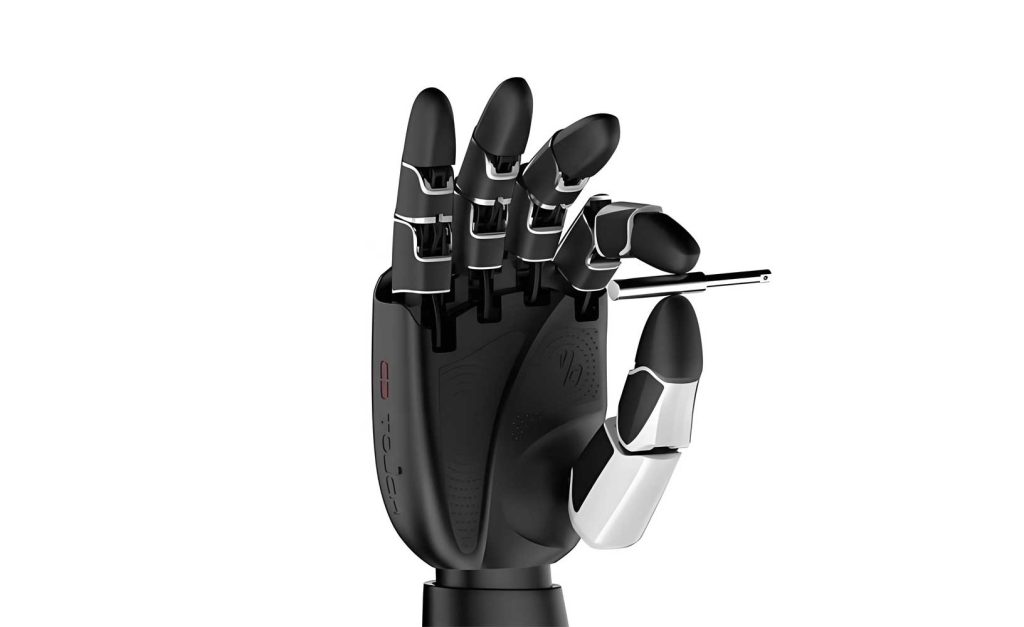
The pursuit of creating machines that can interact with the physical world with human-like finesse has driven significant research into dexterous robotic hands. These complex, multi-fingered end-effectors, characterized by their high degrees of freedom and inherent flexibility, are fundamental to advancing automation in domains requiring precise and adaptive manipulation. From intricate assembly tasks in manufacturing to delicate procedures in healthcare and hazardous material handling, the applications for a dexterous robotic hand are vast and transformative. Central to the effective operation of such a system is a high-fidelity dynamic model. This model serves not only as the foundation for analyzing the hand’s mechanical behavior—such as stability, force transmission, and motion trajectories—but is also a prerequisite for implementing sophisticated, real-time control algorithms essential for successful object manipulation.
The core challenge in dynamic modeling of a grasping system lies in accurately incorporating the interaction between the dexterous robotic hand and the object it holds. The manipulation task is accomplished solely through contacts established between the fingertips and the object’s surface. Different types of contact (e.g., point, line, or surface) impose distinct kinematic and dynamic constraints on the system, directly influencing the accuracy and robustness of the manipulation. Therefore, a comprehensive model must describe not only the independent dynamics of the fingers and the object but, crucially, the constrained dynamics that arise from their physical connection. Traditional methods for handling such constraints, like the Lagrangian multiplier method or Kane’s method, introduce auxiliary variables (the multipliers) into the equations of motion. While mathematically correct, this approach increases the dimensionality and computational complexity of the model, which can be a significant drawback for real-time control applications.
This work focuses on a powerful alternative known as the Udwadia-Kalaba (U-K) formulation. Derived as an extension of Lagrangian mechanics, the U-K method provides a concise, direct procedure for obtaining the explicit equations of motion for constrained mechanical systems without introducing extra unknown variables. Its elegance and computational efficiency make it particularly well-suited for modeling complex systems like a multi-fingered dexterous robotic hand in grasp. This article will present a detailed methodology for deriving the complete dynamics of a dexterous robotic hand-object system under fixed contact conditions using the Udwadia-Kalaba equation. The discussion will be extended far beyond a simple derivation, incorporating detailed theoretical background, comprehensive kinematic analysis, and an exploration of the implications for control system design.
Theoretical Foundation: The Udwadia-Kalaba Formulation
The Udwadia-Kalaba formulation offers a unified approach to the dynamics of constrained systems. Consider an unconstrained mechanical system whose configuration can be described by an $n$-dimensional generalized coordinate vector $\mathbf{q}(t) \in \mathbb{R}^n$. Its equations of motion can be written in the following standard form:
$$
\mathbf{M}(\mathbf{q}, t)\,\ddot{\mathbf{q}} = \mathbf{Q}(\mathbf{q}, \dot{\mathbf{q}}, t)
$$
where $\mathbf{M}(\mathbf{q}, t) \in \mathbb{R}^{n \times n}$ is the symmetric, positive-definite mass matrix, and $\mathbf{Q}(\mathbf{q}, \dot{\mathbf{q}}, t) \in \mathbb{R}^{n}$ is the vector of impressed (or given) forces, which includes Coriolis, centrifugal, gravitational, and any applied actuator forces.
Now, suppose this system is subjected to $l$ independent constraints ($l < n$). These constraints are often first expressed in the Pfaffian form:
$$
\mathbf{A}(\mathbf{q}, t)\dot{\mathbf{q}} = \mathbf{c}(\mathbf{q}, t)
$$
Here, $\mathbf{A}(\mathbf{q}, t) \in \mathbb{R}^{l \times n}$ and $\mathbf{c}(\mathbf{q}, t) \in \mathbb{R}^{l}$. By differentiating with respect to time, we obtain the constraint equation in its second-order (acceleration) form, which is more useful for dynamic analysis:
$$
\mathbf{A}(\mathbf{q}, t)\ddot{\mathbf{q}} = \mathbf{b}(\mathbf{q}, \dot{\mathbf{q}}, t)
$$
where $\mathbf{b}(\mathbf{q}, \dot{\mathbf{q}}, t) := \mathbf{c}(\mathbf{q}, t) – \dot{\mathbf{A}}(\mathbf{q}, t)\dot{\mathbf{q}}$. For brevity, the explicit dependence on $\mathbf{q}$, $\dot{\mathbf{q}}$, and $t$ will be omitted in subsequent equations.
The central result of the U-K theory is the following theorem: For a system satisfying the assumptions above, the explicit equations of motion that incorporate the constraints are given by:
$$
\mathbf{M}\ddot{\mathbf{q}} = \mathbf{Q} + \mathbf{Q}_c
$$
where $\mathbf{Q}_c$ is the constraining force that enforces Eq. (3). This force is not an unknown to be solved for but is given explicitly by:
$$
\mathbf{Q}_c = \mathbf{M}^{1/2}\left(\mathbf{A}\mathbf{M}^{-1/2}\right)^+ \left( \mathbf{b} – \mathbf{A}\mathbf{M}^{-1}\mathbf{Q} \right)
$$
The superscript $+$ denotes the Moore-Penrose generalized inverse. The term $\left( \mathbf{b} – \mathbf{A}\mathbf{M}^{-1}\mathbf{Q} \right)$ represents the extent to which the unconstrained acceleration violates the constraints. The U-K equation elegantly shows that the total acceleration is the sum of the unconstrained acceleration and a correction term provided by the constraining force $\mathbf{Q}_c$.
The advantages of this formulation for modeling a dexterous robotic hand are substantial:
- No Lagrange Multipliers: It eliminates the need to introduce and solve for additional variables, simplifying the equation structure.
- Unified Treatment: It handles both holonomic and non-holonomic constraints seamlessly within the same framework.
- Explicit Form: It provides a closed-form expression for the constraint forces, which are critical for grasp stability analysis and force control.
- Computational Efficiency: The formulation is amenable to efficient numerical computation, which is vital for real-time simulation and control of a high-DOF dexterous robotic hand.
| Method | Key Feature | Advantages | Disadvantages for Dexterous Hand Modeling |
|---|---|---|---|
| Lagrange Multipliers | Introduces unknown multipliers for constraints. | Systematic, guarantees constraint satisfaction. | Increases system order; multipliers must be solved numerically, adding complexity. |
| Kane’s Method | Uses generalized speeds and partial velocities. | Efficient for complex topologies; eliminates non-working forces early. | Derivation can be algebraically intensive; constraint forces not directly explicit. |
| Newton-Euler Recursion | Based on force/moment balance across links. | Computationally very efficient for serial chains. | Handling closed-loop constraints (like grasp) is non-trivial; system-wide model is less transparent. |
| Udwadia-Kalaba | Provides explicit equation of motion with constraints. | No extra variables; explicit constraint force; unified for holonomic/non-holonomic. | Requires computation of generalized inverse; mass matrix inversion needed. |
Kinematic Analysis of Fixed Contact
To apply the U-K formulation, we must first derive the precise constraint equations $\mathbf{A}\ddot{\mathbf{q}} = \mathbf{b}$ that represent the physical interaction. For a dexterous robotic hand, the most fundamental interaction is a fingertip contact. Among contact models (point contact with friction, soft finger, etc.), the fixed contact (also called a point contact without slip or a welded contact) provides a foundational case. It assumes the fingertip does not slip or roll relative to the object at the contact point, effectively creating a stationary connection. While simplifying, it is a critical model for analyzing firm, non-prehensile pushes or certain phases of rigid grasping.
Consider a dexterous robotic hand with $m$ fingers grasping a single object. Let us define:
- Base Frame {$B$}: Inertial frame attached to the palm/wrist of the dexterous robotic hand.
- Object Frame {$O$}: Attached to the center of mass of the object. Its pose is $\mathbf{q}_o = [x, y, z, \phi, \theta, \psi]^T \in \mathbb{R}^6$.
- Fingertip Frame {$F_i$}: Attached to the tip of the $i$-th finger ($i=1,…,m$). The finger’s joint angles are $\mathbf{q}_{f_i} \in \mathbb{R}^{n_i}$, where $n_i$ is the number of DOF for that finger.
The system’s generalized coordinate vector is the concatenation of all subsystem coordinates:
$$
\mathbf{q} = [\mathbf{q}_{f_1}^T, \mathbf{q}_{f_2}^T, …, \mathbf{q}_{f_m}^T, \mathbf{q}_o^T]^T \in \mathbb{R}^n, \quad \text{where } n = \sum_{i=1}^{m} n_i + 6.
$$
The condition for a fixed contact between fingertip $i$ and the object is that the position of the contact point, expressed in the base frame, is identical whether computed via the object or the finger. This yields the position-level constraint:
$$
\mathbf{p}_o + \mathbf{R}_o \, ^{o}\mathbf{c}_i = \mathbf{p}_{f_i} + \mathbf{R}_{f_i} \, ^{f_i}\mathbf{c}_i
$$
where:
- $\mathbf{p}_o, \mathbf{p}_{f_i} \in \mathbb{R}^3$: Position vectors of origins of frames $O$ and $F_i$.
- $\mathbf{R}_o, \mathbf{R}_{f_i} \in SO(3)$: Rotation matrices of frames $O$ and $F_i$.
- $^{o}\mathbf{c}_i, ^{f_i}\mathbf{c}_i \in \mathbb{R}^3$: Location of the contact point expressed in the object frame and the fingertip frame, respectively. For a fixed contact on the fingertip surface, $^{f_i}\mathbf{c}_i$ is constant.
Differentiating Eq. (6) with respect to time gives the velocity-level constraint (Pfaffian form). Using the relationship $\dot{\mathbf{R}} = \boldsymbol{\omega} \times \mathbf{R}$, where $\boldsymbol{\omega}$ is the angular velocity vector, we get:
$$
\dot{\mathbf{p}}_o + \boldsymbol{\omega}_o \times (\mathbf{R}_o \, ^{o}\mathbf{c}_i) = \dot{\mathbf{p}}_{f_i} + \boldsymbol{\omega}_{f_i} \times (\mathbf{R}_{f_i} \, ^{f_i}\mathbf{c}_i)
$$
This can be rearranged into a matrix form that relates the generalized velocities of the object and the finger:
$$
\left[ \mathbf{A}_{f_i} \,\,\, \mathbf{A}_{o_i} \right]
\begin{bmatrix}
\dot{\mathbf{q}}_{f_i} \\\
\dot{\mathbf{q}}_o
\end{bmatrix} = \mathbf{0} \quad \text{or} \quad \mathbf{A}_{f_i} \dot{\mathbf{q}}_{f_i} + \mathbf{A}_{o_i} \dot{\mathbf{q}}_o = \mathbf{0}
$$
The matrices $\mathbf{A}_{f_i}$ and $\mathbf{A}_{o_i}$ are derived from the Jacobians that map joint velocities to fingertip linear and angular velocity. Typically, if $\mathbf{J}_{v_{f_i}}$ and $\mathbf{J}_{\omega_{f_i}}$ are the linear and angular velocity Jacobians of finger $i$, and $\mathbf{J}_{v_o}$ and $\mathbf{J}_{\omega_o}$ are for the object (trivial for the free-floating object), then:
$$
\mathbf{A}_{f_i} = \left[ \mathbf{J}_{v_{f_i}} – \left(\mathbf{R}_{f_i} \, ^{f_i}\mathbf{c}_i\right) \times \mathbf{J}_{\omega_{f_i}} \right], \quad \mathbf{A}_{o_i} = \left[ -\mathbf{I}_{3 \times 3} \,\,\, \left(\mathbf{R}_o \, ^{o}\mathbf{c}_i\right) \times \right]
$$
The $\times$ operator denotes the skew-symmetric matrix form of the cross product.
Finally, differentiating the velocity constraint one more time yields the essential acceleration-level constraint for the U-K equation:
$$
\left[ \mathbf{A}_{f_i} \,\,\, \mathbf{A}_{o_i} \right]
\begin{bmatrix}
\ddot{\mathbf{q}}_{f_i} \\\
\ddot{\mathbf{q}}_o
\end{bmatrix} = \mathbf{b}_i
$$
where $\mathbf{b}_i = -\dot{\mathbf{A}}_{f_i} \dot{\mathbf{q}}_{f_i} – \dot{\mathbf{A}}_{o_i} \dot{\mathbf{q}}_o$. Each fixed contact contributes three independent scalar constraint equations (one for each spatial direction).
| Contact Type | Degrees of Constraint | Kinematic Condition | Resulting Constraint Form for Finger $i$ |
|---|---|---|---|
| Fixed (Welded) | 3 (Translation) | No relative translation at contact point. | $\mathbf{A}_{f_i}\ddot{\mathbf{q}}_{f_i} + \mathbf{A}_{o_i}\ddot{\mathbf{q}}_o = \mathbf{b}_i$ |
| Point Contact with Friction | 1 (Normal Translation) | No inter-penetration; can slip. | $\mathbf{n}_i^T(\mathbf{a}_{c_i,o} – \mathbf{a}_{c_i,f}) = b_i$ (Normal component only) |
| Soft Finger with Friction | 3 (Normal Trans. + 2 Rotation*) | No translation + no torsion about normal. | More complex, includes rotational components. |
| *Assumes rolling and spinning about normal are prevented, but other rotations may be free. | |||
Hierarchical Dynamics Modeling of the Grasping System
We now construct the complete dynamic model for a dexterous robotic hand grasping an object via fixed contacts using a hierarchical or “subsystem aggregation” approach. This method involves first modeling the dynamics of each component independently as if they were unconstrained, and then using the U-K equation to seamlessly impose the contact constraints that bind them together into a single system.
Step 1: Unconstrained Subsystem Dynamics
Each finger and the object are treated as separate dynamical subsystems.
Finger Dynamics: For a finger $i$ modeled as a serial chain of rigid links, its unconstrained dynamics can be derived using the Euler-Lagrange method and expressed in the standard form:
$$
\mathbf{M}_{f_i}(\mathbf{q}_{f_i}) \ddot{\mathbf{q}}_{f_i} + \mathbf{C}_{f_i}(\mathbf{q}_{f_i}, \dot{\mathbf{q}}_{f_i})\dot{\mathbf{q}}_{f_i} + \mathbf{g}_{f_i}(\mathbf{q}_{f_i}) = \boldsymbol{\tau}_i
$$
Here, $\mathbf{M}_{f_i}$ is the finger’s mass matrix, $\mathbf{C}_{f_i}$ represents Coriolis and centrifugal forces, $\mathbf{g}_{f_i}$ is the gravity vector, and $\boldsymbol{\tau}_i$ is the vector of actuator torques at the joints. This can be rewritten as:
$$
\mathbf{M}_{f_i} \ddot{\mathbf{q}}_{f_i} = \mathbf{Q}_{f_i}, \quad \text{where} \quad \mathbf{Q}_{f_i} = \boldsymbol{\tau}_i – \mathbf{C}_{f_i}\dot{\mathbf{q}}_{f_i} – \mathbf{g}_{f_i}.
$$
Object Dynamics: The unconstrained object, free to move in space, has simple Newton-Euler dynamics. Its mass matrix is a constant diagonal block matrix containing its mass $m_o$ and inertia tensor $\mathbf{I}_o$ about its center of mass:
$$
\mathbf{M}_o = \begin{bmatrix}
m_o\mathbf{I}_{3\times3} & \mathbf{0} \\\
\mathbf{0} & \mathbf{I}_o
\end{bmatrix} \in \mathbb{R}^{6\times6}
$$
The impressed force vector $\mathbf{Q}_o$ includes gravity and any other external forces/wrenches $\mathbf{F}_{ext}$ acting directly on the object:
$$
\mathbf{M}_o \ddot{\mathbf{q}}_o = \mathbf{Q}_o, \quad \text{where} \quad \mathbf{Q}_o = \mathbf{F}_{ext} + \begin{bmatrix} m_o \mathbf{g} \\\ \mathbf{0} \end{bmatrix}.
$$
Step 2: Aggregated Unconstrained System
By assembling all subsystems, we obtain the dynamics of the unconstrained aggregate system—as if the fingers and object were not touching. The block-diagonal structure reflects the independence of the subsystems:
$$
\mathbf{M}\,\ddot{\mathbf{q}} = \mathbf{Q}
$$
with
$$
\mathbf{M} = \text{blkdiag}\left( \mathbf{M}_{f_1}, \mathbf{M}_{f_2}, …, \mathbf{M}_{f_m}, \mathbf{M}_o \right), \quad
\mathbf{Q} = \begin{bmatrix} \mathbf{Q}_{f_1}^T & \mathbf{Q}_{f_2}^T & … & \mathbf{Q}_{f_m}^T & \mathbf{Q}_o^T \end{bmatrix}^T.
$$
This equation, $\mathbf{M}\ddot{\mathbf{q}} = \mathbf{Q}$, represents the starting point for the U-K formulation (Eq. (1)).
Step 3: Imposing Contact Constraints via U-K Equation
We now introduce the $l = 3m$ constraint equations (three per finger) derived in the kinematic analysis. For $m$ fingers, the global constraint equation $\mathbf{A}\ddot{\mathbf{q}} = \mathbf{b}$ is assembled as follows:
$$
\underbrace{\begin{bmatrix}
\mathbf{A}_{f_1} & \mathbf{0} & \cdots & \mathbf{0} & \mathbf{A}_{o_1} \\\
\mathbf{0} & \mathbf{A}_{f_2} & \cdots & \mathbf{0} & \mathbf{A}_{o_2} \\\
\vdots & \vdots & \ddots & \vdots & \vdots \\\
\mathbf{0} & \mathbf{0} & \cdots & \mathbf{A}_{f_m} & \mathbf{A}_{o_m}
\end{bmatrix}}_{\mathbf{A} \in \mathbb{R}^{3m \times n}}
\ddot{\mathbf{q}} =
\underbrace{\begin{bmatrix} \mathbf{b}_1 \\\ \mathbf{b}_2 \\\ \vdots \\\ \mathbf{b}_m \end{bmatrix}}_{\mathbf{b} \in \mathbb{R}^{3m}}.
$$
The matrix $\mathbf{A}$ is highly sparse, a feature that can be exploited for efficient computation of the U-K equation.
Applying the U-K theorem (Eq. (4) & (5)) directly yields the final, constrained equations of motion for the entire dexterous robotic hand-object system:
$$
\boxed{\mathbf{M}\,\ddot{\mathbf{q}} = \mathbf{Q} + \mathbf{M}^{1/2}\left(\mathbf{A}\mathbf{M}^{-1/2}\right)^+ \left( \mathbf{b} – \mathbf{A}\mathbf{M}^{-1}\mathbf{Q} \right)}
$$
This single equation encapsulates everything: the inertia of all links and the object, the actuator and gravity forces, and the precise interaction forces at the contact points required to maintain the fixed-contact conditions. The term $\mathbf{Q}_c = \mathbf{M}^{1/2}\left(\mathbf{A}\mathbf{M}^{-1/2}\right)^+ \left( \mathbf{b} – \mathbf{A}\mathbf{M}^{-1}\mathbf{Q} \right)$ is the collective constraint force vector. A portion of it, when mapped back to the joint spaces of the fingers, represents the contact forces that the finger joints must exert to maintain the grasp.
Step 4: Analysis and Control Implications
The resulting model is explicit and deterministic. For simulation, given the current state $(\mathbf{q}, \dot{\mathbf{q}})$ and applied joint torques $\boldsymbol{\tau}$, one can compute $\mathbf{M}$, $\mathbf{Q}$, $\mathbf{A}$, and $\mathbf{b}$, then solve Eq. (12) for the acceleration $\ddot{\mathbf{q}}$. This acceleration is guaranteed to satisfy the fixed-contact constraints. For control design, the model is invaluable:
- Inverse Dynamics Control: The model can compute the exact joint torques $\boldsymbol{\tau}$ required to achieve a desired object acceleration $\ddot{\mathbf{q}}_o^{des}$ while maintaining contact, by solving Eq. (12) for $\mathbf{Q}$ and extracting $\boldsymbol{\tau}$.
- Hybrid Force-Motion Control: The explicit form of $\mathbf{Q}_c$ provides direct information about the contact forces, allowing for controllers that regulate both the object’s motion and the internal grasping forces.
- Stability Analysis: The linearized form of this model around a specific grasp configuration is the starting point for analyzing grasp stability and designing robust controllers.
| Step | Action | Inputs | Outputs | Key Equation/Matrix |
|---|---|---|---|---|
| 1 | Model Finger Dynamics | Link parameters (mass, inertia, length), joint states. | $\mathbf{M}_{f_i}, \mathbf{Q}_{f_i}$ for each finger $i$. | $\mathbf{M}_{f_i}\ddot{\mathbf{q}}_{f_i} = \boldsymbol{\tau}_i – \mathbf{C}_{f_i}\dot{\mathbf{q}}_{f_i} – \mathbf{g}_{f_i}$ |
| 1 | Model Object Dynamics | Object mass $m_o$, inertia $\mathbf{I}_o$. | $\mathbf{M}_o, \mathbf{Q}_o$. | $\mathbf{M}_o = \text{blkdiag}(m_o\mathbf{I}_3, \mathbf{I}_o)$ |
| 2 | Aggregate Unconstrained System | All $\mathbf{M}_{f_i}, \mathbf{M}_o, \mathbf{Q}_{f_i}, \mathbf{Q}_o$. | Block-diagonal $\mathbf{M}$, concatenated $\mathbf{Q}$. | $\mathbf{M} = \text{blkdiag}(\mathbf{M}_{f_1},…,\mathbf{M}_{f_m}, \mathbf{M}_o)$ |
| 3 | Formulate Contact Constraints | Contact points $^{o}\mathbf{c}_i, ^{f_i}\mathbf{c}_i$, system kinematics. | Constraint matrix $\mathbf{A}$, vector $\mathbf{b}$. | $\mathbf{A}\ddot{\mathbf{q}} = \mathbf{b}$ (See Eq. (11)) |
| 4 | Apply U-K Equation | $\mathbf{M}, \mathbf{Q}, \mathbf{A}, \mathbf{b}$. | Complete Constrained System Dynamics | $\mathbf{M}\ddot{\mathbf{q}} = \mathbf{Q} + \mathbf{M}^{1/2}(\mathbf{A}\mathbf{M}^{-1/2})^+(\mathbf{b} – \mathbf{A}\mathbf{M}^{-1}\mathbf{Q})$ |
Extended Discussion and Future Directions
The Udwadia-Kalaba-based framework presented here provides a robust and elegant foundation for modeling the dynamics of a dexterous robotic hand. Its strength lies in the clarity with which it separates the description of the component subsystems from the description of their interactions (the constraints). This modularity is highly beneficial. For instance, to model a different dexterous robotic hand morphology, one only needs to replace the finger dynamics models $\mathbf{M}_{f_i}$ and $\mathbf{Q}_{f_i}$ in Step 1 and update the kinematic Jacobians used in the constraint matrix $\mathbf{A}$. The core U-K aggregation process (Step 4) remains unchanged.
While the analysis focused on fixed contacts for clarity, the framework is inherently capable of handling more complex and realistic contact models. To model a point contact with friction (allowing slip), the constraint matrix $\mathbf{A}$ would only enforce the normal direction constraint, leaving the tangential directions free. The friction forces in these tangential directions would then be included as part of the impressed forces $\mathbf{Q}$, typically as a function of the normal constraint force (computed from $\mathbf{Q}_c$) and the sliding velocity. This hybrid approach—using U-K for normal constraints and classical friction models for tangential forces—is a powerful direction for extending this work. Similarly, rolling contacts can be modeled by adding constraints that enforce zero relative velocity at the contact point, leading to non-holonomic constraints perfectly handled by the U-K formulation.
The potential applications of this precise dynamic model are extensive. In simulation and digital twin development, it allows for high-fidelity, real-time simulation of manipulation tasks, crucial for testing control algorithms and training AI policies in a safe virtual environment before deployment on physical hardware. For model-based control, it is the cornerstone of algorithms like computed-torque control, operational space control, and impedance control at the system level. Knowing the exact dynamics enables the controller to decouple and linearize the system’s nonlinear behavior, leading to superior tracking performance and disturbance rejection. Finally, for grasp planning and analysis, the model allows planners to predict the forces and motions resulting from a candidate grasp, enabling the selection of grasps that are not only kinematically feasible but also dynamically stable and efficient.
Future research directions stemming from this modeling approach are plentiful. Integrating this model with real-time sensor feedback (tactile, force-torque, vision) to create adaptive controllers is a critical step. Exploring the use of this formulation for underactuated or soft dexterous robotic hands, where the constraints might be more complex or even unilateral, presents an interesting challenge. Furthermore, developing highly optimized numerical solvers that exploit the sparsity structure of the $\mathbf{A}$ and $\mathbf{M}$ matrices for a specific dexterous robotic hand architecture could push the boundaries of real-time computational performance, making truly dynamic, reactive manipulation an achievable reality. In conclusion, the application of the Udwadia-Kalaba equation to the dynamics of a dexterous robotic hand provides a clear, efficient, and extensible mathematical pathway from the mechanical design of the hand to the implementation of intelligent, high-performance control systems.