
The global push towards carbon peaking and carbon neutrality, coupled with rapid advancements in science and technology, has made green, low-carbon transition and intelligent upgrading an inevitable and critical path for the high-quality development of the mining industry. The mining sector stands at a pivotal crossroads, where embracing innovation is no longer optional but essential for sustainability, safety, and efficiency. In this context, the emergence of intelligent robots represents a paradigm shift. More specifically, the convergence of electrification and embodied intelligence is poised to fundamentally redefine mining operations. This article explores how electric, embodied intelligent robots are becoming the cornerstone of this transformation, driving the industry towards a greener and smarter future. We will examine the catalytic role of electrification, the revolutionary potential of embodied intelligence, and the significant challenges that must be overcome to realize their full potential in harsh mining environments.
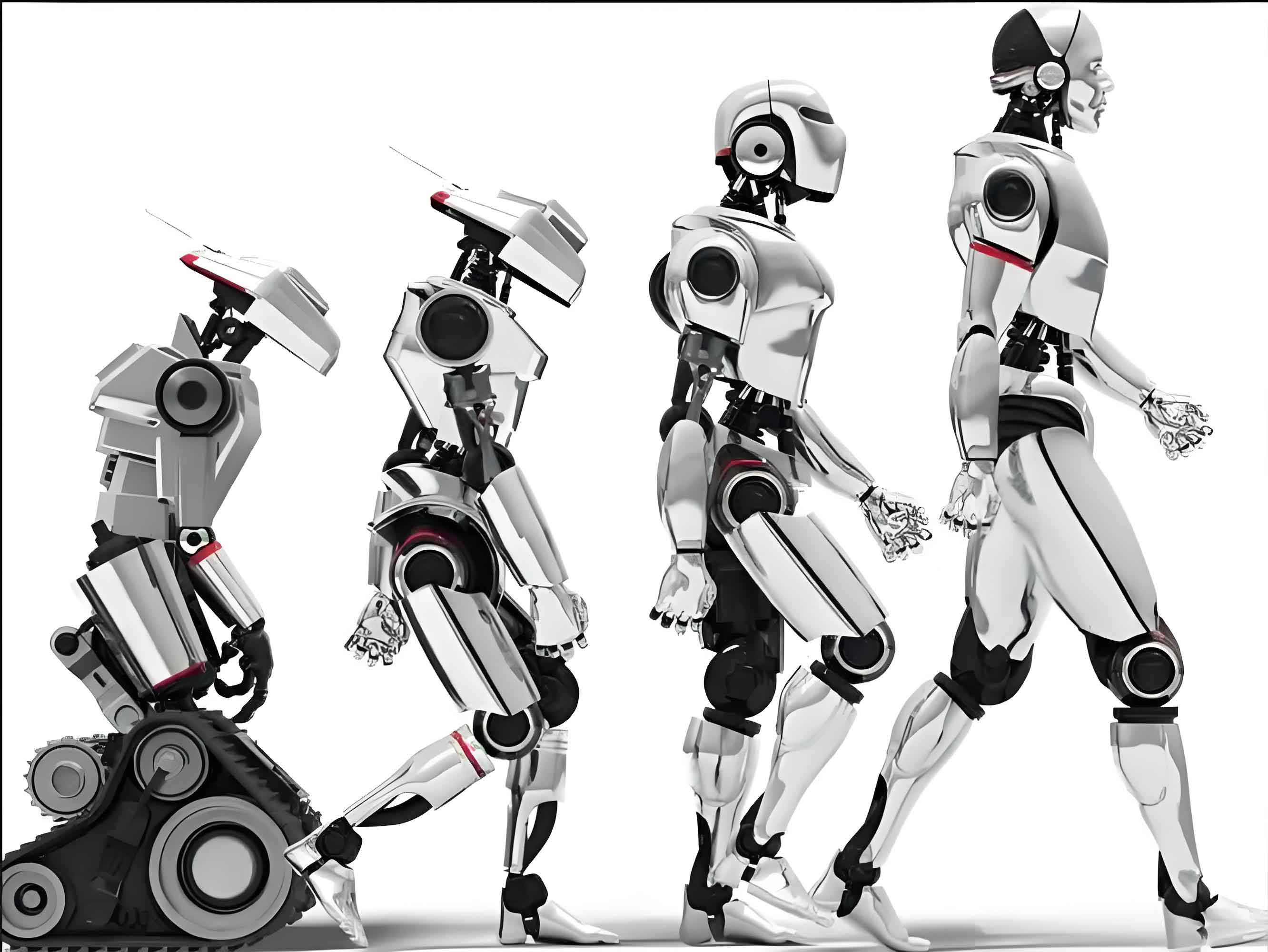
1. Electrification: Powering a New Era for Green and Smart Mines
The wave of electrification is transforming global industries, and mining is no exception. Mining intelligent robots, as the primary carriers of this intelligent transformation, are leveraging electrification to transition from theoretical concepts to large-scale, practical applications.
1.1. Accelerating the Transformation of Mining Equipment Powertrains
For decades, mining equipment has been dominated by diesel engines and hydraulic systems. While powerful, these systems come with significant drawbacks: emissions, noise pollution, high maintenance requirements, and limited compatibility with digital control systems. The maturation of electric vehicle (EV) technology in the automotive sector has provided a robust foundation for change. The rapid iteration of battery, motor, and electronic control (“three-electric”) technologies has cascaded into the mining industry, offering a cleaner, more efficient alternative.
Electric drive systems offer distinct advantages crucial for modern intelligent robots:
- Environmental Benefits: Zero direct emissions at the point of use, drastically reducing the carbon footprint and improving air quality in confined underground spaces.
- Performance: Electric motors provide instant torque, enabling faster and more precise control responses crucial for automated and robotic tasks.
- Efficiency & Noise: Higher energy efficiency compared to internal combustion engines and significantly lower operational noise.
- Digital Native: Seamless integration with digital control systems, sensors, and IoT platforms, forming the “nervous system” of a smart mine.
The evolution from AC induction motors to Permanent Magnet Synchronous Motors (PMSMs) and now to innovative Axial Flux Motors represents this technological progression. Axial flux motors, with their compact, lightweight, and high-torque design, are particularly suited for space-constrained mining machinery. This shift from diesel to electric is more than a simple power source swap; it is an enabler for a new generation of intelligent, connected, and software-defined mining equipment. The following table summarizes the key differences between traditional and electric powertrains in the context of intelligent robots.
| Feature | Traditional Diesel/Hydraulic | Electric Drive System |
|---|---|---|
| Power Source | Diesel Fuel | Battery / Trolley / Hydrogen Fuel Cell |
| Emissions | High (CO2, NOx, Particulates) | Zero at point of use |
| Noise Level | High | Low |
| Energy Efficiency | Relatively Low (~30-40%) | High (>85%) |
| Control Response | Slow (hydraulic lag) | Fast (millisecond torque control) |
| Maintenance | Complex (fluids, filters, exhaust) | Simpler (fewer moving parts) |
| Digital Integration | Difficult | Native and seamless |
| Heat Generation | High | Lower, more manageable |
1.2. Enabling the Intelligent Development of Mining Robots
Electrification is not merely an alternative power source; it is the critical enabler for the advanced intelligence of mining robots. The core challenge for a truly intelligent robot lies in its ability to perceive, decide, and act with precision and autonomy. Traditional powertrains are ill-suited for this.
Electric drives, with their precise controllability, provide the necessary “muscle” for intelligent control systems. The relationship between motor torque ($T_m$), current ($I$), and the robot’s dynamic motion can be expressed as a fundamental control equation, which is far more linear and predictable than hydraulic counterparts:
$$ T_m = k_t \cdot I $$
$$ J\dot{\omega} + B\omega = T_m – T_{load} $$
Where $k_t$ is the motor torque constant, $J$ is the moment of inertia, $\omega$ is the angular velocity, $B$ is the damping coefficient, and $T_{load}$ is the external load torque. This direct and fast relationship allows the robot’s control system to execute complex trajectories and force-controlled tasks accurately.
Furthermore, the electric powertrain simplifies the robot’s mechanical architecture. The removal of complex hydraulic lines, pumps, and exhaust systems reduces weight, minimizes potential failure points, and lowers maintenance costs. This streamlined design allows engineers to focus on integrating advanced sensors (LiDAR, cameras, tactile sensors) and high-performance computing units, which are the “brain” of the embodied intelligent robot. In essence, electrification provides the clean, responsive, and software-friendly physical platform upon which artificial intelligence can be effectively built and deployed.
2. Embodied Intelligence: The Evolutionary Direction for Mining Robots
The field of Artificial Intelligence (AI) is branching into two major directions: disembodied intelligence and embodied intelligence. While disembodied intelligence, powered by Large Language Models (LLMs), has achieved remarkable success in digital realms, the future of physical work in mines lies with embodied intelligence.
2.1. The Rise and Limits of Disembodied Intelligence
Disembodied intelligence, exemplified by models like ChatGPT, operates purely in the information domain. It excels at processing language, generating text and code, and performing logical reasoning based on vast datasets. Its power is derived from pattern recognition and statistical inference within digital data. However, a significant limitation for industrial application is its detachment from the physical world. A disembodied AI lacks a body; it cannot perceive a dusty, uneven mine tunnel through sensors, cannot feel the resistance of a rock face, and cannot physically manipulate a drill. It operates on symbolic representations without grounding in physical reality. Therefore, while disembodied AI can be a powerful tool for planning, simulation, and data analysis in mining, it cannot directly control an intelligent robot to perform a physical task in an unpredictable, dynamic environment.
2.2. Embodied Intelligence: Driving the Autonomous Upgrade
Embodied intelligence bridges this gap. It refers to intelligent agents that possess a physical body (the robot) and learn to interact intelligently with their environment through sensory-motor experiences. For a mining intelligent robot, this means:
- Active Perception: Fusing multi-modal data (vision, LiDAR, inertial measurement, force/torque) to build a rich, situated understanding of its surroundings.
- Physical Cognition: Understanding the physics of its actions—how pushing, lifting, or drilling affects the environment and its own state.
- Adaptive Action: Executing tasks not through pre-programmed, rigid sequences, but through goal-directed policies that can adapt to changes (e.g., a shifting rock pile, an unexpected obstacle).
The core paradigm of an embodied intelligent robot can be described as a continuous perception-action loop. The robot’s policy ($\pi$), often represented by a deep neural network, maps its perceptual state ($s_t$) and goal ($g$) to an action ($a_t$). This loop is grounded in minimizing a cost or maximizing a reward related to the task:
$$ a_t = \pi(s_t, g; \theta) $$
$$ s_{t+1} = f(s_t, a_t) $$
The function $f$ represents the often complex and learned dynamics of the robot-environment interaction.
A promising architectural approach for mining robots is the “end-to-end” model, where raw sensor inputs are directly mapped to control outputs (e.g., steering and throttle for an autonomous haul truck). This reduces information loss between separate perception, planning, and control modules. When combined with the reasoning and semantic understanding capabilities of LLMs, these systems can evolve from reflexive actors to robots capable of understanding high-level instructions (“clear the fallen debris from the main haulageway”) and reasoning about the steps needed to accomplish it.
The physical embodiment is crucial. The design of the robot—its mobility (tracks, wheels, legs), its manipulators (arms, buckets, drills), and its material strength—directly defines the space of possible intelligent behaviors. Advancements in lightweight, durable materials and high-fidelity, ruggedized sensors are therefore co-evolutionary with advancements in embodied AI algorithms. This synergy is what will allow future intelligent robots to perform complex, dexterous tasks like selective bolting, precise scaling, or automated maintenance in confined, hazardous spaces where traditional machinery and human workers struggle.
3. Bottlenecks and Challenges for Mining Embodied Intelligent Robots
Despite the tremendous potential, the widespread deployment of electric, embodied intelligent robots in mining faces several formidable, industry-specific challenges.
3.1. The Critical Shortcoming of High-Power Explosion-Proof Battery Technology
This is arguably the most pressing hardware challenge, especially for underground coal mining. Mining intelligent robots are required to perform heavy, continuous work while also powering energy-intensive computing systems. This demands battery packs with high energy density (for long shift duration) and high power density (for high-torque operations).
The stringent safety regulations in gassy mines add a layer of extreme complexity. Batteries must be intrinsically safe or housed in explosion-proof enclosures to prevent any spark or thermal runaway event from igniting methane gas. Current lithium-ion battery technology, while advanced, poses safety risks under fault conditions. Regulatory limits on permissible battery capacity in underground coal mines (e.g., restrictions on single-cell capacity) directly constrain the operational range and capability of robots. The key technical hurdles include:
- Thermal Runaway Prevention: Developing robust battery management systems (BMS) and cell/module designs that can detect and isolate failures.
- Lightweight Explosion-Proof Enclosure Design: Creating protective housings that are strong enough to contain an explosion yet not so heavy as to cripple the robot’s payload and mobility.
- Fast-Charging/Swapping Infrastructure: Establishing efficient systems to minimize robot downtime, which is particularly challenging in the confined and distributed layout of a mine.
Until significant breakthroughs are made in safe, high-energy-density storage (including potential alternatives like hydrogen fuel cells or advanced supercapacitors), the operational scope of large, mobile underground intelligent robots will remain limited.
3.2. Insufficient Data-Driven Resources for Mining Scenarios
Embodied intelligence is fundamentally data-driven. Modern AI techniques, particularly deep reinforcement learning and end-to-end model training, require vast amounts of high-quality, task-specific data. This data is used to train the robot’s “brain” to understand its environment and learn effective policies.
The mining environment presents a unique “data desert” problem:
- Scarcity of Real-World Data: Collecting large-scale sensor datasets from active, hazardous mining areas is difficult, expensive, and often disruptive.
- Lack of Standardized Datasets: Unlike domains like autonomous driving (with datasets like KITTI or nuScenes), there are no large, open-source, multi-modal datasets (camera, LiDAR, radar) for common underground mining scenarios (haulage, development, stope).
- Simulation-Reality Gap: While simulation is a powerful tool for training, the “sim2real” gap for mining is exceptionally wide. Simulating the complex physics of rock fragmentation, dust obscuration, wheel-terrain interaction, and dynamic lighting conditions with high fidelity is extremely challenging.
This data poverty severely slows down the development and validation cycle for mining-specific AI algorithms. Creating rich, photorealistic, and physically accurate simulation environments, coupled with strategic collection and sharing of real-world benchmark datasets, is an urgent prerequisite for accelerating the intelligence of mining robots.
3.3. The Daunting Challenge of Underground Autonomous Driving
Autonomous navigation and haulage represent a core application for embodied intelligent robots, integrating perception, cognition, and action. While surface mining has seen successful deployments of autonomous haul trucks (AHS), the underground environment poses a much greater challenge, preventing routine, large-scale application.
The technical constraints of underground autonomous driving are severe:
| Challenge Category | Specific Issues | Impact on Intelligent Robot |
|---|---|---|
| Perception | Dust, humidity, spray, poor/uneven lighting, lack of GPS, reflective surfaces (water). | Degrades sensor (camera, LiDAR) reliability, causing localization drift and obstacle detection failures. |
| Localization & Mapping | Long, featureless, repetitive tunnels; dynamic changes (fall of ground, equipment movement). | Makes maintaining a consistent and accurate map (SLAM) extremely difficult. |
| Communication | Limited bandwidth and reliability of wireless networks in tunnels; signal attenuation. | Hinders real-time teleoperation fallback and fleet coordination. |
| Path Planning & Control | Narrow, winding roads; uneven, muddy, or cluttered floors; two-way traffic in single lanes. | Requires extremely precise and robust local planning and vehicle control algorithms. |
| System Integration | Discontinuous mining processes (drill-blast-haul); legacy equipment and heterogeneous fleets. | A single autonomous robot cannot optimize a broken process. Requires systemic re-engineering. |
Overcoming these challenges requires more than just adapting surface-level autonomous driving stacks. It demands the development of novel, mine-hardened perception systems (e.g., multi-spectral sensing, dust-penetrating radar), resilient localization techniques (e.g., ultra-wideband aided SLAM), and control algorithms robust to extreme terrain and visibility conditions. Furthermore, the successful deployment of an autonomous underground intelligent robot fleet often necessitates re-engineering the mining process itself towards greater continuity and standardization to create an environment where autonomy can thrive.
4. Conclusion
The pursuit of green and intelligent mines is an imperative for the sustainable future of the mining industry. In this transformative journey, electric, embodied intelligent robots are emerging as the central catalysts. Electrification provides the clean, precise, and digitally integrable powertrain essential for advanced automation, while embodied intelligence promises to elevate robots from simple automated machines to adaptive, perceptive, and decision-making partners capable of handling complex, dynamic, and hazardous tasks.
Although the field is still in its early stages, the potential is immense. The path forward is fraught with significant challenges, most notably in developing safe, high-capacity power systems for underground use, solving the critical data scarcity problem for AI training, and conquering the extreme difficulties of autonomous navigation in confined, unstructured, and harsh subterranean environments. Addressing these bottlenecks will require sustained, collaborative R&D efforts across disciplines—from materials science and electrical engineering to computer vision, robotics, and AI. By overcoming these hurdles, the mining industry can unlock a new era of safety, efficiency, and environmental stewardship, truly led by the next generation of electric, embodied intelligent robots.