
The evolution of Artificial Intelligence (AI) is undergoing a pivotal shift, moving from processing digital symbols to engaging directly with the physical world. This paradigm, known as Embodied AI or Embodied Intelligence, is recognized as the critical pathway toward Artificial General Intelligence (AGI). Its core objective is to achieve deep fusion and efficient collaboration among humans, robots, and the physical environment. An embodied AI robot is not merely a passive observer but an active agent that perceives its surroundings through sensors, reasons about tasks, and executes physical actions to effect change. This transition marks the leap from “disembodied” intelligence, which operates solely in the digital realm, to a form of intelligence grounded in physical interaction, enabling the embodied AI robot to perform complex, long-horizon tasks in dynamic, open-ended environments.
The technological system for realizing this vision is built upon five foundational pillars: 1) Multimodal Active Perception, 2) Embodied Task Planning and Decision-Making, 3) Simulation-to-Reality (Sim2Real) Transfer, 4) Generalization of Vision-Language-Action (VLA) Models, and 5) Development of Autonomous, Controllable Ecosystems. This article systematically explores these pillars, detailing the current research landscape, key methodologies, and future directions for creating robust and scalable embodied AI robot systems.
1. From Disembodied to Embodied Intelligence
Traditional AI, or “disembodied intelligence,” excels at tasks within constrained digital spaces—classification, prediction, and analysis of static datasets. For instance, answering “what is the cheapest fruit?” requires only semantic parsing of a database. In contrast, embodied AI robot systems operate under a fundamentally different paradigm characterized by three principles:
- Embodiment: The agent possesses a physical body (e.g., robotic arms, mobile base, sensors) that situates it within an environment.
- Perception-Action Loop: Intelligence emerges from the continuous cycle of perceiving the environment, making decisions, taking actions, and observing the consequences. This loop is inherently dynamic and must handle real-world uncertainty.
- Embodied Cognition: Cognitive abilities like learning, reasoning, and planning are deeply shaped by and dependent on physical interaction with the world.
The relationship is synergistic: disembodied models (e.g., LLMs, VLMs) provide vast knowledge and reasoning priors, while embodied AI robot systems ground this knowledge in physical experience, generating feedback to refine the models further. The ultimate goal is the seamless alignment of digital intelligence with the physical world.
2. Core Technological Pillars of Embodied AI
2.1 Pillar I: Multimodal Active Perception
For an embodied AI robot, perception must be active and task-oriented, not passive. The system must decide where to look and what to sense to reduce uncertainty and achieve goals efficiently. This goes beyond classic SLAM and 3D scene understanding to include active exploration and affordance reasoning.
A key framework involves hierarchical active search, where a planner uses past observations to decide the next best viewpoint. This can be modeled as maximizing expected information gain $I$ about a target or task state $S$:
$$a_t^* = \arg\max_{a \in \mathcal{A}} \mathbb{E}_{o \sim P(O|a, s_t)}[I(S; o | s_t)]$$
where $a_t$ is the action (e.g., move, look), $o$ is the potential observation, and $s_t$ is the current state.
Recent advances focus on dense 3D representations like 3D Gaussian Splatting (3DGS) for affordance reasoning—understanding how an object can be used. Learning from 3DGS-based datasets allows an embodied AI robot to link natural language instructions (“grab the handle”) to specific, actionable 3D regions on objects with high precision.
2.2 Pillar II: Embodied Task Planning and Decision-Making
This pillar addresses the core challenge of translating high-level instructions into executable action sequences in a dynamic world. It moves from perception to cognition. Modern approaches heavily leverage Large Language Models (LLMs) and World Models.
LLM-based Hierarchical Planning: Models like SayCan use an LLM as a high-level planner that breaks down a natural language command (“make coffee”) into a sequence of feasible sub-tasks (“find kettle”, “fill with water”, “turn on stove”). This sequence is then executed by pre-trained low-level skill policies. The LLM’s knowledge is constrained by a “affordance function” $f_{aff}(s, a)$ that scores the probability a skill $a$ is viable in state $s$, preventing impossible plans.
World Models for Dynamics Prediction: A world model learns the dynamics of the environment $p(s_{t+1} | s_t, a_t)$. This allows an embodied AI robot to simulate outcomes before acting. A primitive-driven world model, like PIVOT-R, focuses prediction on key waypoints, improving efficiency. The model can be used for planning by searching for action sequences that achieve a goal $g$:
$$\min_{a_{0:T}} \sum_{t} c(s_t, a_t) \quad \text{s.t.} \quad s_{t+1} = \mathcal{M}(s_t, a_t), s_T = g$$
where $\mathcal{M}$ is the learned world model and $c$ is a cost function.
Benchmarks for Complex Tasks: New benchmarks like Long-Horizon VLN (LH-VLN) propose multi-stage navigation instructions (“Go to the kitchen, then find the mug on the countertop, and bring it to the living room”), pushing the limits of an embodied AI robot‘s planning and memory capabilities.
| Paradigm | Core Idea | Strengths | Challenges | Example Models |
|---|---|---|---|---|
| LLM as Planner | Uses LLM for symbolic task decomposition. | Leverages commonsense knowledge, flexible. | Lacks physical grounding, can generate infeasible steps. | SayCan, VoxPoser |
| Monolithic VLA Model | End-to-end mapping from observation/instruction to action. | Strong potential for generalization, simple pipeline. | Requires massive data, poor interpretability, sample inefficient. | RT-2, RoboFlamingo |
| World Model-Based | Learns environment dynamics for internal simulation and planning. | Enables look-ahead planning, data-efficient. | Model inaccuracies compound, complex to train. | PIVOT-R, VidMan |
| Hierarchical (LLM + Skills) | LLM plans over a library of learned primitive skills. | Modular, combines knowledge and grounding. | Requires pre-defined skill set, integration complexity. | MEIA, early SayCan |
2.3 Pillar III: Simulation-to-Reality (Sim2Real) Transfer
Training embodied AI robot systems purely in the real world is prohibitively slow, expensive, and risky. High-fidelity simulation is essential for scalable training. The key challenge is the “reality gap”—policies that work in simulation often fail on real hardware due to unmodeled physics, perception noise, and actuation delays.
The core technical chain is Simulation Pre-training → Physical Fine-tuning → Real-world Deployment.
High-Fidelity Simulation Platforms: Platforms like InfiniteWorld provide realistic physics engines (e.g., NVIDIA Isaac Sim), diverse 3D assets, and configurable sensors. They support the generation of massive, labeled datasets for tasks ranging from navigation to complex manipulation. Domain randomization (DR) is a critical technique applied during training:
$$\theta_{sim} \sim \mathcal{P}_{DR}$$
where parameters like friction, mass, lighting, and texture are randomly sampled from a distribution $\mathcal{P}_{DR}$. This forces the policy $\pi_{\phi}(a|o)$ to learn robust features invariant to these variations.
Advanced Sim2Real Techniques:
- System Identification & Dynamics Randomization: Identify real-world physical parameters and randomize around them in sim.
- Real2Sim: Use real-world data (e.g., from scans) to calibrate and improve the simulation model, reducing the gap.
- Adaptive Control: Train adaptive policies or use meta-learning so the embodied AI robot can quickly adjust to new dynamics. A reward-shaping formulation for a bipedal robot might be:
$$R_t = w_{balance} R_{balance} + w_{gait} R_{gait} + w_{energy} R_{energy} + w_{task} R_{task}$$
where weights can be adapted online.
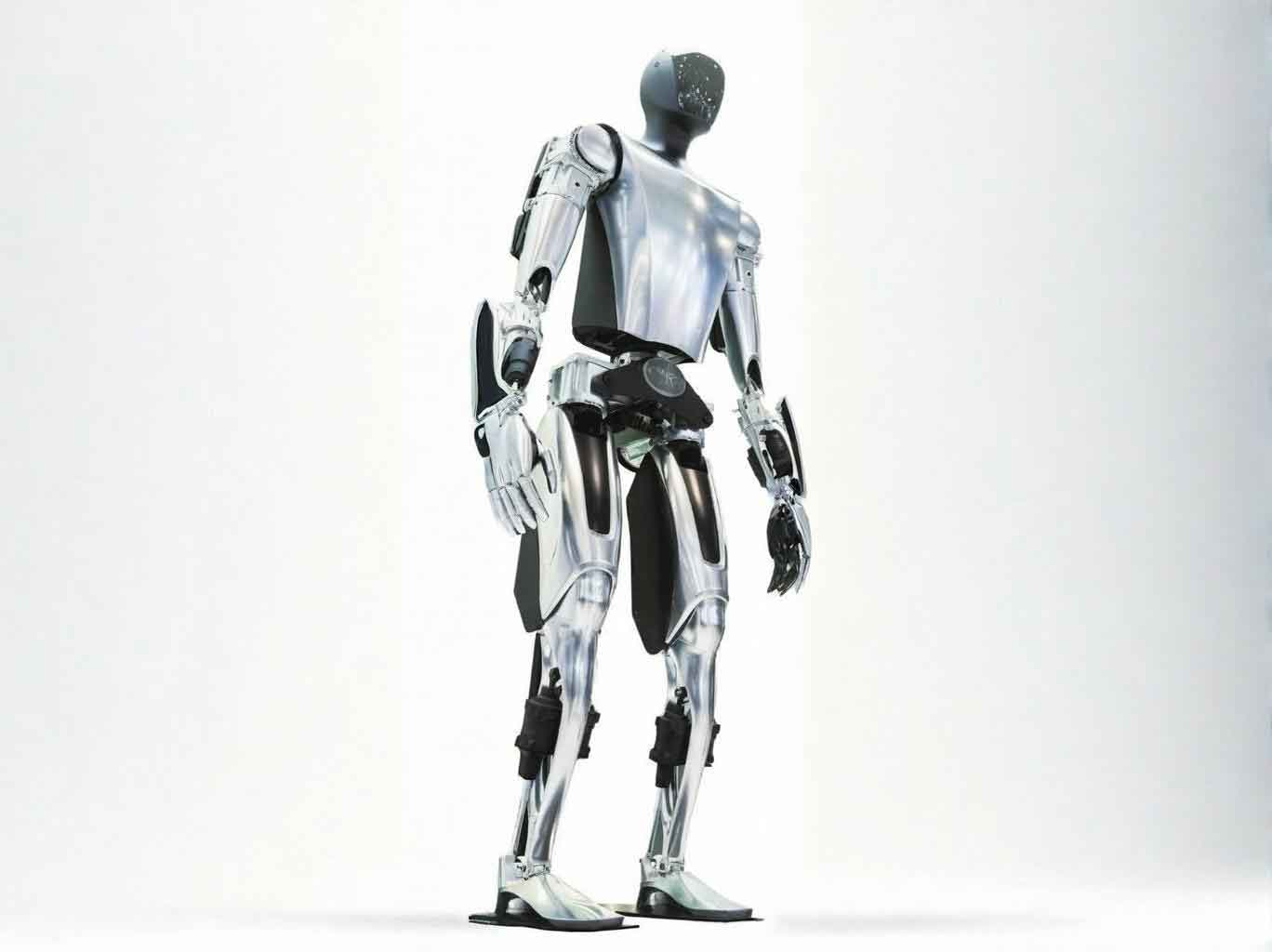
The image above illustrates the ecosystem where advanced simulation platforms are developed and utilized, forming the backbone for training the next generation of embodied AI robot systems before they interact with the physical world.
2.4 Pillar IV: Generalization of Vision-Language-Action Models
Vision-Language-Action (VLA) models are end-to-end architectures that take visual observations and language instructions as input and output low-level actions. They represent a promising path toward generalist embodied AI robot policies. However, they suffer from significant performance degradation on out-of-distribution (OOD) tasks and scenes.
Architectural Innovations for Generalization:
- Mixture of Experts (MoE): Sparse models like RoboDMoE use a two-level gating mechanism. A Task MoE router $g_T(z)$ selects experts based on task type, and a Skill MoE router $g_S(z|x)$ selects experts based on the specific input $x$ (language and vision). The output is a weighted sum:
$$y = \sum_{i=1}^{N} g_S(z|x)_i \cdot E_i(x)$$
where only a few experts $E_i$ are active per input, allowing for scalable multi-task learning and efficient task addition. - Diffusion Policies: Modeling the action distribution as a denoising diffusion process has shown superior multimodality and stability compared to autoregressive models. The policy learns to reverse a noise process:
$$a_{0} = \mathcal{D}_{\theta}(a_t, t, o, l)$$
where $a_t$ is the noisy action at diffusion step $t$, $o$ is observation, $l$ is language instruction. - Causal Representation Learning: Encouraging the model to learn representations that capture causal invariances (e.g., object shape vs. texture) improves OOD robustness. This can be framed as minimizing a contrastive loss that separates style from content.
| Generalization Type | Challenge Description | Mitigation Strategy | Key Technique |
|---|---|---|---|
| Object/Scene OOD | Novel object categories, unseen backgrounds, new lighting. | Domain Randomization, Data Augmentation, Feature Disentanglement. | StyleGAN-based augmentation, CausalRL. |
| Task OOD | Executing a composition of known skills in a novel order or for a new goal. | Hierarchical Planning, Modular Network Design, Meta-Learning. | LLM planners, MoE architectures, MAML. |
| Robot Morphology OOD | Deploying a policy trained on one robot (e.g., 7-DoF arm) to another (e.g., 6-DoF arm). | Action Space Normalization, Morphology-Agnostic Representations. | Latent action spaces, graph neural networks. |
| Dynamic Environment OOD | Unexpected obstacles, moving actors, non-stationary dynamics. | Online Adaptation, World Models, Memory. | Recurrent networks, Online fine-tuning, Model Predictive Control (MPC). |
2.5 Pillar V: Autonomous and Controllable Ecosystems
For the sustainable and secure development of embodied AI robot technology, especially at a national strategic level, building a self-reliant ecosystem is paramount. This ecosystem rests on three pillars:
1. Indigenous Computing Power: Dependence on foreign hardware (e.g., specific GPU brands) poses risks. Initiatives like the “China Computing Power Network” aim to create large-scale, heterogeneous computing clusters using domestically developed AI accelerators (e.g., Huawei Ascend). The challenge is optimizing the full software stack—compilers, frameworks, libraries—for these novel architectures to train massive embodied foundation models efficiently.
2. Unified Data Standards and Open Repositories: Fragmented, incompatible datasets hinder progress. Standards like ARIO (All Robots In One) define unified formats for multi-modal data (vision, force, language) across different robot platforms. Large-scale open datasets, generated in part from high-fidelity simulators, fuel the pre-training of generalist models. The scaling law for embodied data likely follows a similar trend to LLMs but is harder to satisfy:
$$\mathcal{L} \propto (N_{data})^{-\alpha} (N_{params})^{-\beta} (C_{compute})^{-\gamma}$$
where acquiring high-quality, diverse $\textit{N}_{data}$ for physical interaction is the major bottleneck.
3. Open-Source Platforms and Collaborative Research: Open-sourcing simulation platforms (e.g., InfiniteWorld), benchmark suites, and model frameworks accelerates innovation, reduces duplication, and fosters global collaboration while maintaining strategic autonomy in core technologies.
3. Future Prospects and Challenges
While significant progress has been made, the journey toward robust, general-purpose embodied AI robot systems faces enduring challenges that outline the future research agenda:
1. Data Efficiency and Causal Understanding: Current VLA models are data-hungry. Future models must learn more from less interaction by incorporating stronger causal and physical priors. Research into neuro-symbolic approaches, where neural networks interact with symbolic reasoning engines and physics simulators, is crucial.
2. Lifelong Learning and Adaptation: An embodied AI robot operating in the real world must continuously learn and adapt without catastrophic forgetting. Techniques like continual learning, open-world skill discovery, and safe exploration need fundamental advances.
3. Human-Robot Collaboration at Scale: Moving beyond pre-programmed tasks to fluid, natural collaboration with humans requires advances in real-time intention recognition, social cue understanding, and safe, compliant physical interaction. The problem can be framed as a decentralized, partially observable Markov decision process (Dec-POMDP) with a human in the loop.
4. Evaluation Beyond Task Success: New metrics are needed that evaluate not just binary success/failure, but also the quality of interaction—safety, efficiency, explainability, compliance with social norms, and graceful failure recovery.
5. Consolidation of the Technology Stack: The integration of the five pillars—from perception and planning algorithms to sim2real pipelines and hardware-specific optimization—into a cohesive, efficient, and easy-to-use stack remains an enormous engineering and research challenge.
In conclusion, embodied AI represents the frontier of AI’s expansion into the physical realm. The technological system built upon multimodal active perception, advanced task planning, robust sim2real transfer, generalizable VLA models, and autonomous ecosystems provides a comprehensive roadmap. By addressing the intertwined challenges of data, generalization, and human integration, the vision of versatile, collaborative, and intelligent embodied AI robot agents that seamlessly fuse human, machine, and world can be realized, marking a definitive step toward the grand goal of AGI.