
The rise of embodied artificial intelligence, representing the deep integration of AI with robotics, is heralding a new wave of technological revolution and industrial transformation. This paradigm endows machines with advanced environmental perception, autonomous decision-making, and precise execution capabilities, enabling seamless human-robot collaboration across diverse sectors like manufacturing and services. It stands as a pivotal direction for future industrial development. In this new arena of global technological competition, our province, leveraging its robust industrial foundation, proactive policy support, and vast application landscapes, is actively positioning itself within the embodied AI sector, striving to secure a commanding position in the future economic landscape.
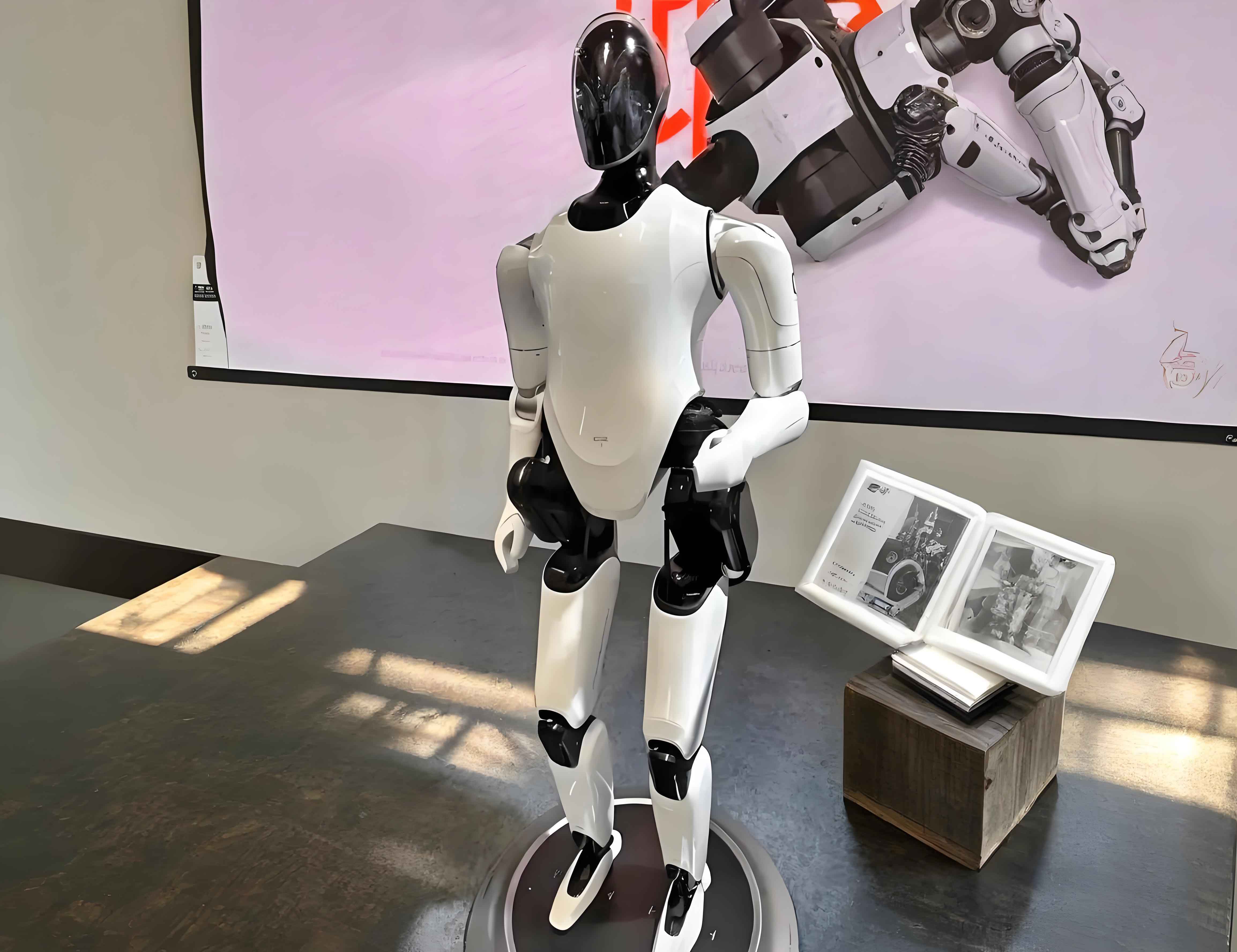
The fundamental premise of an embodied AI robot is its physical interaction with the world, creating a closed perception-decision-action loop. We define the core decision-making process of such a system as a function of its perceptual state and internal model:
$$
a_t = \pi(s_t, M)
$$
where $a_t$ is the action at time $t$, $s_t$ is the perceptual state derived from multimodal sensors, and $M$ represents the internal world model or policy learned by the AI. This distinguishes it from software-only AI, grounding intelligence in physical experience.
The evolution of the embodied AI robot has progressed through distinct phases, as summarized below:
| Phase | Timeframe | Key Characteristics | Limitations |
|---|---|---|---|
| Pre-programmed | ~2000s | Fixed task execution, repetitive motions, minimal environmental feedback. | No adaptation, fragile to changes, limited scope. |
| Sensor-driven | ~2010s | Basic environment sensing (e.g., LIDAR, simple vision), reactive behaviors. | Limited decision complexity, poor scene understanding. |
| AI-Integrated | ~2020s | Deep learning for perception/control, task-specific optimization. | Narrow capabilities, high cost of training for new tasks. |
| Foundation Model Era | Present-Future | Large-scale models for reasoning and planning, emergence of generalizable skills. | Data hunger, sim-to-real gap, safety and ethical frameworks under development. |
The development of a sophisticated embodied AI robot relies on the seamless convergence of several core technological pillars. We can break down the required competencies and their enabling technologies as follows:
| Competency Pillar | Key Technologies | Mathematical/Engineering Basis | Current Challenges |
|---|---|---|---|
| Perception | Multi-modal sensing (Vision, LiDAR, Tactile, Audio), Sensor fusion, 3D scene reconstruction. | State estimation: $s_t = f(I_t, L_t, T_t…)$; SLAM (Simultaneous Localization and Mapping). | Robustness in dynamic, cluttered environments; high-fidelity tactile feedback. |
| Cognition & Decision | Embodied AI large models, Reinforcement Learning (RL), Task and motion planning (TAMP). | Policy learning: $\pi^* = \arg\max_\pi \mathbb{E}[\sum \gamma^t R(s_t, a_t)]$; LLM-based reasoning. | High computational cost, sample inefficiency of RL, grounding language in physical action. |
| Action & Control | High-precision actuators (e.g., servo motors), Advanced drivetrains (e.g., harmonic drives), Whole-body dynamics control. | Dynamics: $M(q)\ddot{q} + C(q, \dot{q})\dot{q} + G(q) = \tau$; Impedance/force control. | Power-to-weight ratio, dexterous manipulation at human-level speed and sensitivity. |
| System Integration | Real-time operating systems (RTOS), Edge computing, Neuromorphic computing. | Latency constraints: $t_{perception} + t_{planning} + t_{control} < t_{deadline}$. | Hardware-software co-design, energy efficiency for autonomous operation. |
Current Status of the Embodied AI Industry in Henan
The provincial government has demonstrated a clear commitment to fostering this strategic industry. The cornerstone is the “Henan Province Embodied AI Industry Development Action Plan (2024-2027),” which outlines a comprehensive strategy focusing on technological breakthroughs, industrial cultivation, and market application, with humanoid robots as a leading segment. This is supported by a network of complementary policies like the “Artificial Intelligence+” Action Plan and the computing infrastructure development plan, creating a holistic policy environment.
The industrial layout strategically incorporates humanoid robotics into the broader “7+28+N” industrial chain cluster system, ensuring focused resource allocation and synergistic development. The roadmap is structured in two key phases:
| Phase | Target Year | Primary Objectives |
|---|---|---|
| Phase I: Framework Establishment | 2027 | Establish a preliminary industrial system framework for embodied AI; achieve breakthroughs in key component technologies; initiate large-scale application demonstrations. |
| Phase II: Ecosystem Maturation | 2030 | Build a mature, comprehensive industrial ecosystem; position key products among the national forefront in terms of technological capability and reliability. |
Our province possesses several distinct advantages for nurturing the embodied AI robot industry. The industrial foundation, particularly in heavy machinery and equipment manufacturing, provides a crucial springboard. A growing number of key enterprises are engaged in the entire value chain, from robot整机 manufacturing to core components and system integration. For core components like reducers, sensors, and bearings, local production capacity is being established, showing potential for future import substitution in the mid-to-low end market.
Perhaps the most significant advantage is the scale and diversity of application scenarios. With a vast population and a comprehensive industrial system spanning agriculture, manufacturing, and services, Henan offers a rich “testing ground” for embodied AI robot applications. This generates the invaluable asset of real-world data, which can be formalized as a driver for model improvement:
$$
\text{Model Performance} \propto \mathcal{F}(\text{Data Diversity}, \text{Data Volume}, \text{Data Quality})
$$
The continuous data flow from agricultural robots, logistics automatons, and service robots accelerates the iterative refinement of algorithms. Furthermore, Henan’s role as a national transportation hub facilitates crucial exchanges of technology, talent, and capital with other leading regions.
On the innovation front, institutions like the Zhongyu Embodied AI Laboratory are playing a vital role. The laboratory’s breakthroughs, such as a tendon-driven actuation scheme for humanoid robots that reduces weight and improves power output, exemplify local R&D capability. Their achievements in international competitions demonstrate advanced competencies in motion control and environmental navigation. To tackle the fundamental challenge of data scarcity and poor generalization, the laboratory is pioneering the construction of multi-scenario, all-terrain training grounds dedicated to collecting rich, diverse datasets for training more robust and versatile embodied AI models.
Currently, the province has gathered over 50 key enterprises across the embodied AI industrial chain. A cluster centered on Zhengzhou is emerging, with leading整机 and system integrators like CSSC 713 Institute, CITIC Heavy Industry, Xiangyu Medical, and Zhongyuan Dynamics. In 2023, the broader AI enterprise ecosystem in Henan exceeded 500 companies with an output value surpassing 60 billion RMB, within which the embodied AI robot sector is experiencing rapid growth. While high-end components still rely on imports, local firms are making steady progress in the mid-range market for reducers and sensors.
Critical Challenges Facing the Industrial Chain
Despite promising momentum, the development of a globally competitive embodied AI robot industry in Henan faces several interconnected challenges that require strategic attention.
Policy Implementation and Refinement Gap
While high-level plans are in place, their translation into actionable, localized measures at the municipal and county levels is inconsistent. A disconnect exists between provincial strategy and local execution. Some local governments lack a deep understanding of the industry’s specifics, leading to insufficiently tailored support. The absence of detailed implementation rules for critical areas like industrial park development, land allocation, and tax incentives creates uncertainty and barriers for enterprises seeking to capitalize on policy benefits.
Bottlenecks in Core Technologies
The most significant technical constraints form a multi-faceted problem. The dependency on external sources for high-performance core components—such as precision servo motors, high-ratio reducers, and advanced controllers—creates a strategic vulnerability in the supply chain. This can be modeled as a risk function for the industry:
$$
\text{Supply Chain Risk} = \frac{\text{External Dependency}_{\text{(Key Components)}} \times \text{Geopolitical Uncertainty}}{\text{Local R&D Momentum}}
$$
Furthermore, breakthroughs in several integrative domains are pending. Algorithm optimization, particularly for embodied large models, requires more foundational research investment. Although application scenarios are abundant, the mechanisms for systematic, high-quality data collection, annotation, and sharing are underdeveloped, starving AI models of the fuel they need. The integration of software intelligence with hardware embodiment—a key to a high-performance embodied AI robot—is hampered by a shortage of cross-disciplinary talent and effective industry-academia-research collaboration models.
Fragmented and Weakly Synergistic Industrial Chain
While elements of the chain exist, its completeness and synergy are lacking. Critical gaps remain in upstream sectors like specialized AI chips and advanced materials. More acutely, the links between enterprises are weak. There is a notable lack of efficient communication and collaboration platforms, leading to poor supply-demand matching within the province. For instance, a local整机 manufacturer may need specific grade sensors that local component makers cannot supply, forcing costly and logistically inefficient external procurement. This fragmentation increases overall costs and stifles the rapid, collaborative innovation necessary for competitiveness. The economic inefficiency can be represented as an added cost:
$$
C_{total} = C_{production} + C_{logistics(external)} + C_{coordination} + \Delta C_{lost\ innovation}
$$
where $C_{coordination}$ and $\Delta C_{lost\ innovation}$ are high due to poor synergy.
Absence of Standards and Ethical Governance Frameworks
The rapid advancement of embodied AI robot technology is outpacing the development of crucial evaluation standards, safety protocols, and ethical guidelines. This regulatory vacuum poses significant risks. Key unresolved questions include: How to ensure the autonomous decisions of an embodied AI robot align with human ethical and legal norms? How to assign liability in cases of damage or accident? How to robustly protect user privacy during extensive environmental data collection? Without provincial and national standards for performance testing, data security, and ethical operation, market confidence and large-scale public adoption will be hindered, and developers operate in a zone of legal and reputational risk.
Strategic Countermeasures and Recommendations
To address these challenges and solidify Henan’s position in the embodied AI arena, a multi-pronged, coordinated strategy is essential.
Deepening Policy Implementation and Piloting Application Scenarios
Policy must move from general directives to specific, localized action plans. A differentiated development strategy should be enforced, leveraging regional strengths. Zhengzhou, as the innovation core, should focus on R&D and high-end manufacturing. Luoyang and other industrial bases should pioneer applications in smart manufacturing. Key to this is launching targeted pilot projects. For example, select agricultural counties to pilot harvesting or inspection robots, creating tangible demonstration models. The success metrics $S$ for such a pilot can be a vector:
$$
S = [\text{Task Completion Rate}, \text{Cost Reduction}, \text{Data Points Collected}, \text{Stakeholder Satisfaction}]
$$
These “lighthouse” projects would de-risk investment, provide validated use cases, and create a blueprint for provincial-scale replication.
Concentrated Efforts to Break Core Technology Bottlenecks
A targeted, resource-concentrated approach is needed to overcome technical hurdles. Provincial-level major S&T projects should be strategically deployed to tackle the “neck” technologies of perception, control, and AI-brain-hardware co-design. Increased funding for basic research in algorithms and models at provincial research institutes is crucial to build a foundation for long-term innovation. The Zhongyu Embodied AI Laboratory should deepen its collaboration with local manufacturers on the joint R&D of core components like reducers and servo motors, aiming for viable domestic alternatives. Supporting SMEs to become “hidden champions” in niche component technologies can build a resilient and innovative supply base. A critical initiative is the establishment of open, shared validation platforms and the curation of high-quality, domain-specific datasets to accelerate the development and testing cycle for every embodied AI robot innovator.
Forging an Integrated Industrial Cluster
The goal must be to transform the current collection of enterprises into a tightly coupled, collaborative ecosystem. This requires strengthening the radiating effect of core areas like Zhengzhou and leading enterprises. A clear regional division of labor within the province should be encouraged: one zone focusing on整机 integration and assembly, another on component manufacturing, and another on AI software and system services. This specialization fosters scale and expertise. Establishing dedicated embodied AI industrial parks within zones like the Zhengzhou Zhongyuan Science City can attract leading domestic and international整机 makers. The surrounding regions can then organically develop to supply this anchor demand, creating a self-reinforcing cluster. The health of such a cluster can be monitored through metrics like Local Procurement Ratio (LPR):
$$
LPR = \frac{\text{Value of Components Sourced Within Province}}{\text{Total Procurement Value of整机 Makers}} \times 100\%
$$
A rising LPR indicates improving chain synergy and independence.
Proactively Building Standards and Governance Efficacy
Henan should take a proactive role in contributing to and adopting standards. In collaboration with industry and academia, the province can accelerate the formulation of technical standards for embodied AI robot performance testing, interoperability, and data security. Simultaneously, it must pioneer the development of ethical guidelines and operational codes of conduct for design and deployment. Public communication and education campaigns are vital to build social understanding and acceptance of this transformative technology. Furthermore, forward-looking policies are needed to manage the workforce transition, offering reskilling and upskilling programs to ensure the benefits of embodied AI robot adoption are widely shared and its disruptions are humanely managed.
In conclusion, the journey for Henan to become a significant player in the embodied AI robot industry is clearly charted, with identifiable strengths and challenges. Success hinges on executing a coordinated strategy that moves beyond planning to precise implementation, bridges technical gaps through focused collaboration, welds discrete enterprises into a synergistic cluster, and establishes the trustworthy foundation of standards and ethics. By doing so, Henan can effectively translate its vast application potential into a powerful, home-grown engine of intelligent innovation and industrial modernization.