
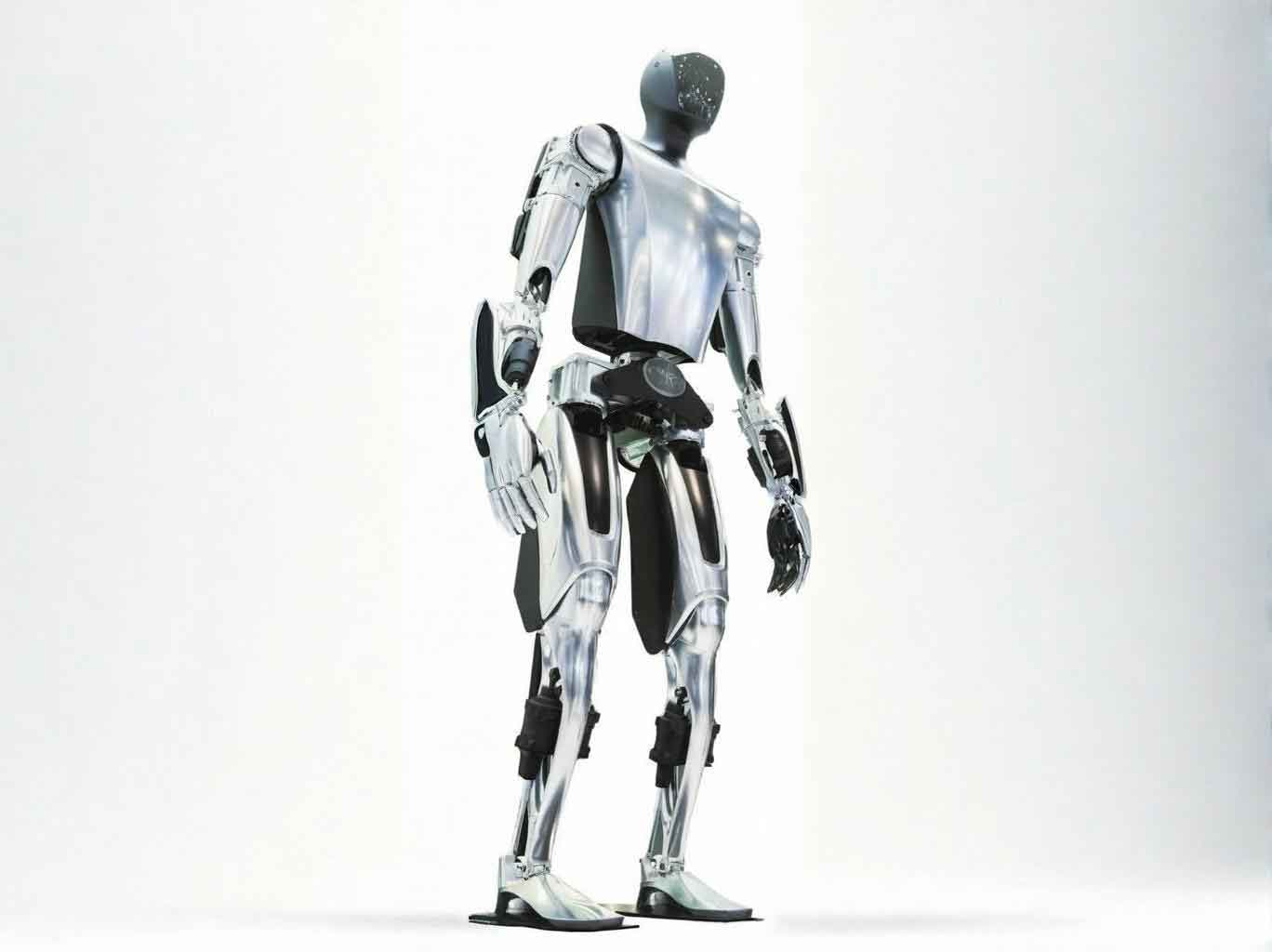
As information technology advances at a breakneck pace, embodied intelligence, an emerging branch of artificial intelligence, is garnering significant attention. I view embodied AI not merely as software but as intelligent systems that perceive and act upon the physical world through a body, be it virtual or robotic. This technology synthesizes knowledge from computer vision, natural language processing, and machine learning, aiming to enable machines to interact with humans more naturally and simulate human perceptual and cognitive capabilities. The core premise lies in simulating embodied human perception and cognition, allowing for a deeper understanding of human language, behavior, and intent. This characteristic grants it a distinct advantage in tasks related to human posture, facial expressions, and gestures. Within the broadcast, television, and audio-visual new media industry, these advantages can be translated into more realistic virtual characters, precise audience behavior analysis, and smarter content recommendation systems. Consequently, the application prospects for embodied AI robot systems in this sector are exceptionally broad, promising to profoundly alter production methods, distribution models, and user experience. Therefore, a deep investigation into the applications of this technology, including its associated challenges, is crucial for driving innovative development in the industry.
This article provides an overview of the transformations instigated by embodied AI robot technology within the audio-visual sector, discussing its prospects and challenges. It proposes future research directions and recommendations, calling for attention and support from within and outside the industry to jointly advance the intelligent transformation and upgrade of audio-visual services.
1. Theoretical Framework: The Impact of Embodied AI
Embodied AI robot technology, which integrates perception, cognition, and action, exerts a profound theoretical influence on the audio-visual industry. From a theoretical standpoint, this technology promises significant transformations across multiple dimensions, including program production, content distribution, and user interaction.
The following table contrasts the impact of traditional methods versus embodied AI robot-enabled approaches across key industry indicators:
| Industry Aspect | Traditional / Current State | Impact with Embodied AI Robot Technology | Key Enabling Capabilities |
|---|---|---|---|
| Program Production | Manual shooting/editing; VR-assisted production; High labor cost, limited efficiency. | Automated scene planning; Real-time rendering & synthesis; Enhanced emotional authenticity of virtual characters. | Intelligent Directing Systems; Motion Capture & Real-time Animation; Affective Computing. |
| Content Distribution | User-profile-based recommendation algorithms; Often lacks contextual precision. | Context-aware content matching; Cross-platform intelligent adaptation; Dynamic personalization. | Situational Awareness; Multimodal User State Analysis; Adaptive Streaming Logic. |
| User Interaction | Remote controls, touch screens, basic voice commands; Lacks natural immersion. | Gestural and motion-based control; Emotional interaction with virtual entities; High immersion. | Natural Gesture Recognition; Emotionally Intelligent Avatars; Immersive VR/AR Integration. |
| Operational Efficiency | Linear workflows, high post-production time. | Streamlined workflows, automated editing, reduced time-to-market. | AI-driven Editing Algorithms; Predictive Workflow Management. |
We can model the potential improvement in user satisfaction $S$ as a function of traditional factors and new embodied intelligence factors:
$$ S_{new} = \alpha \cdot S_{profile} + \beta \cdot S_{context} + \gamma \cdot S_{interaction} $$
where $S_{profile}$ is satisfaction from historical profile matching, $S_{context}$ is the gain from real-time situational awareness provided by an embodied AI robot system, and $S_{interaction}$ is the satisfaction derived from natural, multi-modal interaction. The coefficients $\beta$ and $\gamma$ are expected to grow as the technology matures, surpassing the limits of $\alpha$ alone.
The cost-benefit analysis for adopting an embodied AI robot system in production can be represented by a simplified model comparing cumulative costs over time $t$:
$$ C_{traditional}(t) = C_{0}^{capital} + \int_{0}^{t} (r_{labor} \cdot L(\tau) + r_{ops}) d\tau $$
$$ C_{embodied}(t) = C_{0}^{high} + \int_{0}^{t} (r_{AI-maintenance} \cdot M(\tau) + r_{ops}^{reduced}) d\tau $$
Here, $C_{0}^{high}$ represents the higher initial investment for the embodied AI robot platform, but $r_{ops}^{reduced}$ and the automated function $M(\tau)$ typically lead to $C_{embodied}(t)$ crossing under $C_{traditional}(t)$ after a critical time $t_{c}$, justifying the investment.
2. Analysis of Application Scenarios for Embodied AI Robots
The audio-visual industry faces challenges in transforming traditional dissemination concepts, innovating content forms, and strengthening technology-driven strategies. The application of embodied AI robot systems is poised to bring about numerous changes by enhancing production efficiency, reducing labor costs, and enabling intelligent editing and effects processing for rapid generation of high-quality programs. In distribution, leveraging big data analytics and user profiling refined by embodied perception, media organizations can push personalized content with precision, fostering industry-wide transformation.
2.1 Reshaping Traditional Media Production
The introduction of virtual AI anchors, a prime application of embodied AI robot principles in a digital form, is revolutionizing newsrooms. A leading news agency in China launched an AI synthetic anchor, “New Xiaohao,” which utilizes this technology to deliver 24/7 news broadcasts. The avatar’s delivery is natural and fluent, alleviating the workload of human anchors while drastically improving the efficiency and novelty of news reporting, thereby strengthening the timeliness of news dissemination.
In content editing, a major streaming platform’s “Intelligent Editing System” represents a significant innovation. This system, powered by embodied AI robot perception algorithms, can automatically identify highlight reels within video content and quickly generate trailers or short videos, significantly boosting editing efficiency. It further optimizes content based on user engagement metrics, making videos more compelling.
The effectiveness of such a system in identifying engaging segments can be approximated by an objective function the AI seeks to maximize:
$$ E_{segment} = w_1 \cdot V_{action} + w_2 \cdot A_{emotion} + w_3 \cdot C_{coherence} + w_4 \cdot H_{historical} $$
where $V_{action}$ denotes visual action intensity, $A_{emotion}$ is auditory emotion score from voice analysis, $C_{coherence}$ is narrative coherence, and $H_{historical}$ is alignment with historically successful patterns. The weights $w_i$ are learned from vast datasets.
A Japanese television network created a virtual anchor, “Armstrong,” using CG combined with embodied AI robot technology for news and variety shows. Reports indicated a 20% increase in program ratings and a 35% rise in viewer interaction. Feedback highlighted the avatar’s vivid presentation and clear information delivery. While this application boosts appeal and reduces human resource costs, challenges remain in refining the naturalness of emotional expression to enhance genuine interaction.
2.2 Optimizing Distribution Models
Intelligent voice assistants, representing an auditory and interactive form of embodied AI robot, are streamlining access. A national news network’s “Xiao Yang Smart Assistant” allows users to interact via voice to query news, set reminders, and more, significantly improving the convenience of information retrieval. Its intelligent customer service function resolves queries promptly, enhancing user satisfaction.
The underlying process for query handling $Q$ by such an assistant involves:
$$ R_{optimal} = \arg \max_{R \in \{R_i\}} [ P_{intent}(I_u | Q) \cdot U_{relevance}(R, I_u) + P_{context}(C_u) \cdot U_{timeliness}(R, C_u) ] $$
where $R_{optimal}$ is the optimal response, derived from maximizing a utility function based on the probability of user intent $I_u$ given query $Q$ and the current user context $C_u$.
In content recommendation, a premier video platform’s “Intelligent Recommendation Algorithm” utilizes analysis of viewing history, preferences, and behavioral data—often enriched by embodied AI robot-like perception of user engagement—to push precisely targeted content. This personalization increases user retention and satisfaction while promoting diversified content distribution, giving niche works exposure.
2.3 Upgrading the User Experience
Immersive technologies are at the forefront. A provincial TV station leveraged VR to launch “VR Live Programs,” offering immersive viewing experiences. Through VR headsets, audiences can feel present within the program, enhancing interactivity, entertainment, and expanding the expressive forms of broadcast content, delivering a novel audio-visual experience facilitated by spatial computing principles central to embodied AI robot research.
The immersion metric $I_{exp}$ can be conceptualized as:
$$ I_{exp} = f(P_{presence}, B_{interactivity}, S_{sensory\ fidelity}) $$
where $P_{presence}$ is the psychological feeling of “being there,” $B_{interactivity}$ is the degree of actionable control, and $S_{sensory\ fidelity}$ is the realism of visual and auditory stimuli.
For advertising, a major video platform’s “Precision Advertising Platform” employs big data and AI—akin to the profiling used by an embodied AI robot to understand its environment—to categorize users finely and enable personalized ad delivery. This increases ad conversion rates while reducing user aversion, optimizing the overall experience.
From content creation to user interaction, embodied AI robot technology has permeated all levels of the audio-visual industry, demonstrating immense potential and value. These applications address core industry pain points, elevate content quality and user satisfaction, and inject new vitality into the sector’s future development.
3. Challenges, Recommendations, and Future Outlook
While embodied AI robot technology presents vast prospects for the audio-visual industry, its application faces several challenges, including technical bottlenecks (e.g., accuracy in complex speech recognition, nuanced natural language understanding), data security and privacy concerns, and the high costs associated with updating equipment and systems.
| Challenge Category | Specific Issues | Potential Mitigation Strategies |
|---|---|---|
| Technical Maturity | Real-time processing latency; Robustness in uncontrolled environments; Natural emotional synthesis. | Increased R&D in edge computing and efficient algorithms; Creation of large, diverse training datasets; Focus on affective computing models. |
| Data & Privacy | Secure collection/processing of biometric data (gesture, emotion); Compliance with regulations (GDPR, etc.); Risk of data breaches. | Implement privacy-by-design frameworks; Use federated learning and on-device processing; Develop clear industry data governance policies. |
| Cost & Accessibility | High initial investment for hardware/software; Ongoing maintenance and update costs; Creating a divide between large and small players. | Promote industry consortia for shared R&D and cost-sharing; Develop cloud-based embodied AI robot services (AI-as-a-Service); Encourage open-source tools for core non-proprietary functions. |
| User Adoption & Ethics | Potential user skepticism or discomfort; Ensuring algorithmic fairness and avoiding bias; Defining accountability for AI-driven content. | Transparent user education and gradual introduction; Regular audits of AI systems for bias; Establishing ethical guidelines for AI in media production. |
To address these challenges, I recommend intensifying R&D efforts to optimize technical performance, strengthening data security management and formulating robust protection policies, and fostering industry collaboration to jointly develop and promote new technologies, thereby reducing costs. The future optimization of a embodied AI robot system can be seen as a continuous cycle of refinement, modeled as:
$$ \Theta_{n+1} = \Theta_{n} + \eta \cdot \nabla J(\Theta_n; D_{real-world}; \Lambda_{constraints}) $$
where $\Theta$ represents the system parameters, updated by a learning rate $\eta$ based on the gradient of a performance objective $J$, which is evaluated on real-world data $D$ while adhering to ethical and operational constraints $\Lambda$.
Looking ahead, as embodied AI robot technology continues to evolve, its applications in the audio-visual industry will become more widespread and profound. It promises to offer audiences richer, more personalized services, drive the industry’s intelligent transformation, and potentially become a standard fixture, accelerating industrial upgrading and leading a new wave of transformative trends. The synergy between creative human direction and the operational capabilities of embodied AI robot systems will define the next era of audio-visual media.