
The field of artificial intelligence is undergoing a seismic shift, moving beyond purely digital domains and into the physical world through the paradigm of embodied AI. This convergence of advanced perception, reasoning, and action within a physical form is widely regarded as the next major wave in AI, poised to fundamentally transform industries, with robotics at its epicenter. In particular, the rapid evolution of large foundational models (LFMs) over the past two years is acting as a powerful catalyst, accelerating the development and application of embodied intelligence and igniting a wave of innovation across the robotics sector. This momentum is vividly reflected in the investment landscape; since 2024, financing within the robotics industry has been exceptionally active, with humanoid robotics attracting sustained and intense interest, signaling its entry into a new phase of research and commercial exploration.
Within this vibrant ecosystem of AI innovation, the security and public safety domain stands out as one of the most promising frontiers for embodied AI robots. The synergistic advancement of intelligent IoT sensing, cloud-edge collaboration, AI computing power, and LFM technology has spawned a new generation of intelligent security robots. These embodied AI robot systems are finding practical applications in an expanding array of scenarios, including facility patrols, equipment inspection, disaster pre-warning, traffic monitoring, and specialized services, unlocking tremendous potential. As the robotics industry flourishes and application scenarios continue to broaden, the public safety sector is increasingly viewed as a primary market for various service robots, demonstrating vast developmental prospects and the capacity to inject powerful momentum into the development of new, high-quality productive forces in security.
From my perspective, the development of embodied intelligence relies on the support of a series of advanced technologies. Fundamentally, embodied AI refers to a robot possessing the ability to perceive and judge its environment and, based on that perception, make decisions and execute physical reactions. It represents the nascent form of an intelligent agent situated in the real world. Humanoid robots, which emulate core human behaviors—bipedal locomotion, dexterous manipulation with hands, and a human-like field of view—are uniquely positioned to integrate into environments engineered for human use. While many see the humanoid form as the optimal vessel for embodied AI, citing its biological inspiration and general-purpose potential, it is crucial to recognize that embodied intelligence is a broader concept not limited to a specific morphology. The form of a robot should ultimately serve its function and delivered value. For instance, a wheeled or tracked base may be more efficient for rapid ground coverage, while a drone form is necessary for aerial mobility. The humanoid form offers wide generality, but it is the best choice only when the application scenario explicitly requires a human-like morphology to interact with a world built for humans.
The recent surge in attention towards both embodied AI and humanoid robots is driven by several converging forces. First, and foremost, is the critical breakthrough in generative AI and multimodal large models, which has dramatically enhanced the efficiency and effectiveness of AI algorithms. Second, the influential advocacy and pioneering work of leading technology entities and visionaries have set a powerful benchmark for the industry. Third, active promotion and investment from the capital markets have injected vital energy and resources into the sector. These factors collectively create a fertile ground for rapid exploration and development.
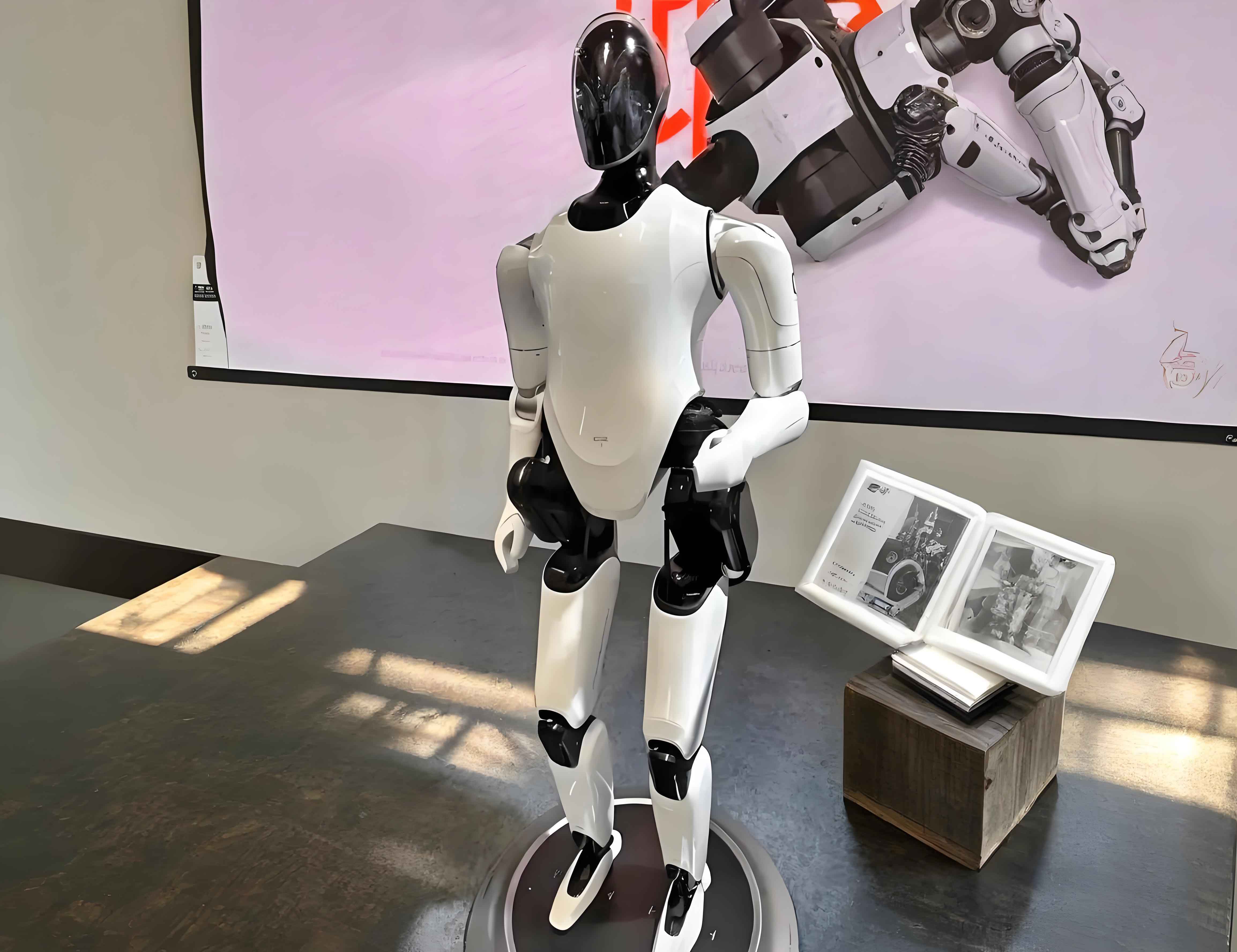
Currently, humanoid robotics itself is still in its early, albeit explosively growing, developmental stage. In the security domain, the application potential for all forms of embodied AI robot solutions is significant. The core mandate of security—to protect people and assets from harm—often involves dangerous, dull, or dirty tasks. Robots are ideally suited to assume these high-risk duties, performing roles in extreme environments such as chemical plants, underground tunnels, or disaster zones, thereby acting as heroic partners that enhance human safety. The practical path to commercialization, however, may initially favor specialized, non-humanoid forms that offer a more immediate return on investment (ROI). “Human-like” or hybrid morphologies that incorporate manipulators on a mobile base can provide substantial operational value in specific inspection and intervention scenarios, making them a pragmatic step toward broader adoption. The following table contrasts key characteristics of different robot morphologies in security contexts:
| Robot Morphology | Key Strengths | Typical Security Use Cases | Commercialization Stage |
|---|---|---|---|
| Wheeled/Tracked Robot | High stability, energy efficiency, long endurance, lower cost. | Routine patrols in factories, campuses, warehouses; perimeter monitoring. | Mature, with widespread deployment. |
| Humanoid Robot | High generality, can navigate human environments (stairs, doors), use human tools. | Complex indoor intervention, emergency response in built environments, detailed equipment checks. | Early R&D/Prototype, limited commercial pilots. |
| Hybrid (Mobile Base + Arm) | Balanced mobility and manipulation, cost-effective for specific tasks. | Infrastructure inspection with valve turning, sample collection, interactive public security kiosks. | Growing adoption in niche industrial and security applications. |
| UAV (Drone) | Rapid aerial perspective, access to difficult terrain. | Large-area surveillance, crowd monitoring, post-disaster assessment, traffic oversight. | Mature and integrated into many security ecosystems. |
The rapid iteration of large model technology is the single most significant factor influencing the intelligent evolution of robots today. Historically, robots operated on pre-programmed instructions for repetitive tasks. The integration of LFMs marks a paradigm shift. Vision foundation models have vastly improved environmental perception, recognition accuracy, and complex scene understanding. Large Language Models (LLMs) have revolutionized human-robot interaction, enabling robots to comprehend natural language instructions, plan multi-step tasks, and exhibit a degree of common-sense reasoning. This infusion of “cognitive” capability transforms the embodied AI robot from a simple executor into a more autonomous and adaptable agent.
We can formalize the enhancement brought by LFMs to the traditional robotic sense-plan-act loop. A classical robot’s action $a_t$ at time $t$ might be based on a hard-coded policy $\pi$ mapping directly from a processed sensor state $s_t$:
$$a_t = \pi(s_t)$$
With a large model (e.g., a vision-language-action model), the policy becomes vastly more general. The robot can now process raw multi-modal observations $o_t$ (images, point clouds, audio) and a high-level language instruction $I$ to generate an action or a plan. This can be abstracted as:
$$a_t, \text{ or } P = \Pi_{\text{LFM}}(o_t, I, M)$$
where $P$ is a generated plan, and $M$ represents the model’s internal world knowledge and reasoning capabilities acquired from pre-training. The key improvement is the model’s ability to handle open-vocabulary recognition, understand intent, and generalize to unseen scenarios, which is encapsulated in its learned parameters.
The distinction between previous-generation security robots and those empowered by LFMs is profound, as summarized below:
| Aspect | Previous-Generation Security Robots | LFM-Powered Embodied AI Robots |
|---|---|---|
| Core Intelligence | Narrow AI, rule-based or classical ML for specific tasks (e.g., face recognition, license plate reading). | Broad, foundational intelligence enabling understanding of context, intent, and complex scenes. |
| Perception | Limited to pre-defined object classes. Struggled with novel items or unusual scenarios. | Open-vocabulary recognition. Can identify and describe previously unseen objects and complex situations (e.g., “a leaking pipe near the electrical panel”). |
| Interaction | Limited to simple voice commands or touchscreen interfaces. | Natural, conversational dialogue. Can receive complex instructions (“Investigate the noise from the north warehouse and report back”). |
| Task Flexibility | Executed a fixed set of pre-programmed patrols and checks. | Can dynamically decompose high-level goals, plan novel action sequences, and adapt to changing circumstances. |
| Learning & Adaptation | Required manual re-programming for new tasks or environments. | Capable of in-context learning from few examples and continuous improvement through interaction data. |
Despite these technological leaps, the journey towards widespread commercialization of intelligent security robots involves navigating several persistent challenges. While the industry has progressed beyond the pure R&D phase into early adoption, with pilot projects demonstrating value in areas like public space patrols and industrial site monitoring, key hurdles remain. The procurement and evaluation processes, especially in government and large enterprise sectors, are often not yet optimized for innovative robotic solutions, requiring joint exploration with forward-thinking customers.
From a technical and operational standpoint, several pain points need resolution. First, while AI “brains” have advanced rapidly, the “body”—robust hardware capable of long-term, reliable operation in diverse and harsh conditions—must keep pace. Second, the cost of advanced embodied AI robot systems, including hardware and the compute needed for sophisticated models, remains a barrier to mass adoption. Achieving the right balance between performance, durability, and cost is critical. Third, the scarcity of large, high-quality, domain-specific datasets for security scenarios limits the fine-tuning and optimization of general-purpose LFMs for this field. Fourth, effective human-robot teaming protocols and operational workflows need to be established to ensure robots augment, rather than complicate, security personnel’s work. Finally, issues of safety certification, liability, and the lack of unified industry standards continue to pose challenges for scalable deployment.
Looking ahead, the trajectory for intelligent security robots is marked by several clear trends, all centered on the maturation of the embodied AI robot concept. The future will be characterized by increasing levels of intelligence and autonomy, where robots transition from being remote-controlled tools or simple automated patrols to becoming proactive, decision-support partners. Morphological diversity will prevail, with purpose-built robots (wheeled, tracked, hybrid) serving the majority of practical security needs in the near to medium term, while humanoid robots continue their development path toward more general-purpose utility.
A critical evolution will be the shift from standalone robots to integrated, collaborative systems. The future security embodied AI robot will not operate in a vacuum. It will be a node in a larger “Swarm Intelligence” or “System of Systems” architecture, seamlessly collaborating with other robots (e.g., drones), fixed IoT sensors (cameras, acoustic sensors), and human operators in a command center. This synergy creates a multi-layered, persistent security blanket. We can model the effectiveness $E$ of such a collaborative system as a function of the capabilities of its components and their coordination:
$$E = f(\sum_{i=1}^{N} C_{robot_i}, \sum_{j=1}^{M} C_{sensor_j}, C_{human}, \Phi_{coord})$$
where $C$ denotes capability metrics (sensing range, processing power, actuation strength), and $\Phi_{coord}$ represents the coordination efficiency, which is greatly enhanced by shared AI models and communication protocols. Maximizing $\Phi_{coord}$ is a key research and engineering focus.
Furthermore, the industry will see a strong push toward technological sovereignty and full-stack innovation. Leading companies are investing deeply in core proprietary technologies—from robot chassis control and navigation algorithms to in-house developed AI training frameworks—to ensure product stability, control iteration cycles, and maintain cost competitiveness. The drive for domestic substitution of key components (chips, sensors, software) is also a significant factor in some regions, aiming to build resilient and independent robotics supply chains.
In conclusion, embodied AI represents not just an incremental improvement but a fundamental reshaping of what robots are and can do. For the security industry, this translates into a future where intelligent, adaptive, and collaborative robotic agents play an indispensable role in safeguarding people and assets. While the humanoid form captures the imagination and represents a long-term vision of general-purpose machines, the immediate and vast potential lies in the strategic deployment of diverse embodied AI robot solutions designed for specific, high-value security scenarios. The convergence of large models, advanced robotics, and deep domain expertise is unlocking this future, promising to enhance public safety, optimize security operations, and redefine the very nature of protective services.