
The pursuit of novel compounds and materials with specific, often contradictory properties—such as high thermal conductivity paired with exceptional heat resistance—has historically been a slow and laborious endeavor. For centuries, chemical advancement relied on the iterative cycle of researcher intuition, manual literature review, painstaking experimentation, and observation. This methodology, while foundational, reveals significant inefficiencies in the modern era. The literature landscape is vast and often lacks crucial experimental details, synthesis routes are fraught with failure, and researchers spend inordinate time on repetitive observational tasks, stifling creative potential. The central challenge, therefore, lies in augmenting human ingenuity by offloading routine, data-intensive, and hazardous work to automated systems.
Chemical laboratory automation, evolving into self-driving labs (SDLs), presents a transformative solution. By integrating robotics, AI, and advanced instrumentation, these systems interact with the physical world to execute and optimize chemical processes. The evolution has progressed from rigid, pre-programmed machinery to systems capable of sophisticated perception, reasoning, and action—culminating in the era of the embodied AI robot. An embodied AI robot in this context is not merely a robotic arm; it is an intelligent agent situated within a chemical laboratory, equipped with multimodal sensors (sight, spectral analysis, tactile feedback), actuation capabilities (robotic manipulators, liquid handlers), and a cognitive core powered by large language models (LLMs) and machine learning. This agent operates through a continuous “perception-reasoning-action” loop, dynamically interpreting its environment and making decisions to achieve complex scientific goals. This article chronicles this evolution, examines the profound opportunities created by embodied AI robot systems, and addresses the critical challenges that must be overcome for their widespread adoption.
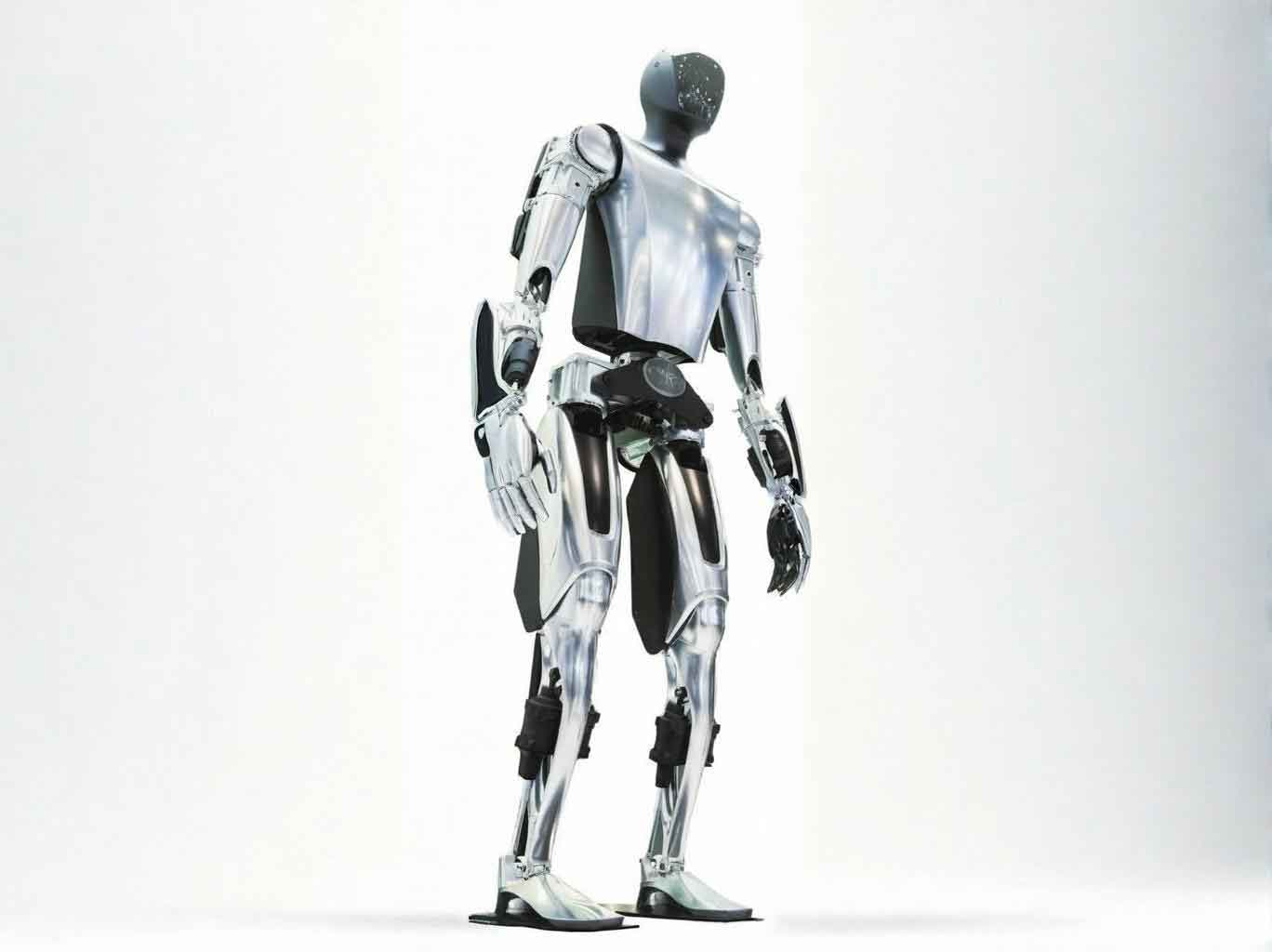
The journey of automation in chemical labs can be systematically divided into four distinct phases, each marked by increasing integration, autonomy, and cognitive capability, paving the way for the modern embodied AI robot.
1. The Evolutionary Pathway: From Mechanization to Embodied Cognition
1.1 Foundational Automation: The Age of Single-Task Machines
This initial phase focused on mechanizing discrete, repetitive tasks. The paradigm was one of strict pre-programming, where robotic arms or dedicated instruments executed fixed scripts. The researcher remained the central controller, orchestrating transitions between different automated stations. Technologies like early mechanical samplers and the iconic AutoAnalyzer (for colorimetric blood analysis) epitomized this stage. The system’s “intelligence” was confined to the precision of its mechanics and the rigidity of its code. There was no feedback loop; the machine performed its isolated duty without comprehension of context or outcome.
1.2 Integrated Automation: Orchestrating High-Throughput Workflows
The next leap involved sequencing multiple tasks into cohesive, high-throughput workflows. This stage saw the integration of liquid handling workstations, mobile robotic arms for sample transfer, and sophisticated plate handlers, enabling techniques like High-Throughput Screening (HTS). Systems could now manage entire multi-step processes, such as sample preparation, reaction, and analysis, within a single integrated platform. Key enablers included:
- Robotic Coordination: Platforms employing scheduling algorithms (e.g., D* lite for path planning, RIT – Reduced Idle Time for task optimization) to coordinate multiple mobile agents and robotic arms, significantly cutting processing time and human error.
- Microfluidics and Flow Chemistry: Technologies like electrowetting-on-dielectric (EWOD) digital microfluidics and continuous flow reactors miniaturized and integrated processes on chips. These “lab-on-a-chip” systems offered superior control over reaction parameters (mixing, temperature, residence time) and enhanced safety for hazardous reactions due to small reagent volumes.
- Data Management: The rise of Laboratory Information Management Systems (LIMS) provided crucial digital infrastructure for tracking samples, logging parameters from sensors and instruments, and storing results, ensuring traceability and eliminating manual record-keeping.
While this stage introduced data capture and process efficiency, decision-making remained a human prerogative. The system executed a pre-defined plan but could not learn from or adapt to the data it generated.
1.3 The Self-Driving Laboratory (SDL): Closing the Design-Build-Test-Learn Loop
This phase marked the arrival of true autonomy within a bounded experimental domain. SDLs close the Design-Build-Test-Learn (DBTL) loop, using AI not just for execution but for planning and optimization. The core components of an SDL are:
- Automated Hardware: Robotic platforms and flow reactors for physical execution.
- Real-Time Data Acquisition: Sensors (spectrometers, cameras, DLS) for in-situ monitoring.
- Machine Learning (ML) Surrogate Models: Algorithms like Gaussian Process Regression (GPR), Deep Neural Networks (DNNs), or specialized Chemical Reaction Neural Networks (CRNNs) learn the relationship between input parameters (e.g., temperature, concentration) and outputs (e.g., yield, particle size). A CRNN, for instance, structures a reaction network where neuron inputs and weights correspond to species concentrations and kinetic parameters, allowing inference of reaction pathways from data: $$ \text{Rate} = f(W \cdot \ln([\text{Species}]) + b) $$ where \(W\) represents reaction orders, \(b\) relates to rate constants, and \(f\) is an activation function.
- Intelligent Experiment Selection Algorithms: These algorithms decide the next experiment by balancing exploration (gathering new information) and exploitation (optimizing known promising regions).
Two dominant optimization frameworks in SDLs are:
- Bayesian Optimization (BO): A sample-efficient strategy that uses a probabilistic surrogate model (like GPR) to approximate the objective function and an acquisition function to select the most informative next experiment. A common acquisition function is Expected Improvement (EI): $$ EI(\mathbf{x}) = \mathbb{E}[\max(0, f(\mathbf{x}) – f(\mathbf{x}^+))] $$ where \(f(\mathbf{x})\) is the unknown function, and \(f(\mathbf{x}^+)\) is the current best observation. This guides the embodied AI robot system to optimally probe the parameter space.
- Reinforcement Learning (RL): Frames the discovery process as a sequential decision-making problem, where an agent learns a policy to maximize a cumulative reward (e.g., yield, purity).
SDLs demonstrated the power of iterative, AI-guided discovery, moving beyond human-designed experimental grids. They represent a primitive form of embodied AI robot, possessing a task-specific perception-action loop. However, their reasoning is limited to numerical optimization within a pre-defined search space; they cannot understand high-level goals expressed in natural language or reason across disparate chemical knowledge.
1.4 The Era of Embodied Intelligence: LLMs as the Cognitive Core
The integration of Large Language Models (LLMs) has catalyzed the transition to advanced embodied AI robot systems. LLMs provide the missing layer of semantic understanding, causal reasoning, and flexible task planning. They act as the “brain” that translates natural language instructions (“synthesize a novel analgesic compound”) into structured, executable workflows, dynamically interprets multimodal data, and handles unexpected contingencies. This creates a cognitive embodied AI robot capable of true human-robot collaboration in science.
Key advancements include domain-specialized LLMs and multi-agent architectures:
| System / Architecture | Core Innovation | Capabilities Enabled for the Embodied AI Robot |
|---|---|---|
| ChemDFM / ChemDFM-X | Domain-specific pre-training on chemical text & multi-modal fusion (text, SMILES, graphs, spectra). | Deep chemical knowledge reasoning; cross-modal interpretation of experimental data (e.g., explaining a spectrum). |
| ChemCrow | LLM (GPT-4) augmented with 18 specialized chemistry tools (synthesis planners, safety checkers, robotic APIs). | Tool-use autonomy; can plan a synthesis, check safety, and generate code for robot execution iteratively. |
| Coscientist | Modular system with planning, web search, code execution, and documentation search modules. | Autonomous experimental design from literature search to hardware code generation and error recovery. |
| ChemAgents | Multi-agent system (Manager, Literature Reader, Experimental Designer, Robot Operator). | Distributed, collaborative task execution; efficient scaling to complex, multi-step research campaigns. |
| CLAIRIFY / ORGANA | LLM-based planner with formal verification and integrated Task-and-Motion-Planning (TAMP). | Safe, reliable translation of language to robot actions in complex, unstructured lab environments. |
These systems exemplify the embodied AI robot paradigm. For example, when an embodied AI robot like Coscientist encounters an error in a heater-stirrer method name, it can autonomously query documentation, correct its code, and proceed. ChemAgents can coordinate a fleet of robotic assets to execute parallel experiments, with its computational agent analyzing data in real-time to redirect the physical agents. This seamless integration of language, reasoning, and physical action defines the modern embodied AI robot laboratory.
2. Opportunities Unleashed by the Embodied AI Robot
The maturation of the embodied AI robot opens unprecedented avenues for accelerating chemical discovery and redefining the research process itself.
2.1 Multi-Scale Simulation and Reality Integration
An embodied AI robot can bridge computational and experimental worlds. Before initiating costly wet-lab experiments, the system can use its reasoning capabilities to invoke computational chemistry tools—such as Density Functional Theory (DFT) for electronic structure or Molecular Dynamics (MD) for thermodynamic properties—to screen candidate molecules or predict reaction feasibility. The agent can formulate the computational query, execute it, and interpret the results to refine its experimental strategy. This creates a virtuous cycle where simulations guide physical experiments, and experimental data validates and improves computational models, dramatically accelerating the exploration of vast chemical spaces.
2.2 Real-Time Adaptive Experimentation
Unlike traditional automation, an embodied AI robot operates with situational awareness. It can monitor an ongoing reaction via spectroscopic or visual feeds, detect anomalies or sub-optimal progression, and decide on-the-fly to adjust parameters (e.g., add more solvent, change temperature gradient). This adaptive capability, showcased by systems like ChemCrow iterating on purification steps or Coscientist debugging code, moves beyond batch-style DBTL loops to a more fluid, responsive, and efficient experimental process. The embodied AI robot becomes a proactive partner in navigating experimental uncertainty.
2.3 The Distributed, Collaborative Laboratory Network
The cognitive layer provided by LLMs enables a paradigm of distributed science. Individual embodied AI robot systems, located in different labs or institutions, can be coordinated via a shared LLM-driven platform. They can partition a large research problem, share protocols and results in real-time, and leverage specialized equipment available at different nodes. An embodied AI robot in one lab could synthesize a compound, while another, guided by the same central intelligence, performs characterization. This democratizes access to advanced experimentation and fosters global, around-the-clock collaborative research.
3. Critical Challenges on the Path Forward
Despite the transformative potential, the deployment of robust and reliable embodied AI robot systems faces significant hurdles.
3.1 Computational Resource Constraints
The “brain” of the embodied AI robot—large multimodal LLMs—requires immense computational power for training and inference. Real-time reasoning on long experimental contexts strains GPU memory and processing capabilities. The high cost of deploying and maintaining the necessary compute infrastructure risks creating a digital divide, limiting access to well-funded institutions and hindering equitable progress in the field.
3.2 The Hallucination Problem and Safety
LLMs are prone to generating plausible but incorrect or unsafe information. For an embodied AI robot controlling physical hardware, a “hallucinated” experimental step—such as an unsafe reagent combination, an incorrect temperature, or a physically impossible motion trajectory—could lead to equipment damage, hazardous chemical incidents, or failed experiments. Developing robust verification layers, “safety guardrails,” and reliable chemistry-specific grounding for LLMs is paramount. The autonomous system must know its limits and default to requesting human intervention when uncertainty is high.
3.3 Demands of Real-Time Decision-Making
The chemical environment is dynamic and multimodal. An embodied AI robot must fuse streams of spectral data, visual information, temperature/pressure readings, and robotic sensor feedback into a coherent world model, and then make decisions within relevant timeframes (e.g., before a reaction intermediate degrades). This requires not only fast hardware but also highly efficient algorithms for perception fusion and planning. The intrinsic latency and context-window limitations of current LLMs pose a major challenge for time-sensitive closed-loop control.
3.4 Data Quality, Availability, and Standardization
The performance of the AI components within an embodied AI robot is directly tied to the quality of its training data. Chemical data is often sparse, proprietary, inconsistent, or buried in unstructured text. There is a severe shortage of large, high-quality, machine-readable datasets linking detailed experimental procedures with comprehensive outcomes. Furthermore, a lack of standardization in how robots and instruments describe their state and actions (ontology) complicates the development of universal “drivers” for the embodied AI robot. This data scarcity and heterogeneity limit model generalization and reliability.
4. Conclusion
The evolution from basic mechanization to integrated automation, and onward to self-driving labs and finally embodied AI robot systems, represents a fundamental paradigm shift in chemical research. The integration of large language models with multimodal perception and robotic actuation has created intelligent agents capable of understanding intent, reasoning over complex chemical knowledge, and executing physical experiments in an adaptive, closed-loop manner. This embodied AI robot paradigm offers breathtaking opportunities: seamless integration of simulation and experiment, real-time adaptive control, and the emergence of globally collaborative laboratory networks.
However, the path forward is not without obstacles. Substantial challenges in computational cost, AI safety and reliability, real-time decision-making, and data infrastructure must be addressed through concerted interdisciplinary effort. As these challenges are met, the embodied AI robot will cease to be a novel prototype and become an indispensable partner in the laboratory. It will amplify human creativity, accelerate the discovery of solutions to pressing global challenges in energy, medicine, and sustainability, and ultimately redefine the very nature of scientific exploration. The era of the embodied AI robot chemist is dawning, promising a future where human intuition and machine intelligence collaborate to push the boundaries of chemical science.