
In recent years, the concept of embodied AI, or embodied intelligence, has gained significant traction as a future industry, highlighted in national strategies such as the 2025 Government Work Report, which emphasizes fostering emerging sectors like biomanufacturing, quantum technology, embodied AI, and 6G. The appearance of robotic dogs on stage during events like the Spring Festival Gala has further expanded public imagination about intelligent interaction. As an industry analyst from a commercial banking perspective, I believe that embodied AI represents a transformative force, with the potential to reshape not only technology landscapes but also business operations. This article delves into the essence, characteristics, industry chain, and application scenarios of embodied AI, and explores its integration into commercial banking through service operations, asset allocation, and management models. By embracing this future industry, banks can leverage AI to reconstruct their management paradigms, positioning themselves at the forefront of innovation.
Embodied AI, also known as Embodied Artificial Intelligence, refers to intelligent systems that integrate artificial intelligence into various physical entities. It emphasizes the dynamic interaction between the intelligent agent and its environment, enabling autonomous learning and evolution. These systems possess the ability to autonomously perceive, learn, decide, and act in physical environments, adapting flexibly to tasks and surroundings. The core lies in the deep integration of perception, action, and cognition. An embodied AI robot exemplifies this by combining a physical body with advanced AI, allowing it to interact with the world in a human-like manner.
The core elements of embodied AI include the本体 (body) and the intelligent agent. The body serves as the actual executor, responsible for perceiving and performing tasks in the physical or virtual world. The intelligent agent handles core functions such as perception, understanding, decision-making, and control, acting as the “brain.” In simple terms, embodied AI embeds AI into physical entities like robots or new energy vehicles, giving a brain a body to enable capabilities similar to human perception, judgment, and dynamic environmental interaction. This results in diverse运动形态 (motion forms). Unlike traditional non-embodied AI that operates in cyberspace, embodied AI combines multimodal large models (MLMs) and world models (WMs), equipping it with perception, interaction, and planning abilities to actively adapt and execute tasks in virtual and physical environments. Compared to pre-programmed systems, embodied AI agents rely more on constructing world models and imagination for complex reasoning and decision-making. Thus, an embodied AI robot can be understood as AI endowed with the capability to perform specific tasks in the real world.
The内涵 (connotation) of embodied AI is reflected in three main aspects: physical interaction, generalization and adaptation, and autonomous evolution. These underscore the dynamic and complex nature of intelligent system design and development. Key characteristics include the interdependence of body and intelligence, real-time perception and feedback in environments, closed-loop cycles from perception to action, and continuous learning and adaptability. The following table summarizes these特性 (characteristics):
| Characteristic | Description |
|---|---|
| Physical Interaction | The embodied AI robot engages directly with the physical world through its body, enabling tasks like manipulation and locomotion. |
| Generalization and Adaptation | It can apply learned skills to novel situations and adapt to changing environments without extensive reprogramming. |
| Autonomous Evolution | The system continuously improves via self-learning from interactions, enhancing performance over time. |
| Body-Intelligence Interdependence | Intelligence emerges from the coupling of the physical form and cognitive algorithms, each influencing the other. |
| Real-Time Perception and Feedback | Sensors provide immediate environmental data, allowing for quick adjustments and responses. |
| Perception-Action Closed Loop | A continuous cycle where perception informs action, and action outcomes update perception, fostering adaptive behavior. |
| Continuous Learning | Machine learning algorithms enable the embodied AI robot to acquire new knowledge and skills from experience. |
The core operational principles of embodied AI stem from the convergence of AI and robotics. AI provides the “brain” for robots, endowing them with perception, thinking, and decision-making capabilities, while robotics offers the “body” for AI, enabling interaction with the real world to gain experience and knowledge. The rise of embodied AI is a natural outcome of advancements in both fields, representing their deep integration. The key differences between embodied AI and traditional AI are: first, it has executive power in the physical world; second, it possesses room for growth; and third, it exhibits subjective initiative towards things and behaviors. The path from embodied AI to artificial general intelligence (AGI) centers on enabling AI to have instincts, wisdom, analysis, decision-making, and corresponding action-taking abilities akin to humans.
Mathematically, the learning process of an embodied AI robot can be modeled using reinforcement learning frameworks. For instance, the value function $Q(s,a)$ represents the expected cumulative reward when taking action $a$ in state $s$, following a policy $\pi$: $$ Q^{\pi}(s,a) = \mathbb{E}_{\pi} \left[ \sum_{t=0}^{\infty} \gamma^t R(s_t, a_t) \mid s_0 = s, a_0 = a \right] $$ where $R(s,a)$ is the immediate reward, $\gamma \in [0,1]$ is the discount factor, and the goal is to find an optimal policy $\pi^*$ that maximizes $Q(s,a)$. This aligns with the “perception-learning-decision-action” closed loop. Additionally, world models in embodied AI can be expressed as probabilistic state transitions: $$ P(s_{t+1} | s_t, a_t) $$ where $s_t$ is the state at time $t$, and $a_t$ is the action taken. These models allow the embodied AI robot to simulate and plan actions before execution.
Development of embodied AI relies on progress in software and hardware technologies, including AI, brain models (both large and small), smart chips, and whole-body motion control. Recent rapid iterations of AI large models have accumulated vast knowledge, enabling logical reasoning and autonomous learning, which significantly促进 (promote) the development of embodied AI robots. Future iterations will depend on technologies like multimodal fusion perception, brain large models, cerebellum skill models, and运动控制性能 (motion control performance), forming an efficient “perception-learning-decision-action” closed loop. The embodied AI robot thus benefits from continuous advancements in these areas.
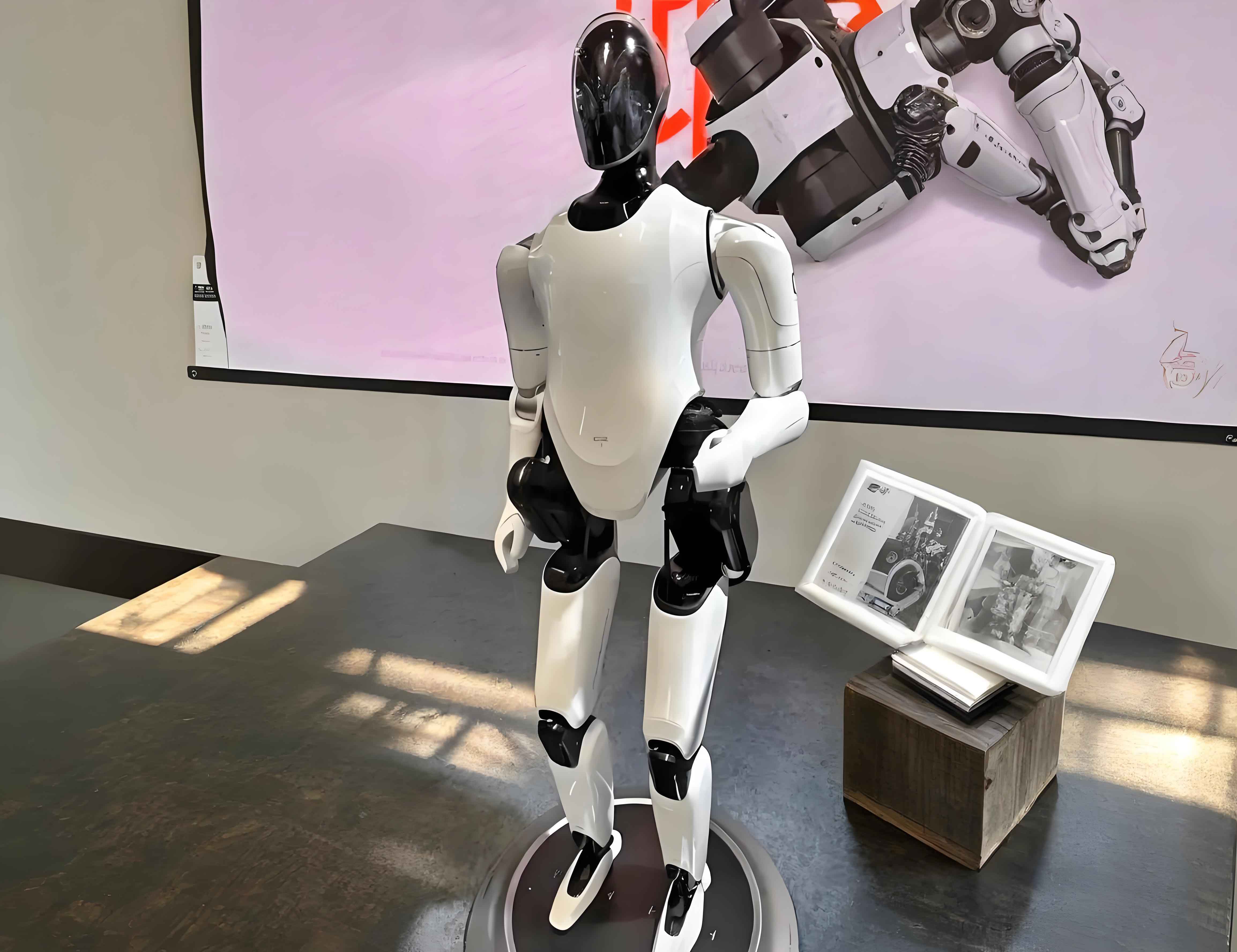
The strategic importance of the embodied AI industry has been recognized by multiple countries. Major developed nations such as the United States, the European Union, Japan, and South Korea have introduced specialized robotics plans. For example, the U.S. released five robotics-related plans between 2011 and 2023. Global powers and multinational giants view the development of embodied AI robots as a new-era “arms race.” In China, since 2022, the Ministry of Industry and Information Technology (MIIT) has issued policies like the “Robot+” Application Action Implementation Plan, “Opinions on Promoting IPv6 Technology Evolution and Application Innovation Development,” “New Industry Standardization Navigation Project Implementation Plan (2023-2035),” “Guiding Opinions on the Innovative Development of Humanoid Robots,” “Guiding Opinions on Accelerating the Development of Emergency Robots,” and “Opinions on Promoting the Innovative Development of Future Industries.” These provide policy guidance and机制保障 (mechanism guarantees). By the end of the first quarter of this year, China had established 11 national AI innovation application pilot zones, co-built manufacturing innovation centers for embodied AI robots and humanoid robots with local governments, and promoted industrial agglomeration. MIIT, jointly with the Ministry of Finance, set up a national AI fund of 600 billion yuan to foster industry-finance cooperation and accelerate investment布局 (layout). The “National AI Industry Comprehensive Standardization System Construction Guide” was issued, formulating over 40 key industry standards and 10 international standards to strengthen standard leadership. Additionally, more than 400 national-level “little giant” enterprises in the AI field have been cultivated, focusing on market主体 (entities).
According to a report by the China Business Industry Research Institute, “2025-2030 China Embodied AI Market Survey and Investment Opportunity Prospect Special Research Report,” the scale of China’s embodied AI market in 2024 was 863.4 billion yuan, with robots and autonomous driving vehicles accounting for 55.6% and 44.4%, respectively. With technological breakthroughs in large models, the embodied AI market is expected to grow rapidly, projected to reach 973.1 billion yuan in 2025. From January to April 2025, the embodied AI industry disclosed 63 investment cases with a total financing amount of approximately 8.063 billion yuan. The high-speed development of the domestic industry chain离不开 (relies on) innovation in domestic high-performance embodied AI chips, core component technologies, and supply capabilities. Chinese enterprises have布局 (deployed) across all segments of the industry chain, with Chinese manufacturing being a crucial support for global robot hardware cost reduction, offering comparative advantages. Currently, core domestic companies build technological moats through differentiated paths. Custom processors or communication interfaces collect data that is vital for performance optimization and difficult for competitors to replicate. Integrated hardware and software designs improve data collection efficiency and processing speed, forming data barriers through strong hardware-data binding.
Presently, domestic embodied AI robots are transitioning from laboratories to规模化量产 (large-scale production), with many institutions defining 2025 as the元年 (first year) of mass production for embodied AI robots, with产量 (output) at around ten thousand units. Chinese tech companies like Tencent, Alibaba, ByteDance, Huawei, and Baidu have all deployed in embodied AI, creating a competitive landscape akin to “a hundred boats racing.” Well-known embodied AI科创企业 (technology innovation enterprises) such as宇树 (Unitree),优必选 (Ubtech), and埃斯顿 (Estun) are backed by these giants. Meanwhile, penetration rates in industrial manufacturing, consumer services, and特种应用 (special applications) are accelerating, further enhancing big data training for embodied AI agents. Industry乐观预估 (optimistic estimates) suggest that embodied AI agents may take about 10 years to reach maturity. However, it is crucial to note that the embodied AI industry has just entered the growth phase of its cycle, facing risks such as technological route changes, key technology bottlenecks, data security, and international geopolitical factors. The定位 (positioning) of future industries requires严谨准确 (rigorous accuracy). From a technical perspective, continuous iteration and optimization are still needed for robot morphology, joint module selection, dexterous hand technology, cerebellum motion control routes, and data collection training methods. By improving performance, embodied AI robots can win more落地应用 (practical applications), and through落地训练 (practical training), accumulate data to form positive feedback loops.
The following table outlines the development布局 (layout) and technical advantages of key enterprises in the embodied AI robot sector:
| Company | Development Focus | Technical Advantages |
|---|---|---|
| Unitree | Quadruped robots for research and commercial use | Advanced locomotion control, high stability in complex terrains |
| Ubtech | Humanoid robots for service and education | Integration of AI with motion, strong human-robot interaction capabilities |
| Estun | Industrial robots and automation solutions | Precision motion control, robust manufacturing expertise |
| Tech Giants (e.g., Huawei) | AI chips and cloud infrastructure for embodied AI | High-performance computing, scalable AI platforms |
| Start-ups in China | Niche applications like healthcare or logistics | Innovative sensor fusion, customized software algorithms |
Scenario落地 (landing) is the core task and development guarantee for the embodied AI industry. Currently, embodied AI robots primarily follow three development paths: first, specific task applications based on existing协作机器人 (collaborative robots) or商用服务机器人 (commercial service robots) as non-humanoid robot bodies for professional scenarios; second, comprehensive universal task applications based on humanoid robots or other general-purpose robots as carriers; and third, unmanned driving or autonomous driving applications based on vehicles, aircraft, or other carriers. This can be visualized as: based on existing collaborative robots and commercial service robots for specific tasks; based on humanoid robots for universal tasks; and based on vehicles for autonomous driving. The embodied AI robot thus adapts to diverse paths depending on use cases.
Embodied AI products are diverse, covering a broad market. From a robotics perspective, different types of robots play important roles in多个领域 (multiple fields) such as intelligent manufacturing, smart homes,智慧医疗 (smart healthcare), and intelligent services. Fixed robots, due to their high precision and stability, are widely used in laboratory automation, education, and industrial manufacturing. Wheeled robots excel in logistics, warehousing, and security inspections, while tracked robots suit复杂地形 (complex terrains) like agriculture, construction, and military operations. Quadruped robots, with their stability and adaptability, are used for complex terrain exploration, rescue missions, and military actions. Humanoid robots are increasingly普及 (popular) in service industries, healthcare, and collaborative environments, applied in科研教育 (scientific research and education),精密制造 (precision manufacturing),医疗手术 (medical surgery),商用服务 (commercial services), and特种作业 (special operations). Looking ahead, as industry development and product technology mature, many daily life and work tasks may be replaced by robots. Robots can handle repetitive and dangerous tasks, while humans focus on creative and decision-intensive work, potentially achieving physical liberation. The embodied AI robot will be at the heart of this transformation.
In commercial banking, embodied AI may become the next wave of科技产业 (technology industry). Based on its unique ability to solve practical problems in the physical world, it could have a more颠覆性 (disruptive) impact on human production and生活方式 (lifestyles) than AI alone. From a commercial banking management perspective, banks should proactively engage, integrating embodied AI from浅层 (shallow) to深层次 (deep levels) in service operations, asset allocation, and core management. By embracing this future industry, banks can gain a competitive edge in the new technological revolution.
In terms of service operations, large domestic banks have already begun场景训练 (scenario training) and application exploration for embodied robots. It is foreseeable that embodied AI robots have broad application prospects in banking, easily used in scenarios such as customer reception, business processing, and product recommendation to enhance operational efficiency and service quality. For example, in business handling, an embodied AI robot can provide services like business consultation (e.g., operating hours, procedures, loan rates), product information explanation, and document assistance, improving convenience and accuracy. The embodied AI robot thus acts as an intelligent assistant in banking halls.
Regarding asset allocation, commercial banks should深耕 (deeply cultivate) the embodied AI赛道 (track) in investment and financing services, further improving the precision of financial services. They can create full-lifecycle financial service solutions for hard-tech enterprises in the产业链 (industry chain) that possess技术壁垒 (technological barriers), application scenarios, and business models. The industry chain核心关注 (focuses on) three areas: first, software services and infrastructure, including AI algorithms, operating systems, middleware, cloud services, and chips; second,本体硬件 (body hardware) and motion control, including controllers, sensors, energy management modules, motors, and communication modules; and third, system integration and services, involving the production of finished embodied AI robots, as well as applications in industrial manufacturing, services, medical rehabilitation, education and entertainment, and transportation. Based on the industry cycle, commercial banks should strengthen cooperation with government departments, capital markets, and third-party service institutions, providing enterprises with multi-dimensional, multi-category,全生命周期 (full-lifecycle) service guarantees such as “equity + debt,” “financing + intellectual support,” “financial + non-financial,” and “enterprise + individual.” Simultaneously, banks can lead the establishment of “产学研媒” (industry-academia-research-media) interaction platforms, leveraging their financial媒介 (mediation) role to facilitate resource integration among enterprises. At this stage, it is advisable to focus on financing needs like equity investment and merger撮合 (matchmaking). For enterprises with commercial operational capabilities, attention can be given to供应链 (supply chain) and order financing. The embodied AI robot industry thus presents lucrative opportunities for bank investments.
In management重构 (reconstruction), the introduction of AI in banks is just the起点 (starting point). Based on the感知 (perception),判断 (judgment),执行 (execution), and学习 (learning) capabilities of embodied AI,远期 (in the long term), it will drive重构 (reconstruction) of technological innovation, business models, and ecological competition in commercial banking. In terms of technological innovation, embodied AI can lead to significant progress in computing power upgrades, data governance, and安全防护 (security protection). For business models, the customer-centric理念 (philosophy) will gain more technical support,加速推动 (accelerating) personalized services, real-time risk control, and even new revenue streams. In生态竞合 (ecological competition and cooperation), various financial生态融合 (ecological integrations) will further expand, financial service innovations will accelerate, and changes in the financial ecosystem will open up巨大的想象空间 (huge imaginative space). For instance, an embodied AI robot could be used for internal audit processes or dynamic risk assessment in real-time. The efficiency of such systems can be quantified using formulas like the throughput rate $T$: $$ T = \frac{N}{t} $$ where $N$ is the number of tasks completed and $t$ is the time taken. With embodied AI, $T$ can increase due to automation.
To summarize the industry’s growth, the market size of embodied AI can be modeled with a growth function: $$ M(t) = M_0 e^{rt} $$ where $M(t)$ is the market size at time $t$, $M_0$ is the initial size, and $r$ is the growth rate. Given the projections, $r$ is positive and significant. For商业银行 (commercial banks), the integration of embodied AI robots offers a strategic advantage. As the industry evolves, banks must adapt by investing in relevant technologies and partnerships. The embodied AI robot is not just a tool but a catalyst for comprehensive business transformation. In conclusion, embodied AI, particularly through embodied AI robots, represents a千亿产业 (trillion-dollar industry) with immense potential. By understanding its principles, industry dynamics, and applications, commercial banks can harness this新势能 (new momentum) to innovate and thrive in the future economy. The journey has just begun, and the embodied AI robot will undoubtedly play a pivotal role in shaping tomorrow’s world.