
In recent years, the rapid advancement of artificial intelligence, control systems, and multimodal perception technologies has propelled humanoid robots and embodied intelligence to the forefront of intelligent technology research. As an interdisciplinary field, embodied AI robots represent a convergence of robotics, AI, and cognitive science, aiming to create machines that mimic human appearance, behavior, and interactive capabilities. The concept of embodied intelligence emphasizes that intelligence arises through the dynamic interaction between a physical body and its environment, shifting from traditional disembodied cognition to a more integrated approach. This paradigm has garnered significant academic and industrial attention, driving a surge in research publications and technological innovations. To systematically understand the evolution and current landscape of this field, we employ bibliometric methods to analyze relevant literature from the past decade. This analysis not only highlights growth patterns and research hotspots but also identifies critical gaps, such as fragmented collaborations and a lack of standardized frameworks, which hinder the replication of findings and industrial adoption. By examining trends and challenges, we aim to provide insights that support the development of robust standards and testing systems for embodied AI robots, fostering their safe and effective integration into society.
The integration of embodied AI robots into various sectors, from healthcare and education to public services, promises substantial social and economic benefits. However, the field faces multifaceted challenges, including high computational demands, sophisticated perception requirements, and ethical dilemmas. Our bibliometric exploration serves as a foundation for addressing these issues by mapping the research ecosystem. We leverage data from the Web of Science database, covering publications from January 2015 to May 2025, and utilize tools like CiteSpace and VOSviewer for visualization and analysis. This comprehensive approach allows us to dissect publication trends, authorship networks, institutional contributions, and keyword dynamics. Through this lens, we delve into the technological breakthroughs driving embodied AI robots, such as advancements in adaptive control and large-scale AI models, while also underscoring the imperative for standardized evaluation metrics. The role of testing institutions is emphasized as pivotal in bridging research and application, ensuring safety, reliability, and ethical compliance. Ultimately, this article seeks to contribute to the coherent development of embodied AI robots by offering a data-driven perspective on their progress and future directions.
Data and Methodology
Our analysis is grounded in a dataset extracted from the Web of Science (WOS) Core Collection, specifically the Science Citation Index Expanded (SCI-Expanded). We conducted a search using the query: TS=(“humanoid robot*” OR “humanoid robotics” OR “human-like robot*” OR “embodied intelligence”), spanning from January 1, 2015, to May 3, 2025. This yielded a total of 2,686 relevant publications, including journal articles, conference papers, and reviews. These documents originate from 78 countries/regions, involve 7,742 authors affiliated with 2,098 institutions, and have accumulated 33,467 citations with 45,352 citation instances. To process and visualize this data, we employed two primary bibliometric tools: CiteSpace (version 6.3.R1) and VOSviewer (version 1.6.20). CiteSpace facilitates the analysis of temporal trends, citation bursts, and network dynamics, while VOSviewer excels in constructing co-occurrence and density maps based on keywords and collaborations. In our CiteSpace settings, we segmented the time period into annual slices, set the threshold to select the top 10% of most cited or frequent items per slice, and focused on node types such as authors, countries, institutions, and keywords. This methodology enables a multifaceted examination of the embodied AI robot domain, capturing its evolution and interconnectedness over the past decade.
Bibliometric Results
The bibliometric analysis reveals significant insights into the growth and structure of research on embodied AI robots. Below, we present key findings through tables and descriptive summaries, highlighting publication trends, geographic distributions, influential actors, and research foci.
Publication Trends and Growth
The annual publication count for embodied AI robot research demonstrates a steady increase, indicating sustained academic interest. From 2015 to 2024, the number of papers published each year has risen, with a peak in 2024 at 311 publications. This growth trajectory underscores the field’s vitality and its emergence as a hotspot in intelligent technology. The cumulative output suggests that research has stabilized at a high level, driven by continuous technological advancements and cross-disciplinary integration. The trend reflects the expanding scope of embodied AI robots, from foundational control theories to applications in human-robot interaction and autonomous learning.
| Year | Number of Publications |
|---|---|
| 2015 | 150 |
| 2016 | 165 |
| 2017 | 180 |
| 2018 | 195 |
| 2019 | 210 |
| 2020 | 313 |
| 2021 | 293 |
| 2022 | 283 |
| 2023 | 269 |
| 2024 | 311 |
Geographic Distribution of Research
Research on embodied AI robots is predominantly concentrated in technologically advanced nations, with China leading in publication output, followed by Japan and the United States. This distribution highlights the role of economic and technological resources in driving innovation. The top 10 countries account for over 70% of total publications, illustrating a “head effect” where a few nations dominate the field. Collaboration networks among countries, however, remain relatively sparse, with limited linkages between leading nations and others. This suggests opportunities for enhanced international cooperation to foster knowledge exchange and reduce disparities.
| Country | Number of Publications | Percentage (%) |
|---|---|---|
| China | 701 | 26.1 |
| Japan | 358 | 13.3 |
| United States | 305 | 11.4 |
| Germany | 198 | 7.4 |
| Italy | 175 | 6.5 |
| France | 162 | 6.0 |
| United Kingdom | 155 | 5.8 |
| South Korea | 140 | 5.2 |
| India | 135 | 5.0 |
| Canada | 120 | 4.5 |
Author Influence and Collaboration Networks
Among the 7,742 authors involved in embodied AI robot research, a small group of prolific contributors stands out. The top authors have published extensively, but collaboration networks are fragmented, with limited connections between research teams. This fragmentation may impede the synthesis of knowledge and the development of unified approaches. For instance, the most productive author has 55 publications, yet co-authorship maps reveal isolated clusters rather than a densely interconnected community. Strengthening collaborative ties could accelerate progress by leveraging diverse expertise.
| Author | Number of Publications |
|---|---|
| Ishiguro H | 55 |
| Parhi D | 42 |
| Huang Q | 34 |
| Yu Z | 32 |
| Kheddar A | 32 |
Institutional Contributions and Networks
Institutions play a crucial role in advancing embodied AI robot research, with a handful of organizations producing a substantial share of publications. The Istituto Italiano di Tecnologia (IIT) leads with 189 papers, followed by the Centre National de la Recherche Scientifique (CNRS) and the Chinese Academy of Sciences. The top 10 institutions collectively contribute 39.6% of all publications, indicating a concentration of research output. However, collaboration networks between institutions, especially across international borders, are not fully developed. Domestic institutions within countries like China show some cooperation, but links with global leaders are limited, potentially slowing the diffusion of innovations.
| Institution | Number of Publications | Percentage (%) |
|---|---|---|
| Istituto Italiano di Tecnologia (IIT) | 189 | 7.0 |
| Centre National de la Recherche Scientifique (CNRS) | 156 | 5.8 |
| Chinese Academy of Sciences | 146 | 5.4 |
| National Institute of Advanced Industrial Science and Technology (AIST) | 99 | 3.7 |
| University of Osaka | 87 | 3.2 |
| University of Tokyo | 83 | 3.1 |
| Beijing Institute of Technology | 82 | 3.1 |
| Harbin Institute of Technology | 80 | 3.0 |
| Helmholtz Association | 71 | 2.6 |
| Technical University of Munich | 70 | 2.6 |
Research Directions and Keyword Analysis
The embodied AI robot field spans multiple disciplines, with robotics, engineering, computer science, automation control systems, and materials science being the most prominent categories. This multidisciplinary nature is essential for addressing the complex challenges of creating intelligent, physical agents. Keyword co-occurrence analysis further refines our understanding: terms like “humanoid robots,” “human-robot interaction,” “artificial intelligence,” “motion control,” and “perception” appear frequently, indicating core research themes. These can be grouped into three clusters: (1) control and simulation (e.g., dynamic modeling, position control), (2) learning and interaction (e.g., recognition, image processing), and (3) hardware and sensors (e.g., devices, signals). The emergence of burst keywords like “anthropomorphism,” “deep learning,” and “trajectory optimization” signals a shift toward more advanced, AI-driven functionalities in embodied AI robots.
| Research Direction | Number of Publications | Percentage (%) |
|---|---|---|
| Robotics | 1,200 | 44.7 |
| Engineering | 842 | 31.3 |
| Computer Science | 830 | 30.9 |
| Automation Control Systems | 322 | 12.0 |
| Materials Science | 268 | 10.0 |
To quantify the prominence of keywords, we can consider their frequency and centrality. For example, the keyword “embodied AI robot” itself, while not explicitly listed in the original data, encapsulates the convergence of embodied intelligence and AI-driven robotics. In our analysis, related terms such as “embodied intelligence” and “humanoid robot” show high co-occurrence, reflecting the integrated nature of this domain. The density visualization from VOSviewer highlights hotspots around control algorithms, sensor fusion, and interactive learning, underscoring the technological priorities in developing effective embodied AI robots.
Trend Analysis
The evolution of embodied AI robots is driven by breakthroughs in control technologies and artificial intelligence. These trends are shaping the future capabilities of such systems, enabling more adaptive, intelligent, and socially interactive machines. Below, we explore key technological advancements and their implications.
First, control technology has seen significant progress, particularly in adaptive and nonlinear control methods. Traditional robotic control often suffers from error accumulation over time, but modern approaches leverage real-time feedback and optimization to enhance precision and flexibility. For instance, impedance control allows embodied AI robots to adjust their dynamics based on environmental interactions, improving safety and performance in unstructured settings. A fundamental equation in control theory for robot motion can be expressed as:
$$ \tau = M(q)\ddot{q} + C(q, \dot{q})\dot{q} + G(q) + J(q)^T F_{ext} $$
where $\tau$ represents the joint torques, $M(q)$ is the inertia matrix, $C(q, \dot{q})$ accounts for Coriolis and centrifugal forces, $G(q)$ denotes gravitational forces, $J(q)$ is the Jacobian matrix, and $F_{ext}$ is the external force. This equation underpins the dynamic control of embodied AI robots, enabling them to perform complex movements while maintaining stability. Advances in solving such equations in real-time have been crucial for achieving human-like locomotion and manipulation.
Second, the rise of large-scale AI models, such as generative pre-trained transformers (GPT) and multimodal systems, has revolutionized the cognitive capabilities of embodied AI robots. These models provide robust language understanding, task planning, and decision-making skills, acting as a “brain” for robots. By integrating multimodal sensors (e.g., cameras, tactile sensors) with edge computing, embodied AI robots can perceive their environment, reason semantically, and generate adaptive behaviors. The learning process often involves reinforcement learning frameworks, where an agent optimizes its policy $\pi$ to maximize cumulative rewards $R$:
$$ \pi^* = \arg\max_{\pi} \mathbb{E} \left[ \sum_{t=0}^{\infty} \gamma^t R(s_t, a_t) \right] $$
Here, $\gamma$ is a discount factor, $s_t$ denotes the state, and $a_t$ is the action at time $t$. This approach allows embodied AI robots to learn from interactions, improving their adaptability in diverse scenarios. The fusion of AI with robotics is paving the way for autonomous task execution in domains like healthcare, education, and customer service, where social interaction is key.
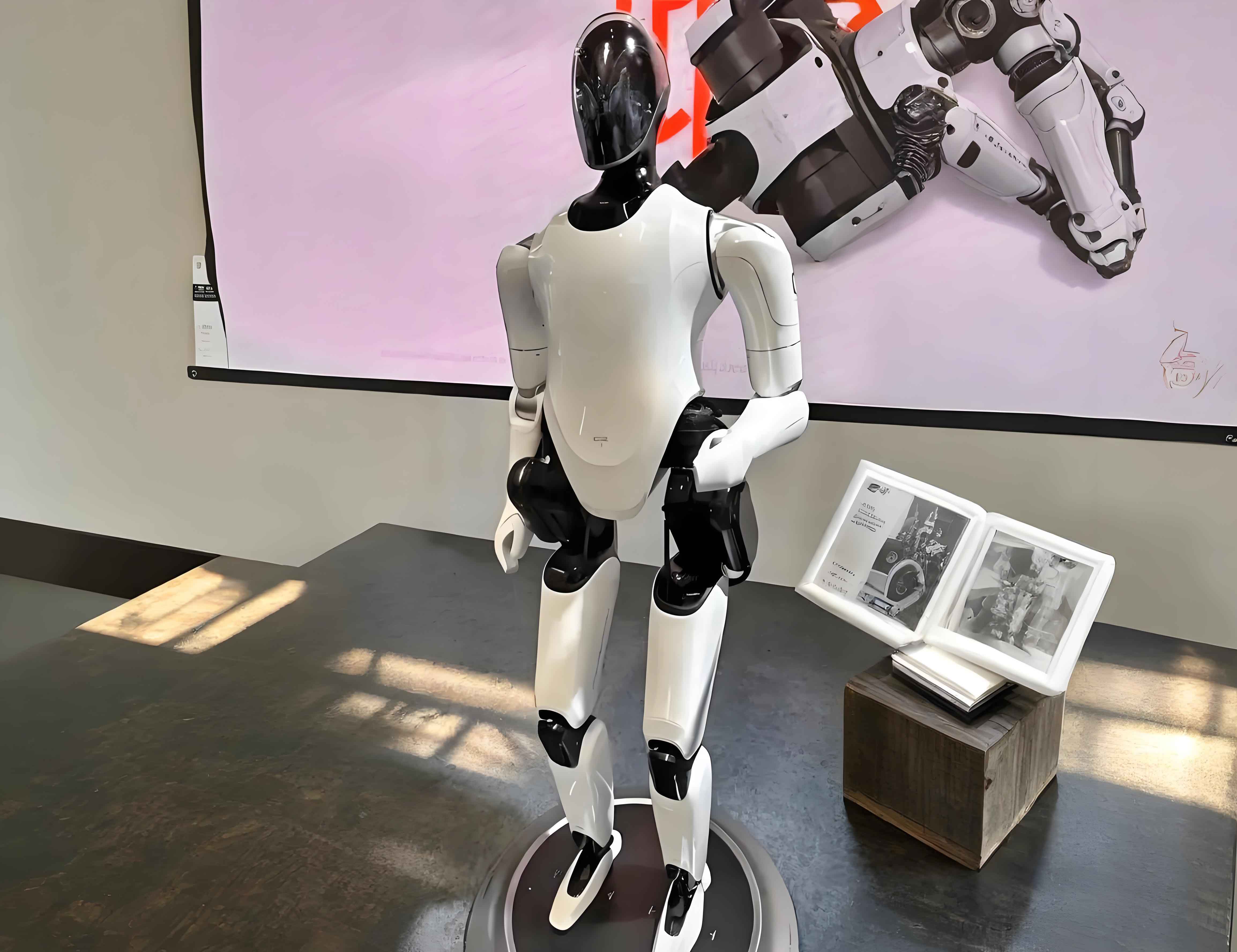
The image above illustrates the growing industry landscape for embodied AI robots, highlighting their application across sectors. This visual underscores the trend toward commercialization and real-world deployment, driven by technological maturation. As embodied AI robots become more prevalent, the need for standardized testing and evaluation becomes paramount to ensure safety and efficacy.
Problems and Challenges
Despite rapid progress, embodied AI robots face several technical and systemic hurdles that must be addressed to achieve widespread adoption. These challenges stem from the complexity of integrating hardware, software, and cognitive capabilities into a cohesive system.
1. High Computational Demands: Real-time processing for embodied AI robots requires substantial computational resources, especially when deploying large AI models. Tasks like sensor fusion, motion planning, and natural language understanding necessitate high-performance hardware, which can be costly and energy-intensive. Balancing efficiency with performance remains a critical issue, as embodied AI robots often operate in dynamic environments where latency is unacceptable.
2. Sophisticated Perception Systems: Embodied AI robots rely on accurate and fast sensor data to interpret their surroundings. Multi-sensor fusion algorithms must integrate inputs from cameras, LiDAR, tactile sensors, and more to create a coherent environmental model. However, challenges like sensor noise, calibration errors, and data synchronization can degrade perception, affecting decision-making. Improving robustness in diverse conditions is essential for reliable operation.
3. Cross-Domain Integration: The development of embodied AI robots involves expertise from robotics, AI, materials science, and human-computer interaction. Coordinating these disciplines is difficult, leading to fragmented solutions. For example, a control algorithm optimized in simulation may fail on physical hardware due to unmodeled dynamics. Achieving seamless integration across perception, action, and cognition is a ongoing research frontier.
4. Safety and Ethical Concerns: As embodied AI robots interact more closely with humans, safety risks and ethical dilemmas emerge. These include physical safety (e.g., collision avoidance), data privacy (e.g., handling personal information), and ethical behavior (e.g., bias in decision-making). The absence of clear guidelines exacerbates these issues, potentially undermining public trust. For instance, an embodied AI robot in healthcare must adhere to strict ethical standards to protect patient well-being.
Underlying these technical challenges is the lack of a unified standard system. Current standards for robotics often derive from industrial frameworks, which are inadequate for assessing the dynamic, interactive nature of embodied AI robots. This gap leads to inconsistent evaluation metrics, hindering comparability between systems and slowing industrialization. Moreover, the fragmented research collaboration networks, as seen in our bibliometric analysis, compound these problems by limiting knowledge sharing and collective problem-solving. Addressing these issues requires concerted efforts toward standardization and enhanced cooperation.
Standardization and the Role of Testing Institutions
The establishment of comprehensive standards is pivotal for the healthy development of embodied AI robots. Standards provide a common language for researchers, manufacturers, and regulators, facilitating interoperability, safety, and innovation. In this context, testing institutions serve as critical intermediaries, ensuring that standards are practical, enforceable, and aligned with technological advancements.
The Positive Impact of Standardization
Standardization offers multiple benefits for the embodied AI robot ecosystem. First, it promotes technological maturity by defining clear benchmarks for performance, safety, and quality. For example, standards can specify test protocols for mobility, interaction fidelity, or AI robustness, enabling objective comparison between different embodied AI robot platforms. This reduces duplication of effort and accelerates the transition from research to market. Second, standards enhance user trust by establishing safeguards for privacy, security, and ethical conduct. In sensitive applications like eldercare or education, adherence to standards assures stakeholders that embodied AI robots operate reliably and responsibly. Third, standardization lowers market entry barriers for startups and smaller enterprises, fostering competition and diversity in the industry. By providing a level playing field, standards encourage innovation while maintaining consistency.
To illustrate the scope of standardization, consider the following table outlining potential standard categories for embodied AI robots:
| Category | Description | Example Metrics |
|---|---|---|
| Physical Safety | Standards for mechanical design, collision avoidance, and emergency stops. | Force limits, response time to hazards, durability tests. |
| Functional Performance | Benchmarks for motion control, perception accuracy, and task completion. | Walking speed, object recognition rate, success rate in predefined tasks. |
| AI and Ethics | Guidelines for algorithmic transparency, bias mitigation, and ethical decision-making. | Fairness scores, explainability metrics, adherence to ethical codes. |
| Interoperability | Protocols for data exchange, communication interfaces, and modular components. | API compatibility, data format standards, plug-and-play capabilities. |
| Environmental Adaptation | Requirements for operation in varied conditions (e.g., lighting, terrain). | Performance degradation under stress, adaptability indices. |
The Evolving Role of Testing Institutions
Testing institutions are poised to play a multifaceted role in the standardization process for embodied AI robots. Beyond mere compliance checking, they can act as innovation catalysts by developing advanced testing methodologies and risk assessment frameworks. Specifically, testing institutions can:
1. Participate in Standard Development: By contributing technical expertise and empirical data, testing institutions help formulate realistic and actionable standards. Their experience in evaluating diverse systems ensures that standards are grounded in practical constraints, such as cost-effectiveness and scalability for embodied AI robots.
2. Provide Third-Party Certification: Independent evaluation by testing institutions offers credibility to manufacturers and assurance to users. Certification processes can cover safety, performance, and ethical compliance, creating a trustmark for embodied AI robot products. This is crucial for market acceptance, especially in regulated sectors like healthcare.
3. Build Testing Platforms and Simulated Environments: To assess the complex behaviors of embodied AI robots, testing institutions can design sophisticated testbeds that mimic real-world scenarios. These platforms enable rigorous validation of interaction capabilities, learning algorithms, and failure modes. For instance, a simulated home environment can test an embodied AI robot’s ability to assist with daily activities while avoiding obstacles.
4. Conduct Risk预警 and Monitoring: As embodied AI robots evolve, new risks may emerge. Testing institutions can proactively identify potential hazards (e.g., cybersecurity vulnerabilities or ethical loopholes) and issue guidelines for mitigation. This proactive stance supports continuous improvement and societal resilience.
The integration of testing into the research and development lifecycle can be modeled as a feedback loop. Let $R$ represent research output, $T$ denote testing outcomes, and $S$ stand for standards. The relationship can be expressed as:
$$ S_{t+1} = f(R_t, T_t, S_t) $$
where $f$ is a function that updates standards based on current research, testing results, and existing standards. This iterative process ensures that standards remain relevant as embodied AI robot technologies advance. Testing institutions, by providing $T_t$, directly influence this evolution, bridging the gap between innovation and regulation.
Conclusion
Our bibliometric analysis of embodied AI robot research reveals a field in rapid expansion, characterized by growing publication volumes, concentrated geographic contributions, and dynamic interdisciplinary integration. The core research themes—spanning control, perception, AI, and interaction—highlight the multifaceted nature of developing intelligent, physical agents. However, challenges such as fragmented collaborations, high technical barriers, and the absence of unified standards pose significant obstacles to progress. These issues are not merely academic; they impact the industrialization and societal acceptance of embodied AI robots. The trend toward more sophisticated control algorithms and AI-driven cognition promises to enhance capabilities, but without robust standards and evaluation frameworks, these advancements may lead to inconsistent outcomes and safety concerns.
We emphasize the critical role of standardization in addressing these challenges. By establishing clear metrics for performance, safety, and ethics, the field can foster interoperability, trust, and innovation. Testing institutions, as neutral arbiters, are essential in this endeavor, providing certification, developing test environments, and contributing to standard formulation. Their involvement ensures that embodied AI robots are not only technologically advanced but also reliable and socially beneficial. Moving forward, we advocate for increased international cooperation among researchers, institutions, and policymakers to create a cohesive ecosystem for embodied AI robots. This collaborative approach, supported by data-driven insights from bibliometric studies, will pave the way for sustainable growth and the realization of the transformative potential of embodied AI robots in enhancing human well-being and productivity.