
As I delve into the realm of artificial intelligence, I find that embodied AI robots represent a pivotal convergence of machine intelligence and physical interaction. These systems are not merely software entities but physical agents that perceive, understand, decide, and act in real-world environments. In this article, I aim to dissect the key technologies, challenges, and future trends of embodied AI robots, drawing from extensive research and development in the field. My perspective is rooted in the belief that embodied AI robots will revolutionize industries from healthcare to manufacturing, enabling more natural human-robot collaboration and autonomous task execution. To begin, let me outline the fundamental concepts that underpin these intelligent machines.
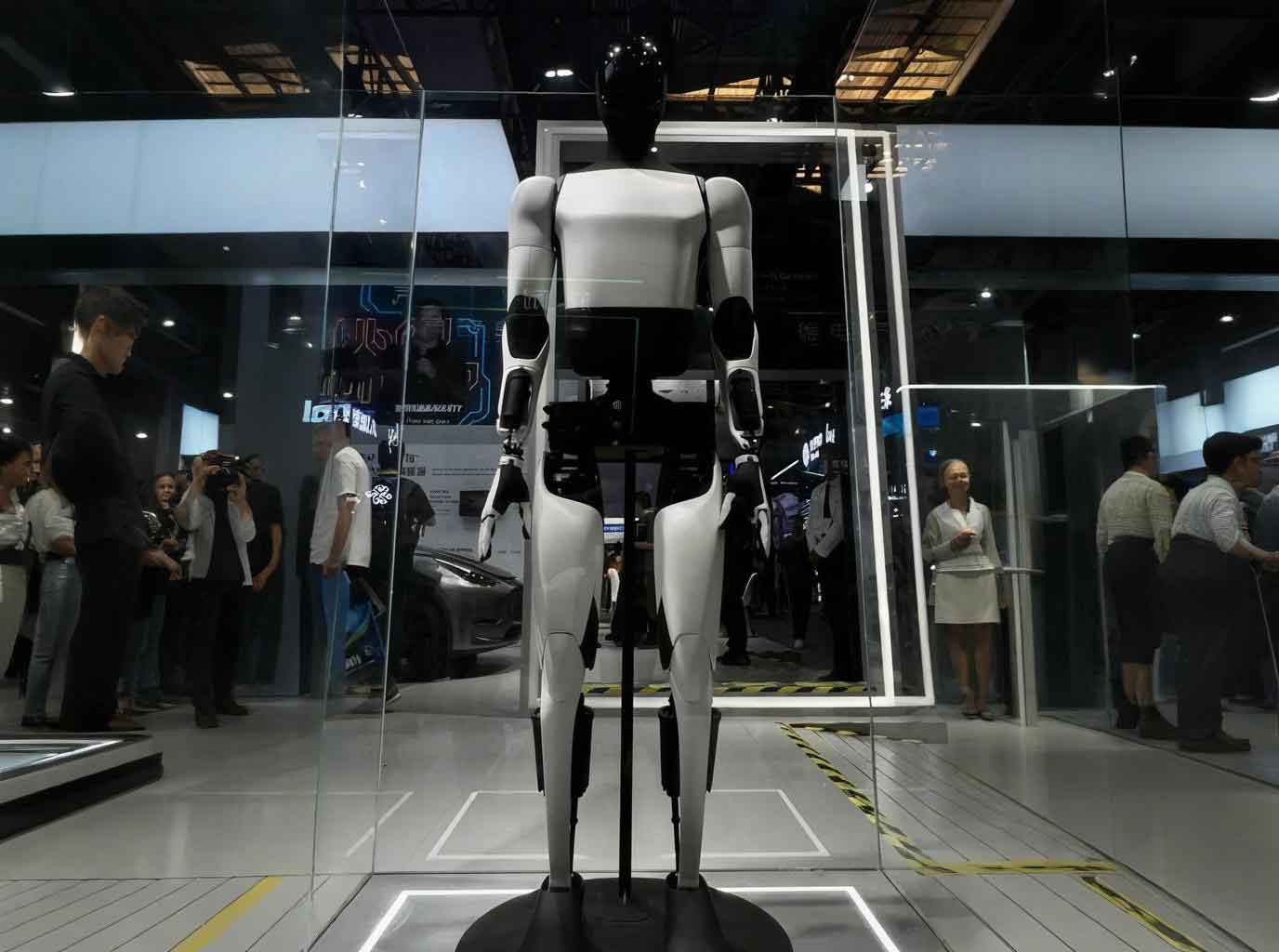
The core of an embodied AI robot lies in its structural analogy to biological systems. I view it as comprising a “brain” for high-level cognition and decision-making, a “cerebellum” for motion control and coordination, a “brainstem” for basic signal processing and perception, and a “machine body” for physical execution. This integration allows the embodied AI robot to interact dynamically with its surroundings. The functional pipeline involves perception, cognition, decision-making, and execution, enabling the embodied AI robot to adapt to complex scenarios. For instance, in a home setting, an embodied AI robot can navigate to fetch items, while in industrial contexts, it can manipulate objects with precision. The embodied AI robot’s value is multi-layered, ranging from basic task execution to advanced cognitive interactions, as summarized in Table 1.
| Layer | Function | Application Example |
|---|---|---|
| Perception | Multi-modal sensing (vision, audio, tactile) | Object detection in cluttered environments |
| Cognition | Understanding and reasoning about environment | Interpreting human commands for task decomposition |
| Decision | Autonomous planning and strategy generation | Choosing optimal path in dynamic spaces |
| Execution | Physical action via actuators and controllers | Grasping and moving objects with dexterity |
In my analysis, the advancement of embodied AI robots is driven by several key technologies. I will explore these in detail, emphasizing how they enable the embodied AI robot to achieve higher levels of intelligence and autonomy.
Multi-Modal Perception Technologies
Multi-modal perception is crucial for an embodied AI robot to construct a comprehensive understanding of its environment. I observe that this involves fusing data from diverse sensors such as cameras, LiDAR, and microphones. Recent breakthroughs in large-scale models have enhanced this capability. For example, models like PaLM-E integrate vision and language processing, allowing the embodied AI robot to interpret natural language instructions in visual contexts. The underlying mechanism can be represented through transformer architectures, where multi-modal inputs are encoded into unified representations. Mathematically, the fusion process can be modeled as:
$$ \mathbf{z} = f(\mathbf{x}_v, \mathbf{x}_a, \mathbf{x}_t) $$
where $\mathbf{x}_v$, $\mathbf{x}_a$, and $\mathbf{x}_t$ are visual, auditory, and textual features, respectively, and $f$ is a fusion function learned via deep neural networks. In practice, pre-training on massive datasets enables the embodied AI robot to generalize across modalities. I summarize notable multi-modal models in Table 2, highlighting their contributions to embodied AI robot perception.
| Model | Core Technology | Application in Embodied AI Robot |
|---|---|---|
| PaLM-E | Integration of language and vision transformers | Generating control commands from natural language |
| VL-T5 | Text-generation unified modeling | Task planning via multi-modal input encoding |
| Florence | Cross-modal alignment and retrieval | Enhancing scene understanding for navigation |
| DALL-E | Text-to-image generation | Simulating environments for training embodied AI robots |
Autonomous Decision and Learning Technologies
Autonomous decision-making is what empowers an embodied AI robot to act intelligently without constant human intervention. I find that this relies on sophisticated algorithms for planning and learning. Reinforcement learning (RL) is a cornerstone, where the embodied AI robot learns optimal policies through trial-and-error interactions. The RL framework can be formalized as a Markov Decision Process (MDP) with states $s \in S$, actions $a \in A$, a reward function $r(s,a)$, and a transition model $P(s’|s,a)$. The goal is to maximize the cumulative reward:
$$ \max_\pi \mathbb{E}\left[ \sum_{t=0}^\infty \gamma^t r(s_t, a_t) \right] $$
where $\pi$ is the policy and $\gamma$ is a discount factor. In embodied AI robots, hierarchical RL is often used to decompose complex tasks into subtasks. Additionally, large language models (LLMs) like GPT-4 are being leveraged to generate high-level plans from textual instructions. For instance, an embodied AI robot can use an LLM to parse “fetch a cup from the kitchen” into a sequence of actionable steps. I categorize decision-making approaches in Table 3, noting their suitability for different embodied AI robot scenarios.
| Method | Description | Advantages for Embodied AI Robot |
|---|---|---|
| Reinforcement Learning | Learning via environment feedback | Adapts to dynamic and unseen situations |
| Large Language Models | Generating plans from natural language | Enables intuitive human-robot communication |
| Classical Planning | Algorithmic path and task optimization | Provides guarantees for safety-critical tasks |
| Hybrid Approaches | Combining multiple techniques | Balances flexibility and robustness in embodied AI robot |
Motion Control and Planning Technologies
Motion control and planning are essential for the physical embodiment of an embodied AI robot. I analyze that this involves generating smooth, collision-free trajectories while accounting for kinematic and dynamic constraints. Path planning algorithms, such as A* and RRT, are widely used. For example, the A* algorithm minimizes a cost function:
$$ f(n) = g(n) + h(n) $$
where $g(n)$ is the cost from start to node $n$, and $h(n)$ is a heuristic estimate to the goal. In control, PID controllers are common for maintaining stability, with the control law:
$$ u(t) = K_p e(t) + K_i \int_0^t e(\tau) d\tau + K_d \frac{de(t)}{dt} $$
where $e(t)$ is the error signal. For more complex motions, model predictive control (MPC) optimizes over a horizon. In social navigation, an embodied AI robot must also consider human presence, requiring algorithms that incorporate social norms. I summarize key motion technologies in Table 4, emphasizing their role in enhancing the embodied AI robot’s agility.
| Technique | Mathematical Formulation | Application in Embodied AI Robot |
|---|---|---|
| A* Algorithm | $$ f(n) = g(n) + h(n) $$ | Global path planning in structured environments |
| RRT (Rapidly-exploring Random Tree) | Random sampling for feasible paths | Navigation in high-dimensional or cluttered spaces |
| PID Control | $$ u(t) = K_p e(t) + K_i \int e + K_d \dot{e} $$ | Precise joint positioning and trajectory tracking |
| Model Predictive Control | Minimizing cost over future states | Dynamic obstacle avoidance for embodied AI robot |
Human-Robot Interaction Technologies
Human-robot interaction (HRI) is a critical aspect that determines the usability and acceptance of an embodied AI robot. I emphasize that natural language processing and affective computing are key enablers. For instance, models like ChatGPT allow users to command an embodied AI robot through conversational interfaces. The process involves parsing user intent, generating appropriate responses, and executing actions. Emotion recognition algorithms can further enhance HRI by enabling the embodied AI robot to adapt its behavior based on human emotional states. A simple model for sentiment analysis might use a softmax classifier:
$$ P(y|x) = \frac{\exp(\mathbf{w}_y^T \phi(x))}{\sum_{c} \exp(\mathbf{w}_c^T \phi(x))} $$
where $x$ is input features (e.g., speech prosody), $\phi$ is a feature extractor, and $y$ is emotion class. In embodied AI robots, this facilitates more empathetic interactions. I outline HRI advancements in Table 5, showing how they contribute to seamless collaboration with embodied AI robots.
| Technology | Key Feature | Benefit for Embodied AI Robot |
|---|---|---|
| Natural Language Understanding | Semantic parsing of commands | Allows intuitive control of embodied AI robot |
| Emotion Recognition | Detecting affective states from voice or face | Enables adaptive and empathetic responses |
| Gesture Recognition | Interpreting human body language | Facilitates non-verbal communication with embodied AI robot |
| Multi-modal Dialogue Systems | Integrating speech, text, and vision | Supports rich, context-aware interactions |
Despite these advancements, I recognize that embodied AI robots face significant challenges. These hurdles must be addressed to realize their full potential.
Challenges in Embodied AI Robot Development
The development of embodied AI robots is fraught with obstacles across multiple dimensions. I categorize these into five areas: environment perception and understanding, autonomous decision and learning, motion control and planning, human-robot interaction, and data privacy and ethics. Each area presents unique difficulties for the embodied AI robot. For example, in perception, sensor noise and occlusion can degrade accuracy, while in decision-making, the need for large datasets poses scalability issues. I summarize these challenges in Table 6, providing a concise overview of the barriers faced by embodied AI robots.
| Challenge Area | Specific Issues | Impact on Embodied AI Robot |
|---|---|---|
| Environment Perception | Multi-modal data fusion, sensor limitations | Reduced accuracy in complex scenes for embodied AI robot |
| Autonomous Decision | Sample inefficiency, generalization gaps | Slow adaptation to new tasks in embodied AI robot |
| Motion Control | Real-time planning, dynamic obstacle avoidance | Risk of collisions or unstable movements in embodied AI robot |
| Human-Robot Interaction | Natural language ambiguity, emotional intelligence | Miscommunication and reduced trust in embodied AI robot |
| Data Privacy and Ethics | Security of personal data, ethical decision-making | Potential misuse or bias in embodied AI robot actions |
To quantify some of these challenges, I consider the perception error in an embodied AI robot, which can be modeled as a function of sensor noise $\epsilon$ and environmental complexity $C$:
$$ E_p = \alpha \cdot \epsilon + \beta \cdot C $$
where $\alpha$ and $\beta$ are coefficients. Reducing $E_p$ requires advances in sensor technology and algorithms. Similarly, in decision-making, the exploration-exploitation trade-off in RL can be framed as optimizing a regret bound:
$$ R(T) = \sum_{t=1}^T (\mu^* – \mu_{a_t}) $$
where $\mu^*$ is the optimal reward mean, and $\mu_{a_t}$ is the mean of chosen action $a_t$ at time $t$. For an embodied AI robot, minimizing regret is crucial for efficient learning.
Future Trends and Recommendations
Looking ahead, I propose several directions for the evolution of embodied AI robots. These trends focus on design innovation, integration with advanced AI models, education, and industry collaboration. First, in design, bio-inspired and humanoid forms are gaining traction, as they facilitate better interaction in human-centric environments. The embodied AI robot of the future may mimic human morphology to enhance versatility. Second, fusion with large models and deep learning will continue to boost cognitive capabilities. For instance, combining vision-language-action models can enable an embodied AI robot to perform complex manipulation tasks from verbal instructions. I express this synergy through a conceptual equation:
$$ \text{Capability}_{\text{robot}} = \text{Perception} \otimes \text{Decision} \otimes \text{Action} $$
where $\otimes$ denotes deep integration via neural networks. Third, educating researchers and raising awareness about ethical implications are vital for responsible development of embodied AI robots. Finally, strengthening upstream and downstream产业链—from component manufacturing to application deployment—will foster a robust ecosystem. My recommendations are summarized in Table 7, outlining actionable steps for advancing embodied AI robots.
| Area | Recommendation | Expected Outcome for Embodied AI Robot |
|---|---|---|
| Design Creativity | Adopt humanoid and adaptive morphologies | Improved dexterity and social acceptance of embodied AI robot |
| AI Integration | Leverage multi-modal large models for cognition | Enhanced reasoning and task generalization in embodied AI robot |
| Education and Ethics | Train developers in AI ethics and safety | More trustworthy and fair embodied AI robot systems |
| Industry Collaboration | Build open platforms and standards | Accelerated innovation and deployment of embodied AI robot |
In conclusion, my exploration reveals that embodied AI robots are at the forefront of AI and robotics convergence. Through multi-modal perception, autonomous learning, precise motion control, and intuitive interaction, the embodied AI robot is poised to transform various sectors. However, challenges in perception accuracy, decision robustness, motion safety, interaction naturalness, and ethical governance must be overcome. By focusing on innovative designs, deep learning integrations, and collaborative ecosystems, we can unlock the full potential of embodied AI robots. As I reflect on this journey, I am convinced that the embodied AI robot will not only augment human capabilities but also pave the way for a more intelligent and interactive world. The continuous evolution of embodied AI robots will depend on sustained research and cross-disciplinary efforts, ensuring that these machines become reliable partners in our daily lives.