
The promotion of embodied AI robots to empower consumption development aligns with the requirements for high-quality economic growth. It is a crucial manifestation of technological innovation and application capabilities and serves as a key driving force for fully unleashing consumption potential and achieving consumption upgrading. In this process, technological progress plays a pivotal role. It promotes comprehensive human development, meets people’s needs for a better life, conforms to the trend of “dual upgrading” in both consumption and industry, and simultaneously induces structural transformations in production relations and the superstructure.
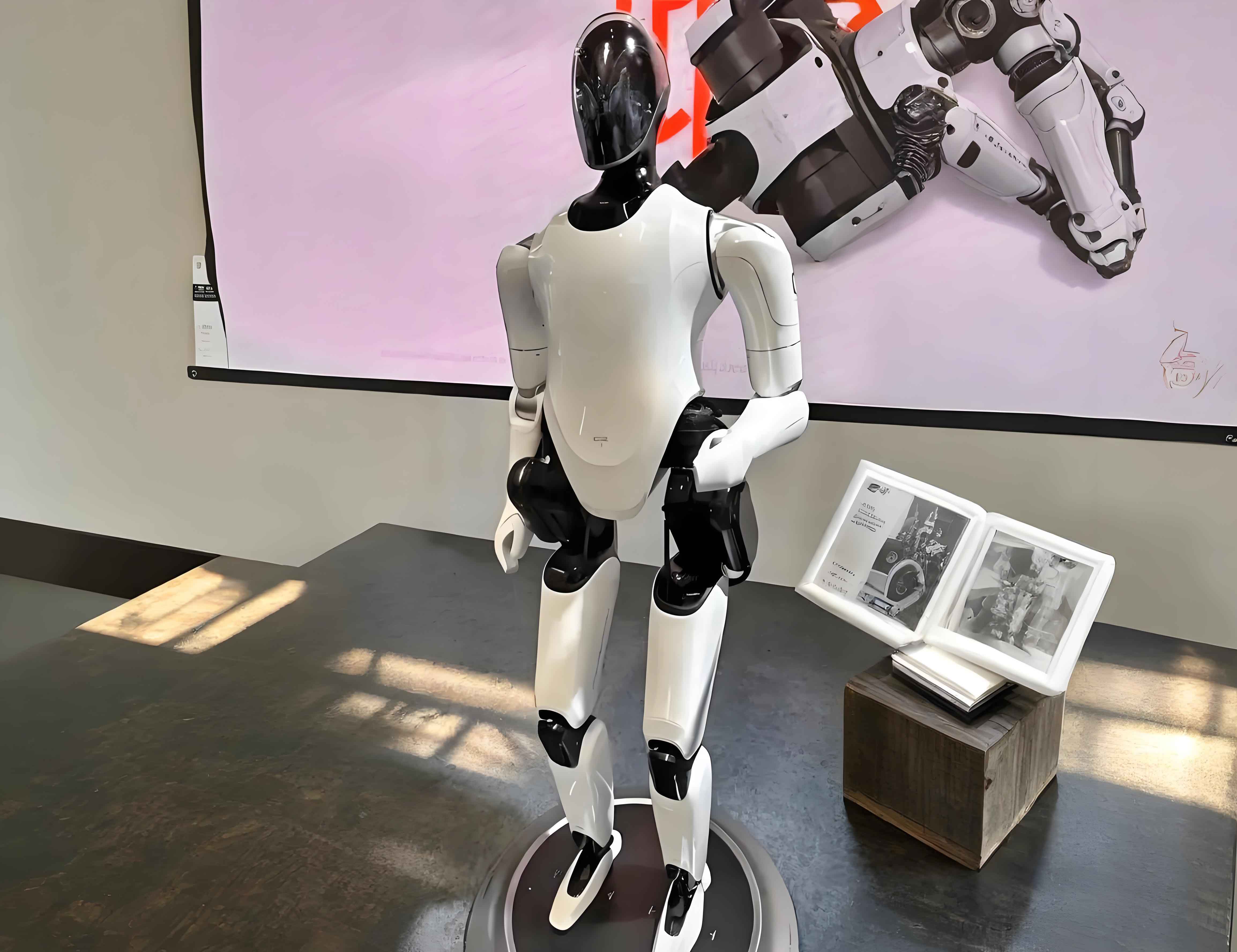
Embodied intelligence, or embodied AI, refers to an artificial intelligence system based on a physical entity that perceives and acts. It acquires information, understands problems, makes decisions, and implements actions through interaction with the environment, thereby generating intelligent behaviors and adaptability. Its core distinction from disembodied AI lies in its existence form and capabilities.
| Aspect | Disembodied AI (e.g., Generative AI, Predictive Models) | Embodied AI Robots |
|---|---|---|
| Existence Form | Software-based, lacking a persistent physical form. | Integrates AI (“brain”) with a robotic body, forming an organic whole. |
| Core Interaction | Processes data, text, images, and voice. Limited to digital or pre-defined physical feedback. | Performs real-time perception and action in the physical world through sensors and actuators, forming a perception-cognition-decision-action closed loop. |
| Primary Capability | Information processing, pattern recognition, content generation. | Comprehensive perception (multimodal sensing), interactive adaptation, and learning evolution through environmental interaction. |
This unique attribute allows embodied AI robots to drive new transformations in human-machine interaction and holds significant potential for personalizing consumer demand, innovating products, and optimizing consumption scenarios.
For example, the production output of service embodied AI robots in China reached 10.519 million units in 2024, a year-on-year increase of 34.3%, indicating rapid market expansion. The theoretical logic of embodied AI robots empowering consumption can be analyzed from four dimensions: generative logic, value logic, pragmatic logic, and practical logic.
I. Theoretical Logic: The Generative and Value Foundations
The empowerment of consumption by embodied AI robots reflects a revolution in productivity, where technological advancement plays a central role. It follows an internal societal logic: Technological Progress → Qualitative Leap in Labor Tools → Reduction in Socially Necessary Labor Time → Price Reduction, Increased Leisure, Scenario Creation → Expanded Consumption.
1. Generative Logic: Reinterpreting the Productivity Revolution. Embodied AI robots drive a qualitative leap in labor tools. Unlike traditional machinery (muscle extension) or disembodied AI (lacking perception/action), embodied AI robots integrate multimodal sensors, large models, and edge computing into a mobile, upgradeable intelligent entity. This transforms labor tools from fixed capital into “smart agents” capable of perception, cognition, decision-making, and action.
This leap enhances productivity and reduces socially necessary labor time across production, logistics, and consumption decision-making chains. The final consumption expansion is realized through three mechanisms, forming a closed logical loop.
- Price Reduction Mechanism: Reduced value per unit commodity allows for lower market prices. According to demand theory, lower prices ($P$) increase quantity demanded ($Q_d$), boosting consumption scale. This is the first transformation: “decreased value” into “daring to consume.”
$$Q_d = f(P, I, …), \quad \frac{\partial Q_d}{\partial P} < 0$$ - Leisure Increase Mechanism: Embodied AI robots save time in production and household labor, converting it into disposable leisure time. Time allocation theory suggests this enables more consumption activities, forming the second transformation: “saved time” into “ability to consume.”
- Scenario Creation Mechanism: Based on lower prices and more leisure, embodied AI robots create novel interactive experiences and consumption scenarios, generating new use-values and converting latent desires into paid consumption. This is the third transformation: “created scenarios” into “willingness to consume.”
2. Value Logic: Human Development and Meeting Needs. Under socialist production relations aiming to satisfy people’s growing needs, the value logic is reshaped. Use-value becomes the starting point and goal of production.
- Promoting Human Development: Embodied AI robots shift value generation from ownership to interaction. For instance, an AR-guided vest for the visually impaired not only assists navigation but also contributes data to optimize urban accessibility maps. Use-value is not consumed in private but增值 in public data cycles. Furthermore, by systematizing the compression of necessary household and commute labor, embodied AI robots return free time to individuals for self-development.
- Meeting Needs for a Better Life: Embodied AI robots promote a green consumption model based on optimal service sharing rather than ownership. Shared logistics embodied AI robots, through algorithmic optimization, significantly reduce resource consumption per unit of service, aligning with sustainable development and higher-level needs as outlined in Maslow’s hierarchy.
3. Pragmatic Logic: The “Dual-Upgrading” of Consumption and Industry. Embodied AI robots facilitate a synergistic upgrade of both supply and demand sides.
- Supply-Side Industrial Upgrade: The industry shifts from producing hardware to generating capabilities. Embodied AI robots lower marginal costs through replicable algorithms, enable long-term service premiums via software updates, and create new consumption scenes through flexible “white-label hardware + algorithm + platform” models.
- Demand-Side Consumption Upgrade: Consumption evolves from one-time ownership to personalized, long-term subscriptions. Subscription models lower entry costs, personalized services improve functionality, and continuous upgrades combat obsolescence, enhancing consumer surplus ($CS$):
$$CS = \int_{P}^{P_{max}} Q_d(P) \, dP$$
where $P_{max}$ is the maximum willingness to pay. - Coupling Resonance: Supply-side efficiencies and demand-side benefits interact on a shared data platform, creating a multiplier effect that drives mutual reinforcement between industry and consumption upgrades.
4. Practical Logic: Adapting Relations and Optimizing Governance. Translating technological potential into sustainable consumption momentum requires adaptive changes in production relations and institutional optimization.
- Adaptive Production Relations: The platform-based labor collaboration of embodied AI robots enables more complex multi-agent cooperation (both intrinsic within a system and extrinsic between agents), providing consumers with richer, higher-quality services compared to single-task AI.
- Institutional Optimization of the Superstructure: Laws, policies, and ethics must protect rights. This includes clarifying data产权 (not pure public or private, but with user rights like portability), establishing ethical standards for safety and fairness, and optimizing governance by turning technical “black boxes” into objects of public scrutiny through code audits and real-time monitoring, as reflected in China’s personal information protection laws.
II. Impact Mechanism: A Tripartite Analysis
The impact mechanism of embodied AI robots on consumption development operates through three core dimensions: the consumption subject (consumer), the consumption object (goods/services), and the consumption environment.
| Dimension | Core Mechanism | How Embodied AI Robots Achieve It | Theoretical Basis |
|---|---|---|---|
| Consumption Subject (Consumer) | Deepening Demand Potential | Enhancing experience, increasing income, providing leisure. | Experience Economy, Keynesian Income Theory, Time Allocation Theory. |
| Consumption Object (Goods/Services) | Promoting “Three-Upgrades” (Product, Quality, Brand) | Offering personalized services, revolutionizing human-goods relations, reconstructing brand value. | Consumer Psychology, Perceived Value Theory. |
| Consumption Environment | Optimizing “Hard & Soft” Conditions | Reducing resource use, innovating scenarios, perfecting institutions. | Environmental Economics, Scenario Theory, Institutional Economics. |
1. Deepening the Demand Potential of the Consumption Subject.
Embodied AI robots transform willingness and ability into consumption action.
$$C = f(Y, T, E, …)$$
Where $C$ is consumption, $Y$ is income, $T$ is leisure time, and $E$ is experience utility.
- Enhancing Experience ($E\uparrow$): The interactive and adaptive capabilities of embodied AI robots provide rich emotional and participatory experiences (e.g., companion robots for the elderly, immersive VR gaming), activating positive emotional resonance and stimulating consumption willingness.
- Increasing Income ($Y\uparrow$): They raise productivity, create high-skilled jobs, and lower usage costs for consumers, effectively increasing disposable income and boosting consumption capacity according to Keynesian absolute income theory.
- Providing Leisure ($T\uparrow$): By replacing human labor in production, logistics, and household chores, and improving consumption decision efficiency, embodied AI robots free up significant leisure time, a necessary resource for realizing consumption activities.
2. Promoting the “Three-Upgrades” of the Consumption Object.
- Enriching Product Categories: Leveraging data and large models, embodied AI robots offer highly personalized services. Their hardware-software decoupling allows rapid service iteration without changing the physical base, diversifying consumer choices.
- Improving Product Quality: They revolutionize human-goods relations through natural interaction (voice, gesture). Their user-friendliness lowers the usage barrier, while their proactive service model (predicting needs via multimodal perception) enhances user experience and perceived quality.
- Creating Consumer Brands: Embodied AI robots help reconstruct brand value by enabling high-tech positioning (via unique interactive intelligence), crafting a humanistic brand image (through empathetic interaction), and empowering consumers as active brand communicators in a new data-driven media matrix.
3. Optimizing the “Hard and Soft” Consumption Environment.
- Protecting the Natural Ecological Environment (Hard): Embodied AI robots reduce resource consumption and waste emissions by optimizing production processes, logistics routes, and user behavior. For example, smart logistics robots minimize travel distance, lowering energy use.
- Reshaping the Artificial Material Environment (Hard): They innovate consumption scenarios in catering (automated kitchens), hospitality (cleaning and concierge robots), and sports (real-time coaching devices), creating new consumption models and reshaping physical spaces.
- Regulating the Social Institutional Environment (Soft): Embodied AI robots contribute to a better institutional environment by assisting people with disabilities (promoting inclusive consumption), protecting data and property security through biometrics, and helping identify counterfeit products, thereby fostering reassuring, secure, and trustworthy consumption settings.
III. Real-World Challenges
Despite progress, the full release of consumption value by embodied AI robots faces significant hurdles.
| Category | Specific Challenges | Impact on Consumption Development |
|---|---|---|
| Technical & Economic | 1. Technical Bottlenecks (fine motor skills, thermal management, battery life). 2. High Capital Requirements & Risk of Monopoly (data advantage of large firms, high R&D costs for SMEs). |
Limits application in high-precision consumption scenarios; increases costs; stifles innovation and fair competition, potentially reducing consumer choice and welfare. |
| Social & Equity | 1. Employment Disruption & Income Inequality (job displacement for low-skilled labor, capital-biased returns). 2. The “Intelligence Divide” (adoption barriers for elderly/low-income groups due to cost, skill, or accessibility). |
May suppress aggregate consumption in the short term; exacerbates consumption inequality; excludes vulnerable groups from benefits. |
| Infrastructure & Governance | 1. Lagging Supporting Infrastructure (insufficient computing power, storage, network bandwidth; lack of data-sharing mechanisms). 2. Governance Gaps (unclear liability for accidents, privacy risks, lack of consumer protection against algorithmic bias or induced consumption). |
Hinders large-scale, real-time deployment; increases costs; creates safety and ethical risks; undermines consumer trust and rights. |
IV. Policy Priorities for Empowerment
To propel embodied AI robots to fully empower consumption development, a systematic approach targeting supply, demand, and environment is necessary.
1. Breaking Technical Bottlenecks and Capital Monopoly (Supply-Side Focus).
- Build a Full-Chain Innovation System: Increase R&D investment via government-guided industrial funds and tax incentives. Implement “unveiling the list and hanging the marshal” projects for core tech (battery, thermal management). Deepen industry-university-research integration to accelerate commercialization in service sectors like elderly care and healthcare.
- Foster a Fair Competition Ecosystem: Strengthen anti-monopoly supervision, especially on data壁垒. Build data-sharing platforms and establish industry-wide technical standards. Support SMEs through dedicated funds, simplified market access, and talent incentives to enhance industrial vitality.
2. Narrowing Income Inequality and the Intelligence Divide (Demand-Side Focus).
- Enhance Employment Quality: Invest in reskilling and upskilling programs. Improve labor policies to protect workers in new flexible employment forms. Optimize income distribution by adjusting taxation on capital returns and strengthening social safety nets.
- Bridge the Intelligence Divide: Launch public education campaigns on embodied AI robot literacy. Subsidize purchases for low-income groups. Encourage companies to design inclusive, user-friendly products with simplified interfaces for elderly and disabled users to increase adoption rates.
3. Perfecting Supporting Facilities and Governance Mechanisms (Environmental Focus).
- Upgrade Supporting Infrastructure: Comprehensively enhance computing power ($C_p$), storage capacity ($S_c$), and network transmission power ($N_t$) to support large-scale deployment. Promote the development of edge computing. Establish national standards for embodied AI robot data storage and processing.
$$ \text{System Performance} \propto \frac{C_p \cdot S_c \cdot N_t}{\text{Latency}} $$ - Strengthen Governance Systems: Establish ethical risk assessment frameworks and involve multiple stakeholders in policy-making. Mandate corporate transparency and strengthen privacy protection through techniques like anonymization. Enrich regulatory tools, including third-party audits and consumer participation in quality evaluations. Accelerate legislation to define liability, safety standards, and data governance for embodied AI robots.
In conclusion, the integration of embodied AI robots into the consumption ecosystem represents a profound shift with the potential to drive high-quality economic development and improve living standards. Realizing this potential requires a balanced and proactive approach that fosters innovation, ensures equity, and builds trust through robust governance, ultimately guiding the technology toward serving the fundamental goal of satisfying people’s evolving needs for a better life.