
The global demographic shift towards an aging population presents one of the most significant socio-economic challenges and opportunities of the 21st century. In response, the development of the Silver Economy—economic activities and systems that cater to the needs and potentials of older adults—has transitioned from a niche concern to a central pillar of national strategic planning. This economic frontier demands innovative solutions to enhance the quality of life for seniors, ensure sustainable care systems, and unlock new markets. I believe that at the forefront of this transformative wave is the emergence of embodied AI, a revolutionary paradigm where artificial intelligence is integrated into a physical form that can perceive, reason, and act within the real world. An embodied AI robot is not merely a programmed machine but an autonomous agent capable of learning from and interacting with its environment. The convergence of this technology with the needs of the Silver Economy creates a powerful synergy, promising to reshape industries, redefine care, and empower older adults. This article explores the multifaceted value proposition of embodied AI robots for the Silver Economy, rigorously examines the practical dilemmas at the intersection of technology and eldercare, and proposes a comprehensive framework of coping strategies to navigate this promising yet complex landscape.
The Value Proposition: How Embodied AI Robots Catalyze the Silver Economy
The integration of embodied AI robots into the fabric of the Silver Economy is not a distant future scenario but an unfolding reality. Its value is demonstrated across several critical dimensions, from foundational policy alignment to tangible industrial upgrades. The core technological architecture of an embodied AI robot can be conceptualized as a unified system for interaction:
$$ EAI = P + I + M $$
Where \(EAI\) represents the functional capability of the Embodied AI system, \(P\) denotes the Perception layer (sensors, computer vision), \(I\) represents the Intelligence and Interaction layer (decision-making AI models, natural language processing), and \(M\) signifies the Motion and Manipulation layer (actuators, mobility systems). This integrated formula is key to its utility in eldercare settings.
1. Policy Synergy and Strategic Alignment
Nationally, there is a clear and accelerating policy momentum supporting both technological innovation in AI and the development of the Silver Economy. Strategic documents consistently emphasize the cultivation of future industries like embodied intelligence and the need for technology to empower eldercare services. This creates a fertile policy environment where investments, research agendas, and regulatory sandboxes are increasingly aligned to foster the development and deployment of embodied AI robot solutions for aging populations. The directive to promote the integration of scientific innovation with industrial application finds a perfect testbed in the Silver Economy, with embodied AI robots serving as a prime conduit.
2. Technological Adaptability to Gerontological Contexts
The inherent capabilities of embodied AI robots are uniquely suited to address the specific challenges and scenarios prevalent in the Silver Economy. The following table summarizes the application of the \(EAI\) formula across key eldercare domains:
| Gerontological Challenge | Embodied AI Robot Capability (Layer) | Practical Application Example |
|---|---|---|
| Chronic Health Monitoring | Perception (P) Multi-modal sensor fusion for vital signs, gait analysis, sleep patterns. |
Continuous, non-invasive monitoring, predicting fall risks, detecting anomalies in heart rate variability. |
| Social Isolation & Cognitive Support | Intelligence & Interaction (I) Natural language dialogue, emotion recognition, cognitive stimulation games. |
Companion robots providing conversation, reminders for medication, and memory-training exercises. |
| Mobility & Activities of Daily Living (ADL) | Motion & Manipulation (M) Stable navigation, object manipulation, physical support. |
Assisting with fetching items, light housekeeping, providing physical support for transfers, or enabling telepresence for family. |
| Personalized Care & Safety | Integrated System (EAI) Learning user patterns, proactive intervention. |
Adapting support routines to individual preferences, automatically alerting emergency services after a detected fall. |
3. Catalyzing a Diversified and Upgraded Silver Consumption Market
The aging demographic is increasingly heterogeneous, with varying consumption preferences ranging from basic care to “enjoyment-type” and intelligent products. Embodied AI robots are pivotal in driving this consumption upgrade. They transform care from a reactive, labor-intensive service to a proactive, technology-enabled experience. This shift empowers older adults, fostering a more active and engaged lifestyle. The demand is evolving from generic aids to personalized, intelligent companions and assistants, creating new market segments. The consumption model is thus shifting, which can be expressed as a function of embodied intelligence’s influence:
$$ C_{new} = f(EAI, D, P) $$
Where \(C_{new}\) represents the new consumption model, \(EAI\) is embodied AI integration, \(D\) is demographic diversity among seniors, and \(P\) denotes personalized preference. The function shows that new consumption is driven by the interplay of advanced technology with diverse and personal needs.
4. Driving Industrial Optimization and Ecosystem Formation
The most profound impact lies in industrial transformation. Embodied AI robots act as a nucleus around which traditional “sunset” care industries evolve into “sunrise” high-tech sectors. They drive the optimization of industrial chains by enabling:
- Supply Chain Integration: Demanding high-precision sensors, advanced actuators, and robust AI chips, pulling upstream manufacturing into a higher-value bracket.
- Service Model Innovation: Enabling “Robotics-as-a-Service” (RaaS) models for eldercare, making advanced support more accessible.
- Ecosystem Interconnectivity: Serving as a data-rich node that connects healthcare providers, family members, and community services, creating a smart eldercare ecosystem.
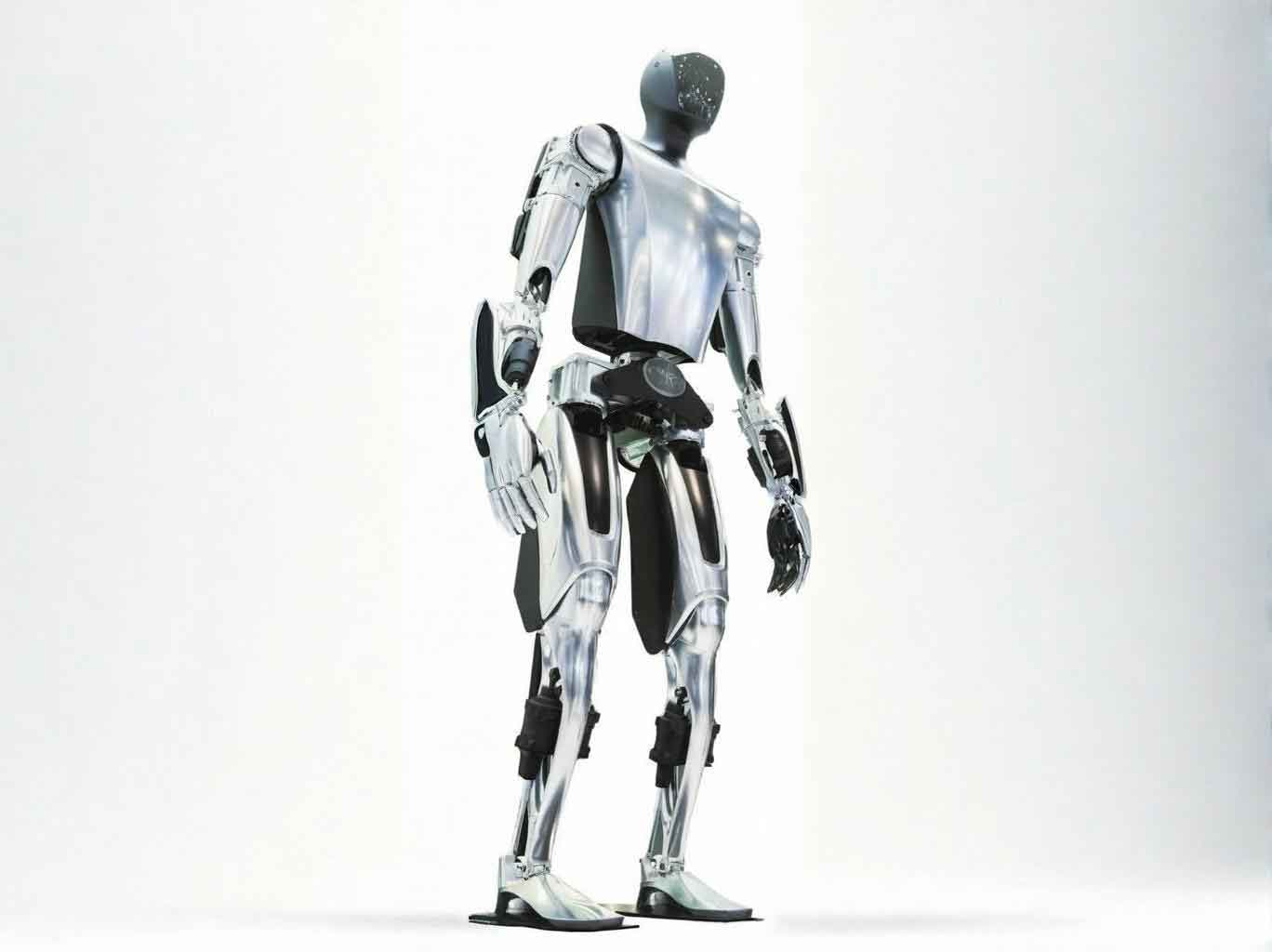
The development and manufacturing of these sophisticated systems, as hinted above, require advanced industrial capabilities. The presence of a robust manufacturing base for embodied AI robots is a critical factor in scaling their application within the Silver Economy, influencing cost, reliability, and the pace of innovation.
Practical Dilemmas: The Multifaceted Challenges at the Frontier
Despite the immense promise, the path for embodied AI robots in the Silver Economy is fraught with significant practical dilemmas that must be soberly addressed to ensure sustainable and ethical integration.
1. The Safety Trilemma: Technical, Interaction, and Social Risks
Safety concerns are paramount when deploying autonomous systems in close proximity to vulnerable populations. The risks form a trilemma:
| Risk Category | Description | Potential Consequence |
|---|---|---|
| Technical Safety | Failures in perception (misidentifying obstacles), decision-making (erroneous emergency response), or motion control (loss of balance while providing support). | Physical harm to the user, failure to provide critical assistance. |
| Data & Privacy Security | The embodied AI robot constantly collects sensitive biometric, audio, and video data in private spaces. Vulnerabilities can lead to breaches or misuse. | Profound invasion of privacy, financial fraud, loss of personal dignity. |
| Psycho-Social Risk | Over-reliance on the robot leading to reduced human contact (deepening isolation) or the “de-skilling” of the user’s own physical and cognitive abilities. | Erosion of autonomy, increased loneliness, and the ethical dilemma of “care replacement” versus “care augmentation.” |
The overall risk \(R_{total}\) can be modeled as a function of these interdependent factors:
$$ R_{total} = \alpha R_{tech} + \beta R_{data} + \gamma R_{psycho} + \epsilon $$
Where \(R_{tech}\), \(R_{data}\), and \(R_{psycho}\) represent technical, data, and psycho-social risks, respectively. The coefficients \(\alpha, \beta, \gamma\) represent their relative weightings in a specific application context, and \(\epsilon\) accounts for unforeseen emergent risks.
2. The Development Bottleneck: Insufficient Industrial and Elemental Support
The translation of embodied AI robot prototypes into reliable, affordable, and widely deployed solutions is constrained by several factors:
- Capital Intensity and Patient Capital Gap: R&D and manufacturing require enormous, long-term investment with uncertain and delayed returns, deterring traditional venture capital.
- Fragmented and Low-Quality Data Ecosystems: Effective AI training requires vast, diverse, and high-quality datasets from real-world eldercare scenarios, which are often siloed, incomplete, or non-existent.
- Lagging Policy and Standardization: Regulatory frameworks for safety certification, liability insurance, and interoperability standards for embodied AI robots in care settings are underdeveloped, creating uncertainty for manufacturers and adopters.
3. The Human Capital Crisis: Scarcity of Multidisciplinary Talent
The ecosystem requires a new breed of professionals, creating a severe talent shortage:
- R&D Talent: Experts in robotics, gerontechnology, AI ethics, and human-robot interaction are in short supply, leading to intense competition (“involuted” environments) that can stifle collaborative innovation.
- Deployment & Service Talent: A lack of technicians who can maintain, customize, and troubleshoot embodied AI robots, as well as care professionals trained to integrate them effectively into care plans.
- Backup Talent Pipeline: Educational curricula have not kept pace, with few programs offering interdisciplinary studies that bridge gerontology, computer science, and engineering.
4. The Governance Vacuum: Weak and Reactive Regulatory Systems
Governance structures are struggling to adapt to the speed of innovation:
- Ethical and Legal Lag: Questions of accountability (who is liable if a robot causes harm—developer, manufacturer, owner?), consent (can someone with cognitive decline consent to robot monitoring?), and algorithmic bias are unresolved.
- Balancing Regulation and Innovation: Overly restrictive regulations could stifle life-saving innovation, while a lax approach could expose seniors to harm. Finding this balance dynamically is a major challenge.
- Lack of Collaborative Oversight: Effective governance requires collaboration between technology, healthcare, civil affairs, and cybersecurity regulators, a mechanism that is currently fragmented.
Coping Strategies: A Framework for Sustainable Integration
To harness the potential of embodied AI robots while mitigating the associated risks, a multi-pronged, proactive strategy is essential. The following table outlines a coordinated framework for action:
| Strategic Pillar | Core Objective | Key Action Measures |
|---|---|---|
| 1. Robust Governance & Safety by Design | Minimize technical and ethical risks throughout the lifecycle. |
|
| 2. Fostering Industrial Innovation & Ecosystems | Build a sustainable supply chain and viable business models. |
|
| 3. Building Human Capital & Societal Acceptance | Develop the necessary skills and foster positive adoption. |
|
| 4. Adaptive & Collaborative Regulation | Create agile, responsive, and effective oversight. |
|
The successful implementation of this strategy requires viewing the embodied AI robot not as a standalone product, but as a node within a larger socio-technical system for eldercare. The ultimate performance \(Perf_{system}\) of this system in enhancing elder well-being depends on the synergistic optimization of all components:
$$ Perf_{system} = \Omega(T, I, H, G) $$
Where \(T\) represents the mature, safe, and capable embodied AI robot technology, \(I\) is the innovative and resilient industrial ecosystem, \(H\) is the skilled and empathetic human capital, and \(G\) is the adaptive and collaborative governance framework. The function \(\Omega\) denotes a complex, non-linear interaction where weakness in any one variable can drastically reduce overall system performance and trust.
Conclusion: Towards a Human-Centric, Technologically Empowered Future
The intersection of embodied intelligence and the Silver Economy represents a defining opportunity for our aging societies. Embodied AI robots offer a powerful toolset to address critical challenges in health monitoring, daily assistance, social connection, and care delivery, thereby fueling economic growth in a vital new sector. However, this path is not automatic nor without peril. The dilemmas of safety, talent, industrial maturity, and governance are substantial and require deliberate, coordinated action. The strategies outlined here—centered on proactive governance, ecosystem cultivation, human capital development, and adaptive regulation—provide a roadmap for navigating this complex terrain. The goal must always be clear: to deploy technology not as a replacement for human care and compassion, but as a sophisticated augmentation that empowers older adults to live with greater dignity, autonomy, and joy. By thoughtfully integrating the physical intelligence of embodied AI robots into the social fabric of eldercare, we can build a more sustainable, inclusive, and hopeful future for generations to come.