
The integration of digital intelligence technologies—such as AI, big data, and blockchain—is widely recognized as a vital force driving the modernization of ideological and moral education, aiming to enhance its pertinence and effectiveness. Among these, a new frontier is rapidly emerging: embodied AI robots. Distinguished from traditional virtual agents, an embodied AI robot refers to a physical entity, like a robot, integrated with artificial intelligence, endowing it with the capacity to perceive, learn, and interact dynamically within real-world environments. This physical incarnation grants it unique advantages, particularly in fostering initiative within educational processes. Unlike passive digital systems, an embodied AI robot can proactively navigate social spaces, engage learners directly, and adapt interactions in real-time. This paper explores how embodied AI robots can elevate the proactivity of moral and ideological education, analyzing their technical advantages, anticipating potential risks, and proposing strategic safeguards for their ethical and effective deployment.
The core promise of the embodied AI robot lies in its ability to transition from passive response to active engagement. Traditional digital tools for education often rely on learners initiating contact within fixed digital platforms. The embodied AI robot breaks this paradigm. Its mobility and multi-modal sensory systems (e.g., visual, auditory, kinesthetic) allow it to initiate observations and interactions based on pedagogical goals. This shift from a reactive to a proactive stance fundamentally enhances the educator’s reach and capability. The initiative of an embodied AI robot manifests in two primary domains: active perception for precise learner profiling and active interaction for meeting emotional and cognitive needs.
Advantages: The Proactive Capabilities of Embodied AI Robots
1. Active Perception: Enabling Precision Profiling
Precision in education requires a nuanced understanding of the learner. Traditional methods for creating learner profiles (“ideological portraits”) often depend on data from fixed sensors (e.g., classroom cameras) or digital footprints from online platforms. These methods are inherently limited by their static nature and can be skewed by the “Hawthorne Effect,” where individuals alter their behavior because they know they are being observed. The embodied AI robot overcomes these limitations.
Its mobility allows it to gather data across diverse contexts—classrooms, libraries, common areas, and extracurricular settings. This spatial flexibility results in a more holistic and authentic dataset. Furthermore, by being a social entity within the environment, a well-designed embodied AI robot can achieve a level of transparency, reducing the observer effect and capturing more natural behavioral data. This enables the construction of a far more accurate and dynamic learner profile.
The process of active perception and profiling can be conceptualized as a function where the profile $P$ is a product of multi-modal data integration over time and space:
$$
P(t) = \int_{0}^{t} \int_{\Omega} F( V(\tau, \mathbf{x}), A(\tau, \mathbf{x}), K(\tau, \mathbf{x}), C(\tau, \mathbf{x}) ) \, d\mathbf{x} \, d\tau
$$
Where:
- $P(t)$ is the comprehensive profile at time $t$.
- $\Omega$ represents the physical space the robot navigates.
- $V, A, K, C$ are streams of visual, auditory, kinesthetic (motion), and contextual data.
- $F$ is the AI fusion and analysis function that transforms raw data into interpretable insights about attitudes, engagement, and social dynamics.
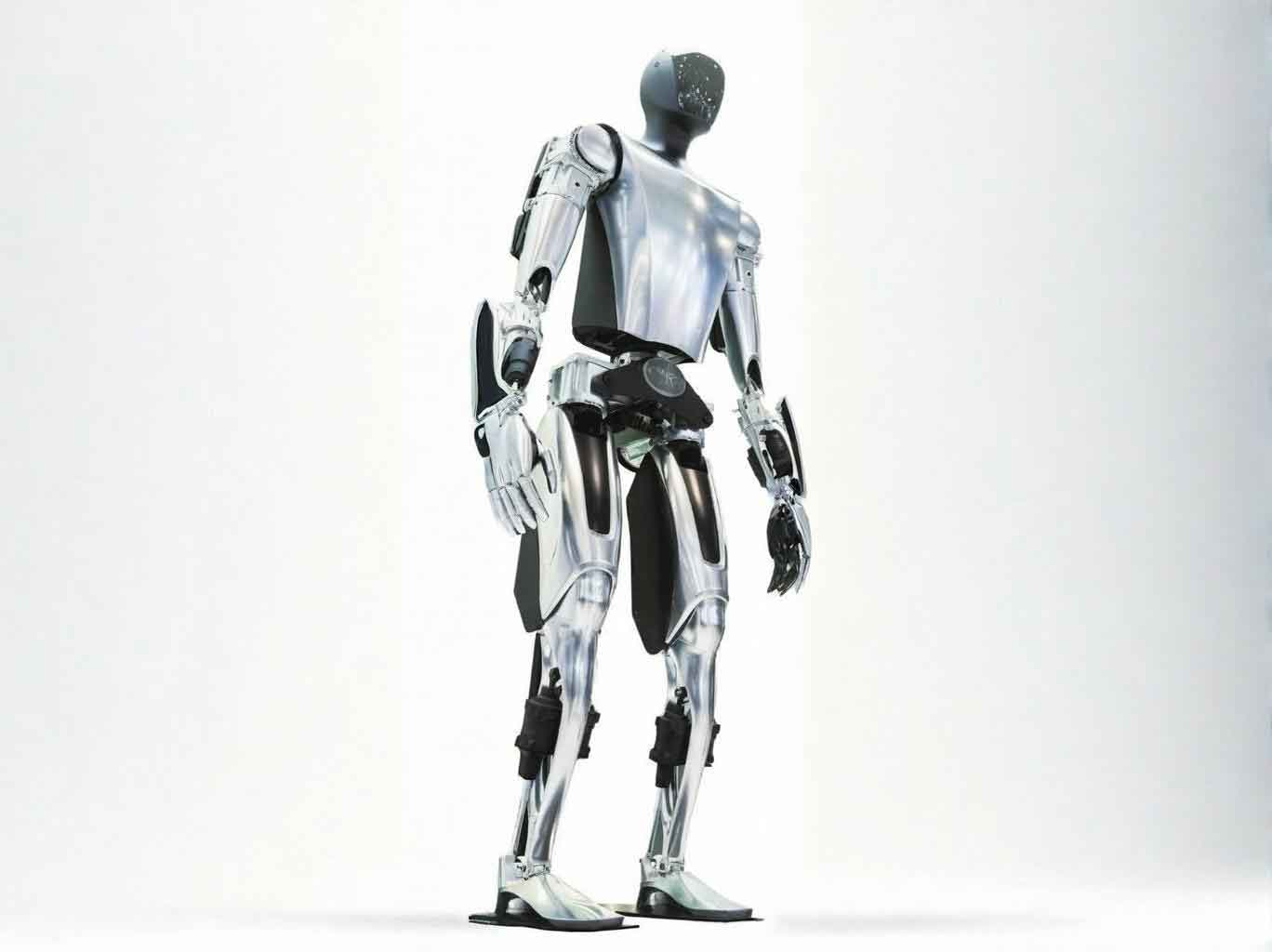
The manufacturing of sophisticated embodied AI robot platforms, as shown, is the foundation for this capability, integrating advanced sensors, actuators, and processing units into a mobile form factor suitable for human environments.
The following table summarizes the comparative advantages of an embodied AI robot over traditional AI in perceptual profiling:
| Aspect | Traditional AI / Digital Systems | Embodied AI Robot | Impact on Proactivity |
|---|---|---|---|
| Spatial Scope | Fixed to specific hardware locations (e.g., smart classroom). | Mobile across various physical and social contexts. | Actively expands the observational field, capturing a complete picture. |
| Data Authenticity | High risk of observer effect (Hawthorne Effect) in controlled settings. | Lower observer effect due to embodied social integration and naturalistic observation. | Actively gathers more authentic behavioral data, enabling truer profiling. |
| Modality | Often limited to one or two data types (e.g., video logins, click streams). | Multi-modal: combines vision, speech, proximity, gesture, and environmental context. | Actively synthesizes rich, multi-dimensional data for deeper understanding. |
2. Active Interaction: Proactively Fulfilling Needs
Understanding a learner is only the first step; effectively engaging them is crucial. Traditional digital education tools require the learner to seek them out. An embodied AI robot can initiate contact. Its humanoid or approachable form factor lowers barriers to interaction. More importantly, it can employ affective computing to recognize emotional states and respond with appropriate verbal and non-verbal cues—tone of voice, facial expressions, and gesture. This allows the embodied AI robot to proactively address moments of confusion, frustration, or disengagement.
For instance, if a learner’s profile indicates declining participation or sensed frustration, the embodied AI robot could approach and initiate a supportive dialogue, review a challenging concept, or connect the lesson to the learner’s interests. This ability to provide just-in-time, empathetic support fulfills critical emotional and cognitive needs that are often prerequisites for internalizing moral and ideological concepts. The interaction can be modeled as a proactive feedback loop:
$$
\text{Interaction}_{t+1} = G( P(t), \, S_{env}(t), \, E_{learner}(t), \, \text{Pedagogical Goal} )
$$
Here, the next interaction initiated by the embodied AI robot is a function $G$ of the current profile $P(t)$, the environmental context $S_{env}$, the estimated emotional state $E_{learner}$, and the overarching educational objective. The embodied AI robot actively computes this to determine when, how, and on what topic to engage.
Risk Assessment: The Dual Edges of Proactivity
The very strengths that make the embodied AI robot a powerful tool for proactive education also introduce significant novel risks that must be anticipated and managed.
| Risk Category | Specific Risks | Root Cause in Embodied AI |
|---|---|---|
| 1. Ethical & Ideological |
|
Physical embodiment and social agency create expectations of human-like ethics and trust. Proactive interaction amplifies influence, for good or ill. |
| 2. Psychological & Developmental |
|
The robot’s constant availability, patience, and tailored empathetic responses create a powerful, potentially addictive, support mechanism. |
| 3. Safety & Privacy |
|
Physical presence and advanced sensors directly intrude into personal physical and psychological space, creating new vectors for harm. |
Risk Mitigation: Strategic Safeguards for Responsible Deployment
To harness the proactive power of the embodied AI robot while mitigating its risks, a multi-layered framework of technical, ethical, and pedagogical safeguards is essential.
| Mitigation Strategy | Key Actions | Targeted Risks |
|---|---|---|
| 1. Ethical Governance & Ideological Oversight |
|
Ethical Deception, Value Misalignment, Technological Alienation, Ideological Manipulation. |
| 2. Psychological Hygiene & Social Scaffolding |
|
Emotional Dependency, Social Atrophy, Passive Internalization. |
| 3. Safety Protocols & Privacy-by-Design |
|
Uncanny Valley, Physical Safety, Privacy Invasion, Data Security. |
Conclusion: Toward a Synergistic Future
The embodied AI robot represents a significant evolution in educational technology, moving from a passive digital resource to an active, contextual, and socially intelligent agent. Its unique capacity for proactive perception and interaction offers a transformative pathway to enhance the initiative, personalization, and ultimately, the effectiveness of moral and ideological education. By actively drawing comprehensive learner profiles and initiating supportive, empathetic dialogues, the embodied AI robot can help educators reach learners at the right moment with the right support.
However, this power is coupled with profound responsibilities. The risks of ethical ambiguity, psychological dependency, and privacy erosion are inherent to its embodied and proactive nature. Successfully integrating the embodied AI robot into educational ecosystems will not be a purely technical challenge. It demands a holistic approach centered on humanistic values—rigorous ethical governance, psychologically informed design, robust safety engineering, and unwavering commitment to privacy. By implementing the strategic safeguards outlined, we can navigate the dual edges of this technology. The goal is not to replace human educators, but to create a synergistic partnership where the embodied AI robot acts as a powerful, proactive extension of the educator’s reach, enabling a more attentive, responsive, and ultimately human-centered approach to fostering moral development and ideological understanding.