
The evolution of modern agriculture is inextricably linked to the advancement of automation and intelligence. Agricultural robots, representing a new quality of productive force, are pivotal in addressing structural labor shortages, enhancing efficiency, and reducing operational costs. However, their widespread adoption is hampered by a critical limitation: a profound lack of adaptability within the complex, dynamic, and unstructured environments characteristic of real-world farms. Traditional robots, often reliant on pre-programmed rules or fixed paths for singular tasks, struggle with variability, uncertainty, and physical interactivity.
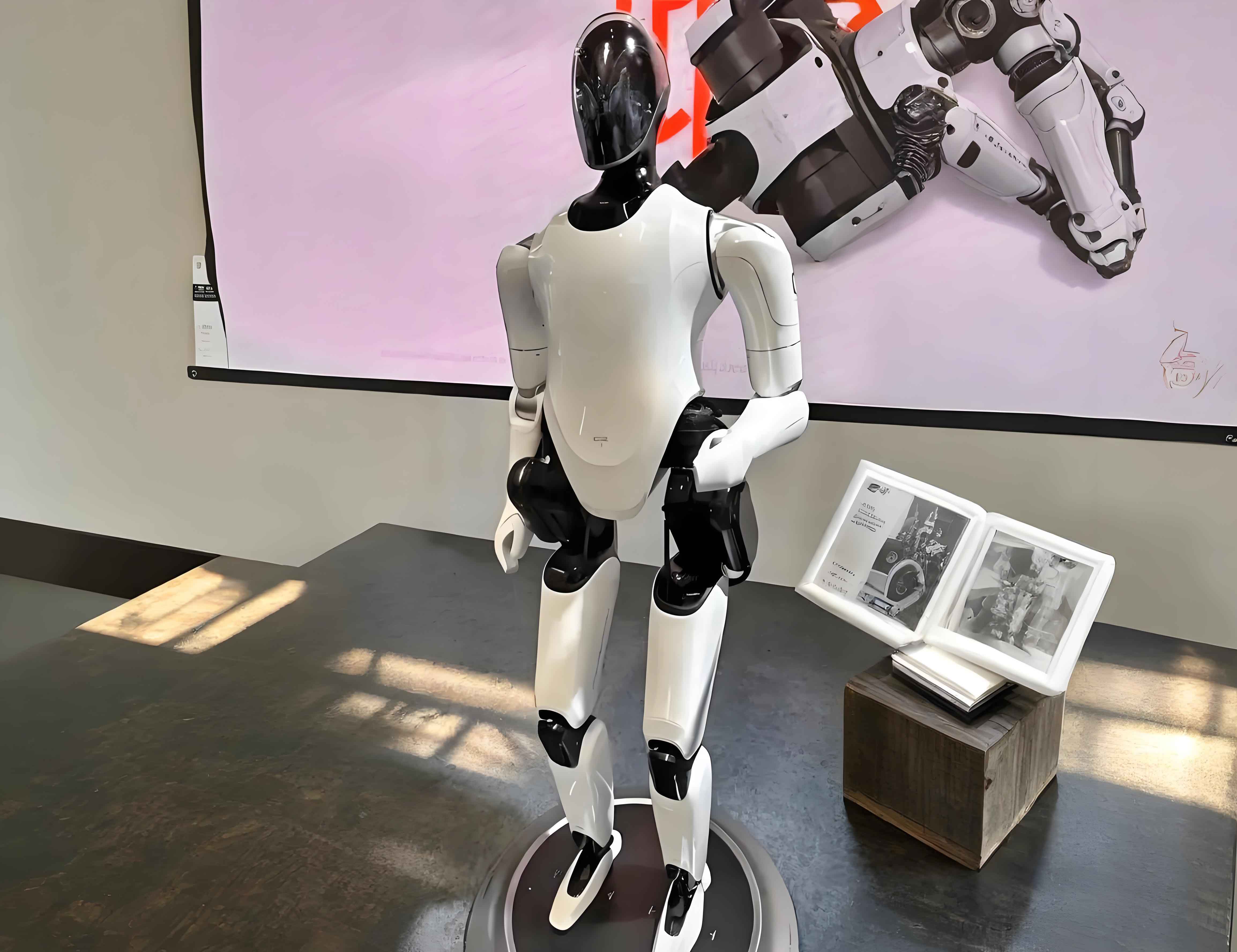
This is where the paradigm of embodied AI emerges as a transformative force. An embodied AI robot is not merely a mobile platform running software; it is an intelligent system where a physical entity (the body) is deeply integrated with artificial intelligence (the mind) to interact with and learn from its environment. It emphasizes the triadic synergy of the robot’s本体, its intelligent system, and the task environment. Intelligence and behavior arise from a continuous, closed-loop cycle of “perception-decision-action-feedback,” enabling dynamic scene understanding, constraint-aware decision-making, and adaptive execution. This shift from disembodied intelligence, which processes abstract symbols, to embodied intelligence, grounded in physical experience, is considered the next wave of AI. For agriculture, it promises robots with unprecedented environmental adaptability, decision-making autonomy, and operational flexibility—key to navigating the challenges of open fields, variable crops, and unpredictable conditions.
This article systematically explores the integration of embodied AI into agricultural robotics. We first delineate the core technological pillars that enable embodied intelligence. Subsequently, we analyze its application framework within agricultural scenarios, constructing a core model of “Embodied Perception, Cognition, Execution, and Evolution.” Finally, we dissect the significant technical and practical challenges currently impeding deployment and offer a perspective on future developmental trajectories.
1. Foundational Technological Pillars for Embodied AI Robots
The operational superiority of an embodied AI robot stems from a tightly integrated suite of technologies that form a coherent, interactive loop. Unlike a stack of isolated algorithms, these technologies enable the robot to be an active participant in its environment. The core system architecture revolves around four dimensions: multimodal fused perception, intelligent autonomous decision-making, autonomous action control, and feedback-driven autonomous learning. This integrated approach allows for dynamic scene reconstruction, optimized decision-making under constraints, adaptive execution amidst uncertainty, and continuous learning from experience.
1.1 Multimodal Fused Perception
As the “perceptual hub” of the embodied AI robot, multimodal perception is fundamental. It moves beyond the limitations of single-sensor systems by fusing spatio-temporal data from heterogeneous arrays—including visible-light cameras, depth sensors, LiDAR, millimeter-wave radar, IMUs, and spectral sensors. This fusion enables robust perception against challenges like lighting variance, occlusions, dust, and dynamic obstacles, which are endemic to agricultural settings. The key tasks are object recognition/classification, precise localization/navigation, 3D scene reconstruction, semantic scene understanding, and本体状态 monitoring.
The implementation of this technology has evolved from modular AI architectures toward unified modeling with large multimodal foundation models.
- Modular AI Architecture: Early systems combined pre-defined, task-specific models (e.g., for object detection, SLAM, behavior recognition) in a pipeline. For instance, improved CNN architectures like Pest-YOLOv5 have been used for small pest detection, while laser-based SLAM algorithms enable centimeter-level environment reconstruction in controlled settings like livestock barns. These methods are stable in structured environments but lack generalization capability due to their strong dependence on scene-specific prior knowledge.
- Multimodal Foundation Model Architecture: The current trend leverages large-scale pre-trained models like Vision Foundation Models (VFMs) and Vision-Language Models (VLMs). These models, trained on vast datasets, learn a unified representation space that aligns information across different modalities (vision, language, etc.). For example, models like SAM (Segment Anything Model) have shown remarkable zero-shot segmentation capabilities on agricultural imagery, such as delineating poultry or field boundaries without task-specific training. VLMs like CLIP-based adaptations can perform fine-grained recognition, such as identifying cucumber diseases by aligning image features with textual and label information in a common semantic space. Pioneering work like the MultiPLY model demonstrates the future direction: a single model that can integrate visual, auditory, tactile, and thermal sensations to reason about and interact with 3D environments, forming a holistic foundation for advanced embodied AI robot perception.
| Technical Direction | Methods/Examples | Core Advantages | Key Limitations |
|---|---|---|---|
| Modular Fusion | Linear Fusion, Multi-branch Networks | Simple, stable for structured tasks; Well-defined pipeline. | Poor cross-modal interaction; Weak generalization to novel scenes; High scene-dependency. |
| Foundation Model Fusion | VFMs (e.g., SAM), VLMs (e.g., CLIP variants), Multisensory Models (e.g., MultiPLY) | Strong zero-shot/cross-task generalization; Unified semantic representation across modalities; Emerging multisensory integration. | High computational cost; Requires massive pre-training data; Complex deployment on edge devices. |
1.2 Intelligent Autonomous Decision-Making
This pillar acts as the “command center,” transforming rich perceptual data into actionable plans. It involves task decomposition, reasoning, and strategy generation. The reliability of decisions depends heavily on the completeness of perceptual information and the accuracy of the environmental model. The evolution here has been from hard-coded logic to data-driven learning, and now toward large model-driven reasoning.
- Programmed & Specialized Task Algorithms: Traditional methods use deterministic algorithms (e.g., dynamic window approaches with fuzzy logic for greenhouse navigation) or reinforcement learning (RL). RL agents, such as those using Deep Q-Networks or PPO, learn policies through environment interaction, enabling adaptive behaviors like vineyard navigation without GPS.
- Large-Scale Pre-trained Models: Large Language Models (LLMs) and their multimodal counterparts are revolutionizing decision-making. Their profound language understanding bridges the gap between natural human instruction and machine action. Frameworks like LLM-Planner use an LLM as a high-level planner to decompose natural language commands (“harvest ripe tomatoes in quadrant A”) into sequences of sub-tasks, while a low-level planner translates these into executable actions. Vision-language-action models like RT-2 or 3D-VLA further unify perception, reasoning, and action planning within a single model, enabling an embodied AI robot to ground language instructions directly into its 3D perceptual space and generate feasible motion plans.
The decision-making process often involves optimizing a policy $ \pi_\theta(a|s) $ that maps states $s$ to actions $a$. In reinforcement learning, this is guided by maximizing the expected cumulative reward $R$:
$$ J(\theta) = \mathbb{E}_{\tau \sim \pi_\theta} \left[ \sum_{t=0}^{T} \gamma^t R(s_t, a_t) \right] $$
where $\tau$ is a trajectory, and $\gamma$ is a discount factor. LLMs can assist in shaping this reward function $R$ or directly generating the policy structure.
1.3 Autonomous Action Control
The “execution unit” of the embodied AI robot is responsible for translating decisions into precise, robust physical actions—navigation, object manipulation (grasping, pushing), and environmental interaction (opening a valve). The core challenge is ensuring robustness and precision in dynamic environments where cascading errors from perception and decision modules can lead to failure.
Recent advances focus on improving the generalization and sample efficiency of control policies:
- Fusion of RL and Transformer Architectures: Models like the Multi-Agent Transformer (MAT) reformulate control as a sequence modeling problem. An encoder models the joint state representation of the agent(s), and a decoder autoregressively outputs action sequences. The encoder is trained to minimize the temporal difference (TD) error, while the decoder is trained via a clipped PPO objective. This architecture enhances the policy’s ability to handle complex, multi-step tasks and generalize across different scenarios.
- Large Model-Assisted Reinforcement Learning: LLMs are used to automatically generate or refine reward functions from natural language descriptions (e.g., Text2Reward), drastically reducing the need for manual reward engineering and improving learning efficiency.
- End-to-End Visuomotor Policies: Models like RT-2 (Robotic Transformer 2) treat robot actions as tokens in a vocabulary and train jointly on vast internet-scale vision-language data and robotic control data. This allows the embodied AI robot to transfer knowledge from the web to physical control, enabling it to execute commands like “pick up the apple” despite never having seen that specific apple during training.
1.4 Feedback-Driven Autonomous Learning
This is the “self-optimizer,” enabling the embodied AI robot to refine its perception, decision, and action modules through continuous interaction. It creates a virtuous cycle where action outcomes and environmental feedback are used for lifelong learning. Large models are pivotal in accelerating this loop.
- Models like VoxPoser use LLMs and VLMs to generate detailed 3D value maps and motion trajectories directly from language instructions, bypassing the need for manually annotated demonstration data. The robot can then use online interaction data to refine these plans, especially for tasks involving complex contacts.
- Frameworks like SayCan leverage the broad knowledge of LLMs to propose feasible skills and use learned value functions (from RL) to score their likelihood of success in the current context, effectively using feedback to ground high-level language in low-level executable policies.
2. Core Application Framework for Embodied AI in Agricultural Robots
The potential of embodied AI robot technology permeates the entire agricultural production chain. From soil to harvest to livestock management, the core capabilities can be mapped to a wide array of applications: unmanned tractors that adjust tillage depth via tactile feedback, weeding robots that distinguish crop from weed using visual affordances, fruit-picking robots with compliant grippers guided by visuo-tactile sensing, and herding robots that adapt their behavior based on animal movement patterns.
To realize this potential, we propose a core operational framework for an embodied AI agricultural robot, consisting of four iterative modules: Embodied Perception (P), Embodied Cognition (C), Embodied Execution (X), and Embodied Evolution (E). This P-C-X-E cycle forms the backbone of its intelligent behavior.
2.1 Embodied Perception (P)
This module is about active, situated understanding. For an embodied AI robot in a field, perception is not just seeing; it’s about fusing what it sees with what it feels (vibration, force), hears (equipment sound, animal calls), and infer from other sensors to build a comprehensive, actionable model of its surroundings.
| Sub-Module | Key Techniques | Agricultural Example & Challenge |
|---|---|---|
| Multimodal Fusion | Feature-level fusion, Transformer-based fusion, Progressive fusion. | Fusing RGB, thermal, and LiDAR to reliably detect livestock in foggy conditions. Challenge: real-time processing of asynchronous, heterogeneous data streams. |
| Dynamic 3D Scene Understanding | Visual SLAM, LiDAR SLAM, Neural Radiance Fields (NeRFs). | Building a dynamic 3D map of an orchard with moving branches to plan a collision-free picking path. Challenge: handling occlusions and object deformations in real-time. |
| Domain Adaptation | Unsupervised Domain Adaptation (UDA), Semi-supervised DA. | Adapting a weed detection model trained in a Midwest field to work reliably in a California field with different soil color and weed species. Challenge: avoiding “negative transfer” and maintaining performance on the original domain. |
Domain adaptation often involves minimizing a distance metric $ d(\mathcal{D}_S, \mathcal{D}_T) $ between the source domain $\mathcal{D}_S$ (e.g., simulation) and target domain $\mathcal{D}_T$ (e.g., real field) feature distributions, often using measures like Maximum Mean Discrepancy (MMD):
$$ \text{MMD}(\mathcal{D}_S, \mathcal{D}_T) = \left\| \frac{1}{n_S} \sum_{i=1}^{n_S} \phi(x_i^S) – \frac{1}{n_T} \sum_{j=1}^{n_T} \phi(x_j^T) \right\|_{\mathcal{H}} $$
where $\phi$ maps data to a Reproducing Kernel Hilbert Space $\mathcal{H}$.
2.2 Embodied Cognition (C)
Cognition links perception to actionable intent. It’s the process where the robot understands a high-level command like “harvest the ripe strawberries on the left trellis” and breaks it down into a logical sequence of sub-tasks and skills, considering its physical capabilities and environmental constraints.
| Paradigm | Basis | Application & Limitation in Agriculture |
|---|---|---|
| Rule-Driven | Finite State Machines, Expert Systems. | Early automated guides: “IF at row end, THEN turn 180 degrees.” Limitation: Inflexible; cannot handle unplanned obstacles or task variations. |
| Expert Demonstration-Driven | Imitation Learning, Behavioral Cloning. | Learning optimal pruning cuts by mimicking a master pruner’s motions. Limitation: Requires costly expert data; performance bounded by demonstration quality and variety. |
| Large Model-Driven | LLMs, VLMs, Vision-Language-Action Models. | An LLM decomposes “prepare the seedbed in plot B” into: 1. Navigate to plot B, 2. Assess soil condition via sensors, 3. Engage tiller at depth X, 4. Perform leveling pass. It can reason about steps based on general agronomic knowledge. This is the most promising direction for cognitive generalization in embodied AI robots. |
2.3 Embodied Execution (X)
Execution is where cognition meets the physical world. It’s the fine-grained control that turns a planned “grasp” into a successful, damage-free pick of a fragile fruit. Key approaches focus on learning from interaction.
| Learning Approach | Mechanism | Role in Agricultural Execution |
|---|---|---|
| Natural Language Interactive Learning | Using verbal feedback (“softer grasp”) to correct and refine policies online (e.g., DROC framework). | Allows a farmer to intuitively correct a robot’s harvesting strength or approach in real-time, enabling fast adaptation. |
| Visual Affordance Learning | Predicting *how* and *where* to interact with an object from visual input (e.g., Where2Act, O2O-Afford). | From an image of a tomato, predicting the pixel-wise success probability of a gripper contact point and the required push/pull direction, enabling precise, physics-aware manipulation. |
2.4 Embodied Evolution (E)
This module ensures the embodied AI robot doesn’t remain static. It evolves its capabilities over time through simulation, experience replay, and continuous learning, tackling the problem of “catastrophic forgetting” when learning new tasks.
| Evolutionary Path | Methods/Tools | Purpose for Agricultural Robots |
|---|---|---|
| Deep Evolutionary Reinforcement Learning (DERL) | CGP, GA-DRL, Supe-RL. | Co-optimizes the robot’s control policy *and* its morphological parameters (e.g., arm length, wheel type) in simulation to find the optimal “body” and “mind” for a task like traversing muddy terrain. |
| Virtual Simulation Learning | High-fidelity simulators (Habitat, NVIDIA Isaac Sim, farm-specific digital twins). | Trains a spraying robot on millions of simulated weed patches under varying wind conditions, then transfers the policy to the real machine, saving immense time and cost. |
| Online Continual Learning (OCL) | Experience Replay, Elastic Weight Consolidation (EWC), Dynamic Architecture Expansion. | Enables a scouting robot to learn to identify a new crop disease over a season without forgetting how to recognize the pests it learned previously. The core challenge is balancing stability (old knowledge) with plasticity (new knowledge). |
A common OCL objective function incorporates a regularization term to protect previously learned parameters $\theta^*$:
$$ \mathcal{L}(\theta) = \mathcal{L}_{\text{new}}(\theta) + \lambda \sum_i \Omega_i (\theta_i – \theta_i^*)^2 $$
where $\mathcal{L}_{\text{new}}$ is the loss on the new task, $\Omega_i$ is the importance weight for parameter $i$, and $\lambda$ controls the strength of consolidation.
3. Critical Challenges for Deployment
Despite significant progress, the path to widespread adoption of sophisticated embodied AI robots in agriculture is fraught with intertwined technical and application-level challenges.
3.1 Technical Challenges
- Algorithmic Robustness and Integration: Achieving reliable performance in the face of extreme environmental variability (light, occlusion, dust, weather) remains difficult. Furthermore, integrating large, complex models for perception, cognition, and control into a cohesive, real-time system on constrained hardware is a major systems engineering hurdle.
- Data Scarcity and the Simulation-to-Reality Gap: Collecting large-scale, high-quality, annotated datasets of physical robot interactions in diverse agricultural settings is prohibitively expensive and time-consuming. While simulation is a powerful tool, the “sim2real” gap—the discrepancy between virtual and real-world physics and visuals—can lead to policies that fail upon deployment.
- Software and Hardware Limitations: There is a lack of standardized software frameworks and middleware tailored for agricultural embodied AI. Hardware must balance computational power for running advanced models with energy efficiency for all-day operation, all while being rugged enough to withstand harsh field conditions.
3.2 Application Challenges
- Imbalance Between Cognitive and Physical Dexterity (“Brain vs. Brawn”): While “brain” capabilities (planning, reasoning) are advancing rapidly with LLMs, the “brawn”—the fine, adaptive, and robust mechanical execution—often lags. Picking a delicate berry requires a level of tactile finesse that is still a research frontier.
- Generalization vs. Specificity: Creating a single, universal embodied AI robot that can handle the vastly different tasks of harvesting grapes, pruning apple trees, and transplanting seedlings is currently unrealistic. Solutions often require significant task-specific or crop-specific customization, hindering economies of scale.
- Multi-dimensional Performance Trade-offs: Practical deployment forces difficult compromises between cost, computational power, real-time performance, battery life, durability, and operational accuracy. Optimizing for all simultaneously is extremely challenging.
4. Future Prospects and Concluding Remarks
The trajectory for embodied AI agricultural robots points toward greater integration, generalization, and practical utility. Key future directions include:
- Development of High-Quality Agricultural Embodied AI Datasets and Simulators: Creating large-scale, open-source datasets of robotic interactions in agricultural settings and high-fidelity, physics-based simulators with realistic crop models will be fundamental for training and benchmarking. This will help bridge the sim2real gap.
- Fusion of Foundational and Domain-Specific Models: The future lies in combining the broad knowledge and reasoning of general-purpose LLMs/VLMs with the deep, specialized knowledge of agricultural domain models (e.g., models trained on agronomic science, pest life cycles, soil chemistry). This will yield an embodied AI robot that can both understand complex instructions and apply expert-level agricultural reasoning.
- Hierarchical “Large-Small” Model Architecture: A pragmatic architecture will leverage a large model (“slow thinker”) in the cloud or on a robust edge computer for high-level task planning, scene understanding, and anomaly reasoning. This will guide a suite of smaller, specialized, and highly optimized models (“fast reactors”) running locally on the robot for real-time perception, control, and reaction. This balance offers a path to deployable intelligence.
In conclusion, embodied AI represents a paradigm shift for agricultural robotics, moving from automated tools to adaptive, intelligent partners in the field. By closing the loop between perception, cognition, and action within a physical body, these systems hold the promise of overcoming the adaptability bottleneck that has long constrained automation in open-ended environments. While significant challenges in robustness, generalization, and integration remain, focused efforts on data, simulation, hybrid model architectures, and continued technological convergence are paving the way for a new generation of truly intelligent agricultural machines. The embodied AI robot is not just a futuristic concept but an inevitable and necessary evolution to meet the demands of sustainable, efficient, and resilient food production.