
The evolution of artificial intelligence (AI) is ushering in a new technological paradigm with profound implications for public security governance: embodied AI. Unlike traditional software-based AI, an embodied AI robot possesses a physical form that interacts with the real world in real-time, integrating perception, cognition, decision-making, and action into a unified, autonomous system. This shift from disembodied intelligence to physically situated agency presents both unprecedented opportunities and complex challenges for law enforcement. As nations globally prioritize future industries like embodied AI robot development, police forces are inevitably exploring their application to enhance operational efficiency and officer safety. However, deploying autonomous physical agents in policing roles triggers significant legal and ethical questions concerning accountability, procedural justice, and fundamental rights. This article examines the transformative potential of embodied AI robot applications in policing, analyzes the concomitant multi-dimensional risks, and proposes a framework for legal规制 aimed at achieving a sustainable balance between technological empowerment and necessary constraint.
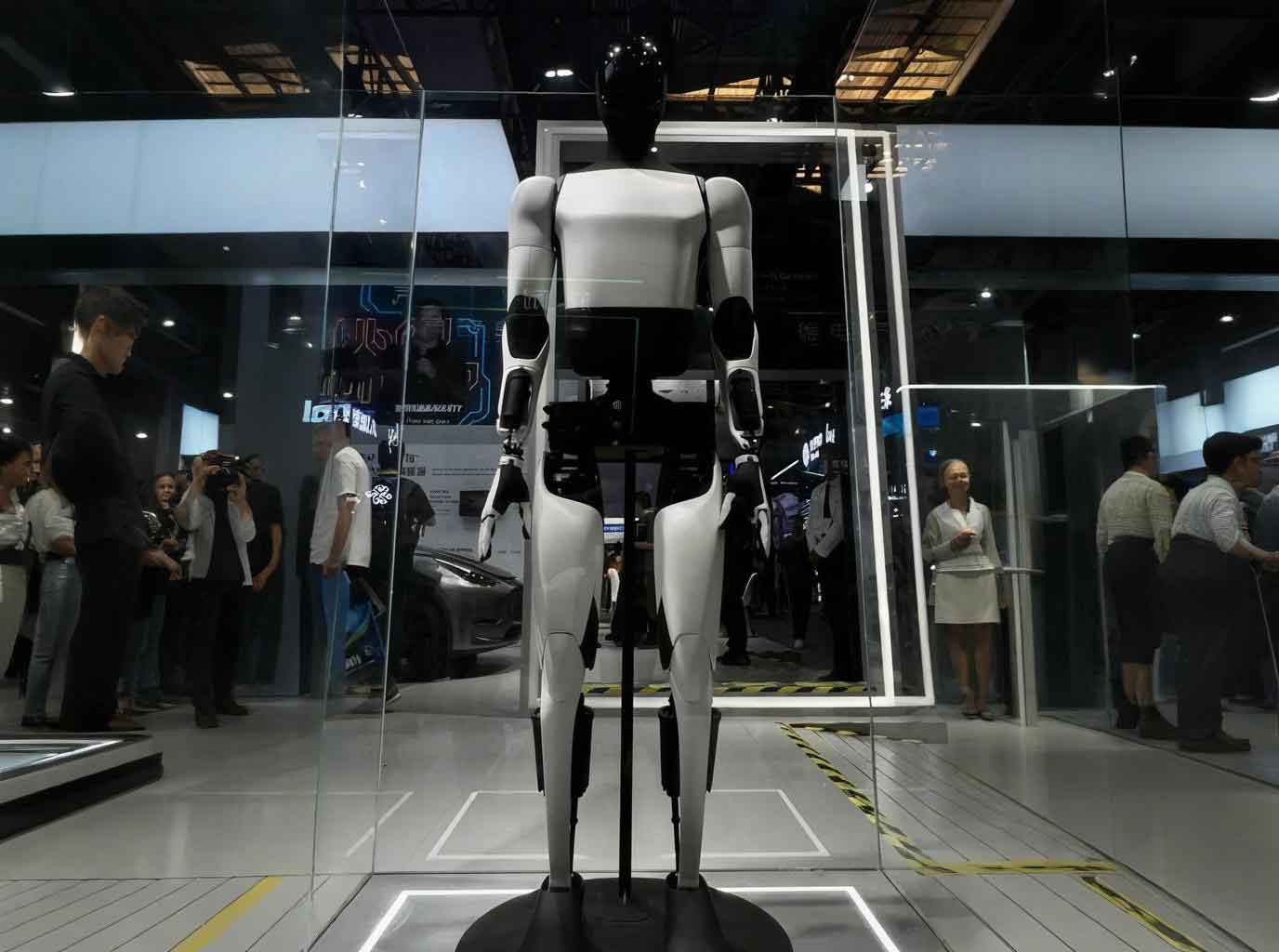
I. The New Paradigm: Defining Characteristics of Embodied AI
Embodied intelligence represents a qualitative leap from conventional AI. Its core defining characteristics, summarized in Table 1, create a new operational modality for intelligent systems.
| Characteristic | Embodied AI Robot | Traditional AI | Implication for Policing |
|---|---|---|---|
| Physical Embodiment | Has a tangible, physical body (humanoid, vehicular, or other forms) enabling direct environmental interaction. | Purely software-based, lacking a persistent physical form. | Can perform physical tasks (patrol, evidence collection, crowd control), replacing or augmenting human officers in the field. |
| Environmental Adaptation & Autonomy | Uses multi-modal sensors (LiDAR, vision, tactile) to perceive and model its environment, enabling offline, self-contained decision-making. | Relies on pre-processed data streams; decisions often require cloud connectivity and central server support. | Can operate in communication-denied environments (e.g., inside buildings, during disasters), making independent, time-critical decisions. |
| Independent Action | Executes physical actions to complete tasks based on its own perceptual input and decision-making, forming a perception-action loop. | Outputs are typically data, recommendations, or control signals for other machines/humans to act upon. | Can autonomously navigate, intervene (e.g., issue verbal warnings, block a path), or use non-lethal force based on predefined protocols. |
| Autonomous Learning & Calibration | Engages in continuous, self-supervised learning through environmental interaction, constantly refining its behavioral models (e.g., through reinforcement learning). | Learning requires extensive offline training on large datasets (“data feeding”) and explicit reprogramming by engineers. | Can adapt to local crime patterns or crowd behaviors, but risks developing unpredictable or biased operational tactics. |
The operational capability of an embodied AI robot can be conceptualized through a simplified decision model at time t:
$$D_t = \Phi(\sum_{s} w_s \cdot S_s(t) + \sum_{c} w_c \cdot C_c(t) + b)$$
Where \(D_t\) is the decision/action vector, \(\Phi\) is the decision function (e.g., a neural network), \(S_s(t)\) are real-time sensor inputs (visual, auditory, spatial), \(C_c(t)\) are contextual factors from memory (historical crime data, local regulations), \(w_s, w_c\) are learned weights, and \(b\) is a bias term. This closed-loop process enables the embodied AI robot to act without direct human command in dynamic situations.
II. The Imperative: Value Logic and Application Trends in Policing
The drive to integrate embodied AI robot technology into policing is not merely technological fascination but a response to concrete operational, strategic, and societal needs.
A. The Need for Policing Modernization and New Quality Combat Capability
National strategies emphasizing technological innovation as a new productive force directly translate into policing doctrine. Modern police forces seek “new quality combat capability,” where technology fundamentally augments effectiveness. Embodied AI robot systems serve as force multipliers, performing dangerous (e.g., bomb disposal, hazardous material response), repetitive (e.g., 24/7 perimeter patrol), or data-intensive (e.g., scanning crowds for known threats) tasks, thereby conserving human resources for complex judgment-based activities. This aligns with the dual policy goals of “Technology Strengthening the Police” and “Preferential Treatment for Officers.”
B. The Need to Govern New Security Risks
Technological advancement itself generates novel security risks, such as crimes leveraging autonomous systems or attacks on digital-physical infrastructure. Policing must evolve to manage the risks it inadvertently helps create. Embodied AI robot platforms can be deployed to police environments shaped by advanced technology, such as monitoring drone traffic or securing IoT-dense smart cities. Their deployment is part of building a resilient security architecture capable of prevention, response, and recovery—a core requirement of modern national security strategy. Resilience \(R\) can be modeled as a function of prevention \(P\), response capacity \(C\), and recovery speed \(R_c\):
$$R(t) = \alpha P(t) + \beta C(t) + \gamma R_c(t)$$
where \(\alpha, \beta, \gamma\) are weighting coefficients determined by systemic priorities.
C. The Need for Digital Government and Prevention of Alienation
Digital government initiatives promote efficiency and transparency through technology. However, unregulated use of embodied AI robots risks several forms of alienation:
- Technological Alienation: The embodied AI robot‘s capabilities may be mistaken for legitimate authority (“technologization of power”), leading to enforcement actions beyond legal authorization.
- Power Alienation: Human officers may over-delegate discretionary authority to algorithms (“power technologization”), diminishing professional judgment and human-centric policing values.
- Ecological Alienation: The symbiosis between human officers and embodied AI robots could create a self-reinforcing system where efficiency overrides justice, eroding public trust and the normative foundations of policing.
D. The Need to Meet Public Expectations for a Better Life
Citizens expect policing that is not only effective but also respectful, fair, and accessible. When designed appropriately, embodied AI robots can enhance the public’s sense of security, gain, and happiness—for example, by providing consistent, impartial first-response services, multilingual assistance in diverse communities, or non-confrontational traffic management. Meeting these elevated public expectations requires technology that complements, not replaces, the human elements of service and procedural justice.
III. The Problematique: Systemic Risks in Police Application
The integration of embodied AI robots into law enforcement generates a complex risk landscape that challenges existing legal and operational frameworks, as detailed in Table 2.
| Risk Category | Manifestation & Legal Challenge | Underlying Cause |
|---|---|---|
| Subject Risk (Agency & Legitimacy) |
|
Mismatch between the embodied AI robot‘s autonomous agency and legal frameworks designed for human actors or simple tools. |
| Process Risk (Procedural Justice) |
|
Absence of real-time human oversight and inherent opacity of autonomous decision-making processes. |
| Liability Risk (Attribution & Justice) |
|
Linear, human-centric liability models cannot accommodate the distributed, nonlinear causality of harm caused by self-learning autonomous systems. |
| Remedy Risk (Redress & Recovery) |
|
Remedial mechanisms are designed for human-administered processes and are ill-equipped for algorithmic, automated adjudication and enforcement. |
The probability and severity of a risk event \(E\) can be modeled as a function of the embodied AI robot‘s autonomy level \(A\), environmental complexity \(C_e\), and the robustness of oversight \(O\):
$$P(E), S(E) = f(A, C_e, \frac{1}{O})$$
Higher autonomy in complex environments with weak oversight exponentially increases risk.
IV. The Regulatory Path: Legal Frameworks for Constraint and Empowerment
Mitigating the risks while harnessing the benefits of embodied AI robot policing requires a proactive, multi-layered legal and governance framework. The guiding principle must be the “legalization of technology,” embedding constitutional and administrative law norms into the design, deployment, and operation lifecycle.
A. Clarifying Legal Subject Status and Authorizing Acts
Law must precisely define the legal fiction governing the embodied AI robot‘s actions.
- Human Officer as Primary Agent: Establish the principle that an embodied AI robot acts solely as an instrument of a legally accountable human officer. Every autonomous action must be traceable to a prior, specific authorization within a defined operational envelope.
- Explicit Authorization Regime: Develop graduated “use case” regulations. High-risk functions (e.g., use of force, arrest) require direct, real-time human command. Medium-risk functions (e.g., traffic stop, investigation) may operate under pre-authorization with human supervision. Low-risk functions (e.g., information dissemination, routine patrol) can be largely autonomous.
- Digital Identity & Logging: Mandate immutable blockchain-based activity logs for every embodied AI robot, recording all sensor inputs, decision triggers, and actions taken, cryptographically linked to the authorizing officer.
B. Strengthening Procedural Control and Oversight
Embed legal checks directly into the embodied AI robot‘s operational process.
- Algorithmic Due Process: Legally mandate “explainability by design.” For any adverse decision (e.g., a fine, detention request), the system must be able to output the primary data points and logical rules that led to it in human-readable form.
- Real-time Legality Checks: Implement onboard legal knowledge graphs that cross-reference planned actions against jurisdictional laws and policies, requiring human override for potentially ultra vires actions.
- Transparency & Notice: The embodied AI robot must clearly identify itself, state its purpose, and inform individuals of their rights (e.g., to request a human officer, to data access) in understandable terms.
C. Refining Liability Attribution Frameworks
Move beyond simplistic liability models to a multi-actor, risk-based approach.
- General Rule – User Liability: The deploying law enforcement agency bears primary strict liability for harm caused by its embodied AI robot, ensuring a viable claimant for victims. This applies under a no-fault or risk-based liability regime.
- Supplementary Developer/Producer Liability: The agency can seek indemnity from the developer/manufacturer if harm is proven to result from a design defect, flawed training data, or a security vulnerability. This requires mandatory liability insurance for producers.
- Fairness & Risk Pools: For harms arising from unpredictable “emergent behavior” after deployment, a shared compensation fund, financed by a levy on the embodied AI robot industry or government, can provide relief, akin to a no-fault insurance scheme.
A liability attribution function \(L\) can be conceptualized as:
$$L = \alpha L_{user} + \beta L_{producer} + \gamma L_{fund}$$
where \(L_{user}\) is user liability, \(L_{producer}\) is producer liability (triggered by defect proof), \(L_{fund}\) is fund payouts, and weights \(\alpha, \beta, \gamma\) are determined by the factual causation chain.
D. Guaranteeing Effective Remedial Channels
Ensure accessible and meaningful remedies for individuals affected by embodied AI robot actions.
- Integrated Administrative Appeal: Create a simple, direct mechanism—via app or hotline—to immediately contest an action taken by an embodied AI robot, triggering an automatic human review and freezing of any related automated process (e.g., fine collection).
- Specialized Expertise & Ombudsman: Establish police units with combined legal and technical expertise to handle complaints and conduct internal audits of embodied AI robot decision logs. An independent AI Ombudsman office could provide external oversight.
- Judicial Adaptation: Develop special court procedures or dedicated divisions to handle cases involving autonomous systems. This includes standards for admitting and interpreting robot log data as evidence and leveraging court-appointed technical experts.
V. Conclusion
The integration of embodied AI robot technology into policing stands at a critical juncture between empowerment and peril. Its potential to enhance operational capabilities, officer safety, and public service is significant. Yet, this potential is inextricably linked to profound risks of rights infringement, accountability evasion, and the erosion of procedural justice and public trust. Navigating this path requires moving beyond viewing the embodied AI robot as either a mere tool or an autonomous agent. Instead, it must be understood as a complex socio-technical system that must be deliberately “locked” into a robust legal framework. The proposed approach—clarifying agency, hardening procedural controls, innovating liability structures, and ensuring genuine remedies—seeks to institutionalize the necessary constraints that enable safe and legitimate empowerment. The ultimate goal is not to have technology disrupt law but to have law seamlessly guide technological integration, ensuring that every embodied AI robot on patrol acts as a force multiplier for justice, transparency, and community trust, thereby genuinely contributing to the new quality combat capability of modern police forces.