
As I observe the rapid evolution of information technology, I see libraries undergoing a profound transformation from traditional institutions to smart libraries. This shift is driven by the integration of artificial intelligence, IoT, and big data, aiming to achieve precise resource management, personalized service delivery, and dynamic spatial optimization. In my view, the core of this transformation lies in building a human-machine collaborative intelligent ecosystem that provides efficient, convenient, and immersive knowledge service experiences, fostering knowledge sharing and innovation. Among the technological advancements, embodied AI robots stand out as a critical branch of artificial intelligence, emphasizing that intelligent agents develop intelligence through interaction with the physical world. With their advantages in perception, decision-making, and action, embodied AI robots hold immense potential in smart library construction. However, I notice that academic circles have not yet reached a consensus on how embodied AI robot technology specifically empowers smart library development, its application pathways, and the challenges involved. Therefore, through literature analysis and case studies, I aim to systematically explore the pathways, challenges, and future directions of embodied AI robots empowering smart library construction, hoping to provide theoretical references and practical guidance for libraries’ intelligent transformation.
Embodied intelligence, rooted in embodied cognition theory from cognitive science, emphasizes that cognitive processes are closely linked to the body and environment. I understand that embodied cognition posits cognition as a dynamic, situational process arising from the interaction between body and world, rather than abstract symbolic computation. For instance, gestures can influence problem-solving. Inspired by this, embodied AI robots require physical bodies and continuously interact with the environment to perceive, learn, decide, and act. In my analysis, embodied AI robots exhibit four core characteristics: embodiment (having a physical body whose structure and capabilities affect cognition), situatedness (cognition occurs in real environments, which are integral to the process), interactivity (continuous interaction with the environment for perception and adaptation), and dynamism (cognition evolves in real-time through interaction). Philosophically, traditional AI, influenced by Cartesian mind-body dualism, views intelligence as pure symbolic reasoning, whereas embodied AI robots adhere to a mind-body unity and emergentism, where intelligence emerges from body-environment interactions. This philosophical insight suggests that smart libraries should focus more on users’ bodily experiences and interactive processes in library settings, prioritizing human-centric, contextualized intelligent service systems.
Currently, embodied AI robot technology is in a phase of rapid iterative development, with system forms and application scenarios showing significant diversity. In terms of physical morphology, embodied AI robots have evolved beyond single structures to include humanoid biomimetic, quadrupedal movement, wheeled mobility, tracked obstacle-crossing, underwater exploration, and drone aerial operations. In functional positioning, embodied AI robots are deeply integrated with vertical sectors such as services (e.g., guided tours), manufacturing (e.g., industrial assembly), logistics (e.g., warehouse sorting), and agriculture (e.g., precision picking), forming a cross-industry, multimodal technology application matrix. Smart libraries represent a key practical domain for embodied AI robot technology in the service industry. Through innovations like intelligent inventory and guided tour robots, smart libraries can not only reshape knowledge service models but also serve as testbeds for human-robot collaboration efficacy, which is crucial for technological iteration and industry paradigm upgrades. End-to-end embodied AI foundation models have become a core research direction. Traditional robotics often decouples perception, cognition, and motion control modules for independent design and training before system integration, but this modular approach can lead to information loss and协同 bottlenecks. To address this, end-to-end embodied AI foundation models aim to build unified, holistic intelligent models that enable end-to-end learning and optimization from raw perceptual inputs (e.g., visual images, natural language instructions) to final action outputs (e.g., robot motion trajectories), thereby breaking information bottlenecks and enhancing overall system performance. For example, models like RoboCat and RT-2 integrate vision, language, and action information, improving agents’ perception, understanding, decision-making, and autonomous action capabilities in complex environments through architectural innovations and action tokenization. However, I recognize that current embodied AI robot technology still faces challenges, particularly in long-term memory construction, complex intent understanding, and task decomposition.
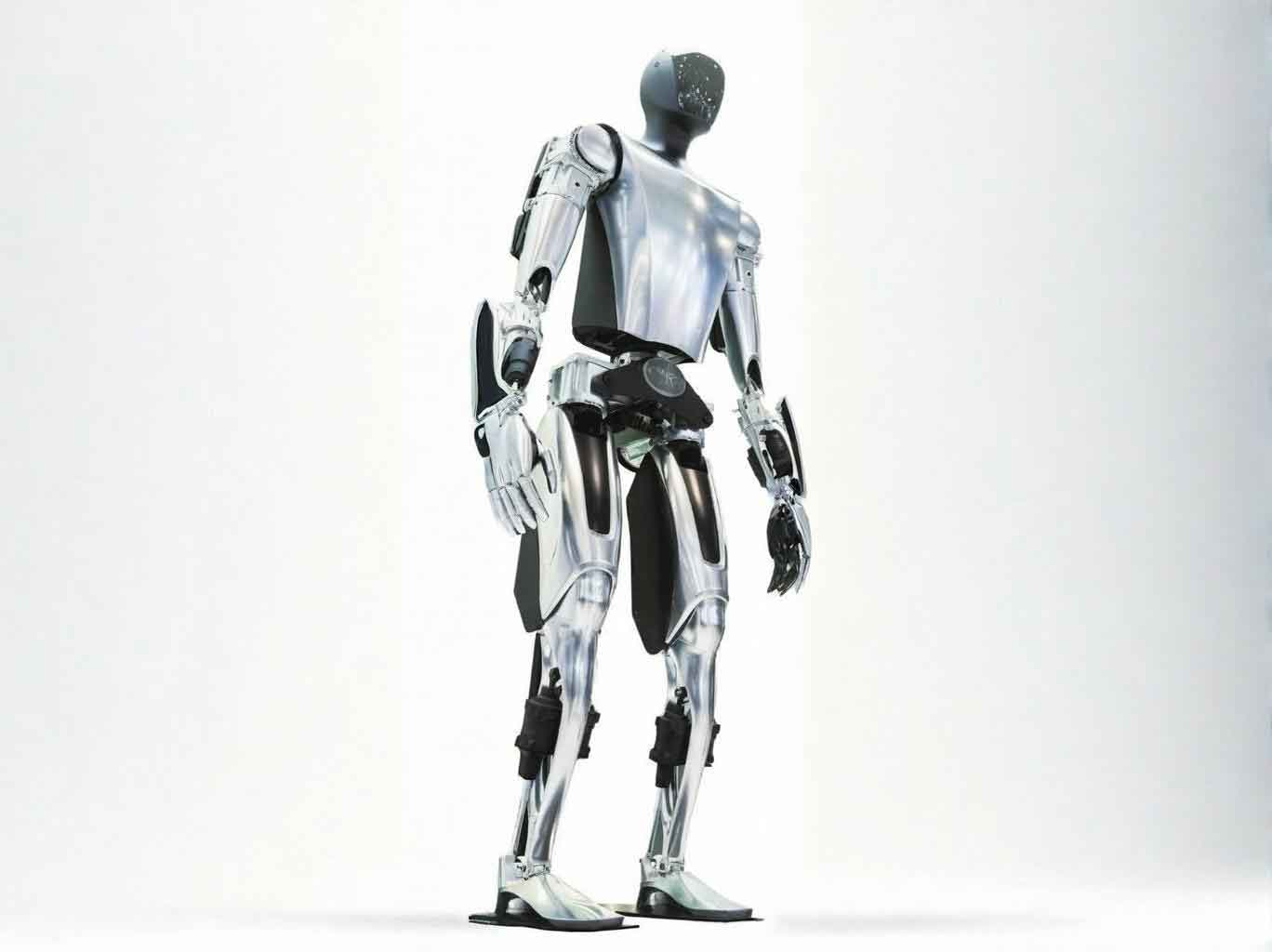
Looking ahead, embodied AI robot technology will continue to evolve toward higher autonomy, generalization能力, and human-robot collaboration models. First, autonomy will improve: future embodied AI robots will possess stronger self-learning, environmental adaptation, and autonomous decision-making abilities, enabling them to handle more complex and dynamic operational environments, independently complete challenging tasks, and reduce reliance on human intervention. For instance, in library scenarios, intelligent guided tour robots could autonomously optimize navigation strategies based on historical service data. Second, generalization capabilities will strengthen: future embodied AI robots will exhibit enhanced knowledge and skill transfer abilities, effectively generalizing experiences learned in specific contexts to new application scenarios, thereby increasing system versatility and environmental adaptability while reducing development and deployment costs. For example, in libraries, warehouse sorting robots could perform inventory and sorting tasks, significantly improving efficiency and研发 efficiency. Third, human-robot collaboration will deepen: future embodied AI robot systems will emphasize synergy with humans, serving as effective assistants and partners in work and life. This collaborative mode can boost工作效率, optimize user experiences, and foster a harmonious human-robot coexistence environment.
In my assessment, the process of embodied AI robot technology empowering smart library construction can be divided into three stages: intelligent tool substitution, service process reshaping, and cognitive form transformation. These stages are summarized in Table 1.
| Stage | Intelligent Tool Substitution | Service Process Reshaping | Cognitive Form Transformation |
|---|---|---|---|
| Technical Features | Single-modal perception, Rule-driven | Multimodal perception, Data-driven | Cross-modal fusion, Autonomous decision-making |
| Service Goal | Efficiency optimization | Personalized service | Ecological reconstruction |
| Examples | Intelligent guided tour robots, Intelligent inventory robots | Intelligent recommendation robots, Mobile service robots | Metaverse libraries, Intelligent agents |
The first stage, intelligent tool substitution, involves libraries introducing various embodied AI robot devices to assist or replace human labor in specific tasks, enhancing operational efficiency and service levels. For example, intelligent guided tour robots equipped with visual navigation, indoor positioning, and natural language processing can autonomously move within libraries, providing precise path guidance and information咨询 services. These embodied AI robots help users quickly locate target books on shelves, saving time and improving borrowing efficiency. Through voice interaction or touchscreens, they can answer common questions about library layout, service processes, and event information, offering convenient咨询 services. Additionally, with emotion recognition technology, embodied AI robots can perceive users’ emotional states, delivering more humanized services. In automated resource management, embodied AI robots like inventory robots with RFID and visual perception technologies can autonomously patrol shelves, rapidly scanning, identifying, and inventorying books, thereby increasing accuracy and freeing up human resources. Automated sorting systems can sort returned books based on type, subject, or call number, accelerating circulation and shelving processes. For instance, some national libraries have deployed智能分拣机器人 systems that automatically identify book information and sort them into different areas, significantly improving efficiency and reducing labor intensity.
The second stage, service process reshaping, sees embodied AI robot technology deeply integrated with core library business processes to enhance service personalization and proactivity, innovate service models, and improve user experiences. Embodied AI robots equipped with user profiling analysis can provide personalized recommendations for books, literature, and events via mobile terminals or smart displays, based on users’ historical borrowing records, interest preferences, and reading habits. This boosts the precision and appeal of library services. Moreover, embodied AI robots can act as narrators, hosts, or performers in library activities like storytelling sessions, lectures, and exhibitions, interacting with users to offer novel experiences and increase event engagement. For example, experiments with desktop robots that recommend books based on user data demonstrate the potential of embodied AI robots in personalization, though they also raise ethical discussions about data privacy. Libraries must balance personalized recommendations with robust data privacy protection to prevent misuse and leakage. Some libraries are exploring mobile service robots for multi-level personalized information recommendation, enabling proactive services that better meet user needs and enhance satisfaction.
The third stage, cognitive form transformation, involves embodied AI robot technology profoundly altering library service forms and user cognitive experiences, leading libraries into a new phase of cognitive change. Metaverse libraries represent a前瞻性构想 of this future form. A metaverse library, built within a virtual world, transcends physical space limitations, extending library services into virtual realms to provide immersive, interactive, and social knowledge acquisition and cultural experiences. Digital twins can serve as the physical foundation, mapping physical library resources and services into the metaverse for interconnected development. In metaverse libraries, intelligent agents play crucial roles as users’ “digital avatars,” simulating users’ bodily and cognitive abilities to freely act, perceive environments, interact with others, acquire knowledge, and complete tasks in virtual settings. These agents can provide continuous library services globally, breaking time and space constraints to achieve truly global, inclusive services. This stage signifies a shift from traditional service delivery to creating holistic intelligent ecosystems where embodied AI robots enable seamless knowledge access and交互 experiences.
Despite the opportunities, embodied AI robot technology presents several challenges for smart library construction. From my perspective, libraries must address these through proactive strategies. The challenges and应对策略 are summarized in Table 2.
| Challenge Category | Specific Challenges | Strategies |
|---|---|---|
| Technical Bottlenecks | Perception accuracy in complex environments | Multimodal sensor fusion, Enhanced semantic understanding |
| Environmental adaptability to dynamic changes | Autonomous learning (e.g., reinforcement learning), Dynamic path planning | |
| Algorithm robustness against anomalies | Adversarial training, Explainable AI techniques | |
| Ethical, Safety, and Privacy Risks | Data privacy leakage from user data collection | Federated learning, Differential privacy, Data security management systems |
| Algorithmic bias leading to unfair outcomes | Data augmentation, De-biasing algorithms, Fairness metrics evaluation | |
| Economic and Social Balance | High construction costs for embodied AI robot systems | Modular design, Open-source technologies, Cloud deployment, Collaboration |
| Ensuring social benefits and inclusivity | Promoting普惠 services, Knowledge dissemination activities, Cross-sector partnerships | |
| Personnel and User Adaptation | Library staff need new skills for smart libraries | Training in智能技术应用, User service innovation, Role转型 programs |
| Users require enhanced智能素养 to utilize services | Information literacy workshops, Human-robot collaboration training, Ethical awareness education |
From a technical standpoint, embodied AI robots face perception accuracy issues in complex, dynamic library environments with varying lighting, crowded spaces, and密集物品. To overcome this, multimodal sensor fusion integrating vision, LiDAR, depth cameras, and microphones can provide more robust perception. Semantic understanding must also improve to interpret object relationships and user intents. For example, when a user requests “find a book on artificial intelligence,” an embodied AI robot should understand the semantics and locate relevant books using classification knowledge. Environmental adaptability is crucial as libraries change dynamically; thus, embodied AI robots need autonomous learning capabilities through reinforcement learning or meta-learning to explore environments and optimize strategies. Dynamic path planning and decision-making algorithms, such as those based on real-time sensor data, can help navigate obstacles. Algorithm robustness can be enhanced via adversarial training to resist noise and explainable AI to increase transparency. Formally, perception can be modeled as $$s_t = f(o_t)$$ where \(s_t\) is the state at time \(t\) and \(o_t\) is the observation, while decision-making can be represented as $$a_t = \pi(s_t)$$ where \(a_t\) is the action and \(\pi\) is the policy. Reinforcement learning objectives can be expressed as $$J(\theta) = \mathbb{E}\left[\sum_{t=0}^T \gamma^t r_t\right]$$ where \(J(\theta)\) is the expected return, \(\gamma\) is the discount factor, and \(r_t\) is the reward at time \(t\).
Ethically, data privacy protection is paramount as embodied AI robots collect extensive user data, including behavior, borrowing records, and facial recognition information. Strategies like federated learning, which trains models without sharing raw data, and differential privacy, which adds noise to data, can mitigate risks. Libraries should establish comprehensive data security protocols and ensure user consent and rights. Algorithmic fairness must be addressed to prevent biases from training data or design, which could exacerbate “information cocoons.” Techniques include data balancing, de-biasing algorithms like adversarial debiasing, and fairness metrics such as equal opportunity or demographic parity. Economically, the high costs of embodied AI robot deployment can be reduced through modular designs, open-source tools, cloud computing, and collaborations with academia and industry. Socially, libraries should leverage embodied AI robots to expand access, conduct科普 activities, and partner with communities to maximize benefits. For personnel, librarians must transition from resource managers to智能服务引导者, requiring training in technology application and innovation. Users need智能素养 cultivation through workshops on information discernment, human-robot collaboration skills, and ethical awareness to effectively engage with smart library services.
Reflecting on these insights, I foresee several implications for smart library development driven by embodied AI robots. First, service理念革新 will shift from passive to active, universal to personalized, fixed-point to ubiquitous, and manual to intelligent services. Embodied AI robots enable proactive engagement, tailored recommendations, anytime-anywhere access, and automated operations. Second, space形态重构 will create human-robot integrated learning spaces, virtual-physical combined experience spaces, and多元智能 activity spaces. Embodied AI robots facilitate协同工作 in physical libraries while digital twins and metaverses offer immersive virtual environments, expanding service boundaries. Third, personnel角色转型 will see librarians become guides, enablers, and innovators. They will help users navigate智能 systems, empower learning through personalized support, and drive service innovation. Fourth, an生态系统构建 is essential, involving open resource-sharing platforms, cross-sector technology alliances, user co-creation mechanisms, and sustainable operational models to ensure long-term viability and inclusivity.
In conclusion, embodied AI robot technology holds transformative potential for smart libraries, enhancing efficiency, innovating services, and reshaping user experiences. The three-stage model—intelligent tool substitution, service process reshaping, and cognitive form transformation—provides a framework for integration.尽管 challenges in technology, ethics, economics, and adaptation persist, strategies like multimodal fusion, privacy-preserving algorithms, cost-saving measures, and training programs can address them. As artificial intelligence advances and embodied AI robot theory matures, these technologies will play an increasingly vital role, not only improving library效能 but also redefining human-library interactions toward more humanized, intelligent, and contextual knowledge service environments. The future vision of smart libraries is a harmonious human-robot共生 ecosystem where knowledge is readily accessible, and embodied AI robots serve as the core engine driving this reality.