
As I reflect on the rapid evolution of artificial intelligence, one trend stands out: the rise of embodied AI robots. These intelligent agents, which integrate physical form with cognitive capabilities, are transitioning from science fiction to reality, reshaping industries and daily life. In recent years, the convergence of large models and robotics has accelerated, enhancing autonomous decision-making and environmental interaction. Notably, embodied AI and intelligent robots have gained prominence in national strategies, signaling a new era of technological advancement. From my perspective, Shanghai exemplifies how a region can harness this wave, building a robust ecosystem that serves as a model for innovation. This article delves into Shanghai’s journey, exploring policy frameworks, technological breakthroughs, industrial clusters, and broader economic impacts, all centered on the development of embodied AI robots.
The global landscape for embodied AI robots is expanding rapidly. Statistical projections indicate explosive growth, with the humanoid robot sector alone expected to surge in value. For instance, the industry’s output is forecast to double within a year and reach staggering figures by the end of the decade. Such growth underscores the strategic importance of embodied AI robots in future economies. Governments worldwide are prioritizing this domain, as seen in policy directives that advocate for “AI+” initiatives, support for large models, and the development of new-generation smart terminals like intelligent connected vehicles, AI phones, and robots. These moves aim to cultivate future industries, including biom manufacturing, quantum technology, embodied AI, and 6G. In this context, Shanghai has emerged as a frontrunner, leveraging its industrial base and innovative spirit to foster embodied AI robot advancements.
Shanghai’s economic scale provides a solid foundation for such endeavors. Having achieved a stable GDP surpassing a significant threshold, the city faces the challenge of sustaining growth through deeper structural reforms and the cultivation of new productive forces. Experts emphasize that Shanghai’s next economic leap hinges on unlocking the potential of its core functions and proactively layout future sectors like embodied AI, the metaverse, brain science, and green technologies. This forward-looking approach is crucial for capturing opportunities from the explosive growth of future industries. From my observation, Shanghai’s commitment is evident in its policy frameworks, which are designed to propel embodied AI robots from research labs to commercial applications.
To systematically understand Shanghai’s policy support for embodied AI robots, I have summarized key milestones in the table below. These policies outline clear targets for industrial growth, innovation platforms, and application scenarios, all contributing to a cohesive ecosystem.
| Policy Document | Key Objectives | Targets for Embodied AI Robots |
|---|---|---|
| Action Plan for High-Quality Innovation and Development of Intelligent Robotics (2023-2025) | Establish Shanghai as a global robotics innovation hub; achieve “ten-hundred-thousand” breakthroughs. | Create 10 leading robot brands, 100 benchmark application scenarios, and reach ¥100 billion in related industry scale; increase industrial robot density in key manufacturing sectors to 500 units per 10,000 workers. |
| Action Plan for Further Promoting New Infrastructure Construction (2023-2026) | Layout intelligent robot testing and pilot verification platforms; build “large model + humanoid robot” collaborative innovation platforms. | Advance R&D of general embodied AI software and hardware systems; support multi-domain integration verification for medical, industrial, and humanoid robots. |
| Action Plan for Accelerating High-Quality Development and High-Level Application of AI | Drive technological iteration through super scenarios; accelerate commercialization of humanoid robots. | Formulate national first group standards for humanoid robots; open heterogeneous humanoid robot training grounds; promote data security and ethical standards. |
These policies collectively foster an environment where embodied AI robots can thrive. The emphasis on standards, technology, data, and scenes creates a holistic innovation system. As I analyze these measures, it becomes clear that Shanghai is not merely reacting to trends but strategically constructing a pipeline from research to market. The establishment of national-level public platforms, such as the National-Local Co-Construction Humanoid Robot Innovation Center, underscores this commitment. This center facilitates interdisciplinary convergence, pushing advancements in mechanics, electronics, and AI, thereby strengthening the technological backbone for embodied AI robots. Moreover, the launch of open-source communities and full-scale general humanoid robot platforms accelerates knowledge sharing and iteration.
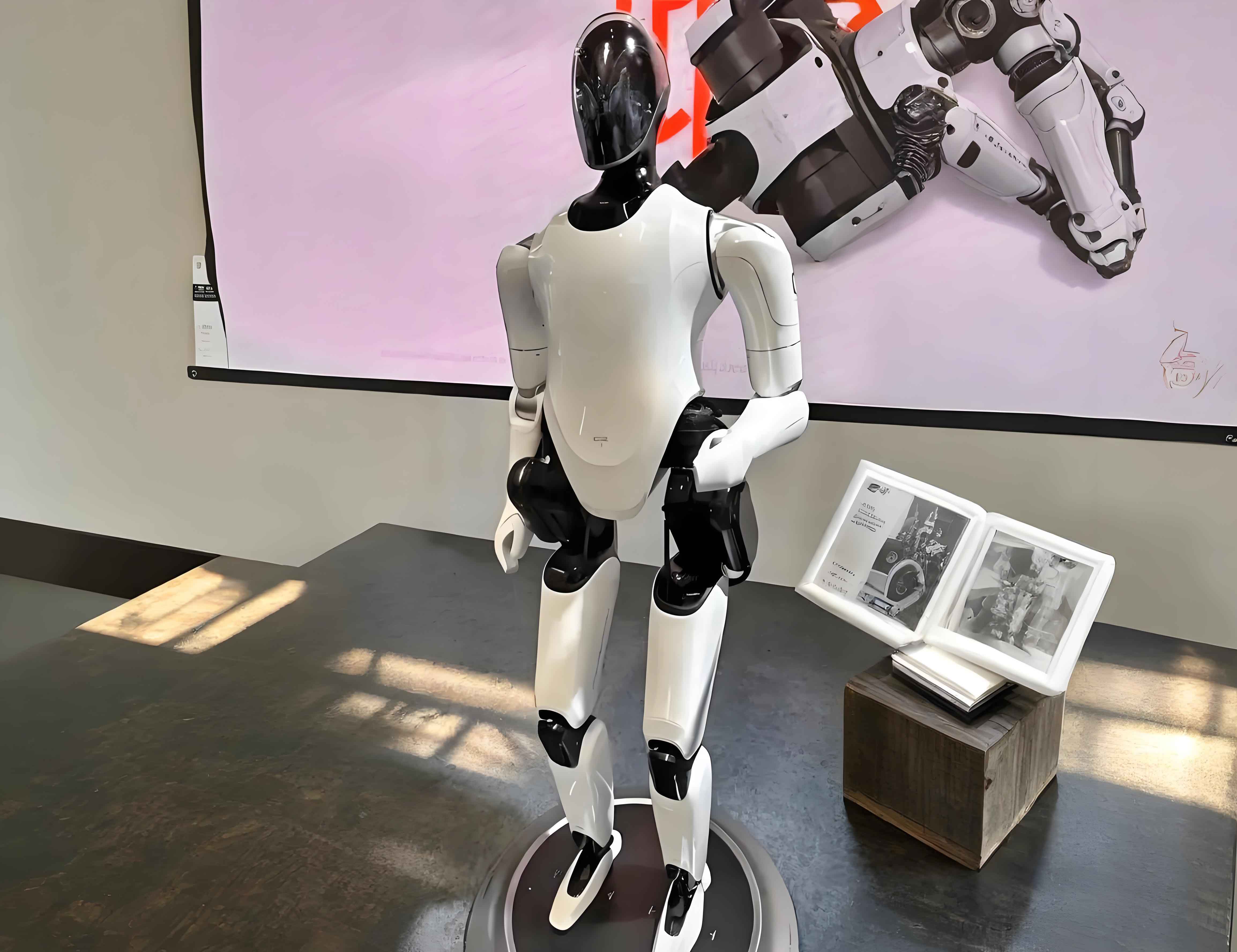
The industrial ecosystem for embodied AI robots in Shanghai is both dense and dynamic. With a longstanding prowess in automotive manufacturing and industrial robotics, the city boasts a complete supply chain and manufacturing base. In districts like Pudong, over a hundred robotics companies cluster, generating substantial output and driving innovation. These companies span the entire value chain, from core components to system integration. For instance, upstream players focus on reducers, sensors, and perception technologies; midstream entities handle robot本体 and mass production; downstream firms engage in sales and integration. This “leader enterprise引领 + small enterprise共生” atmosphere promotes synergy, achieving an industrial ecology characterized by high-end, intelligent, and green development. As I explore this landscape, I see how embodied AI robots benefit from this maturity, with humanoid robots as a subset gaining particular traction. Applications are already visible in fields like guided tours, academic research, and medical rehabilitation, demonstrating the practicality of embodied AI robots.
To quantify the growth and projections for embodied AI robots, especially humanoid robots, I present the following table based on statistical data and forecasts. This highlights the market potential and Shanghai’s role within it.
| Year | Projected Output Value (in billion CNY) | Notes |
|---|---|---|
| 2024 | 27.6 | Rapid growth from previous years; Shanghai accounts for a significant portion of national total. |
| 2025 | 53 | Expected to double, reflecting accelerated adoption and production. |
| 2029 | 750 | Long-term surge, indicating vast market expansion and technological maturation. |
Such growth is fueled by technological catalysis, particularly the integration of large AI models with robotics. In my view, this fusion represents a paradigm shift, elevating embodied AI robots from task-specific tools to general-purpose agents. Large models serve as the “brain” and “cerebellum” of these robots, enhancing cognitive understanding and motor control. For example, multi-modal models improve human-robot interaction by interpreting intentions and environments, while algorithms optimize movement coordination. The advent of general embodied base models, like the GO-1 model, exemplifies this progress. By reducing the data required for training from thousands to hundreds of samples, such models lower barriers and costs, making embodied AI robots more accessible. The underlying principle can be expressed through a reinforcement learning framework, where the robot learns to maximize cumulative rewards:
$$ J(\pi) = \mathbb{E}_{\tau \sim \pi} \left[ \sum_{t=0}^{T} \gamma^t R(s_t, a_t) \right] $$
Here, \( \pi \) represents the policy of the embodied AI robot, \( \tau \) is the trajectory, \( \gamma \) is the discount factor, and \( R(s_t, a_t) \) is the reward at state \( s_t \) and action \( a_t \). With large models, the policy \( \pi \) can be generalized across tasks, enabling few-shot or zero-shot learning. This aligns with the concept of “emergence” in AI, where scaling model parameters and data yields unprecedented capabilities. As noted by experts, after multi-modal models, embodied AI becomes the next growth frontier, extending AI’s reach into physical worlds and broadening applications for general artificial intelligence (AGI).
Furthermore, the synergy between large models and embodied AI robots can be modeled through a loss function that optimizes both perception and action. Consider a simplified formulation for a embodied AI robot learning from demonstrations:
$$ \mathcal{L}_{\text{embodied}} = \lambda_1 \mathcal{L}_{\text{perception}}(x, y) + \lambda_2 \mathcal{L}_{\text{control}}(s, a) + \lambda_3 \mathcal{L}_{\text{generalization}}(\theta) $$
In this equation, \( \mathcal{L}_{\text{perception}} \) captures errors in understanding sensory input \( x \) and target \( y \), \( \mathcal{L}_{\text{control}} \) penalizes deviations in state \( s \) and action \( a \), and \( \mathcal{L}_{\text{generalization}} \) encourages model parameters \( \theta \) to adapt to new scenarios. The weights \( \lambda_1, \lambda_2, \lambda_3 \) balance these objectives. Advances in Shanghai, such as the open-source AgiBot world dataset and training grounds, directly feed into minimizing this loss, accelerating the development of versatile embodied AI robots.
The innovation ecosystem for embodied AI robots in Shanghai extends beyond technology to encompass collaborative platforms and training environments. The city has pioneered heterogeneous, ultra-large humanoid robot training fields that simulate complex urban scenarios. These virtual-real fusion spaces allow embodied AI robots to train in near-authentic conditions, boosting adaptability, interaction, and decision-making. Data generated here—amounting to thousands of daily entries—serves as high-quality “corpus” for model refinement. This infrastructure, coupled with functional platforms for rapid manufacturing and testing, creates a closed loop from R&D to deployment. As I assess this setup, it’s evident that Shanghai is not only advancing embodied AI robots but also setting standards and ethical guidelines, ensuring healthy industry growth.
Another critical aspect is the spillover effect of embodied AI robots on regional economies, particularly within the Yangtze River Delta. Shanghai acts as a龙头, driving integration and synergy across Jiangsu, Zhejiang, and Anhui. This collaboration is epitomized by the “fully Yangtze River Delta-made” robots, where all components—from bearings and servo motors to harmonic reducers—are sourced locally. Led by chain-master enterprises, this initiative mitigates supply chain risks and enhances autonomy in core robotics parts. The table below summarizes key components and their origins, illustrating the regional supply chain for embodied AI robots.
| Component | Function in Embodied AI Robots | Primary Supplier Location |
|---|---|---|
| Bearings | Facilitate smooth joint movements in robot limbs. | Wenzhou, Zhejiang |
| Servo Motors | Provide precise torque and position control for actuators. | Quzhou, Zhejiang |
| Harmonic Reducers | Enable compact, high-ratio speed reduction in robot joints. | Suzhou, Jiangsu |
| Controllers | Orchestrate overall robot behavior and task execution. | Shanghai (various firms) |
| Sensors | Gather environmental data for perception in embodied AI robots. | Across Yangtze River Delta |
This regional synergy has yielded tangible outcomes. For instance, these robots have penetrated automotive production lines, marking a breakthrough for domestic brands. Output has consistently exceeded targets, with thousands of units shipped annually. Performance comparisons reveal that these regionally made robots rival global top brands in numerous sub-items, underscoring their competitiveness. From my standpoint, this success story highlights how embodied AI robots can catalyze broader industrial upgrades. By shortening supply chains and集中 resources, the Yangtze River Delta enhances交付 reliability and cost-effectiveness, elevating the entire robotics sector. Shanghai’s role in coordinating this effort—through government facilitation and platform building—exemplifies how innovation chains, industrial chains, capital chains, and talent chains can merge to foster new productive forces.
Looking ahead, the trajectory for embodied AI robots in Shanghai is poised for further acceleration. With over 30 large models备案, covering verticals like manufacturing, finance, and embodied AI robots, the city is building a world-class AI ecosystem. Goals include establishing comprehensive frameworks for computing power, data corpora, models, and applications by 2025. The continuous push for technology breakthroughs, policy coordination, and ecological construction will deepen the integration of large models and robotics, enabling full-chain breakthroughs from research to commercialization. As I envision the future, embodied AI robots will become more通用, capable of自主 operating in diverse settings—from homes and healthcare to factories and public spaces. This evolution will solidify Shanghai’s leading position in embodied AI, offering a replicable “Shanghai sample” for other regions.
In conclusion, the rise of embodied AI robots represents a transformative force in the global tech landscape. Shanghai, through strategic foresight and systemic efforts, has positioned itself at the forefront of this revolution. By fostering policy support, industrial clusters, technological innovation, and regional collaboration, the city is not only advancing embodied AI robots but also generating spillover effects that benefit the wider economy. As embodied AI robots evolve from niche applications to ubiquitous assistants, they will redefine productivity and daily life. Shanghai’s journey offers valuable insights into how to nurture such future industries, balancing innovation with sustainability, and local development with global integration. The ongoing commitment to embodied AI robots will undoubtedly shape the next chapter of intelligent economic growth, both in Shanghai and beyond.