
As I delve into the evolution of artificial intelligence, the shift from disembodied to embodied systems represents a profound transformation. Embodied artificial intelligence, or embodied robots, are designed to perceive, understand, and interact with their environment through sensory-motor capabilities. However, despite this advancement, I observe significant limitations in how these embodied robots engage with objects, environments, and humans. In this article, I explore these interactive behaviors through the lens of phenomenology of the body, drawing on concepts like body schema, intentional arc, and speech gestures to uncover the roots of these constraints. I argue that developmental robotics offers a promising path forward, integrating principles from human cognitive development to enhance the capabilities of embodied robots. Throughout this discussion, I will use tables and mathematical formulations to clarify key points, and I emphasize the repeated importance of embodied robot in addressing these challenges.
The concept of embodied intelligence stems from the idea that cognition is not merely a computational process but is deeply rooted in bodily experiences. Embodied robots, as physical agents, must navigate complex environments, manipulate objects, and communicate with humans in a seamless manner. Yet, current implementations fall short in several areas. For instance, in motion control, embodied robots struggle with tasks like grasping and moving objects with the finesse of a human child. Similarly, their ability to adapt to dynamic environments and understand non-verbal cues remains limited. By examining these issues through phenomenological frameworks, I aim to shed light on how embodied robots can evolve to mimic human-like interactions more effectively.
Deep Limitations in Interactive Behavior of Embodied Robots
In my analysis, I identify three primary limitations in the interactive behavior of embodied robots. These are not superficial issues but stem from fundamental gaps in how these systems are designed and trained.
Insufficient Motion Control Capability
When I consider motion control in embodied robots, I see a reliance on pre-defined algorithms and reinforcement learning, which often lack the fluidity and adaptability of human movement. For example, an embodied robot attempting to pick up a delicate object may apply excessive force or misjudge distances, leading to failures. This is because current approaches, such as trajectory optimization or task planning, operate in a top-down manner without continuous feedback from the environment. Mathematically, this can be represented as a control problem where the robot’s action $A$ is derived from a policy $\pi$ based on state $S$, but without the dynamic adjustment seen in humans:
$$A = \pi(S)$$
However, human motion control involves a body schema that integrates sensory inputs and motor outputs in real-time. In contrast, embodied robots often use discrete control methods, leading to jerky or inefficient movements. The table below summarizes key differences in motion control between humans and embodied robots:
| Aspect | Human Motion Control | Embodied Robot Motion Control |
|---|---|---|
| Adaptability | High; adjusts based on context and feedback | Low; relies on pre-trained models |
| Learning Mechanism | Developmental through experience | Reinforcement learning or imitation |
| Integration of Sensors | Seamless fusion of visual, tactile, and proprioceptive data | Often siloed; limited cross-modal integration |
This limitation highlights the need for embodied robots to incorporate more holistic motion strategies, akin to human body schemas.
Inadequate Environmental Interaction Ability
As I explore environmental interaction, I note that embodied robots frequently operate in simulated or controlled settings, which do not translate well to real-world unpredictability. For instance, an autonomous vehicle as an embodied robot might struggle with sudden obstacles or changing light conditions. This is due to the reliance on machine learning models that require massive datasets and lack generalization. The interaction can be modeled as a function of the environment $E$ and the robot’s policy $\pi$, but without the historical context humans possess:
$$I(E, \pi) = \text{Outcome}$$
Humans, through their intentional arc, build a history of interactions that inform future behavior. Embodied robots, however, often reset with each task, missing the cumulative learning that characterizes human development. The following table contrasts environmental interaction capabilities:
| Factor | Human Environmental Interaction | Embodied Robot Environmental Interaction |
|---|---|---|
| Adaptation to Change | Dynamic and continuous | Static or slow to adapt |
| Use of Past Experience | Integrated via intentional arc | Limited memory and recall |
| Response to Novel Situations | Intuitive and creative | Rule-based or fails |
This inadequacy underscores the importance of embedding historical and contextual awareness into embodied robots.
Deficiencies in Understanding and Expressing Body Language
In human-robot interaction, I observe that embodied robots have difficulty interpreting and generating non-verbal cues, such as gestures or facial expressions. This limits their ability to engage in natural communication. For example, when a human points to an object, an embodied robot might not grasp the intended reference without explicit verbal commands. This can be formulated as a communication problem where the robot’s interpretation $C$ of a gesture $G$ is often inaccurate:
$$C = f(G)$$
But human communication involves speech gestures that are embodied and context-dependent. Embodied robots typically rely on parameterized models that simulate expressions but lack the emergent quality of human body language. The table below illustrates these differences:
| Element | Human Body Language | Embodied Robot Body Language |
|---|---|---|
| Expressiveness | Rich and nuanced | Limited to pre-defined sets |
| Understanding of Context | Deeply integrated with situation | Superficial or absent |
| Learning from Interaction | Continuous through social engagement | Fixed training data |
These deficiencies point to a gap in how embodied robots encode and decode embodied signals, which is crucial for advanced interactions.
Phenomenological Roots of the Limitations in Embodied Robots
From a phenomenological perspective, I trace these limitations to the absence of key bodily concepts in embodied robots. By examining body schema, intentional arc, and speech gestures, I can pinpoint where current systems diverge from human-like intelligence.
Absence of Body Schema Leading to Motion Control Issues
In humans, the body schema is a dynamic, pre-reflective awareness of one’s body in space, allowing for seamless movement and object manipulation. For embodied robots, this is missing, resulting in clumsy motion control. Mathematically, the body schema can be represented as a function that maps bodily states $B$ and environmental cues $E$ to actions $A$:
$$S(B, E) = A$$
Where $S$ is the schema that evolves with experience. In embodied robots, however, this is often reduced to a rigid control law, such as:
$$A = K_p \cdot e + K_d \cdot \dot{e}$$
With $e$ as error and $K_p$, $K_d$ as gains. This linear approach lacks the adaptability of a human body schema, which continuously updates based on sensory feedback. For instance, when a human reaches for an object, the body schema automatically adjusts posture and grip, whereas an embodied robot must compute each step, leading to delays and errors. This absence is a core reason why embodied robots struggle with tasks that require fine motor skills or rapid adaptation.
Lack of Intentional Arc Causing Environmental Interaction Shortfalls
The intentional arc in phenomenology refers to the feedback loop between an agent and their environment, embedding past experiences into present actions. Embodied robots typically lack this arc, making them ill-equipped for dynamic environments. I can model the intentional arc as a cumulative function where the current interaction $I_t$ depends on previous states $S_{t-1}$ and actions $A_{t-1}$:
$$I_t = g(S_{t-1}, A_{t-1}, E_t)$$
In contrast, embodied robots often use Markov decision processes that assume memorylessness:
$$P(S_{t+1} | S_t, A_t)$$
This ignores the historical context that humans leverage through their intentional arc. For example, a human driver gradually learns to anticipate road conditions, while an embodied robot in an autonomous vehicle might treat each scenario as new. This lack results in poor generalization and an inability to handle novel situations effectively. By integrating an intentional arc, embodied robots could develop a more nuanced understanding of their surroundings, similar to human learning processes.
Missing Speech Gestures Resulting in Body Language Deficiencies
Speech gestures, in the phenomenological sense, are embodied expressions that carry meaning through physical interactions. Embodied robots miss this dimension, leading to sterile communication. I can express this as a function where meaning $M$ arises from the interaction between bodies:
$$M = h(B_1, B_2)$$
With $B_1$ and $B_2$ as the bodies in communication. However, embodied robots often rely on symbolic representations or statistical models, such as:
$$M = \text{argmax}_{m} P(m | \text{input})$$
This misses the embodied, gestural aspect where meaning is co-constructed in real-time. For instance, when humans converse, gestures and posture convey nuances that words alone cannot. Embodied robots, without speech gestures, fail to capture these subtleties, making interactions feel artificial. This gap is evident in social robots that struggle to interpret sarcasm or empathy through body language. Incorporating speech gestures would allow embodied robots to engage in more authentic and responsive dialogues.
Developmental Robotics: A Phenomenological Path for Embodied Robots
To address these limitations, I propose developmental robotics as a viable approach for advancing embodied robots. This field draws inspiration from human cognitive development, where robots learn through staged experiences, much like children. By simulating developmental processes, embodied robots can acquire body schemas, intentional arcs, and speech gestures organically.
In developmental robotics, an embodied robot starts with basic sensory-motor capabilities and gradually builds complexity through interaction. For example, initial tasks might involve touching objects, progressing to tool use, and eventually engaging in social behaviors. This can be modeled as a hierarchical learning process:
$$L = \sum_{t=1}^{T} \gamma^t R(s_t, a_t)$$
Where $L$ is the cumulative learning reward over time $T$, with discount factor $\gamma$ and reward $R$ for state $s_t$ and action $a_t$. However, unlike traditional reinforcement learning, developmental robotics emphasizes continuous, lifelong learning that mirrors human growth. The table below outlines how developmental stages can be mapped to embodied robot training:
| Developmental Stage | Human Example | Embodied Robot Application |
|---|---|---|
| Infancy (0-2 years) | Learning to grasp and imitate | Basic object manipulation and gesture recognition |
| Childhood (2-6 years) | Developing language and social skills | Integrating verbal and non-verbal communication |
| Adulthood | Refining complex tasks | Advanced environmental adaptation and collaboration |
By adopting this approach, embodied robots can gradually form body schemas through multisensory integration, intentional arcs via historical data accumulation, and speech gestures through interactive mimicry. For instance, an embodied robot trained in a rich, simulated environment could learn to adjust its grip based on tactile feedback, similar to a child’s exploratory play.
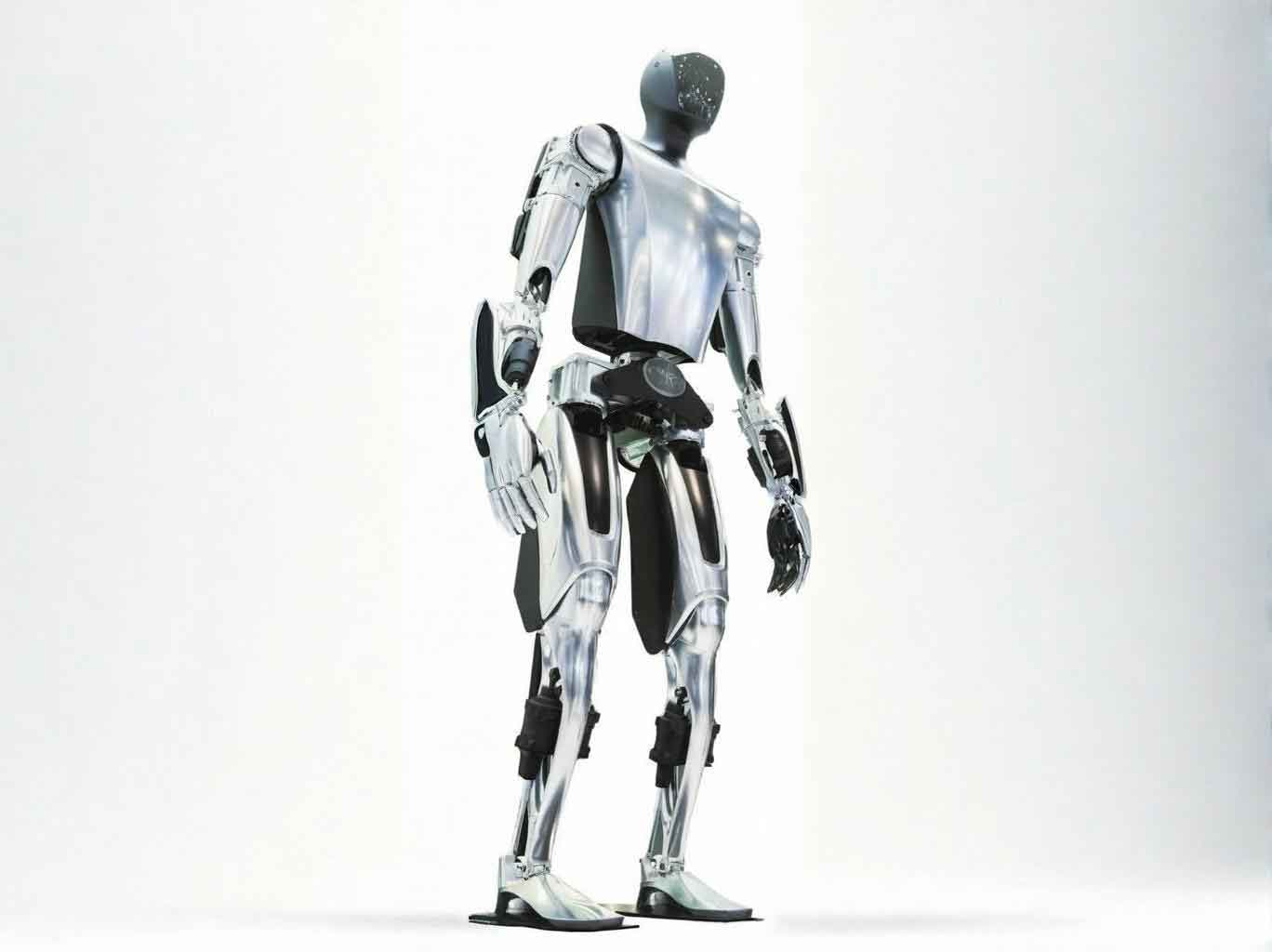
Moreover, developmental robotics encourages the use of embodied robot platforms that physically resemble humans, such as those with articulated joints and sensitive sensors. This morphological similarity facilitates the emergence of human-like behaviors. For example, an embodied robot with muscle-like actuators might develop more natural movements, reducing the motion control issues discussed earlier. The integration of these principles can be formalized through equations that describe how an embodied robot’s capability $C$ evolves over time $t$ based on experiences $E$:
$$\frac{dC}{dt} = \alpha \cdot I(E, C)$$
Where $\alpha$ is a learning rate, and $I$ represents the interaction function. This continuous evolution mirrors the phenomenological concepts, enabling embodied robots to bridge the gap between current limitations and desired interactive behaviors.
Conclusion
In reflecting on the interactive behavior of embodied robots, I have highlighted how limitations in motion control, environmental interaction, and body language stem from the absence of phenomenological elements like body schema, intentional arc, and speech gestures. Through developmental robotics, embodied robots can embark on a path that mimics human development, fostering more adaptive and intuitive interactions. As I look to the future, the fusion of phenomenology and artificial intelligence holds great promise for creating embodied robots that not only perform tasks but also understand and engage with the world in a genuinely embodied manner. This journey requires ongoing research and innovation, but by embracing these insights, we can unlock the full potential of embodied artificial intelligence.
To summarize, the key to advancing embodied robots lies in embedding them with the experiential richness that defines human existence. By doing so, we can transform them from mere tools into collaborative partners, capable of navigating the complexities of real-world interactions. The repeated emphasis on embodied robot throughout this discussion underscores its centrality in the evolution of intelligent systems, and I am optimistic that these phenomenological reflections will guide future developments in this exciting field.