
As we delve into the realm of artificial intelligence, the evolution from computational and perceptual intelligence to creative intelligence has marked significant milestones. However, the true frontier lies in enabling AI systems to interact with and learn from the physical world, a concept known as embodied intelligence. This paradigm shift emphasizes that intelligence is not merely abstract computation but is deeply rooted in physical interactions. In this article, I explore the research and applications of embodied intelligence, focusing on embodied perception, embodied cognition, and embodied action optimization. Through this lens, I examine how AI human robot systems can bridge the gap between virtual simulations and real-world environments, leveraging advancements in deep learning and large models to achieve human-like capabilities.
Embodied intelligence represents a holistic approach where AI human robot entities perceive, reason, and act within their surroundings. Unlike traditional AI, which often operates in closed virtual settings, embodied systems require continuous engagement with dynamic physical spaces. This interaction enables them to learn from experiences, adapt to uncertainties, and perform complex tasks. For instance, an AI human robot might navigate a cluttered room, manipulate objects with varying properties, or interpret human intentions through multimodal cues. The core of this research lies in three interconnected domains: embodied perception, which involves sensing and understanding the environment; embodied cognition, which encompasses planning and decision-making; and embodied action optimization, which ensures efficient and accurate execution in real-world scenarios.
To illustrate the physical embodiment of these concepts, consider the following representation of a humanoid robot, which serves as a prime example of how AI human robot systems integrate perception, cognition, and action in a unified platform.
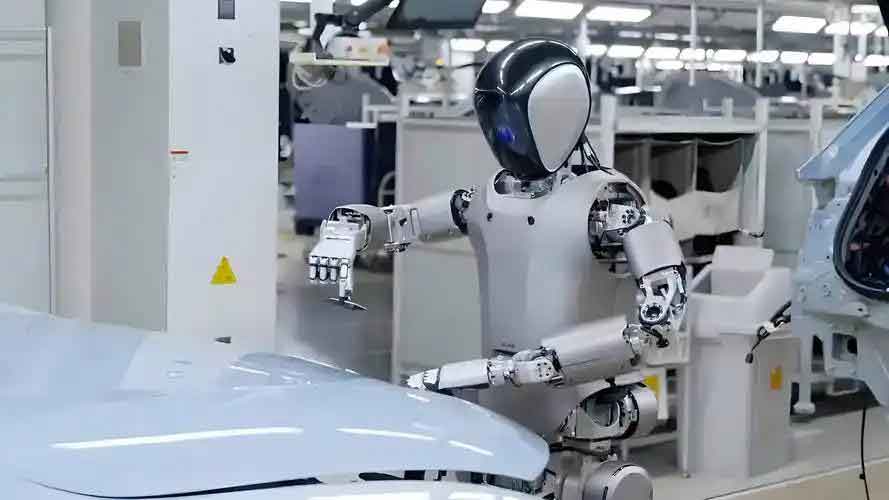
In the following sections, I will dissect each research area in detail, incorporating mathematical formulations and comparative tables to summarize key insights. The interplay between AI human robot components will be emphasized throughout, highlighting how embodied intelligence drives progress toward general artificial intelligence. Moreover, I will address the opportunities and challenges in this field, drawing on recent developments in simulation environments and real-world deployments. By the end, I aim to provide a comprehensive perspective on how embodied intelligence is reshaping AI research and its practical applications, from domestic assistants to industrial automation.
Embodied Perception
Embodied perception focuses on enabling AI human robot systems to actively sense and interpret their surroundings, including both objects and humans. This goes beyond passive observation, requiring interactive exploration to gather rich, multimodal data. For objects, perception involves understanding shape, physical properties, geometric structure, and how they respond to manipulation. For humans, it entails inferring intentions and behaviors, which is crucial for social interactions. In essence, embodied perception allows an AI human robot to build a coherent model of the world through direct engagement, rather than relying solely on pre-existing datasets.
Object Perception
Object perception in embodied AI human robot systems encompasses several subdomains. First, shape perception involves reconstructing an object’s form from multiple viewpoints. For example, a robot might move around a table to capture different angles of a cup, fusing visual data to create a 3D model. This can be mathematically represented as optimizing a reconstruction function: $$ R(\mathbf{I}_1, \mathbf{I}_2, \dots, \mathbf{I}_n) = \arg \min_{\mathbf{M}} \sum_{i=1}^n \mathcal{L}(\mathbf{I}_i, \mathcal{P}(\mathbf{M}, \mathbf{v}_i)) $$ where $\mathbf{I}_i$ are input images, $\mathbf{M}$ is the 3D model, $\mathcal{P}$ is the projection function, $\mathbf{v}_i$ are viewpoints, and $\mathcal{L}$ is a loss function measuring discrepancy. Challenges arise with occlusions or dynamic scenes, where the AI human robot must infer missing parts through active exploration.
Second, physical property perception involves estimating attributes like mass, friction, or elasticity through tactile and force feedback. For instance, a robot grasping a soft ball might use pressure sensors to deduce its deformability. A common approach uses Bayesian inference: $$ P(\phi \mid \mathbf{s}) \propto P(\mathbf{s} \mid \phi) P(\phi) $$ where $\phi$ represents physical properties, and $\mathbf{s}$ are sensor readings. This allows the AI human robot to update beliefs based on interactions, enhancing its understanding of object behavior under various conditions.
Third, geometric structure perception deals with identifying degrees of freedom in objects, such as hinges on a door or flexibility in clothing. This is vital for manipulation tasks. A formulation might involve learning a manifold representation: $$ \mathcal{M} = \{ \mathbf{x} \in \mathbb{R}^d : f(\mathbf{x}) = 0 \} $$ where $f$ captures the constraints of the object’s motion. For articulated objects, the AI human robot must discover joint parameters through probing actions, which can be framed as an optimization problem to minimize reconstruction error.
Lastly, interactive perception involves moving or manipulating objects to reveal hidden information. For example, pushing a box might expose its bottom surface, or shaking a container could infer its contents. This can be modeled as a partially observable Markov decision process (POMDP), where the AI human robot chooses actions to reduce uncertainty: $$ \max_a \mathbb{E} [I(S; O \mid a)] $$ where $I$ is mutual information between state $S$ and observations $O$ given action $a$. This emphasizes how embodiment enables richer perception than static methods.
| Aspect | Description | Mathematical Formulation | Challenges |
|---|---|---|---|
| Shape Perception | Reconstructing 3D form from multiple views | $$ R(\mathbf{I}_1, \dots, \mathbf{I}_n) = \arg \min_{\mathbf{M}} \sum \mathcal{L}(\mathbf{I}_i, \mathcal{P}(\mathbf{M}, \mathbf{v}_i)) $$ | Occlusions, dynamic environments |
| Physical Property Perception | Estimating mass, friction, elasticity via sensors | $$ P(\phi \mid \mathbf{s}) \propto P(\mathbf{s} \mid \phi) P(\phi) $$ | Noisy measurements, complex material behaviors |
| Geometric Structure Perception | Identifying degrees of freedom and joints | $$ \mathcal{M} = \{ \mathbf{x} \in \mathbb{R}^d : f(\mathbf{x}) = 0 \} $$ | High-dimensional spaces, unseen object types |
| Interactive Perception | Using actions to gather additional sensory data | $$ \max_a \mathbb{E} [I(S; O \mid a)] $$ | Trade-offs between exploration and exploitation |
Human Perception
Human perception in embodied AI human robot systems involves understanding intentions and behaviors, often referred to as operational semantics. This requires the AI human robot to interpret actions in context, leveraging commonsense knowledge and logical reasoning. For example, if a person is waving arms near a pool, the robot must discern whether it’s a playful gesture or a distress signal. This can be formulated as a classification problem: $$ y^* = \arg \max_y P(y \mid \mathbf{o}, \mathcal{C}) $$ where $y$ is the inferred intention, $\mathbf{o}$ are observations, and $\mathcal{C}$ represents contextual knowledge. In social settings, an AI human robot might use sequence models like LSTMs to predict human actions: $$ \mathbf{h}_t = \text{LSTM}(\mathbf{o}_t, \mathbf{h}_{t-1}) $$ where $\mathbf{h}_t$ is the hidden state capturing temporal dependencies. Such capabilities are essential for collaborative tasks, where the AI human robot must align its actions with human expectations, ensuring safety and efficiency.
Embodied Cognition
Embodied cognition in AI human robot systems focuses on aligning virtual and real worlds through interactive learning. It enables robots to understand abstract instructions, decompose them into executable tasks, and acquire skills through practice. Unlike non-embodied cognition, which processes symbolic data, embodied cognition involves physical interactions, allowing the AI human robot to learn from environmental feedback. This process typically includes task planning, skill learning, and tool utilization, supported by large models that provide semantic understanding and generalization.
Core Tasks of Embodied Cognition
The core of embodied cognition lies in translating high-level commands into actions. For instance, when an AI human robot receives the instruction “Bring me a book,” it must first plan a sequence of sub-tasks: locate the book, navigate to it, grasp it, and deliver it. This can be formalized as a hierarchical task network: $$ \mathcal{T} = \{ \tau_1, \tau_2, \dots, \tau_k \} $$ where each $\tau_i$ is a sub-task, and the AI human robot must ensure preconditions and effects are satisfied. Skill learning then involves acquiring low-level controllers for each sub-task, such as using reinforcement learning to optimize a policy: $$ \pi^* = \arg \max_\pi \mathbb{E} \left[ \sum_{t=0}^\infty \gamma^t r_t \mid \pi \right] $$ where $r_t$ is the reward at time $t$, and $\gamma$ is a discount factor. Tool learning integrates with platforms like ROS, where the AI human robot calls APIs for specific actions, bridging the gap between cognition and execution.
Developmental Stages of Embodied Cognition
Embodied cognition in AI human robot systems has evolved through three stages: rule-driven, imitation-based fitting, and large model-driven creation. Each stage represents a leap in flexibility and intelligence, as summarized in the table below.
| Feature/Stage | Rule-Driven | Imitation-Based Fitting | Large Model-Driven Creation |
|---|---|---|---|
| Definition & Characteristics | Relies on preset rules and programs | Trains models by imitating expert demonstrations | Leverages capabilities of large models for generalization |
| Task Planning & Skill Learning | Human-defined task decomposition and skill programming | Learning from expert data, such as videos or teleoperation | Autonomous task decomposition and skill acquisition via large models |
| Adaptability & Autonomy | Low adaptability, no autonomy | Moderate adaptability, limited autonomy | High adaptability and autonomy |
| Limitations | Inflexible to new tasks | Generalization bounded by expert data | Requires massive data and computational resources |
| Data Dependency | Low | High | Very high |
| Update & Iteration Capability | Difficult | Moderate | Strong |
| Understanding New Tasks | Low | Moderate | High |
| Implementation Complexity | Low | Moderate | High |
| Application Scenarios | Structured environments | Tasks with available demonstrations | Dynamic and open-ended environments |
In the rule-driven stage, an AI human robot follows rigid protocols, such as executing a fixed sequence for assembly tasks. This is efficient in controlled settings but fails in novel situations. The imitation-based stage uses behavioral cloning: $$ \min_\theta \mathbb{E}_{(\mathbf{s},\mathbf{a}) \sim \mathcal{D}} [\mathcal{L}(\pi_\theta(\mathbf{s}), \mathbf{a})] $$ where $\mathcal{D}$ is expert data, and $\pi_\theta$ is the robot’s policy. This allows the AI human robot to learn from humans but may overfit to demonstrations. The creation stage, powered by large models, enables few-shot learning and reasoning. For example, a large language model can generate reward functions for reinforcement learning: $$ r(\mathbf{s}, \mathbf{a}) = \text{LLM}(\text{task description}, \mathbf{s}) $$ facilitating skill acquisition in unseen domains. This progression highlights how embodied cognition in AI human robot systems is becoming more human-like, with enhanced problem-solving abilities.
Embodied Action Optimization
Embodied action optimization addresses the sim-to-real gap, where skills learned in simulation fail in physical environments due to discrepancies in physics, data, or human preferences. For AI human robot systems, this involves refining policies to ensure robust performance. The core challenge is minimizing the difference between simulated and real dynamics, which can be formulated as a domain adaptation problem: $$ \min_\theta \mathbb{E}_{\mathbf{s} \sim p_{\text{real}}}} [\mathcal{L}(f_\theta(\mathbf{s}), \mathbf{y})] $$ where $f_\theta$ is the policy, and $\mathbf{y}$ is the desired outcome. Optimization techniques include system identification to calibrate simulators and meta-learning for fast adaptation.
Key Challenges in Embodied Action Optimization
First, the simulation-reality gap stems from inaccuracies in physics engines. For example, friction and aerodynamics may be oversimplified, leading to failures in grasping or locomotion. This can be quantified using a divergence measure: $$ D_{\text{sim-real}} = \mathbb{E} [ \| \mathbf{s}_{\text{sim}} – \mathbf{s}_{\text{real}} \| ] $$ where $\mathbf{s}$ denotes states. To mitigate this, AI human robot systems often use domain randomization, where simulation parameters are varied during training to improve robustness.
Second, data scarcity in simulation compared to reality limits learning. Real-world datasets for AI human robot tasks are often small and costly to collect. Techniques like generative adversarial networks (GANs) can synthesize additional data: $$ \min_G \max_D \mathbb{E}_{\mathbf{x} \sim p_{\text{real}}}} [\log D(\mathbf{x})] + \mathbb{E}_{\mathbf{z} \sim p_{\mathbf{z}}}} [\log (1 – D(G(\mathbf{z})))] $$ where $G$ generates synthetic samples, and $D$ discriminates between real and fake. This helps balance the data distribution for better generalization.
Third, the strategy-preference gap arises when AI human robot behaviors conflict with human expectations. For instance, a robot might learn an efficient but socially awkward gesture. Inverse reinforcement learning can align policies with human values: $$ \max_\pi \mathbb{E} [R_{\text{human}}(\tau) ] $$ where $R_{\text{human}}$ is a reward function inferred from human demonstrations. Overall, embodied action optimization is crucial for deploying AI human robot systems in diverse settings, ensuring they operate safely and effectively.
Opportunities and Challenges in Embodied Intelligence
The rise of large models presents unprecedented opportunities for embodied AI human robot systems. First, perception becomes more nuanced, as multimodal models integrate vision, language, and sensor data. For example, a transformer-based architecture can fuse inputs: $$ \mathbf{z} = \text{Transformer}(\mathbf{X}_{\text{vision}}, \mathbf{X}_{\text{language}}, \mathbf{X}_{\text{sensor}}) $$ enabling richer environment understanding. Second, decision-making is enhanced through commonsense reasoning, allowing AI human robot entities to handle ambiguous instructions. Third, execution benefits from model-generated training data and evaluation metrics, reducing reliance on human annotation. Finally, deployment becomes more feasible as models transfer knowledge across tasks, lowering the barrier for real-world applications.
However, significant challenges remain. Knowledge acquisition requires AI human robot systems to possess extensive world models, which current large models still lack in depth. Logical reasoning demands advanced inference capabilities, such as handling counterfactuals or long-term planning. Real-world deployment faces issues like hardware reliability and environmental unpredictability. Continuous learning is essential for AI human robot systems to adapt to new tools and scenarios without forgetting previous skills, a problem known as catastrophic forgetting. Formally, this can be addressed with elastic weight consolidation: $$ \mathcal{L}(\theta) = \mathcal{L}_{\text{new}}(\theta) + \lambda \sum_i F_i (\theta_i – \theta_{\text{old},i})^2 $$ where $F_i$ measures parameter importance. Commercialization hurdles include cost control and scalability, as AI human robot technologies must become affordable and robust for mass adoption. Despite these challenges, the integration of embodied intelligence into AI human robot platforms promises to revolutionize industries from healthcare to manufacturing.
Applications of Embodied Intelligence
Embodied intelligence finds practical expression in humanoid robots, which exemplify the integration of AI human robot capabilities. These systems combine sophisticated perception, cognition, and action optimization to perform tasks in human-centric environments. For instance, a humanoid AI human robot can assist in homes by cleaning, cooking, or providing companionship, leveraging its ability to navigate spaces and manipulate objects. In industrial settings, AI human robot platforms enable flexible automation, such as assembling custom products or handling fragile items. Specialized applications include search and rescue, where robots traverse hazardous terrain, and healthcare, where they aid in rehabilitation or surgery.
The development of humanoid AI human robot systems has progressed from basic mobility to advanced intelligence. Early models focused on bipedal locomotion, while modern iterations incorporate large models for natural language interaction and task planning. For example, some humanoid robots use vision-language-action models to interpret commands like “Fetch the tool on the shelf” and execute a series of actions autonomously. This is achieved through end-to-end learning: $$ \pi(\mathbf{a} \mid \mathbf{o}, \mathbf{c}) = \text{Softmax}(f(\mathbf{o}, \mathbf{c})) $$ where $\mathbf{c}$ is the command, and $f$ is a neural network. The versatility of AI human robot systems allows them to operate in diverse scenarios, from structured factories to chaotic households, demonstrating the practical benefits of embodied intelligence.
Opportunities and Challenges in Applications
Applications of embodied AI human robot systems span service, industrial,特种, domestic, and emotional陪伴 domains. In service, robots can act as receptionists or waiters, reducing labor costs. Industrially, they enable just-in-time production by adapting to varying demands.特种 applications include military or disaster response, where AI human robot systems perform tasks too dangerous for humans. At home, they offer convenience through chores and entertainment. Emotionally, AI human robot companions can provide social support, especially for isolated individuals.
Nevertheless, application-focused challenges persist. Technical maturity varies, with cognitive functions often outpacing physical reliability in AI human robot systems. Customization is frequently needed for specific environments, limiting generalization. Data scarcity in niche domains hinders model training, and high costs impede widespread adoption. To overcome these, research must focus on modular AI human robot architectures that allow plug-and-play components, alongside efforts to collect large-scale, multimodal datasets. As embodied intelligence advances, AI human robot systems will become increasingly integral to daily life, transforming how we interact with technology.
Conclusion and Future Outlook
In conclusion, embodied intelligence represents a paradigm shift in AI, emphasizing the fusion of perception, cognition, and action within physical embodiments like AI human robot systems. Through embodied perception, robots gain a deeper understanding of objects and humans; embodied cognition enables them to reason and plan; and embodied action optimization ensures robust performance in real-world settings. The synergy of these components allows AI human robot entities to learn from interactions, bridging the gap between virtual and real environments.
Looking ahead, the future of embodied AI human robot systems lies in multidisciplinary collaboration, drawing from robotics, computer vision, natural language processing, and cognitive science. Key directions include developing more accurate world models that simulate complex physics, enhancing large models for contextual reasoning, and creating lifelong learning frameworks for continuous adaptation. As AI human robot technologies evolve, they will unlock new applications in personalized assistance, sustainable manufacturing, and beyond, ultimately paving the way toward general artificial intelligence. By embracing the principles of embodiment, we can build AI human robot systems that not only mimic human abilities but also enrich our lives through seamless integration into society.