
In a landmark event that highlighted the cutting-edge advancements in robotics and artificial intelligence, the Zhuhai Grand Lecture Hall recently hosted a profound academic seminar as part of the 21st “Enjoy Social Sciences, Enlighten the Mind” Social Science Popularization Month. The lecture, delivered by Professor Zhu Qiuguo, a distinguished figure in the field and founder of Deep Robotics, delved into the transformative concept of embodied intelligence and its implications for the future of robotics. This session not only provided deep insights into the evolution of embodied robots but also underscored the potential for collaborative innovation in regions like Zhuhai.
Professor Zhu Qiuguo, an associate professor at Zhejiang University’s National Institute of Outstanding Engineers and the College of Control Science and Engineering, shared his expertise on “Research Progress and Reflections on Embodied Bionic Robots.” As one of the “Hangzhou Six Little Dragons” and the CEO of Deep Robotics, he brought a unique perspective grounded in both academic research and industrial application. The lecture attracted a diverse audience, emphasizing the growing public interest in how embodied intelligence is reshaping technology and society.
The Zhuhai Grand Lecture Hall, organized by the Zhuhai Municipal Party Committee Propaganda Department, the Zhuhai Federation of Social Sciences, and managed by Zhuhai Media Group with support from the Zhuhai Federation of Trade Unions, serves as a platform for disseminating high-end social science resources. This year, the series plans eight sessions, with Professor Zhu’s talk marking a significant highlight that bridges theoretical exploration with real-world applications of embodied robots.
Understanding Embodied Intelligence: Giving Machines Physical Senses
Professor Zhu began his presentation by tracing the historical development of artificial intelligence, from Newtonian classical physics and Hilbert’s mathematical program to the conceptualization of the Turing machine and the birth of AI. He outlined the three major schools of thought in AI: symbolism, connectionism, and behaviorism. However, he emphasized that we are now at a pivotal juncture with the rise of embodied intelligence, which represents a departure from “disembodied intelligence” systems like ChatGPT.
Embodied intelligence, as Professor Zhu explained, involves endowing machines with physical bodies that enable them to perceive, control, and interact with their environment in real-time. This approach allows intelligent agents to learn and adapt to the physical world through sensory experiences, much like teaching a child. The core idea is that true intelligence cannot be separated from physical embodiment; it requires a body to sense and act upon the world. This paradigm shift is crucial for developing embodied robots that can operate autonomously in complex, unstructured environments.
Throughout his discussion, Professor Zhu repeatedly highlighted how embodied intelligence differs from traditional AI by focusing on the integration of perception and action. For instance, while disembodied systems process data in isolation, embodied robots use their bodies to gather sensory inputs, process them, and execute actions that lead to continuous learning. This iterative process is fundamental to advancing embodied intelligence, as it mirrors biological systems where cognition emerges from bodily interactions.
The Rise of Humanoid Robots: Merging Algorithms and Intelligence
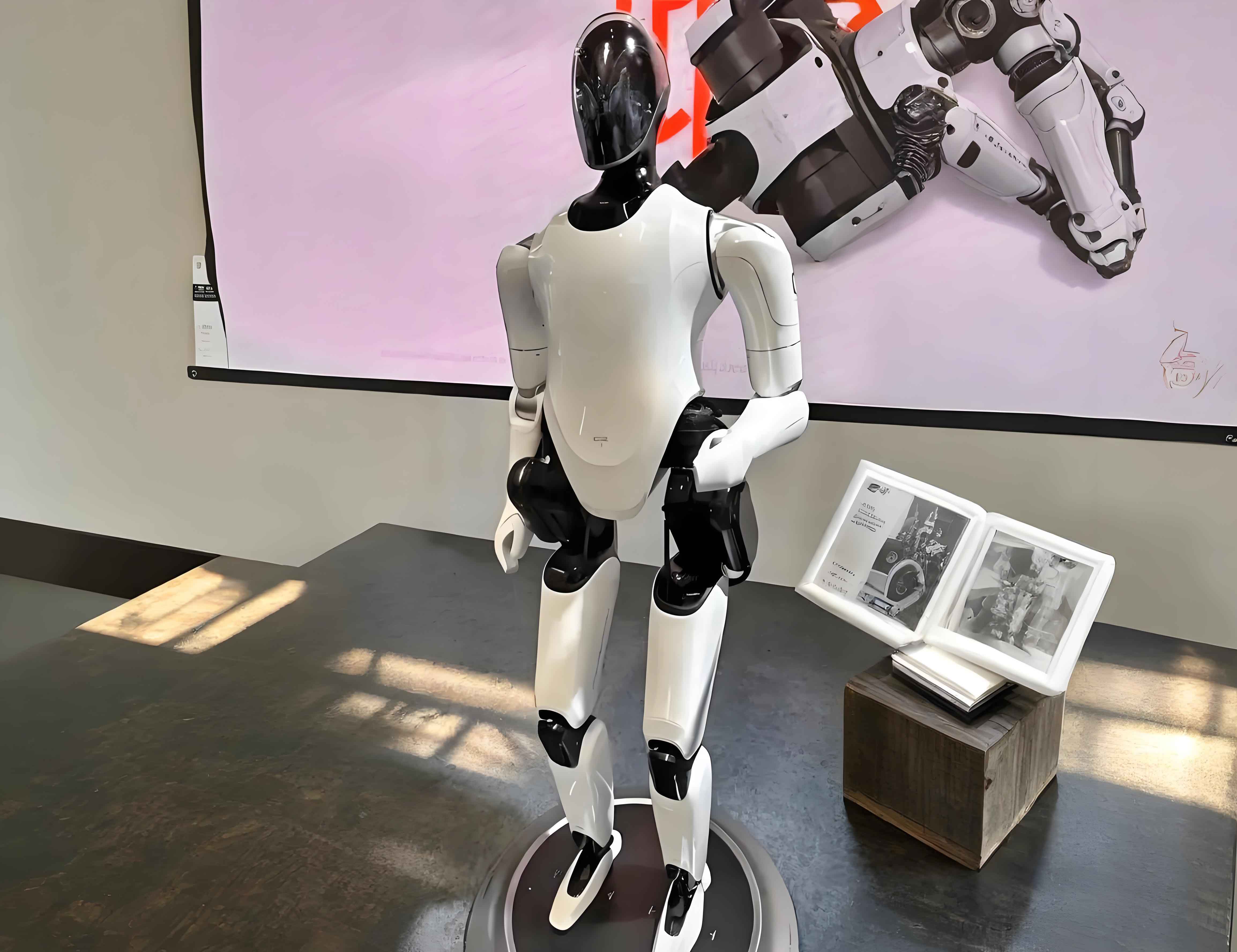
Humanoid robots stand as one of the ultimate manifestations of embodied intelligence, offering versatility, adaptability to human environments, and the ability to use tools designed for people. Professor Zhu provided a comprehensive overview of global developments in this area, citing examples like Japan’s ASIMO and the United States’ Atlas. ASIMO, with its high-precision control and rigid structure, achieved stable gait but was limited by large feet that hindered outdoor applications. In contrast, Atlas, utilizing hydraulic drives and full-body dynamic control, demonstrated capabilities such as running, jumping, backflips, and navigating rough terrain, marking the advent of the “outdoor era” for humanoid robots.
Professor Zhu noted that the 2016 debut of Atlas was a global sensation, as it surpassed many laboratories’ efforts that were still focused on basic jumping tasks. However, he candidly addressed the existing “technology gap” in humanoid robotics, pointing out that the primary challenge lies not in hardware manufacturing but in the seamless integration of algorithms and intelligence. Creating a robot is relatively straightforward, but enabling it to perform tasks autonomously and intelligently remains a formidable hurdle. This underscores the importance of embodied intelligence in driving progress, as it requires sophisticated control systems that leverage sensory feedback from the robot’s body.
In this context, embodied robots must evolve beyond pre-programmed movements to embrace adaptive behaviors. Professor Zhu stressed that the future of humanoid robots depends on enhancing their embodied intelligence through advanced machine learning techniques, allowing them to learn from interactions and improve over time. This aligns with the broader goal of developing embodied robots that can assist in everyday tasks, from household chores to industrial operations.
Case Studies: Robots Solving Real-World Problems
As one of China’s earliest teams dedicated to legged robot research, Zhejiang University initiated the development of bipedal robots in 2006, leading to the creation of “Wukong,” the country’s first humanoid robot capable of outdoor walking and running. The evolution of Wukong over multiple generations exemplifies a transformative journey: from slow walking with large feet in 2010 to navigating complex terrains like slippery surfaces, plum blossom piles, and steps by 2020. This progression highlights how embodied intelligence enables robots to adapt to diverse environments through iterative learning and physical experimentation.
In 2017, Professor Zhu founded Deep Robotics to translate laboratory innovations into practical applications. The company has since launched the “Jueying” series of robotic dogs and the world’s first wheel-legged robot, “Shanmao,” which combines the efficiency of wheels with the obstacle-crossing abilities of legs. These embodied robots are designed for scenarios such as firefighting, power inspection, and security patrols, demonstrating the real-world impact of embodied intelligence. For example, in substations, they perform automated inspections by reading meters, detecting temperatures, and identifying equipment statuses; in hazardous environments like smoke-filled areas, they conduct preliminary探测 to reduce risks for firefighters.
Professor Zhu shared specific instances where embodied robots have made a difference: autonomous patrols in urban settings, wildlife monitoring in remote areas like Hoh Xil by disguising as Tibetan antelopes, and industrial inspections. He emphasized that the mission behind these creations is to address practical problems, reinforcing the value of embodied intelligence in enhancing safety, efficiency, and accessibility. Each case study illustrates how embodied robots leverage their physical forms to interact with and learn from their surroundings, a hallmark of embodied intelligence.
Development Bottlenecks: Energy and Operational Challenges
During the interactive session, Professor Zhu addressed several pressing issues facing embodied robots, starting with energy constraints. He pointed out that current robots often suffer from a “charge for one hour, work for two hours” limitation, and extreme temperatures further challenge battery performance and safety. To tackle this, Deep Robotics has assembled a dedicated battery team to collaborate with industry partners on improving续航 and environmental adaptability. This focus on energy efficiency is critical for advancing embodied intelligence, as it ensures that robots can sustain prolonged operations in real-world conditions.
Another significant challenge is “embodied manipulation,” which involves the dexterous use of hands for tasks like handling tools, threading needles, or understanding subtle commands such as “handle with care.” Professor Zhu explained that this requires the integration of vision, touch, and reinforcement learning, areas that are still in early stages of development. Unlike leg movement, which has seen considerable progress, hand-based operations demand a higher level of embodied intelligence to process multi-sensory inputs and execute precise actions. This gap highlights the need for continued research into how embodied robots can achieve human-like manipulation skills.
Additionally, “scene generalization” and “long-term memory” are key research priorities. Professor Zhu illustrated this with an example: a robot’s ability to remember obstacles after a single traversal is essential for true autonomy. Memory, he argued, is a fundamental component of intelligence; without it, even a physically capable robot cannot be considered truly intelligent. These bottlenecks underscore the complexity of embodied intelligence, as it involves not just physical embodiment but also cognitive functions like learning and recall.
Future Outlook: The Inevitable Integration of Robots into Daily Life
Amidst the current investment boom and skepticism about potential “bubble” effects in robotics, Professor Zhu maintained a pragmatic outlook. He stated that Deep Robotics remains focused on solving genuine problems in real scenarios rather than chasing short-term trends. While humanoid robots may take a decade or more to become commonplace in households, he expressed confidence that robots will eventually permeate everyday life. The company is actively developing a new generation of humanoid robots, expected to debut around National Day, featuring more natural movement and enhanced operational capabilities.
Professor Zhu envisions a future where embodied robots provide personalized services in communities, such as assisting with repetitive, dangerous, or mundane tasks. This aligns with the core philosophy of embodied intelligence, which aims to create machines that not only think but also act in the physical world. He expressed hope that one day, Deep Robotics’ robotic dogs could be seen offering services on the streets of Zhuhai, symbolizing the seamless integration of technology into human environments.
Embodied intelligence, as Professor Zhu concluded, is not merely a technological convergence but a profound exploration of life and intelligence itself. By empowering machines with bodies that sense and interact, we are unlocking new possibilities for human-robot collaboration. The ultimate goal is to enhance quality of life, allowing people to focus on creative and meaningful pursuits while embodied robots handle the burdensome aspects of work.
Evolution of Motion and Control Algorithms: Three Iterations
Based on his extensive experience, Professor Zhu categorized the development of humanoid robots into three distinct phases, each driven by advancements in embodied intelligence and control methodologies.
- First Phase: Model-Based Control – Exemplified by robots like ASIMO, this approach relied on precise mathematical models and foot design, resulting in limited environmental adaptability. The focus was on static stability, but it struggled with dynamic and unpredictable settings, highlighting the early limitations of embodied robots without advanced sensory integration.
- Second Phase: Virtual Model Control with Force-Controlled Joints – Early versions of Atlas introduced force sensing and compliant control, improving dynamic performance. This phase marked a shift towards more responsive embodied intelligence, as robots began to incorporate real-time feedback from their bodies to adjust movements, enabling better balance and interaction with surfaces.
- Third Phase: Reinforcement Learning-Driven Methods – The latest era leverages reinforcement learning to train neural networks in simulation environments, then transfer control policies to physical robots. This has led to superhuman运动 capabilities, such as complex maneuvers and terrain navigation. Professor Zhu emphasized that reinforcement learning has been instrumental in突破 the运动 limits of embodied robots, allowing them to learn from experience and adapt to novel situations. He noted that in research, teams often “discard old methods without hesitation” to embrace new technologies, ensuring that embodied intelligence continues to evolve.
Throughout these phases, the role of embodied intelligence has become increasingly central, as it enables robots to learn from physical interactions and refine their behaviors. Professor Zhu’s insights underscore that the future of robotics hinges on deepening the synergy between algorithms and physical embodiment, paving the way for more autonomous and intelligent embodied robots.
In summary, the lecture at Zhuhai Grand Lecture Hall provided a comprehensive exploration of embodied intelligence and its application in embodied robots. From historical context to future prospects, Professor Zhu’s presentation illuminated the path toward a world where machines not only compute but also perceive and act through their physical forms. As research and innovation accelerate, the promise of embodied robots becoming integral to daily life grows ever more tangible, driven by the relentless pursuit of embodied intelligence.