
A newly released academic analysis argues that embodied intelligence is moving from the laboratory into the classroom, where it may reshape how values-based political teaching is designed, delivered, and assessed. The analysis places embodied intelligence at the center of a broader pedagogical shift: from passive reception of abstract ideas toward situated, sensory, emotional, and action-oriented learning. In this vision, embodied intelligence is not simply another digital tool. It is a framework that connects perception, movement, emotion, environment, and dialogue so that learners encounter political and ethical concepts through lived, simulated, and reflective experience.
The central claim is direct: embodied intelligence can strengthen political teaching when it is used to create meaningful embodied scenarios, to support emotional resonance, and to encourage ethical judgment through interaction. At the same time, the analysis warns that embodied intelligence also introduces serious concerns. Algorithmic bias, data privacy risks, cognitive dependence, teacher displacement, and unequal access all threaten to undermine the very values that political teaching seeks to cultivate. The result is a balanced argument: embodied intelligence has genuine pedagogical promise, but only if it is embedded within ethical governance, human-machine collaboration, and a clear commitment to humanistic education.
This report examines the mechanisms, realistic concerns, and practical pathways associated with embodied intelligence in values-based political teaching. It draws on the conceptual structure of the analysis without reproducing its original language, and it presents the core argument in a form accessible to educators, policymakers, technologists, and researchers. The discussion treats embodied intelligence as a socio-technical and pedagogical phenomenon, not as a neutral instrument. The question is not whether embodied intelligence will enter education, but how it can be guided so that it supports rather than erodes the formation of responsible citizens.
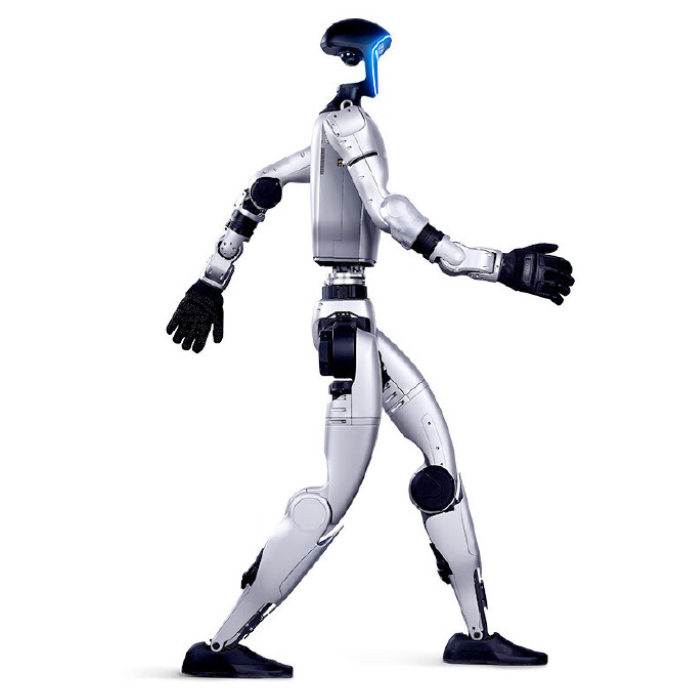
1. Why Embodied Intelligence Matters for Political Teaching
Values-based political teaching has long faced a persistent challenge: many of its core concepts are abstract, normative, and distant from everyday experience. Justice, responsibility, citizenship, collective memory, solidarity, and democratic participation cannot be reduced to definitions alone. They must be understood, felt, tested, and practiced. Traditional lecture-based instruction can transmit information, but it often struggles to create the kind of deep, embodied understanding that changes attitudes and behavior. This is the gap that embodied intelligence seeks to address.
Embodied intelligence refers to artificial systems that do not merely process symbols but perceive, act, and learn through physical or simulated bodies in dynamic environments. Unlike conventional artificial intelligence, which may operate primarily through text, data, and prediction, embodied intelligence integrates morphology, sensing, movement, feedback, and environmental interaction. In educational settings, embodied intelligence can appear through robots, virtual agents, mixed-reality environments, wearable devices, interactive simulations, and smart learning spaces. Each of these forms can bring political concepts closer to the learner’s sensory and emotional world.
The analysis emphasizes that embodied intelligence is not valuable simply because it is new. Its value lies in its capacity to support embodied cognition. Learners do not think with their minds alone; they think through their bodies, emotions, gestures, spatial relations, and social interactions. When embodied intelligence is designed well, it can create learning experiences in which students physically or virtually act out civic dilemmas, negotiate competing interests, respond to historical scenarios, and reflect on the consequences of their choices. In this way, embodied intelligence becomes a bridge between abstract values and concrete practice.
- Embodied intelligence can turn political concepts into situated experiences rather than isolated definitions.
- Embodied intelligence can combine visual, auditory, haptic, and spatial feedback to support multiple modes of understanding.
- Embodied intelligence can simulate complex social and ethical situations that would be difficult to reproduce in a traditional classroom.
- Embodied intelligence can encourage students to reflect on their own embodied responses, including empathy, discomfort, curiosity, and resistance.
- Embodied intelligence can support collaborative learning when multiple learners interact with a shared intelligent environment.
Yet the analysis does not present embodied intelligence as a solution without costs. It insists that political teaching is not merely a cognitive enterprise. It is also an ethical and political enterprise. The introduction of embodied intelligence into this domain therefore raises questions about value alignment, student autonomy, emotional manipulation, and the role of the teacher. A technology that can simulate empathy may also simulate persuasion. A system that can personalize learning may also profile learners. A robot that can embody civic dialogue may also reproduce biased social scripts. These tensions run throughout the analysis and shape its practical recommendations.
2. The Core Mechanisms: How Embodied Intelligence Empowers Teaching
The analysis identifies several interconnected mechanisms through which embodied intelligence can empower values-based political teaching. These mechanisms are not isolated technical features. They are pedagogical processes that link embodiment, emotion, interaction, and environment. Together, they form a framework for understanding why embodied intelligence may succeed where purely verbal instruction often falls short.
2.1 Multi-Modal Perception and Situated Cognition
The first mechanism is multi-modal perception. Embodied intelligence can gather and respond to visual, auditory, tactile, spatial, and gestural information. In a political teaching context, this means that learners can encounter concepts through multiple channels at once. A student might see a historical scene, hear competing testimonies, move through a simulated public square, and physically choose a path of action. The body becomes part of the cognitive process. The learner is not merely reading about a dilemma; the learner is positioned within it.
Situated cognition follows from this multi-modal foundation. Embodied intelligence can place learners in contexts that resemble real civic, historical, or ethical situations. Instead of memorizing the features of democratic deliberation, students can participate in a simulated deliberation. Instead of summarizing the trade-offs of public policy, they can experience the pressure of competing demands. This situated quality is crucial because political understanding is often contextual. What counts as fair, legitimate, or responsible depends on the setting, the stakeholders, and the consequences at stake. Embodied intelligence can make those contextual factors visible and tangible.
2.2 Emotional Resonance and Value Internalization
The second mechanism is emotional resonance. Values are not adopted through information alone. They are often internalized through emotional engagement, empathy, and moral reflection. Embodied intelligence can support emotional resonance by creating responsive environments that react to learner choices. A virtual agent might express distress, a simulated community might respond to exclusion, or an interactive narrative might confront the learner with the human consequences of a decision. These experiences can make abstract values feel urgent and personal.
The analysis cautions, however, that emotional resonance is double-edged. If embodied intelligence is used to manipulate emotions without giving learners space for critical reflection, it can become a tool of indoctrination rather than education. The goal is not to produce automatic emotional alignment. The goal is to help learners recognize their emotional responses, examine them, and connect them to reasoned judgment. Embodied intelligence can support this process when it is designed to prompt reflection rather than to close debate.
2.3 Interactive Dialogue and Ethical Judgment
The third mechanism is interactive dialogue. Embodied intelligence can function as a conversational partner, a role-playing agent, or a mediator in group learning. Through dialogue, learners can test their assumptions, encounter counterarguments, and revise their positions. In political teaching, this is especially important because democratic citizenship requires the ability to engage with disagreement without dismissing the humanity of the other side.
Embodied conversational agents can simulate perspectives that might otherwise be absent from the classroom. They can represent historical figures, ordinary citizens, policy experts, or affected communities. The learner can ask questions, challenge claims, and observe how an agent responds. This interaction can deepen understanding of complex social issues. At the same time, the analysis warns that embodied intelligence may reproduce biased or simplistic viewpoints if its training data and design assumptions are not carefully checked. Dialogue with an intelligent system is not automatically dialogical in the educational sense. It must be structured to encourage critical thinking, perspective-taking, and ethical reasoning.
2.4 Environmental Extension and Social Practice
The fourth mechanism is environmental extension. Embodied intelligence can connect classroom learning to broader social and material environments. Through augmented reality, virtual reality, location-based media, and smart devices, learners can engage with real places, community histories, and public issues. A political teaching lesson might involve walking through a neighborhood while an embodied system provides layered historical and civic information. Another lesson might ask students to design a public campaign and test it in a simulated social environment. These activities can bridge the gap between knowing and doing.
The analysis argues that this environmental dimension is essential for political teaching because citizenship is practiced in spaces, institutions, and relationships. If students only encounter values in texts, they may learn to repeat them without knowing how to enact them. Embodied intelligence can provide rehearsal spaces for civic action. But it cannot replace actual participation in communities. The most defensible use of embodied intelligence is therefore complementary: it prepares learners for real-world engagement, deepens reflection on that engagement, and helps them imagine alternatives.
| Mechanism of Embodied Intelligence | Pedagogical Function | Expected Educational Value |
|---|---|---|
| Multi-modal perception | Combines visual, auditory, haptic, spatial, and gestural information | Supports richer understanding of abstract political concepts |
| Situated cognition | Places learners inside simulated civic, historical, and ethical contexts | Connects values to concrete situations and consequences |
| Emotional resonance | Responds to learner choices with affective and social feedback | Encourages empathy, moral attention, and value internalization |
| Interactive dialogue | Enables role-play, questioning, perspective-taking, and debate | Develops critical judgment and democratic communication |
| Environmental extension | Links learning to places, communities, and public issues | Bridges knowledge, reflection, and civic practice |
These mechanisms show why embodied intelligence has attracted attention in political teaching. They also show why implementation cannot be reduced to purchasing equipment or deploying software. The pedagogical value of embodied intelligence depends on how activities are designed, how teachers are prepared, how learners are supported, and how ethical safeguards are built into the system. Mechanism alone is not enough. The analysis therefore turns to the risks that accompany these opportunities.
3. Realistic Concerns: The Hidden Costs of Embodied Intelligence
The analysis is careful not to present embodied intelligence as an educational cure-all. It identifies a range of realistic concerns that must be addressed if embodied intelligence is to support rather than distort political teaching. These concerns are technical, ethical, pedagogical, and institutional. They interact with one another, which makes simple solutions inadequate.
3.1 Algorithmic Bias and Value Alignment
The first concern is algorithmic bias. Embodied intelligence systems are trained on data, shaped by design choices, and embedded in institutional contexts. They can reproduce stereotypes, exclude marginalized perspectives, and normalize particular worldviews. In political teaching, where values are explicitly at stake, this risk is especially serious. If an embodied agent consistently presents one ideological interpretation as natural or neutral, it may narrow rather than expand students’ understanding.
Value alignment is therefore not a purely technical problem. It requires ongoing deliberation about whose values are represented, whose voices are missing, and how disagreement is handled. The analysis argues that embodied intelligence should be designed to support pluralism, critical reflection, and transparency. Learners should be able to ask how a system works, why it responds as it does, and what assumptions shape its behavior. Without such transparency, embodied intelligence may become an opaque authority in the classroom, which contradicts the goals of political education.
3.2 Data Privacy and Student Autonomy
The second concern is data privacy. Embodied intelligence often relies on sensors, cameras, microphones, biometric signals, and interaction logs. These data can reveal not only what students know but also how they move, speak, hesitate, and emotionally respond. Such information is highly sensitive. If it is collected without meaningful consent, shared with third parties, or used for surveillance, it can undermine trust and violate student autonomy.
The analysis emphasizes that privacy is not only a legal issue. It is a pedagogical and ethical issue. Students need safe spaces to explore controversial ideas, make mistakes, and change their minds. If they feel constantly monitored, they may self-censor or perform compliance rather than engage in genuine inquiry. Embodied intelligence should therefore be governed by principles of data minimization, purpose limitation, transparency, and student control. The classroom should not become a laboratory for extractive data collection.
3.3 Cognitive Dependence and Shallow Learning
The third concern is cognitive dependence. When embodied intelligence provides constant guidance, feedback, and answers, students may become dependent on the system. They may lose opportunities to struggle with difficult ideas, to formulate their own questions, and to develop independent judgment. In political teaching, this is particularly troubling because citizenship requires the capacity to think critically without external instruction.
The analysis warns that embodied intelligence can create an illusion of understanding. A vivid simulation may feel powerful, but feeling moved is not the same as thinking carefully. If students mistake emotional intensity for moral insight, they may accept simplistic conclusions. Good design must therefore include pauses for reflection, opportunities for written and oral argumentation, and activities that require students to justify their positions without the system’s assistance. Embodied intelligence should scaffold learning, not replace the learner’s own cognitive effort.
3.4 Teacher Displacement and Humanistic Care
The fourth concern is teacher displacement. Embodied intelligence may be presented as a way to automate instruction, reduce teacher workload, or scale personalized learning. While these goals can be valuable, they can also marginalize the teacher’s role. Political teaching depends on human judgment, relational trust, and the ability to respond to sensitive moments in the classroom. A teacher can sense when a discussion is becoming harmful, when a student is vulnerable, or when a concept needs to be rephrased. Embodied intelligence may not reliably perform these humanistic functions.
The analysis argues that the teacher should remain central. Embodied intelligence can assist with simulation, feedback, and access to resources, but it should not replace the ethical presence of the educator. The most promising model is human-machine collaboration, in which the teacher designs the learning experience, interprets the system’s outputs, and makes final pedagogical judgments. This model protects the relational and moral dimensions of political teaching.
3.5 Digital Divide and Unequal Access
The fifth concern is inequality. Embodied intelligence often requires advanced hardware, reliable connectivity, technical support, and teacher training. Schools and regions with fewer resources may be unable to adopt these tools, while well-resourced institutions may gain further advantages. This can create new forms of educational inequality. If embodied intelligence becomes a marker of privilege, it may undermine the inclusive values that political teaching claims to promote.
The analysis calls for equity-oriented planning. This includes public investment, shared infrastructure, open educational resources, and teacher professional development. It also includes critical reflection on whether embodied intelligence is the most appropriate solution for a given context. In some cases, low-tech embodied methods such as role-play, debate, theatre, and community inquiry may achieve similar goals with fewer risks. Embodied intelligence should expand access, not narrow it.
| Concern | Why It Matters for Political Teaching | Required Response |
|---|---|---|
| Algorithmic bias | Can narrow perspectives and reproduce stereotypes | Transparency, pluralism, auditing, and value deliberation |
| Data privacy | Can undermine trust, autonomy, and free inquiry | Consent, data minimization, and student control |
| Cognitive dependence | Can weaken independent judgment and critical thinking | Reflection, argumentation, and scaffolded challenge |
| Teacher displacement | Can erode relational and ethical teaching | Human-machine collaboration and teacher centrality |
| Digital divide | Can deepen educational inequality | Public investment, shared resources, and context-sensitive design |
These concerns do not mean that embodied intelligence should be rejected. They mean that it must be approached with caution, governance, and pedagogical wisdom. The analysis insists that the question is not whether to use embodied intelligence, but under what conditions it can be used responsibly. This leads to the practical pathways that the analysis proposes.
4. Practical Pathways: Governing and Designing Embodied Intelligence for Political Teaching
The analysis outlines several practical pathways for integrating embodied intelligence into values-based political teaching. These pathways are not merely technical instructions. They are institutional, pedagogical, and ethical commitments. Together, they form a framework for responsible innovation.
4.1 Ethical Governance and Transparent Standards
The first pathway is ethical governance. Embodied intelligence should be introduced through clear standards that address data protection, algorithmic accountability, content review, and student rights. Institutions should establish review processes for educational embodied intelligence, including checks for bias, privacy, safety, and pedagogical value. These processes should involve teachers, students, parents, ethicists, and technical experts. Governance should not be a one-time approval. It should be continuous, because embodied intelligence systems evolve through updates, data collection, and new deployments.
Transparency is central to ethical governance. Students and teachers should know when embodied intelligence is being used, what data it collects, how it makes decisions, and who is responsible for its outcomes. This is especially important in political teaching, where hidden persuasion or covert profiling would violate the spirit of education. Embodied intelligence should be visible as a tool, not invisible as an authority.
4.2 Human-Machine Collaborative Teaching
The second pathway is human-machine collaboration. The analysis rejects the idea that embodied intelligence should replace teachers. Instead, it should function as a collaborative partner. Teachers can use embodied intelligence to design simulations, generate scenarios, provide real-time feedback, and support students with diverse needs. The system can handle repetitive tasks, while the teacher focuses on discussion, ethical judgment, and relational care.
Effective collaboration requires role clarity. The teacher should remain responsible for learning objectives, classroom culture, and final assessment. Embodied intelligence should not set the moral agenda. It should help enact the agenda that educators and communities have deliberated. This division of labor protects both educational quality and human dignity.
4.3 Curriculum Integration and Scenario Design
The third pathway is curriculum integration. Embodied intelligence should not be added as a standalone novelty. It should be embedded in coherent learning sequences that connect concepts, experiences, reflection, and action. For example, a unit on citizenship might begin with a conceptual discussion, move into an embodied intelligence simulation, include small-group analysis, and end with a community-based project. The embodied intelligence component should serve the broader learning arc, not dominate it.
Scenario design is particularly important. Scenarios should be relevant, age-appropriate, culturally sensitive, and open to multiple perspectives. They should avoid simplistic moral binaries and instead present genuine dilemmas. Learners should have opportunities to make choices, observe consequences, revise their reasoning, and discuss their emotional responses. The analysis argues that the quality of the scenario matters more than the sophistication of the technology.
4.4 Teacher Development and Digital Literacy
The fourth pathway is teacher development. Teachers need more than technical training. They need critical digital literacy, ethical awareness, and pedagogical design skills. They should understand how embodied intelligence works, how bias can enter systems, how data is collected, and how to evaluate educational claims. They should also be prepared to facilitate discussions about technology itself, treating embodied intelligence as an object of political and ethical inquiry.
Professional development should be ongoing and collaborative. Teachers can learn from one another by sharing scenarios, discussing failures, and developing norms for classroom use. Institutions should provide time, resources, and recognition for this work. Without sustained teacher development, embodied intelligence is likely to be used superficially or abandoned when difficulties arise.
4.5 Assessment, Feedback, and Reflection
The fifth pathway is assessment and reflection. Embodied intelligence can generate rich data about learner interaction, but not all data are meaningful for assessment. Educators should focus on evidence of critical thinking, perspective-taking, ethical reasoning, and civic understanding. They should avoid reducing assessment to engagement metrics or emotional responses. Reflection should be built into the learning process so that students can examine their own choices and connect them to broader values.
The analysis also recommends participatory evaluation. Students should have a voice in how embodied intelligence is used and evaluated. Their experiences, concerns, and suggestions can reveal problems that technical audits miss. Participatory evaluation can also strengthen democratic habits, turning the classroom into a space where technology is discussed rather than simply consumed.
4.6 Equity, Inclusion, and Context-Sensitive Implementation
The sixth pathway is equity and inclusion. Embodied intelligence should be implemented in ways that reduce rather than reinforce inequality. This means considering cost, accessibility, language, disability, cultural context, and local needs. It also means avoiding one-size-fits-all models. A rural school, an urban school, a vocational program, and a university seminar may need different approaches to embodied intelligence.
Context-sensitive implementation requires listening to communities. What values are important? What histories matter? What concerns do families have? What resources are available? Embodied intelligence should not be imposed from outside without local deliberation. When it is adapted to context, it is more likely to be meaningful and sustainable.
| Pathway | Core Action | Desired Outcome |
|---|---|---|
| Ethical governance | Establish transparent standards, audits, and accountability | Trustworthy and rights-respecting embodied intelligence |
| Human-machine collaboration | Keep teachers central while using embodied intelligence as support | Pedagogical judgment and relational care are preserved |
| Curriculum integration | Embed embodied intelligence in coherent learning sequences | Technology serves deeper understanding and civic practice |
| Teacher development | Build critical digital literacy and design capacity | Educators can evaluate, adapt, and challenge embodied intelligence |
| Assessment and reflection | Focus on critical reasoning and participatory evaluation | Learning outcomes align with democratic values |
| Equity and inclusion | Design for access, context, and community voice | Embodied intelligence reduces rather than deepens inequality |
The pathways reinforce one another. Ethical governance without teacher development may produce rules that educators cannot implement. Curriculum integration without equity may benefit only privileged students. Human-machine collaboration without assessment reform may reproduce old metrics rather than support deeper learning. The analysis therefore presents these pathways as an integrated agenda, not a checklist.
5. Implications for Educators, Policymakers, and Researchers
The analysis has several implications for different stakeholders. For educators, the most important message is that embodied intelligence should be treated as a pedagogical question, not merely a technological upgrade. Teachers should ask what kind of learning they want to create, what values are at stake, and how embodied intelligence can support those goals. They should also be prepared to say no when a tool is unnecessary, distracting, or harmful.
For policymakers, the analysis suggests the need for public frameworks that guide the responsible use of embodied intelligence in education. These frameworks should protect student rights, promote equity, support teacher training, and encourage research. Policymakers should avoid treating embodied intelligence as a quick fix for complex educational problems. Sustainable change requires infrastructure, professional development, and long-term evaluation.
For researchers, the analysis calls for interdisciplinary work. Embodied intelligence in political teaching cannot be understood through computer science alone. It requires insights from education, philosophy, psychology, sociology, ethics, and political theory. Researchers should study not only learning outcomes but also power, identity, emotion, and institutional context. They should examine how embodied intelligence shapes classroom relationships and whether it supports or undermines democratic education.
Several research questions follow from the analysis. How does embodied intelligence influence students’ capacity for moral reasoning? Under what conditions does emotional engagement deepen rather than distort understanding? How do teachers interpret and adapt embodied intelligence systems? What forms of governance build trust without stifling innovation? How can embodied intelligence be designed to support pluralism and inclusion? These questions require longitudinal, qualitative, and participatory methods, not only short-term experiments.
- Investigate how embodied intelligence affects critical thinking, empathy, and civic participation over time.
- Examine the relationship between embodied intelligence, teacher judgment, and classroom culture.
- Develop ethical frameworks for data collection and algorithmic accountability in political teaching.
- Study how embodied intelligence can be adapted across diverse cultural and socioeconomic contexts.
- Evaluate whether embodied intelligence supports or undermines student autonomy and democratic dialogue.
- Explore low-tech and hybrid models that combine embodied intelligence with traditional embodied pedagogy.
The analysis also warns against technological determinism. It is tempting to assume that more advanced embodied intelligence will automatically produce better education. This assumption is false. Educational value depends on purpose, design, context, and judgment. A simple role-play activity led by a skilled teacher may be more transformative than a costly embodied intelligence system used without reflection. The goal is not maximum technology. The goal is meaningful learning.
6. Conclusion: A Conditional Promise for Embodied Intelligence
The analysis offers a conditional promise. Embodied intelligence can enrich values-based political teaching by making abstract concepts tangible, by engaging emotion and embodiment, and by creating interactive environments for ethical practice. It can help students encounter political ideas not only as information but as lived dilemmas. It can support perspective-taking, dialogue, and civic imagination. These are significant possibilities, especially in a time when political education must compete with fragmented media, polarization, and superficial engagement.
But the promise is conditional. Embodied intelligence can also reproduce bias, invade privacy, foster dependence, displace teachers, and deepen inequality. These risks are not incidental. They are built into the political economy and design of educational technology. Addressing them requires more than technical fixes. It requires ethical governance, pedagogical wisdom, teacher agency, student voice, and a commitment to equity. It requires asking who benefits, who is excluded, and whose values are encoded in the system.
The most defensible approach is therefore neither uncritical enthusiasm nor blanket rejection. It is disciplined experimentation. Educators should pilot embodied intelligence in small, well-designed settings, evaluate its effects carefully, and scale only what demonstrably supports learning. Policymakers should create supportive conditions without imposing rigid mandates. Researchers should study embodied intelligence as a social and pedagogical phenomenon, not only as a technical artifact. Technologists should design for transparency, contestability, and human dignity.
In the end, the value of embodied intelligence in political teaching depends on the purposes it serves. If it is used to automate instruction, maximize engagement, or collect data, it may weaken education. If it is used to deepen understanding, foster empathy, support critical reflection, and connect learning to civic life, it may strengthen education. The difference lies not in the technology alone but in the educational vision that guides it. Embodied intelligence can be a powerful partner in political teaching, but only when it remains accountable to the humanistic values that political teaching exists to cultivate.
Key terms: embodied intelligence, values-based political teaching, ideological and political education, embodied cognition, human-machine collaboration, ethical governance, data privacy, algorithmic bias, teacher development, curriculum design, civic learning, practical pathways.