
1. Introduction: The Embodied Turn in Artificial Intelligence
The rapid advancement of artificial intelligence has fundamentally reshaped the landscape of digital education. Current AI-driven learning systems, however, exhibit significant deficiencies in embodiment and contextual grounding. The dominant paradigm of large language models (LLMs) which powers many contemporary educational technologies, operates essentially in a disembodied manner, deriving intelligence from statistical patterns in text rather than from physical interaction with the world. This creates a critical pedagogical paradox: while these systems excel at knowledge generation and logical reasoning, they lack the experiential grounding that is fundamental to meaningful learning.
From a philosophical and cognitive science perspective, the binary separation between cognitive processes and bodily experiences has long been identified as a root cause of the “knowing-doing gap” in education. When students interact with digital learning environments that prioritize abstract symbol manipulation over physical engagement, knowledge construction becomes disembedded from authentic situations. This technological alienation continuously widens the chasm between theoretical understanding and practical application, undermining the very essence of education as preparation for real-world competence.
Embodied intelligence, as a pivotal direction in AI evolution, offers a compelling resolution to this crisis. By integrating physical embodiments such as humanoid robots, robotic arms, and other tangible agents with sophisticated cognitive architectures, embodied intelligence enables learning systems to perceive, act, and reason within physical environments. This paradigm shift reframes learning not merely as information processing but as an active, situated, and sensorimotor-grounded process. The concept of the embodied robot lies at the heart of this transformation, representing a class of intelligent agents that learn through doing, adapting through interacting, and understanding through experiencing.
The policy context further underscores the strategic importance of this technological trajectory. In March 2025, the Chinese government explicitly identified embodied intelligence as a future industry to be cultivated, alongside bio-manufacturing, quantum technology, and 6G. This policy signal reflects a broader recognition that the next wave of AI innovation will be defined by the convergence of physical and digital intelligence. For education, this convergence promises to create a new paradigm of “embodied symbiosis,” where learners, teachers, and intelligent embodied robots coexist within enriched, interactive learning ecosystems.
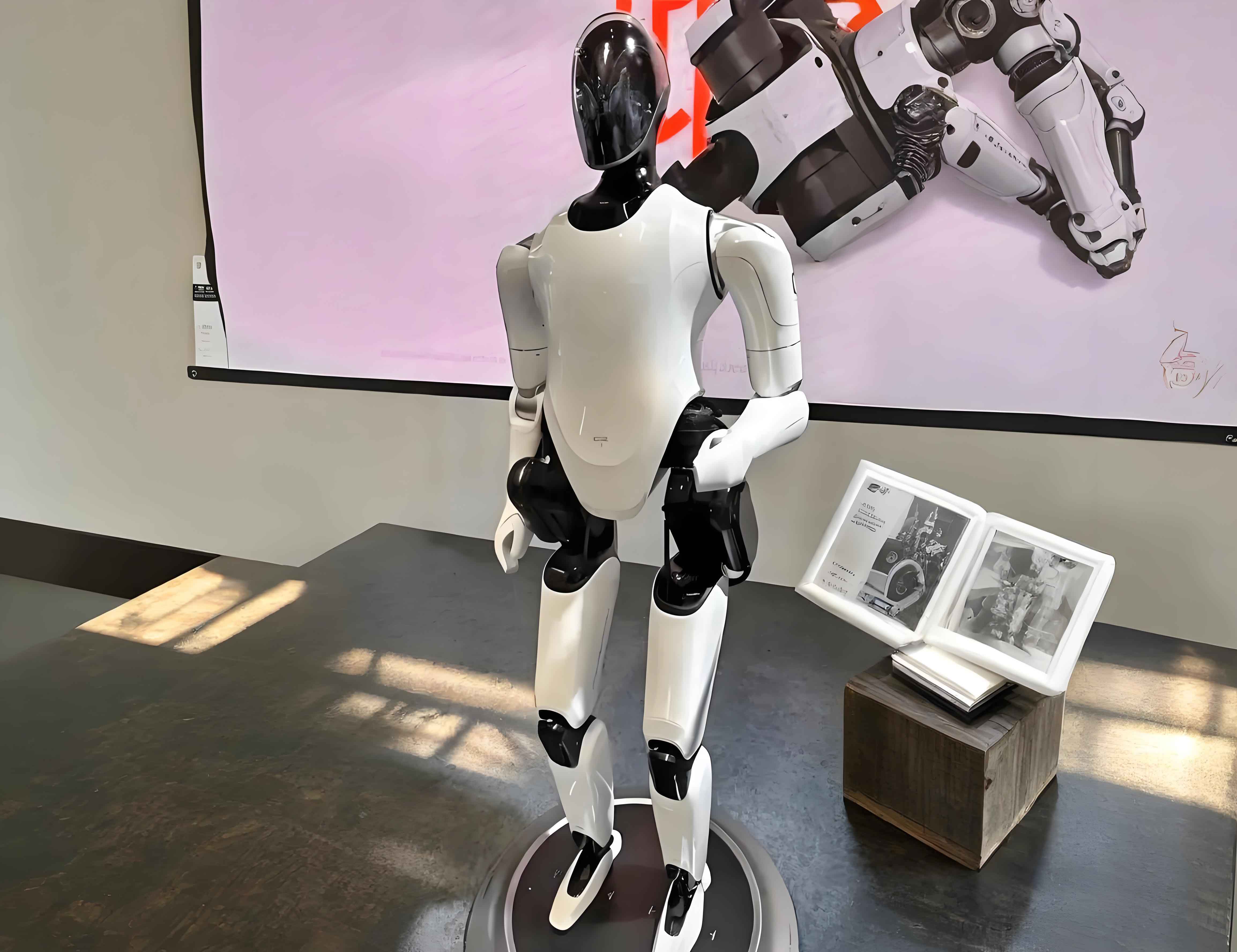
This article examines the theoretical foundations, technical architectures, and practical implications of embodied intelligence in education. Specifically, I address three interconnected questions: (1) What constitutes embodied intelligence and how does it relate to embodied cognition theory? (2) What framework can guide the integration of embodied intelligence into educational practices? (3) What research directions emerge from this integration? Throughout this analysis, I adopt a first-person perspective, reflecting on the conceptual journey from understanding the fundamental nature of embodied intelligence to envisioning its transformative potential in educational settings.
2. Theoretical Foundations of Embodied Intelligence
2.1 Historical Genesis: From Cartesian Dualism to Embodied AI
The intellectual lineage of embodied intelligence can be traced to the earliest debates in artificial intelligence. Alan Turing’s seminal 1950 question, “Can machines think?” implicitly challenged Cartesian dualism by suggesting that cognitive capabilities might be instantiated in physical systems. However, the subsequent development of AI was dominated by symbolic computation approaches that treated intelligence as abstract information processing, independent of physical instantiation.
A pivotal moment occurred in 1986 when robotics researcher Rodney Brooks introduced his “behavior-based robotics” manifesto. Brooks argued that traditional AI’s reliance on explicit representations and central processing was fundamentally misguided. Instead, he proposed that intelligence emerges from the interaction between a physical body and its environment. This “Nouvelle AI” perspective emphasized situatedness and embodiment as necessary conditions for intelligent behavior. For an embodied robot, this means that intelligence is not pre-programmed but developed through ongoing sensorimotor interactions with the world.
The subsequent evolution of embodied intelligence research proceeded along several trajectories. The development of humanoid robots in the early 21st century, exemplified by platforms like ASIMO and later Atlas, demonstrated the feasibility of complex bipedal locomotion and manipulation. Concurrently, advances in machine learning, particularly reinforcement learning, provided mechanisms for embodied agents to acquire skills through trial-and-error interaction with their environments. The emergence of deep learning further accelerated progress, enabling embodied robots to process high-dimensional sensory inputs and learn hierarchical representations of their surroundings.
Table 1: Historical Milestones in the Development of Embodied Intelligence
| Era | Key Development | Impact on Embodied Intelligence |
|——|—————–|——————————–|
| 1950 | Turing’s “Computing Machinery and Intelligence” | Established theoretical foundation for machine intelligence |
| 1986 | Brooks’ Behavior-Based Robotics | Shifted focus from abstract reasoning to embodied interaction |
| 2000s | Humanoid Robot Platforms | Enabled research on whole-body control and human-robot interaction |
| 2010s | Deep Reinforcement Learning | Provided learning mechanisms for sensorimotor skill acquisition |
| 2020s | Large Multimodal Models | Enhanced perception, reasoning, and planning capabilities |
| 2024 | Embodied Intelligence Reports and Policies | Institutional and policy recognition of embodied AI significance |
2.2 Conceptual Analysis: Defining Embodied Intelligence
The conceptual clarification of embodied intelligence requires distinguishing it from related but distinct notions. At its most literal level, embodied intelligence refers to “embodied artificial intelligence” — AI systems that possess physical form and interact with physical environments through sensing and acting. The term “embodied” emphasizes the possession of a physical body capable of executing tasks through perception, interaction, and action. “Intelligence” in this context refers to the capacity to understand and transform multimodal information received through embodied perception, including textual, visual, and auditory modalities.
Two distinctions are critical for proper conceptualization. First, embodied intelligence is not merely the combination of LLMs with robotic hardware. While large language models have demonstrated remarkable language understanding and generation capabilities, they fundamentally lack subjective perceptual experiences and direct environmental access. An embodied robot equipped with a language model can accomplish meaningful tasks only when its perceptual and motor processes are deeply integrated with linguistic reasoning. Second, embodied intelligence is not equivalent to teleoperation or remote-controlled robots. Unlike purely human-controlled systems, embodied intelligence requires autonomous perception, decision-making, and adaptation capabilities.
Third, embodied intelligence is related to but distinct from the broader concept of “intelligent agents” or “agents.” Intelligent agents can be purely virtual entities — such as chatbots or recommendation algorithms — that perceive their environment and take actions within digital domains. In contrast, embodied intelligence specifically refers to agents with physical embodiments that interact with the physical world. An embodied robot represents a particular instantiation of an intelligent agent whose sensing and acting occur in the physical realm, enabling it to receive real-world feedback through situated interactions.
Building on these considerations and the 2024 Embodied Intelligence Development Report, I define embodied intelligence as an intelligent system that interacts with its environment through physical embodiments such as robots, performing environmental perception, information cognition, autonomous decision-making, and action execution, while achieving intelligent growth and adaptive behavior through experience feedback. This definition emphasizes the integrated nature of embodied intelligence, wherein perception, cognition, and action form a unified cognitive system.
2.3 Constituent Elements: Body, Brain, and Environment
The operational architecture of embodied intelligence comprises three fundamental elements: the body (physical embodiment), the brain (intelligent processing), and the environment (contextual setting). These elements interact dynamically to enable adaptive behavior and learning.
Table 2: Core Elements of Embodied Intelligence Systems
| Element | Functional Role | Technical Instantiation | Educational Application |
|———|—————–|————————|————————|
| Body (Ontology) | Physical interface between mind and world | Humanoid robots, robotic arms, intelligent sensing devices | Physical presence in classroom, tangible manipulation of learning objects |
| Brain (Intelligence) | Information processing and decision-making | LLMs, Visual Language Models, Vision-Language-Action models | Adaptive tutoring, curriculum sequencing, assessment feedback |
| Environment | Learning and adaptation context | Real physical spaces, virtual simulations, mixed reality | Authentic learning contexts, safe practice environments |
The environment serves as the “testing ground” that supports learning processes and strategy optimization. In educational contexts, the environment may range from physical classrooms to virtual laboratories to mixed-reality spaces. The body functions as the “senses and limbs” connecting the physical and virtual worlds, perceiving the environment and interacting with it to acquire information. The brain acts as the “neural command center” that processes information, engages in knowledge learning and reasoning, and enhances perception, cognition, decision-making, and action capabilities.
The relationships among these three elements are fundamentally cybernetic. An embodied robot with a sophisticated brain engages in bidirectional interaction with its environment, forming perception-action loops that enable intelligent evolution. The formal characterization of this process can be expressed as:
$$E_{t+1} = f_{env}(E_t, A_t)$$
$$P_t = f_{sense}(E_t)$$
$$C_t = f_{cog}(P_t, H_t)$$
$$A_t = f_{act}(C_t, G_t)$$
where \(E_t\) represents the state of the environment at time \(t\), \(A_t\) is the action executed by the embodied agent, \(P_t\) is the perceptual input, \(C_t\) is the cognitive state, \(H_t\) is the history of past interactions, \(G_t\) represents the agent’s goals, and \(f_{env}, f_{sense}, f_{cog}, f_{act}\) are functions describing environment dynamics, sensing processes, cognitive processing, and action selection, respectively.
The embodied cognition theory provides the theoretical underpinning for understanding how this architecture relates to learning. According to embodied cognition, cognitive activities arise from the mutual coupling of brain, body, and environment. In learning contexts, the knowledge gained through physical participation encompasses not only rational thinking but also affective, attitudinal, intuitive, and experiential forms of knowing. The characteristics of embodiment, experientiality, and environmental embeddedness are thus essential for effective learning.
3. Application Levels of Embodied Intelligence in Education
Embodied intelligence represents the practical implementation of embodied cognition theory within artificial intelligence systems. In educational settings, the integration of embodied intelligence manifests across three progressively sophisticated levels: primary embodiment, intermediate embodiment, and advanced embodiment. This hierarchical structure provides a framework for understanding how embodied robot systems can support learning across different dimensions of cognitive engagement.
3.1 Preliminary Embodiment: Situational Embedding
Learning is fundamentally an activity “embedded” in physical and social contexts. Only within concrete situations can learners obtain authentic embodied experiences and develop a sense of bodily agency. At the primary embodiment level, the focus is on breaking through the limitations of single learning scenarios through situational embedding. By leveraging environments that fuse virtual and physical elements, such as embodied mixed-reality learning spaces, learners can achieve immersive bodily experiences that stimulate their learning curiosity and interest.
The underlying principle derives from Dewey’s pragmatist philosophy and later experiential learning theories, which hold that experience precedes conceptual understanding. When an embodied robot or intelligent system facilitates situations that physically engage the learner, it enables foundational perceptual experiences upon which more abstract knowledge can be constructed.
Table 3: Environmental Configurations for Situational Embedding
| Environment Type | Description | Technological Infrastructure | Learning Activities Supported |
|——————|————-|—————————-|——————————-|
| Physical Environment | Real spatial settings | Sensor-equipped classrooms, internet of things, physical manipulatives | Hands-on experiments, role-playing, collaborative projects |
| Virtual Environment | Simulated digital worlds | VR headsets, haptic devices, motion capture | Virtual field trips, simulated laboratories, historical reconstructions |
| Mixed Reality | Blended physical and virtual elements | AR/MR devices, projection mapping, spatial computing | Interactive overlays, augmented manipulatives, hybrid collaboration |
The virtual environment enables safe experimentation and visualization of abstract concepts, allowing learners to explore scenarios that would be impractical or dangerous in reality. For example, a chemistry lesson using an embodied robot in a virtual laboratory could simulate chemical reactions with realistic visual and haptic feedback, enabling students to develop procedural understanding without physical safety concerns. Meanwhile, the physical environment grounds learning in authentic contexts, ensuring that the abstract knowledge gained in virtual settings remains applicable to real-world situations.
3.2 Intermediate Embodiment: Multi-Sensory Interactive Participation
Learning is a whole-hearted, whole-body participation process. Educational psychologist Francesconi observed that “the brain is simply a special organ of the body; thinking arises from the whole person, from the organism.” The intermediate embodiment level emphasizes sensory-rich interaction with learning materials and environments.
At this level, learners use embodied robot systems to interact within hybrid virtual-physical environments through operations, practice, observation, and feedback, effectively internalizing knowledge. This form of active, embodied learning is substantially more effective than passive listening or reading. The empirical evidence supporting this claim is substantial: educational research has shown that virtual experiments with different levels of embodiment have substantial positive effects on learning outcomes across different disciplines and knowledge domains.
The interaction mechanisms at this level can be characterized as:
$$\text{Learning Outcome} = g(\text{Embodiment Level}, \text{Task Complexity}, \text{Knowledge Domain})$$
Research findings indicate that higher levels of embodiment generally produce greater learning gains, particularly for procedural and applied knowledge. For instance, when students manipulate physical objects or use body movements to represent mathematical concepts, they develop more flexible and robust understanding than when merely watching demonstrations.
The role of the embodied robot at this stage is twofold. First, it acts as a responsive partner that provides real-time feedback based on the learner’s actions, prompting reflection and adjustment. Second, it can model appropriate procedures and demonstrate complex motions, serving as a dynamic example that learners can emulate and compare against their own performance.
3.3 Advanced Embodiment: Cognitive Creation and Personalization
The advanced embodiment level emphasizes creative cognition and personalized knowledge construction. By constructing hybrid learning environments and using embodied intelligence during environmental interactions — such as shaping virtual geometric objects through gestures, operating virtual experiments, or performing visualized music with full-body movements — learners can transform abstract concepts into embodied experiences, promoting deep reconstruction and innovation of knowledge structures.
This level is distinguished by the emergent property of self-authorship in learning. Rather than simply responding to environmental stimuli, learners actively construct their understanding through goal-directed interaction. The embodied robot serves as both a collaborator and a facilitating resource, adapting its behavior and feedback to the individual learner’s cognitive and emotional state.
The three levels — situational embedding, embodied participation, and cognitive creation — are not mutually exclusive, but rather constitute a dynamically integrated system. Situations provide the embodied contexts for cognition; the physical body functions as the vehicle for the perception-action loop; and cognitive creation represents the ultimate goal of knowledge transformation and transfer across contexts. This hierarchical model provides a structural framework for designing effective embodied intelligence interventions in educational settings.
4. Implementation Framework for Embodied Intelligence in Education
Building upon the educational application levels and integrating insights from embodied cognition theory, AI technology, and educational practice, I propose a comprehensive implementation framework for embodied intelligence in education. This framework comprises three interconnected components — hybrid environments, embodied interaction, and the intelligent brain — corresponding to the three application levels of situational embedding, embodied participation, and cognitive creation.
Table 4: Correspondence Between Framework Components and Educational Functions
| Framework Component | Educational Level | Primary Functions | Key Technologies |
|——————–|——————|——————-|——————|
| Hybrid Environment | Situational Embedding | Context provision, immersion | VR/AR/MR, sensors, physical spaces |
| Embodied Interaction | Embodied Participation | Engagement, feedback, coaching | Multi-modal sensing, haptics, motion tracking |
| Intelligent Brain | Cognitive Creation | Reasoning, personalization, generation | LLMs, VLM, VLA models, knowledge graphs |
4.1 Hybrid Environment: Building Blended Learning Spaces
Embodied intelligence acquires knowledge, adapts to environments, and optimizes action strategies through interaction with the physical world (whether physical or virtual). In physical environments, embodied intelligence agents employ multi-modal sensors to receive environmental information covering vision, hearing, touch, and olfaction, providing learners with multi-sensory stimulation and rich learning experiences.
In virtual environments, the implementation of virtual simulation platforms creates convincing digital scenarios. These platforms can iterate experience demonstrations and playbacks, automatically generating training data for learning and transferring acquired competence to real-world contexts. The general architecture of the hybrid environment can be characterized mathematically by the following formulas.
The degree of immersion (\(I\)) provided by a spatial learning environment is related to the fidelity of sensory feedback (\(F_{sense}\)), the level of interactivity (\(L_{interact}\)), and the comprehensive coverage of sensory modalities (\(M_{cover}\)):
$$I = \alpha \cdot F_{sense} + \beta \cdot L_{interact} + \gamma \cdot M_{cover}$$
The creation of mixed-reality environments further enriches the learning space. By projecting virtual elements into physical space, mixed reality enhances learning and engagement, bridging the gap between purely digital and purely physical settings while enabling learners to progress from “disembodied cognition” toward embodied presence.
| Environment Feature | Physical Reality | Virtual Reality | Mixed Reality |
|———————|—————-:|—————-:|————–:|
| Physical Interaction | High | Low | Medium-High |
| Sensory Immersion | Variable | High | High |
| Normative Flexibility | Low | High | Medium |
| Authenticity | High | Medium | High |
| Spatial Accessibility | Limited | Unlimited | Medium |
4.2 Embodied Interaction: Multi-Modal Perception and Action
Embodied intelligence uses its physical structure and form — articulated arms, bionic joints, robotics, and related architectures — to create a foundation for real-time interaction with the physical world. Operating from a first-person perspective, the system perceives, plans, decides, and drives action, achieving the integration of perception, cognition, decision-making, and action.
The perception process involves comprehensively sensing environmental information through a suite of devices. Sensors, cameras, and microphones collect visual, auditory, and tactile multimodal data. Based on these multimodal inputs, the system understands three-dimensional scenes, infers object geometry and physical properties, effectively recognizes target objects, identifies valid commands, and determines self-position and pose. Simultaneous Localization and Mapping (SLAM) technology enables continuous environmental scanning during movement, constructing spatial maps and completing three-dimensional environmental reconstruction.
The cognitive process involves systematic learning through interaction:
$$C_{t+1} = C_t + \eta_1 \cdot L_{imitation}(A_{demonstrated}, C_t) + \eta_2 \cdot L_{reinforcement}(R_t, C_t)$$
where \(C_t\) represents the cognitive model at time \(t\), \(L_{imitation}\) represents imitation learning from demonstrated behaviors, \(L_{reinforcement}\) is the reinforcement learning signal, and \(\eta_1, \eta_2\) are learning rate parameters.
Within the cognitive phase, imitation learning provides behavioral priors, while reinforcement learning from trial-and-error environmental interaction drives autonomous evolution. The system processes perceived information through hierarchical abstraction and gradual refinement, enabling information flow between levels and behavioral output that supports decision-making and implementation.
The decision-making phase requires understanding external instructions (including natural language and situational semantics), decomposing complex tasks, planning subtasks, generating optimal feasible paths through trajectory planning, creating precise movement instructions through motion planning, and adapting to complex environments using reasoning analysis to produce intelligent decisions. Based on these decisions, the system achieves target localization, navigates, controls, and optimizes its actions.
Table 5: Perception-to-Action Pipeline in Education
| Stage | Function | Deep Learning Component | Education Application Example |
|——-|———-|————————|——————————-|
| Perception | Sensory data acquisition | CNNs, transformers, multimodal encoders | Student gesture/expression recognition |
| Understanding | Situational comprehension | Scene graph generation, VLM reasoning | Real-time task state assessment |
| Cognition | Knowledge integration | Knowledge graphs, memory systems | Learning progression tracking |
| Planning | Subtask decomposition | Task planners, LLM-based planning | Scaffolding generation |
| Action | Physical execution | Motion controllers, force control | Robotic demonstration and feedback |
The integration of embodied intelligence in education realizes the core tenets of embodied cognition theory, which posits that cognitive processes fundamentally depend on interactions between body and environment. Through the ability to sense and respond in real-time, embodied intelligence can read learner states — including facial micro-expressions, vocal patterns, and body language — alongside behavioral data from learning activities and interaction records. Deep analysis of these multimodal data streams reveals levels of knowledge mastery, cognitive styles, and emotional states.
4.3 Cognitive Creation: The Intelligent Brain Driving Knowledge Generation
The “intelligent brain” of embodied intelligence relies on large language models and multimodal large models to achieve sophisticated understanding and generation of natural language as well as integration and analysis of multimodal data. Multimodal large models can simultaneously integrate and understand information from different sensory channels, endowing embodied intelligence with an almost human-like ability to understand diverse situations.
The processing pipeline can be articulated as a layered generative mechanism. To connect the embodied robot to educational transformation, this cognitive capability is represented in learning processes as the following:
Let \(\mathcal{X} \in \mathbb{R}^{T \times D_{in}}\) denote the time series of learner state data (e.g., actions, gaze, speech, postural states) and \(\mathcal{Y} \in \mathbb{R}^{T \times D_{out}}\) denote the pedagogical output sequence (e.g., adaptive feedback, task reconfiguration, concept explanations). The intelligent brain models the conditional mapping:
$$P(\mathcal{Y} | \mathcal{X}; \theta_{emb}) = \prod_{t=1}^{T} p(y_t | \phi_{\text{policy}}(x_1, \dots, x_T) , y_1, \dots, y_{t-1})$$
where \(\theta_{emb}\) is a set of learnable parameters shared across the perception and action loop, and \(\phi_{\text{policy}}\) is the policy function mapping accumulated multimodal perception data to appropriate pedagogical actions.
In practical educational deployment, a cognitive feedback loop emerges:
$$U_{t} = \lambda_1 \cdot E_{cog} + \lambda_2 \cdot B_{proxemic} + \lambda_3 \cdot I_{interaction} + \epsilon$$
where \(U_{t}\) is a scalar index of learner engagement, \(E_{cog}\) is cognitive feature encoding derived from the intelligent brain, \(B_{proxemic}\) represents bodily and spatial features detected by the embodied robot, \(I_{interaction}\) encodes learner–robot reciprocal actions, and \(\epsilon\) is noise. This index then modulates instructional decisions in real-time, generating customized learning paths:
$$\theta_{learn}^{t+1} = \theta_{learn}^{t} – \zeta \cdot \nabla U_{t}$$
The instructional relevance of this formal pipeline is that it becomes possible to flip the traditional “one-to-many” knowledge-transfer paradigm into a “one-to-one” dynamic scaffolding paradigm. Instead of static curriculum delivery, the embodied robot adaptively reconfigures the next pedagogical event based on each learner’s real-time cognitive and affective state.
Consider Google’s PaLM-E model and OpenAI’s CLIP model as illustrative examples. The CLIP model, trained on image-text pairs, embeds both modalities into a shared semantic space, enabling cross-modal understanding. In educational applications, this capacity allows the system to relate abstract verbal descriptions to concrete physical demonstrations and to align learner actions with instructional goals.
When the embodied robot combines such multimodal understanding with student behavior analysis, it constructs accurate learner profiles, integrates emotion recognition and classroom behavior analysis, and dynamically adjusts teaching strategies and interaction patterns. This capability supports the stimulation of learner motivation and the cultivation of autonomous learning. The educational process within this framework embodies knowledge construction and innovation, an integrated learning environment — body — brain interaction that underpins pedagogical innovation.
The triadic structure of environment, body, and brain, initially expressed in theoretical classifications from the literature, finds a corresponding functional mapping in the three-part framework.
Table 6: Theoretical and Practical correspondences in the Implementation Framework
| Triadic Structure | Framework Component | Educational Layer | Key Mechanisms |
|——————-|——————–|——————–|—————-|
| Environment | Hybrid Learning Spaces | Situational Embedding | Authenticity, immersion, immersion feedback |
| Body | Multi-modal Embodied Interaction | Embodied Participation | Sensorimotor contingencies, kinesthetic learning |
| Brain | Intelligent Processing Engine | Cognitive Creation | Generative modeling, adaptive personalization |
This framework transcends the limitations of traditional “disembodied identification” education. By supporting embodied intelligence as a pedagogical lever, it enables learners to acquire autonomous learning capabilities, proactively build and construct knowledge structures, and generate novel solutions from contextualized problem-solving.
5. Research Frontiers and Future Directions
The integration of embodied intelligence into education heralds a shift toward what educational stakeholders increasingly call “new productive forces” in education — innovations that recombine technological affordances with pedagogical goals. Based on the theoretical framework presented above, I identify four interconnected research frontiers.
5.1 Personalized Learning through Embodied Human-Robot Interaction
From the learner’s perspective, embodied intelligence creates novel pathways for personalized learning through the integration of multimodal sensing, physical interaction, and adaptive decision-making. The core innovation involves merging bodily actions, environmental contexts, and cognitive processes to overcome the disembodied limitations of conventional digital learning.
In STEAM education, students can control bionic robots through programming to intuitively understand mechanical principles and algorithmic logic. The Robot Operating System (ROS) enables integrated environmental perception modules that provide real-time feedback on experimental data, transforming abstract concepts into transferable skills through embodied practice.
The mathematical formulation of personalized learning pathways is:
$$f_{learning}^{personalized}(t) = \arg\max_{a \in \mathcal{A}} \mathbb{E} [U(\text{learner state}_{t+1}) | \text{state}_t, a, \theta_{student}]$$
where \(\mathcal{A}\) is the space of possible pedagogical actions available to the embodied robot, \(U\) is an individual-specific utility function capturing both cognitive and emotional outcomes, and \(\theta_{student}\) reflects the learner’s current competence and learning trajectory.
A concrete scenario in special education highlight how embodied robots function as interaction partners and therapeutic companions. In controlled environments, humanoid robots can reproduce social scenarios in predictable ways, optimizing attention allocation and reducing social anxiety for children with autism — providing more comprehensive and individualized therapeutic support.
In physical education and sports training, motion-capture systems integrated with haptic feedback and visual overlays provide real-time corrective guidance, accelerating skill internalization and preventing the reinforcement of erroneous movement patterns.
Table 7: Personalized Learning Applications across Educational Domains
| Educational Domain | Embodied Robot Role | Personalization Mechanism | Measured Outcomes |
|——————–|——————–|—————————|——————-|
| STEM Education | Physical teaching assistant | Real-time adaptive scaffolding based on problem-solving traces | Improved conceptual understanding |
| Special Education | Social interaction partner | Reproducible social cues, adjustable stimulation levels | Reduced social anxiety, increased engagement |
| Physical Training | Movement coach | Kinematic analysis and haptic correction | Faster skill acquisition |
| Language Learning | Conversational partner | Interactive dialogues with adaptive linguistic complexity | Enhanced communicative competence |
Importantly, the educational value of embodied intelligence extends beyond personalized accuracy to the reconstruction of learner subjectivity. Embodied intelligence pushes education toward “body-mind integration,” while preserving the essential humanistic roles of teachers through complementary human-robot collaboration. The ultimate objective is to serve the holistic development of the learner.
5.2 Embodied Pedagogical Agents: New Roles for Robots in the Classroom
Embodied pedagogical agents, existing in physical form as humanoid robots or other physical embodied robot platforms, are positioned as teaching companions and instructional aides. Through multimodal sensing devices, these agents monitor classroom dynamics, capture student learning behaviors, and engage in natural interactions with students in physical space via gestures, facial expressions, and speech.
This emerging class of educational agents has witnessed significant technological advances. In 2022, the Swedish company Furhat Robotics introduced a robot capable of interacting through both natural language and non-verbal cues such as facial expressions. In language learning contexts, the system simulates realistic conversational situations, helping learners practice oral skills and enhance practical language abilities.
By 2024, research-oriented embodied robots have begun integrating mobile robot platforms, precise sensing, AI large-model technology, and flexible robotic arms, creating high-quality simulated experiment environments for scientific research and education. At the 2025 World Digital Education Conference, a science-education intelligent tutor prototype was officially released, marking the designation of embodied tutor technologies as national key R&D initiatives.
The pedagogical functions of embodied agents can be characterized as follows:
$$Q_{agent}(participant) = w_1 \cdot Q_{demo} + w_2 \cdot Q_{monitor} + w_3 \cdot Q_{assess} + w_4 \cdot Q_{motivate}$$
where \(Q_{demo}\) represents the quality of the agent’s task demonstrations, \(Q_{monitor}\) identifies coverage of learning behaviors observed, \(Q_{assess}\) denotes the accuracy of formative assessments, and \(Q_{motivate}\) captures the system’s capacity to boost learner motivation through embodied presence.
Embodied agents also open up novel learning opportunities for students with special needs. Through interactions involving images, sound, video, and multimodal information perception, these robotic agents substantially enhance learning experiences that were previously inaccessible to special-needs groups. Furthermore, they can serve in remote education and human-AI collaborative teacher professional development, offering a relatively immersive educational experience.
5.3 Collaborative Intelligence: Multi-Agent Robot Coordination in Educational Contexts
Professor Huang Ronghuai proposed the crucial observation that “corporeal agents serve as the executive layer for large models, undertaking the bridge from cognition to action and opening the last mile from large models to real teaching contexts.” Recognizing that single agents often struggle with complex real-world problems, the emphasis shifts to multi-agent collaboration.
With the advancement of LLMs and multimodal large models, embodied intelligence has achieved breakthroughs in reasoning and generalization. Combined with improved perceptual and autonomous decision-making capabilities, these advances will drive transformation from “knowledge transmission” toward “embodied cognition construction.” This transformation forges a new human-machine symbiotic teaching pattern, transitioning the teacher’s role from knowledge transmitter to learning designer and facilitator.
The multi-agent system can be formally characterized as a team of embodied robots:
$$\mathcal{G} = \{\mathbf{r}_1, \mathbf{r}_2, \dots, \mathbf{r}_N\}$$
where each \(\mathbf{r}_i = (\text{perception}_i, \text{cognition}_i, \text{action}_i)\) is an embodied robot agent. A cooperative task \(T\) is decomposed into subtasks:
$$T = \{T_1, T_2, \dots, T_N\}, \quad \text{with} \quad T_i \cap T_j = \varnothing \quad \text{for} \quad i \neq j$$
The coordination mechanism entails each robot \(\mathbf{r}_i\) solving a subtask under constraints:
$$\min_{\pi_1, \dots, \pi_N} \sum_{i=1}^{N} \mathbb{E}[\text{cost}_i(\pi_i)] \quad \text{s.t.} \quad \text{capability}_i \geq \text{requirement}(T_i)$$
where \(\pi_i\) is the policy of the \(i\)-th embodied robot. In practical terms, a group of robots might function as collaborative learning assistants in a robotics classroom — one robot demonstrates physical manipulation, another monitors learner attention, a third provides verbal explanations, and a fourth manages adaptive difficulty.
Implementation examples include using multiple intelligent agents to support project-based learning, with each agent simulating distinct roles to mirror real-world task distribution. Additional directions involve brain-computer interfaces for knowledge internalization, transcending conventional cognitive boundaries, and constructing embodied educational metaverse spaces.
Research on multi-robot systems has developed frameworks such as the Smart-LLM architecture, which assigns distinct capabilities to multiple embodied robots to facilitate cooperative task completion. However, critical questions regarding coordination control, dynamic environment adaptation, and information sharing among robots remain.
Table 8: Research Directions for Multi-Agent Educational Collaboration
| Research Problem | Description | Potential Application |
|——————|————-|———————-|
| Coordination control | Methods for synchronized multi-robot action in constrained spaces | Classroom activities with multiple embodied assistants |
| Dynamic adaptation | Algorithms for adjusting agent behavior during unexpected events | Emergency interventions or flexible lesson flow |
| Information sharing | Communication protocols among heterogeneous robots | Integrating sensing data from different modalities |
| Role differentiation | How agents assume specialized pedagogic roles with minimal redundancy | Collaborative tutoring of differentiated learner groups |
5.4 Immersive Embodied Learning: From Virtual Reality to Mixed Symbiosis
Embodied immersive learning will emerge as a transformative teaching modality in the intelligent era, emphasizing “physical presence” and embodied experiences. By leveraging immersive technologies — virtual reality (VR), mixed reality (MR), augmented reality (AR), and metaverse-related systems — educators can create perceptible, interactive, and embodied experiential situations.
Within these situations, learners interact through virtual avatars, fostering a powerful sense of presence and embodiment. Empirical research found that embodied VR-based learning significantly enhanced academic performance, learning engagement, and subject interest. Additional case-based evidence suggests that constructivist alignment — integrating bodily perception, affective engagement, and cognitive processing within AI-augmented environments — is educationally essential.
A formal model of the immersive learning experience is:
$$\text{ILQ} = \mu_1 \cdot \text{presence} + \mu_2 \cdot \text{embodiment} + \mu_3 \cdot \text{interactivity} + \mu_4 \cdot \text{affectivity}$$
where \(\text{ILQ}\) represents immersive learning quality, and presence, embodiment, interactivity, and affectivity are measured through validated instruments embedded in the embodied robot sensors.
Advanced affordances of immersive embodied environments include the capacity to dynamically adjust physical constraints and perceptual cues according to learner actions:
$$E_{next}^{(task)} = \Phi(E_{current}^{(task)}, A_{learner})$$
where \(\Phi\) rescales task difficulty, alters visual and haptic feedback, and adapts the scenario context.
Table 9: Comparison of Immersive Technologies for Education
| Technology | Physical Fidelity | Interaction Modality | Cost | Implementation Complexity | Learning Outcomes |
|————|——————–|———————–|——|—————————|——————-|
| VR | Medium-High | Controller-based, full body | Medium | Medium | High |
| AR | Medium | Marker-based, spatial | Low-Medium | Low | Moderate-High |
| MR | High | Natural gestures, voice | High | High | High |
| Metaverse | Variable | Avatar-mediated | Variable | High | Potentially High |
The role of the embodied robot within these immersive systems deserves special emphasis. As a physical agent situated between the learner and the digital overlay, the robot provides tactile feedback, embodies virtual characters, and anchors virtual artifacts in the physical space. For instance, in a mixed-reality anatomy lesson, the robot might “perform” the function of a dynamic anatomical model, allowing learners to point at virtual organs and see the robot respond with corresponding movements and explanations.
6. Challenges and Future Directions
Despite the transformative potential of embodied intelligence in education, several challenges require careful consideration.
Data Privacy and Security: The operation of embodied robots in classrooms involves continuous sensing of learner behaviors, physiological signals, and affective states. This granular data collection raises serious privacy concerns, particularly for minors. Robust privacy-preserving techniques, transparency mechanisms, and ethical guidelines are essential to ensure responsible implementation.
The privacy preservation can be formulated as an information-theoretic optimization problem:
$$\min_{\text{encoder}} I(\text{learner data}; \text{robot-observable output}) \quad \text{s.t.} \quad \text{utility}(educational) \geq \delta$$
which suggests the need for privacy-utility tradeoffs.
Ethical Considerations: The deep integration of embodied agents in educational relationships may affect social and emotional development. Questions concerning the appropriateness of emotional attachment to robots, the impact on peer relationships, and the potential for technological dependence require careful investigation.
Technical Limitations: Multi-modal data collection, multi-agent collaboration, multi-scenario adaptive transfer, multi-task parallel learning and generalization, and multimodal interaction remain substantial technical bottlenecks. Improving robustness, reliability, and generalization continues to be essential research priorities.
Transparency and Explainability: Embodied intelligence must develop interpretable theories and methods. The capacity to explain why an embodied robot took a particular pedagogical action is essential for building trust among learners, teachers, and parents. This requirement is expressible through:
$$\text{Explainability}(\mathcal{M}) = \frac{\text{covered by interpretable abstract rules}}{\text{all decisions made by } \mathcal{M}}$$
Teacher Training and Acceptance: The success of embodied intelligence in education depends critically on teachers’ willingness to adopt such technologies and their ability to integrate them meaningfully into instruction. Professional development programs must equip educators with the necessary knowledge and skills.
Table 10: Implementation Challenges and Potential Mitigation Strategies
| Challenge Type | Specific Concern | Mitigation Strategy | Priority |
|—————-|——————|———————|———-|
| Technological | Limited robot adaptability and reliability | Continued R&D, field-testing in authentic classrooms | High |
| Ethical | Data privacy and algorithmic bias | Ethical frameworks, transparent data governance | Moderate |
| Pedagogical | Potential misalignment with learning goals | Co-design with educators, theory-driven development | High |
| Economic | High cost of hardware and maintenance | Government funding, open-source alternatives | Moderate |
| Societal | Equity of access across diverse communities | Community-based implementation, inclusive design | Moderate-High |
I also recognize the significance of developing safe, controllable, and scalable embodied intelligence technologies. Standardization of interfaces, evaluation protocols, and ethical standards is needed to support sustainable innovation and the dissemination of such technologies in educational settings.
7. Conclusion
Embodied intelligence stands as an essential pathway toward artificial general intelligence, linking AI to real-world industries, stimulating new productive forces, and providing crucial support for national strategies including “AI+” initiatives and digital transformation in education.
From the perspective of educational ecology, the advent of embodied intelligence offers a promising resolution to the longstanding cognition-action gap in learning and opens up possibilities for the long-term transformation from “disembodied cognition” toward “embodied symbiosis.” By situating learning in meaningful contexts, engaging learners’ full physical involvement, and enabling cognitive processes that are fundamentally interactional and adaptive, the embodied robot becomes a cornerstone of a more authentic and effective educational paradigm.
In this article, I systematically elaborated the theoretical connotations and historical development of embodied intelligence, described the educational application hierarchy, and proposed a practical implementation framework. The framework — spanning hybrid environment, embodied interaction, and intelligent brain — provides both theoretical guidance and practical reference for future implementation. The three corresponding levels of situational embedding, embodied participation, and cognitive creation form a unified progression that can help educational technology designers and classroom educators structure their approaches.
I then articulated four future research directions from the perspectives of learners, teachers, human-robot collaboration, and learning environments: embodied personalized learning, embodied pedagogical agents, multi-agent collaborative work, and embodied participation in immersive learning. Each direction offers rich research potential and practical value.
However, education remains a complex, systemic endeavor characterized by multi-dimensional interactions and dynamic development. Future research must prioritize breakthroughs in multi-modal data collection, multi-agent coordination, multi-scenario self-adaptive transfer, multi-task parallel learning and generalization, along with multi-modal interaction. Equally importantly, the pervasiveness of embodied intelligence and its sustained interaction with the environment unavoidably introduce privacy threats and ethical challenges. How to responsibly address these risks is crucial for the healthy and innovative application of embodied intelligence in education.
By pursuing these research directions with careful attention to ethical boundaries and learner well-being, the field can advance toward developing embodied intelligence systems that are not only effective but also truly empowering for every learner. The vision is that embodied robots will become natural collaborators with teachers, co-creators of learning environments, and enablers of human flourishing — not merely as tools of efficiency, but as participants in the lifelong journey of human learning and development.