
In the current era of artificial intelligence-driven learning, a significant deficiency in embodiment and contextual disembedding persists, primarily manifested as a binary separation between cognitive processes and bodily experiences, as well as a disconnect between knowledge construction and real-world situations. This technological alienation continuously widens the gap between cognition and practice in education. Embodied intelligence, as a crucial direction in the evolution of AI, offers a new paradigm for reshaping the embodied characteristics of education and achieving personalized development. It has become a key driving force in cultivating new productive forces in education. Based on this, this article explores how embodied intelligence empowers the educational ecosystem amidst rapid technological advancements and digital transformation in education. From the dimensions of theoretical foundations, technological applications, and educational practices, it first elucidates the theoretical connotations of embodied intelligence, traces its origins, and analyzes its core elements. Secondly, using “functional progression” as an axis, it categorizes the educational application levels of embodied intelligence and constructs a framework for its implementation in education. Finally, it提炼关键的研究方向 for the future.
The theoretical萌芽 of embodied intelligence can be traced back to the early days of artificial intelligence. In 1950, Turing posed the question of “whether machines can think,” sparking遐想 about the relationship between machines and intelligence. In 1986, roboticist Brooks proposed the concept of “behavior-based robots,” emphasizing that intelligence is embodied and situated, guiding researchers from computational studies to interactions between body and environment. He argued that embodied intelligence is a necessary path toward general artificial intelligence. In the early 21st century, the emergence of humanoid robots and bionic robots further advanced the development of embodied intelligence, providing conditions for its practical applications.
Embodied intelligence, literally understood as “embodied artificial intelligence,” refers to having a physical entity capable of performing tasks through感知, interaction, and action. “Intelligence” manifests as the ability to understand and转换 multimodal information (text, visual, auditory, etc.). Embodied intelligence emphasizes that intelligence is influenced by the tight coupling of brain, body, and environment, achieving autonomous learning and evolution through感知信息 and physical interaction with the environment. First, embodied intelligence is not a simple combination of technologies like Large Language Models (LLMs) with robots; LLMs have capabilities such as language understanding and generation but lack subjective感知能力. In contrast, embodied intelligence achieves autonomous decision-making and adaptive actions through a “perception-action”闭环. Second, one goal of embodied intelligence is to enable robots to act flexibly, efficiently, and robustly like humans. While humanoid robots are considered an ideal application form, embodied intelligence is not equivalent to humanoid robots. Finally, embodied intelligence is not synonymous with agents; agents perceive their environment and take actions, which can be virtual (e.g., chatbots,智能 assistants) or physical entities (e.g., intelligent robots, industrial robotic arms). Thus, in embodied intelligence, agents specifically refer to those with physical entities that can interact contextually with the environment to actively obtain real feedback from the physical world.
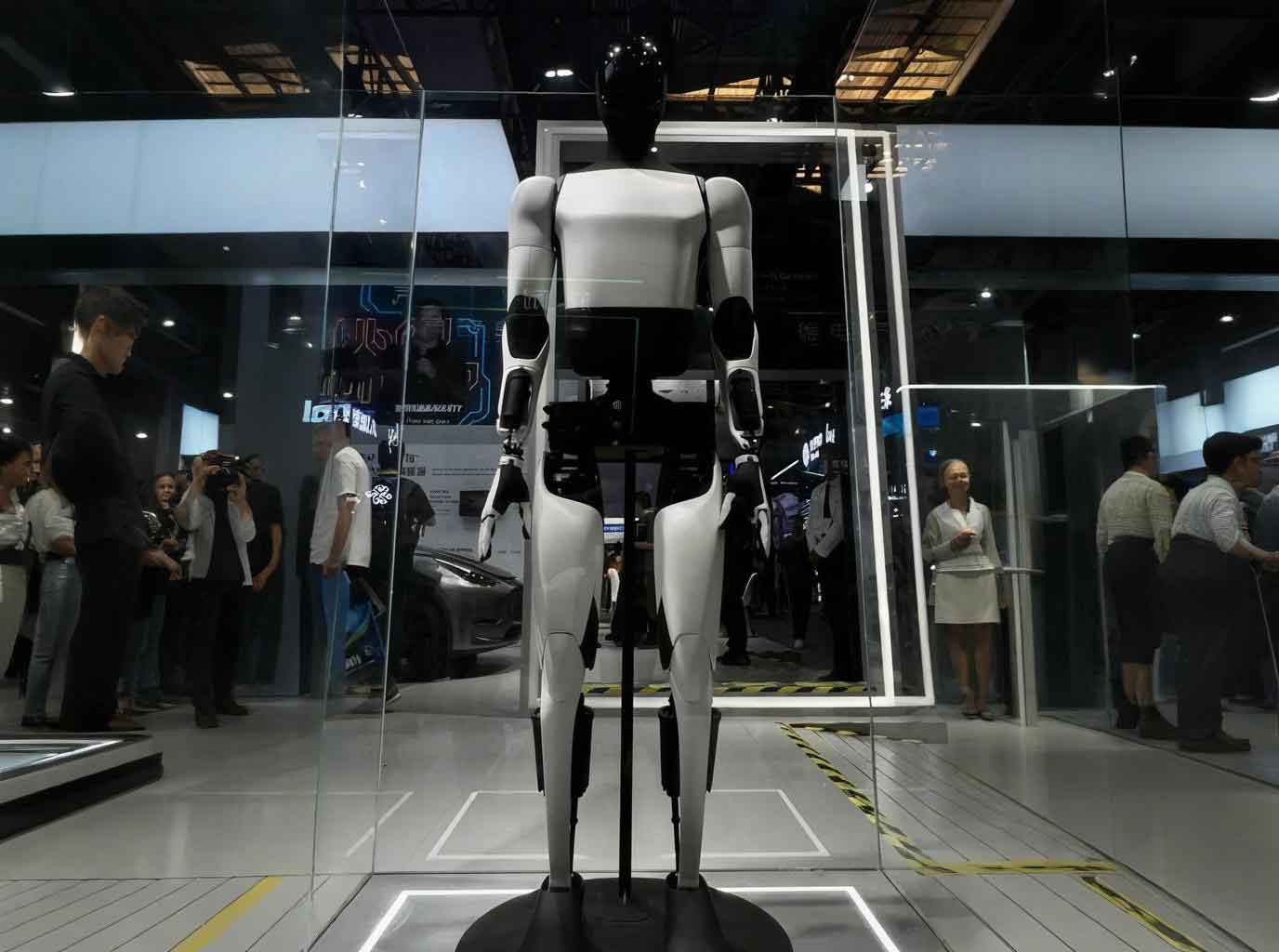
These perspectives acknowledge the importance of “intelligence” and “embodiment.” According to the 2024 “Embodied Intelligence Development Report,” embodied intelligence refers to intelligent systems that, through physical entities like robots interacting with the environment, can perform environmental perception, information cognition, autonomous decision-making, and行动, and achieve intelligent growth and行动自适应 from经验反馈. This definition forms the basis for subsequent discussions. Embodied intelligence generally consists of three elements:本体, intelligence, and environment. The本体 is the physical foundation, typically referring to physical实体 robots with various forms. Intelligence refers to the智能大脑 embedded in the embodied本体, such as Large Language Models (LLMs), Vision Language Models (VLMs), Vision Language Action models (VLAs), etc. The environment involves the embodied本体 interacting with it, not only感知 the environment but also influencing it through行动, continuously learning and adapting through interaction. In terms of relationships, the environment is the “试验场” supporting learning processes and strategy optimization; the本体 is the “senses and limbs” connecting the physical and virtual worlds, perceiving the environment and interacting to acquire information and understand problems; the智能大脑 is the “neural中枢” processing information, learning knowledge, and reasoning, directing the本体 to implement actions by enhancing its感知, cognition, decision-making, and行动 capabilities. With an intelligent brain, the embodied本体 engages in bidirectional interaction with the environment, forming a “perception-action”闭环 for智能进化.
Embodied intelligence is a practical extension of embodied cognition theory in the field of artificial intelligence. Embodied cognition emphasizes that the formation of cognitive activities is a process of interaction between brain, body, and environment. In specific learning situations, knowledge gained through bodily participation is not merely deductive thinking but also the formation of非理性思维 such as emotions, attitudes, intuition, and experiences, characterized by涉身性, experience, and environmental性. Basic concepts arise from感知体验, primarily from understanding the body and context. During knowledge acquisition, environment, body, and cognition are indispensable; lacking embodied contexts or脱离身体的实践 hinders “body participation in cognition.” From the theoretical perspective of embodied cognition, the educational applications of embodied intelligence can be divided into three levels:初级具身,中级具身, and高级具身.
| Level | Description | Key Characteristics |
|---|---|---|
| 初级具身 (Primary Embodiment) | Context embedding through虚实融合 environments to provide immersive experiences. | Situational immersion, multi-sensory stimulation. |
| 中级具身 (Intermediate Embodiment) | Emphasizes embodied interaction where learners操作, practice, observe, and receive feedback. | Active participation, knowledge internalization through physical actions. |
| 高级具身 (Advanced Embodiment) | Focuses on创造性认知 and personalized cognition through虚实融合 environments and交互. | Cognitive reconstruction, innovation, and跨情景迁移. |
First, learning is an activity “embedded” in the body and environment. Only in specific contexts can students gain切身体验, bodily意志, and归属,感知 the joy of接触知识. At the初级具身 level, embodied intelligence breaks the limitations of单一 learning scenarios through情境嵌入, using虚实融合 environments like embodied mixed-reality learning environments to provide immersive embodied experiences and stimulate interest. Second, learning involves全身心 participation. Educational psychologists note that “the brain is merely a special organ of the body; thinking originates from the whole person, from the organism.” The中级具身 level emphasizes embodied interaction, where students use embodied intelligence in虚实融合 environments to internalize knowledge through操作, practice, observation, and feedback, which is more efficient than passive listening or reading. For example, studies show that virtual experiments with different levels of embodiment significantly promote college students’ learning outcomes, with varying impacts across disciplines and knowledge types.高级具身 emphasizes创造性认知 and personalized cognition by constructing虚实融合 learning environments and using embodied intelligence to interact with the environment (e.g.,手势塑造虚拟几何体, virtual实验操作,全身演奏可视化音乐), transforming “abstract concepts” into “embodied experiences” to promote deep重构 and innovation of learners’ knowledge structures. Through the three levels of “情境嵌入-具身参与-认知创造,” learners undergo a cognitive deepening process from初级具身 to高级具身. These levels are not independent but form a dynamic integrated whole, where context provides the embodied场景, the entity serves as the carrier for the “perception-action”闭环, supporting creative重构 and跨情景迁移 of knowledge in embodied practice, offering a structured paradigm for构建 frameworks.
Based on the levels of embodied intelligence in educational scenarios, this article proposes a framework for empowering education through embodied intelligence from the perspectives of embodied cognition theory, AI technology, and educational practice. The framework consists of three main parts:虚实环境,具身交互, and智能大脑, corresponding to the three levels of情境嵌入,具身参与, and认知创造. This framework, empowered by embodied intelligence technology, emphasizes the role of虚实融合 learning environments, embodied participation in learning experiences, and智能大脑’s cognitive deepening in education, providing theoretical and technical support for embodied, contextualized, and personalized future education.
In情境嵌入, the construction of虚实融合 learning scenarios involves embodied intelligence learning through interaction with the physical world (physical or virtual) to acquire knowledge, adapt to environments, and optimize行动策略. In physical environments, embodied intelligence uses physical carriers with multimodal sensors to receive visual, auditory, tactile, olfactory等信息, providing multi-sensory stimulation and rich learning experiences for learners. In virtual environments, realistic模拟 environments are constructed through virtual仿真 platforms for演示转换 and重放, automatically generating training data for模仿学习, and transferring learned capabilities or behaviors to the real world. Overall, the environment in情境嵌入 includes real physical environments, virtual仿真 environments, and mixed-reality environments. In real physical environments, learning activities are based on real physical spaces and操作场景 for immersive learning experiences. In virtual仿真 environments, learners use VR glasses, VR动捕数据 gloves, etc., to enter immersive learning environments. In mixed-reality environments, virtual elements are superimposed on physical spaces through投影, bridging the gap between virtual and physical worlds and guiding students from “离身” to “具身,” providing real-time interactive mixed-reality environments for learners.
In具身参与,多模态感知的具身交互 involves embodied intelligence building the foundation for real-time interaction with the physical world through its physical躯干架构 (e.g., robotic arms, bionic joints, robots), actively感知, planning, and决策 from a first-person perspective, driving embodied intelligence to complete autonomous actions, achieving integrated “perception-cognition-decision-action.” First, embodied intelligence comprehensively perceives environmental information through感知能力, using sensors, cameras, microphones, etc., to collect multimodal data such as visual, auditory, and tactile, and理解三维场景 based on multimodal information (inferring object geometric and physical properties, effectively identifying target objects), recognizing valid instructions, and confirming its own位姿.在此基础上, through technologies like Simultaneous Localization and Mapping (SLAM), it continuously scans the environment while moving, constructing spatial maps and completing三维环境重建. Second, embodied intelligence interacts with the environment, continuously summarizing past experiences and reflecting on visual感知结果 to form cognitive maps. During cognition,模仿学习 provides behavioral先验, reinforcement learning (trial-and-error interaction with the environment) drives autonomous evolution, and embodied intelligence hierarchically abstracts perceived information, refining it level by level, achieving信息流动 and behavior output between levels through信息加工 to support decision-making and行动. Finally, embodied intelligence needs to understand external instructions (e.g., natural language and场景语义), decompose complex tasks, plan subtasks, generate optimal feasible paths through轨迹规划, produce precise运动指令 through动作规划, adapt to complex environments based on推理分析, complete intelligent决策, and achieve目标定位 and位置导航 according to decisions to control and optimize actions. In summary, if perception is the “five senses” of embodied intelligence, then cognition is its “brain,” decision-making is its “neural中枢,” and action is its ultimate “归宿.” The application of embodied intelligence in education reflects the core主张 of embodied cognition theory: cognitive processes essentially depend on the interaction between body and environment. Using embodied intelligence, learners’ states can be实时感知, including physiological behavioral characteristics like facial micro-expressions,语音,肢体动作, while learning process data and交互 records are acquired. Through deep analysis of this data, learners’ knowledge mastery, cognitive特点, and emotional states can be精准识别. The intervention of physical embodiment (e.g., educational humanoid robots) can achieve functions like教学示范,即时反馈, and情境化指导, simultaneously感知 learners’ emotional states (参与度,挫折感), forming a complete教学闭环 to overcome the矛盾 of lag and subjectivity in traditional educational assessment. With embodied intelligence, traditional human-computer交互 limitations can be more effectively突破, enabling more natural and immersive learning experiences, and further providing appropriate personalized educational services based on each learner’s cognitive特点 and emotional needs.
In认知创造,智能驱动的知识生成与创新 involves the “智能大脑” of embodied intelligence relying on technologies like Large Language Models (LLMs) and Multimodal Large Language Models (MLLMs) to achieve understanding and generation of natural language, as well as integration and analysis of multimodal data. MLLMs can simultaneously understand and integrate information from different senses, endowing embodied intelligence with a近乎人类的理解能力. For example, Google’s PaLM-E embodied multimodal large language model and OpenAI’s CLIP multimodal (text and image) pre-trained model. The CLIP model embeds text and images into a common semantic space, enabling跨模态理解. With embodied intelligence technology, through understanding and analyzing student behavior data, accurate student profiles can be constructed, integrating多模态感知 technologies like情绪识别 and课堂行为分析 to dynamically adjust教学策略 and交互方式, thereby激发 learning积极性 and improving自主学习能力. A classification system covering the三元维度 of “environment-body-brain” has been proposed, where each dimension may involve human, AI technology, or human+AI technology participation, providing a theoretical basis for understanding embodied intelligence empowering education, corresponding to the three parts of this framework:虚实环境,具身交互, and智能大脑. In empowering educational scenarios, they correspond to情境嵌入,具身参与, and认知创造.虚实融合 environments provide the foundation for情境嵌入 in education,具身交互 creates possibilities for bodily participation and interaction, and智能大脑 drives the质变效应 of认知创造 and知识生成. This framework not only breaks the limitations of “离身教育” in traditional education but also empowers learners with自主学习能力, active construction, and innovative knowledge capabilities through embodied intelligence.
As a core component of the new generation AI technology system, embodied intelligence has demonstrated transformative potential and technical穿透力 in fields like industrial manufacturing, autonomous driving, and智慧医疗, deeply reshaping industrial格局, driving social进步, and介入 human life scenarios through the深度融合 of physical entities and intelligent systems. For example, in industrial scenarios, multimodal robotic arms enable autonomous调优 of柔性生产线; in医疗,触觉反馈 robots assist in precise外科手术; in服务 industries, humanoid robots complete delivery and interaction in complex scenes. Education, as a core场域 for knowledge传承 and cognitive塑造, has a deep耦合关系 with the technical特性 of embodied intelligence, creating conditions for突破 the paradigm困境 of “离身认知” in education, providing a new paradigm for knowledge传承 and cognitive塑造, which will inevitably推动 deep变革 in educational methods and models. The落地应用 of embodied intelligence in education still requires further exploration of feasible研究路向 and application scenarios. Based on this, this article proposes specific研究路向 for embodied intelligence empowering education from four core perspectives: learners, teachers, human-machine协同, and learning environments.
From the learner’s perspective, embodied intelligence provides new technological paths for personalized learning by integrating multimodal感知, physical交互, and adaptive决策技术, with its core lying in the深度融合 of learners’ bodily movements, environmental interaction, and cognitive processes,突破 the “离身性” limitations of traditional digital learning. For example, in STEAM education, students can program控制仿生 robots, intuitively understanding力学原理 and算法逻辑 through physical操作, with the robot operating system (ROS) integrating environmental感知 modules to实时反馈力学实验 data, internalizing abstract concepts into transferable skills through embodied practice. In special education, humanoid robots serve as交互伙伴 and治疗工具,复现社交场景 in environments in a controlled and predictable manner, optimizing attention allocation and reducing社交焦虑 for autistic children, providing more comprehensive and personalized治疗计划. In sports training,动作捕捉 systems precisely capture human运动数据, providing real-time纠正指导 through具身交互 methods like触觉反馈 and视觉叠加, accelerating skill internalization and preventing错误动作固化. The educational value of embodied intelligence lies not only in the precision of personalized适配 but also in重构 learners’主体性体验. Currently, embodied intelligence is推动 education from “离身认知” to “身心合一,” but its ultimate goal is not to replace teachers but to release educators’人文关怀潜能 through human-machine协同, allowing technology to truly serve the educational essence of “全人发展.”
Embodied teaching agents exist in physical forms, where代理机器人 can accompany teachers to实时监控教学动态, capture student learning behaviors through multimodal感知设备, and achieve natural交互 with students in physical environments through手势,表情, and语音, assisting teachers in improving教学质量 and消解 learners’ “人机隔阂.” As learning伙伴 and教学导师, embodied teaching agents are continuously emerging with technological迭代. In 2022, the Swedish startup Furhat developed a robot that interacts with humans not only through natural language but also via non-verbal cues like facial expressions. In language learning, by simulating真人口语交谈场景, it helps students practice foreign languages, enhancing their language运用能力. In 2024,松灵机器人 launched the embodied intelligent mobile协作机器人 Cobot S Kit for科研教育, deeply integrating移动机器人 platforms, precise传感, AI large models, and flexible机械臂设计, providing an优质模拟实验 environment for科研教育. At the 2025 World Digital Education Conference, the prototype for中小学科学教育智能导师 was officially released, with中小学科学教育智能导师关键技术 listed as a national key研发计划. Additionally, embodied intelligent agents open a全新学习领域 for师生 with special needs; through交互 of images, sounds, videos, and感知 of multimodal information, they can极大赋予特殊群体 children previously inaccessible learning experiences, and can be applied in远程支教 or人智协同教研,营造 a身临其境的教育感受.
As noted, “具象化的智能体作为大模型的执行层,承担从认知到行动的关键环节,打通大模型与实际教学场景的最后一公里.” Single agents often struggle to effectively address complex problems in the real world, necessitating embodied multi-agent协同工作. With the rapid development of large language models and multimodal large models, embodied intelligence continues to achieve突破 in推理 and泛化能力, coupled with improvements in感知 and autonomous决策能力, which will催生 changes in educational teaching methods,推动 education from “知识灌输式” to “具身认知构建式”转型, forming new human-machine共生 teaching models, and促使 teachers’ roles from “灌输者” of knowledge learning to designers and guides. For example, multiple agents can协同支持项目式学习 (each agent扮演不同的角色,模拟真实社会分工), or achieve knowledge internalization through脑机接口,突破 traditional认知 boundaries,构建 embodied educational元宇宙空间. Some researchers have designed six-agent协同工作 scenarios for educational research applications. Others have constructed a “eye-brain-hand”三维能力框架 for agents based on large models and proposed an内外双循环 framework for enhancing the智能性 of multi-agent systems. An innovative framework (Smart-LLM framework) has been proposed for embodied multi-robot task planning, endowing various embodied robots with different capabilities to协同完成任务. Additionally, how to achieve协调控制, dynamic environment adaptation, and信息共享 among multiple agents remains an亟须探究的问题.
Embodied参与 immersive learning based on embodied cognition will become a新型教学形态兴起 in the智能时代背景, emphasizing “身体在场” during learning and the embodied experience of learning, using immersive technologies like Virtual Reality (VR), Mixed Reality (MR), Augmented Reality (AR), and元宇宙 to create perceptible and交互 embodied experience情境. In such情境, learners can interact naturally through virtual avatars, enhancing the embodied sense and immersion of learning. For example, studies found that the body indeed participates in cognitive processes, and VR-based embodied learning not only effectively improves academic performance but also positively impacts student learning engagement and interest. Immersive teaching cases based on embodied cognition theory, using game design techniques to integrate body, perception, and emotion into AI-enhanced learning environments, have significant educational meaning and practical value.
In conclusion, embodied intelligence, as an important path to achieving general artificial intelligence, is a key依托 for AI链接现实产业, belonging to critical technological innovation fields, and a vital engine for推动新质生产力建设, holding significant importance for advancing the “AI+” and educational digital transformation strategic布局. Specifically, embodied intelligence provides new思路 for破解 the paradigm困境 of “离身认知” in education, achieving the转型 to “具身共生,” and effectively addressing the long-standing “知行分离”难题 in education. This article systematically阐述 the theoretical connotations of embodied intelligence, its application levels, implementation framework, and possible研究路向 in empowering education, aiming to provide theoretical references and practical exploration for the application of embodied intelligence in education. Education is a complex, multi-dimensional交互, and dynamically developing系统工程; future research needs to focus on突破关键技术 challenges such as multimodal data collection, multi-agent协作, multi-scenario自适应迁移, multi-task parallel learning and泛化, and multimodal交互. Simultaneously, the technical特性 of embodied intelligence深度交互 with the environment and continuous感知 inevitably引发 a series of隐私威胁 and ethical issues; how to effectively应对 ethical risks brought by technology is a concern during the application of embodied intelligence in education. Additionally, embodied intelligence must establish explainable theories and methods, develop safe, controllable, and easily extendable embodied intelligence technology, and推动 innovative applications and healthy development of embodied intelligence in education.
The framework for embodied intelligence in education can be summarized through key equations that model the interaction processes. For instance, the感知-action闭环 can be represented as:
$$ P_t = f(S_t, A_{t-1}) $$
where \( P_t \) is the perception at time \( t \), \( S_t \) is the state of the environment, and \( A_{t-1} \) is the previous action. The cognitive decision-making process can be expressed as:
$$ D_t = g(P_t, M) $$
where \( D_t \) is the decision at time \( t \), and \( M \) represents the internal model or memory. The action output is then:
$$ A_t = h(D_t, E) $$
where \( E \) denotes environmental constraints. These equations illustrate how an embodied AI robot continuously adapts through feedback loops.
| Research Direction | Key Technologies | Educational Benefits |
|---|---|---|
| Embodied Personalized Learning | Multimodal感知, adaptive algorithms, robotic interaction | Enhanced engagement, skill internalization, tailored support |
| Embodied Teaching Agents | Humanoid robots, natural language processing,情感识别 | Real-time feedback, reduced anxiety, immersive tutoring |
| Multi-Agent协同工作 | LLMs, task planning, coordination frameworks | Complex problem-solving, social simulation, collaborative learning |
| Embodied Immersive Learning | VR/AR/MR, embodied交互, gamification | Deep cognitive integration, experiential knowledge, motivation |
Furthermore, the integration of embodied AI robots in educational settings can be quantified through metrics such as learning efficiency \( \eta \), defined as:
$$ \eta = \frac{\Delta K}{T \cdot R} $$
where \( \Delta K \) is the knowledge gain, \( T \) is time, and \( R \) represents resource usage (e.g., robot deployment). This highlights the cost-effectiveness of using embodied AI robots for scalable personalized education.
In summary, the convergence of embodied intelligence with educational practices promises to redefine learning paradigms. By leveraging embodied AI robots, educators can create dynamic, interactive, and adaptive environments that foster holistic development. Future advancements should prioritize ethical frameworks, interoperability standards, and empirical validations to ensure that embodied intelligence serves as a transformative force for inclusive and equitable education worldwide.