
The industrialization of embodied intelligence is rapidly transitioning from theoretical concepts to tangible applications, as evidenced by a series of strategic partnerships and substantial orders for embodied robots across various sectors. Industry capital is increasingly channeling investments into practical deployments, signaling a significant shift towards the widespread adoption of embodied intelligence technologies in real-world settings. This trend is particularly prominent in manufacturing, where embodied robots are being integrated into complex workflows to enhance efficiency and address labor shortages.
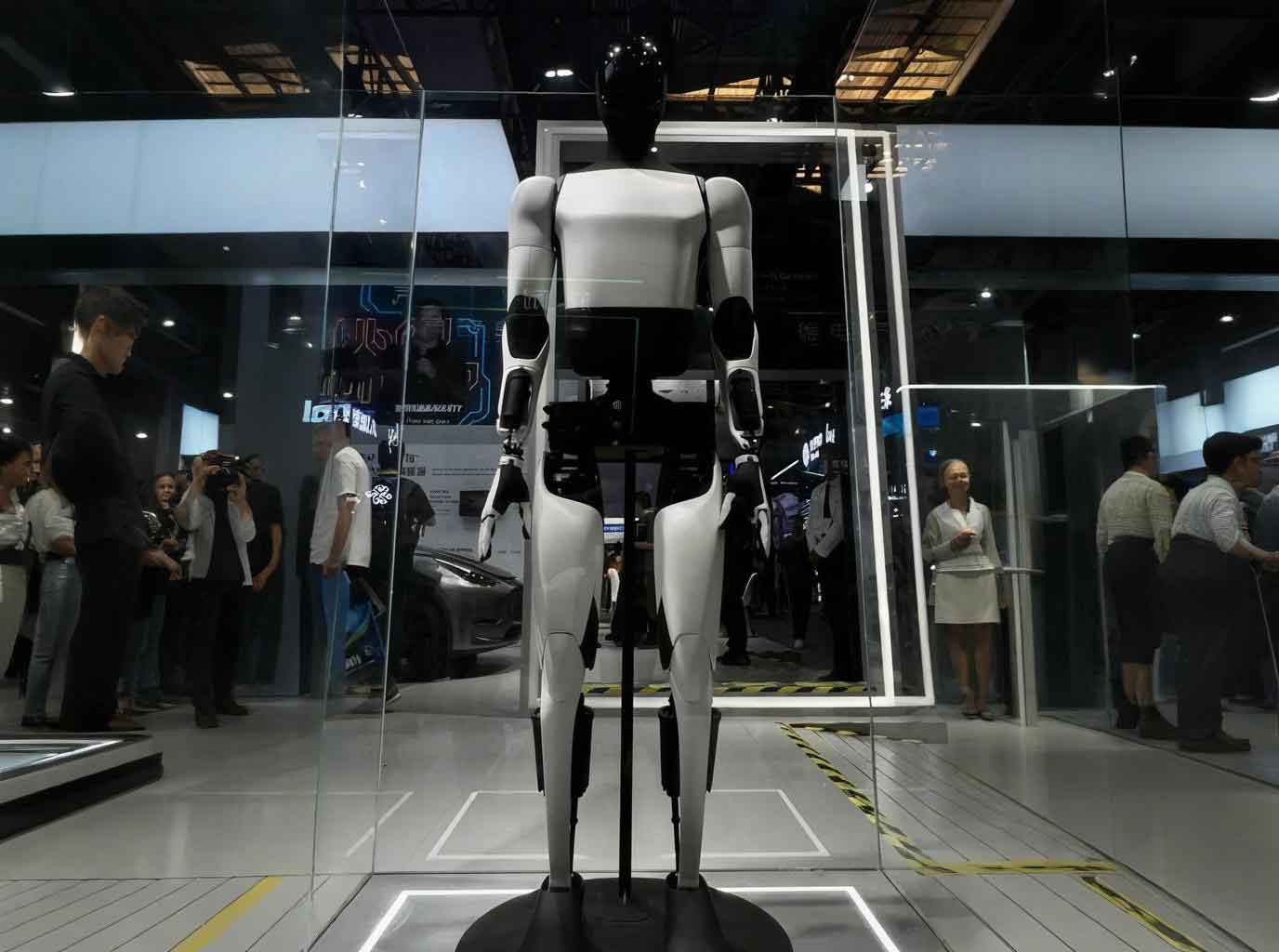
Recent developments highlight how companies are leveraging embodied intelligence to revolutionize traditional processes. From semiconductor display manufacturing to automotive assembly lines, embodied robots are demonstrating their potential to handle diverse tasks, supported by robust collaborations and forward-looking business models. The following sections delve into the key announcements, industry insights, and corporate advancements that underscore the growing momentum for embodied intelligence and embodied robots.
- Major Collaborations and Large-Scale Orders for Embodied Robots
In a landmark agreement, HKC’s wholly-owned subsidiary, Huizhi IoT, has entered into a strategic partnership with Zhi Ping Fang, focusing on the deployment of over 1,000 embodied robots across HKC’s global production bases over the next three years. The collaboration, valued at nearly 500 million yuan, represents the first comprehensive strategic cooperation in the global semiconductor display sector centered on embodied intelligence. These embodied robots are designed to manage a wide range of functions, including warehouse logistics, material handling, component assembly, and quality inspection and testing, aiming to fully integrate embodied intelligence into the manufacturing processes for semiconductor displays and smart terminals.
Similarly, Xingchen Intelligent recently announced a strategic cooperation with Xian Gong Intelligent for a thousand-unit order of humanoid robots, which will be deployed in phases over the next two years across industrial, manufacturing, warehouse, and logistics scenarios. This initiative aims to automate repetitive and hazardous tasks, thereby improving production efficiency and safety. Meanwhile, UBTech secured a 250 million yuan procurement contract for embodied intelligence humanoid robots, primarily involving the Walker S2 model with an autonomous hot-swappable battery system, with deliveries scheduled to commence within the year. These agreements highlight the accelerating demand for embodied robots and the commitment of companies to embed embodied intelligence into their operations.
- Embodied Robots in Industrial Training and Real-World Applications
Embodied robots are increasingly undergoing practical training in factory environments to refine their capabilities. According to Guo Yandong, CEO of Zhi Ping Fang, the company’s embodied robots have been in training since last year, covering four core scenarios: automotive manufacturing, semiconductors, biotechnology, and public services. Deep partnerships have been established with leading enterprises in these fields, and the company anticipates delivering what it describes as “hardcore” products this year, with an estimated annual order volume of 500 units. This hands-on approach allows embodied robots to adapt to dynamic industrial settings, showcasing the practical benefits of embodied intelligence.
At Midea’s washing machine plant in Jingzhou, the self-developed humanoid robot “Meiro 1” performs tasks such as搬运, initial inspection delivery, and fire patrol under the调度 of an industrial brain. This demonstration illustrates how embodied intelligence can streamline operations in challenging environments. Xingchen Intelligent’s AI robots are similarly being tasked with material distribution, container handling, loading and unloading, and empty container recovery on production lines. By automating these processes, embodied robots help reduce the burden of repetitive labor on workers, allowing them to focus on skills and processes that cannot be automated, thereby enhancing overall productivity and safety through advanced embodied intelligence.
- Industry Perspectives on Stability and the Role of Embodied Intelligence
Despite the progress, some industry voices have raised concerns about the stability of humanoid robots in factory settings, where reliability is paramount. However, proponents argue that embodied robots are not intended to replace existing automation equipment but to complement it. Guo Yandong analogized the relationship using a collectible figure: fixed robotic arms handle deterministic tasks, such as assembling armor, while embodied robots, like the figure itself, can operate across varied scenarios once freed from fixed areas. This complementary approach addresses the limitations of current automation, which, despite accounting for over 50% of global usage, still leaves gaps that require flexible solutions like embodied intelligence.
Jiao Jichao, Vice President and Head of Research Institute at UBTech, emphasized that after extensive on-site validation, industrial humanoid robots are being focused on three key segments: handling, sorting, and quality inspection. These areas often face challenges such as difficulty in hiring, poor working conditions, and high employee turnover, making the automation through embodied intelligence not only necessary but also economically viable with clear return on investment. This targeted application of embodied robots ensures that they address specific pain points in manufacturing, further driving the adoption of embodied intelligence technologies.
- Advances in Embodied Intelligence Among A-Share Listed Companies
Numerous A-share listed companies have recently disclosed updates on their involvement in embodied intelligence, reflecting a broader industry trend. These developments can be categorized into three main areas, as outlined below:
- In-House Development of Humanoid Robots: Companies are leveraging existing technological expertise to create their own embodied robots. For instance, Topstar announced its first humanoid robot product, “Xiaotuo,” which is based on a embodied model developed in collaboration with Zhipu and has undergone multiple rounds of validation in injection molding workshops. Estun Kuozhuo released its second-generation humanoid robot, Codroid02, which is currently undergoing small-batch validation in industrial scenarios, capitalizing on the company’s capabilities in core components and robot本体 research and manufacturing.
- Strategic Partnerships with Leading Institutions: Firms are forming alliances to enhance their embodied intelligence offerings. Zhong Chao Holdings signed a strategic agreement with Hefei Intelligent Robot Research Institute to collaborate on smart robot technology cooperation and industrialization, applications in aerospace high-temperature alloy casting lightweight technology, and the development of wires and cables for smart robots. Hongrun Construction announced a strategic investment in Matrix Super Intelligence, with plans to establish a joint venture focused on the research, production, and commercial application of humanoid robots, noting that Matrix Super Intelligence has already released its self-developed Matrix-1 humanoid robot and secured orders.
- Supplying Products to Embodied Robot Manufacturers: Some companies are positioning themselves as suppliers to the embodied intelligence ecosystem. Mengguli reported that it achieved batch supply of NCA products for humanoid robot batteries in the first half of the year and is developing solid-state battery materials, including LATP solid electrolytes and high-nickel/230 ultra-high-nickel ternary materials, which have passed pilot certifications from leading enterprises. Zhiwei Intelligent unveiled its “Zhiqing” series of products for robot brain domain controllers, utilizing NVIDIA Jetson chips and offering multiple AI computing options. After the launch, dozens of embodied intelligence customers have been engaged in demand对接 and sample testing, with customized modifications underway for various embodied intelligence companies.
These initiatives demonstrate how A-share companies are actively contributing to the embodied intelligence value chain, from developing core embodied robots to enabling technologies that support embodied intelligence applications.
- Market Outlook and Analyst Insights on Embodied Intelligence
The embodied intelligence sector is poised for significant growth, driven by increasing adoption and technological advancements. Guojin Securities noted that the robotics industry is expected to enter a long-term upward cycle starting in the fourth quarter of this year, extending into 2026, fueled by resonance in domestic and international markets. Investments in the robotics板块 are considered highly deterministic, with recommendations to focus on key players in the domestic supply chain and vertical scenario applications, such as logistics, packaging, and environmental sanitation. This outlook underscores the potential for embodied robots and embodied intelligence to transform various industries, supported by continuous innovation and strategic deployments.
As embodied intelligence evolves, the integration of embodied robots into everyday operations is likely to expand, addressing global challenges like labor shortages and operational inefficiencies. The ongoing collaborations and orders signal a robust future for embodied intelligence, where embodied robots become integral to smart manufacturing and beyond, paving the way for a new era of automation driven by advanced embodied intelligence technologies.
In summary, the recent flurry of activity around embodied intelligence and embodied robots highlights a decisive move towards practical industrialization. With major orders, strategic partnerships, and advancements from listed companies, the ecosystem for embodied intelligence is strengthening, promising enhanced productivity and innovation across multiple sectors. As embodied robots continue to prove their value in real-world applications, the journey of embodied intelligence from concept to cornerstone of modern industry is well underway.