
Embodied intelligence has continued to attract sustained attention across the technology, manufacturing, and policy communities. The reason is not simply that robots and smart equipment are becoming more capable. The deeper reason is that artificial intelligence is increasingly moving from information processing, content generation, and decision support into physical production activities. Embodied intelligence represents this shift in a concrete form: it brings machine learning, perception, control, and action into factories, warehouses, mines, power stations, logistics hubs, and emergency response sites. In this new phase, the most important question is no longer whether a robot can perform a striking demonstration, but whether embodied intelligence can work reliably, continuously, and economically in real operations.
A recent policy action has given this transition a clearer direction. The Ministry of Industry and Information Technology and the State-owned Assets Supervision and Administration Commission of the State Council launched a special action for real-scene training of humanoid robots and embodied intelligence. The action calls for key products to enter an “operation mode,” with application validation and normalized deployment in representative scenarios. This policy orientation reflects a broader industrial reality: embodied intelligence is moving from technical display toward practical work. For enterprises, the value of embodied intelligence is not measured by a few high-difficulty movements. It is measured by long-term stable operation, higher efficiency, lower costs, and reduced human exposure to dangerous and high-intensity positions.
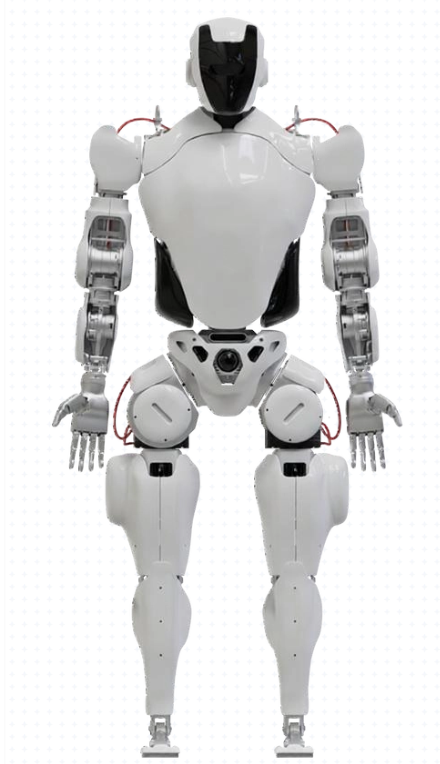
The movement toward an operation mode is a critical step for embodied intelligence. It marks the transition from technological innovation to real productivity. When embodied intelligence remains at the demonstration stage, it can still generate excitement, investment interest, and public attention. But demonstration success does not automatically translate into production value. Production environments impose different requirements: repeatability, safety, maintainability, integration with existing workflows, and acceptable total cost of ownership. Embodied intelligence must therefore be evaluated through the same practical lens that manufacturers use for any other production asset. The central question is whether embodied intelligence can become a dependable part of daily operations rather than a temporary showcase.
1. Why Embodied Intelligence Is Moving to the Center of Industrial Artificial Intelligence
Artificial intelligence has already transformed many areas of business. It has been used for information processing, content generation, data analysis, and辅助决策. However, the next stage is different. Embodied intelligence allows artificial intelligence to participate more directly in physical production. Robots and various intelligent equipment can carry these capabilities into the production site and undertake specific tasks such as handling, assembly, inspection, and maintenance. This is not a minor extension of existing automation. It is a change in how intelligence is deployed, because embodied intelligence must connect perception, reasoning, planning, and action in real time.
For companies, the practical benefits of embodied intelligence are straightforward. A robot that can complete several difficult movements may attract attention, but it does not necessarily improve factory performance. What matters is whether embodied intelligence can work for long periods, maintain output quality, reduce downtime, and lower labor costs in dangerous or repetitive roles. Production managers are not evaluating a performance. They are evaluating a worker, a tool, or a system that must fit into an existing process. Embodied intelligence therefore has to meet standards of reliability, safety, and economic return that are much stricter than those of a laboratory demonstration.
The policy push toward real-scene training and normalized deployment reflects this understanding. If embodied intelligence is to become a general-purpose technology, it must be tested in representative scenarios and improved through continuous use. The operation mode is not simply a slogan. It is a demand for measurable performance. It asks whether embodied intelligence can adapt to production rhythms, handle exceptions, and deliver consistent results over time. That demand is likely to shape the next stage of competition in the embodied intelligence industry.
2. Industrialization of Embodied Intelligence Is Accelerating
In recent years, the industrialization of embodied intelligence has accelerated noticeably. Competition is no longer limited to a single breakthrough in a complete machine. It is increasingly a coordinated race across models, data, robot bodies, and manufacturing capability. Embodied intelligence requires progress in many areas at once: perception systems, control algorithms, mechanical design, actuators, sensors, computing platforms, and software integration. A strong robot body alone is not enough. A powerful model alone is also not enough. The advantage belongs to organizations that can combine these elements into a reliable system and deploy that system in real settings.
Application scenarios are also expanding from demonstration and validation toward actual production. In Shanghai, efforts around manufacturing intelligent transformation have advanced embodied models, embodied data, and industrial scenario applications. In Jiangxi, some electronics manufacturers have tried using robots for loading and unloading operations on tablet computer production lines. These robots have been run continuously to test production takt and operational efficiency. In Hangzhou, pilot testing, industry application, and scenario demonstration are being connected, with attention to how technology moves from research and development to mass production and market entry. These examples show that embodied intelligence is being tested against the demands of real production rather than only against the standards of a controlled exhibition.
As applications deepen, the focus of enterprises is changing. The question is no longer only whether a robot can complete a task. The question is whether embodied intelligence can adapt to production takt, maintain stable operation, and demonstrate efficiency and cost advantages over long-term use. This shift has important implications for suppliers. It means that embodied intelligence products must be designed not only for capability, but also for maintainability, integration, and repeatable deployment. A solution that works once may be interesting. A solution that works every day may be valuable.
The competitive landscape of embodied intelligence is therefore becoming more demanding. Companies must prove that their systems can operate in complex environments, recover from disturbances, and cooperate with human workers and other machines. They must also show that the cost of deployment can be recovered through productivity gains. This is a higher bar than demonstration success, but it is the bar that determines whether embodied intelligence becomes a durable industry.
3. Real Scenarios Are Changing How Embodied Intelligence Is Developed
Real scenarios are not only a testing ground for embodied intelligence. They are also changing the way embodied intelligence is developed. Large language models can use massive amounts of text and images from the internet for training. Embodied intelligence faces a different challenge. It needs large amounts of interaction data from the physical world. Every time a robot grasps an object, moves across a floor, or performs an operation, it generates information about motion trajectories, force and position control, operation sequences, and exception handling. This information is not merely a byproduct. It is a foundation for learning.
For embodied intelligence, the accumulation of real-world data is a strategic asset. The more data that is collected, the more opportunities there are to improve models and control strategies. As models improve, robots become better able to adapt to new workstations and tasks. This creates a cycle: scenarios generate data, data optimizes models, models improve robot bodies, and improved robot bodies enter more scenarios. This cycle is central to the long-term competitiveness of embodied intelligence. It also explains why real application matters so much. Without deployment, the cycle cannot turn. Without the cycle, embodied intelligence may remain technically impressive but industrially limited.
The development of embodied intelligence therefore cannot be separated from scenario design. A scenario that produces useful data must be structured enough to generate repeatable interactions, yet complex enough to expose real challenges. The most valuable scenarios are not necessarily the most dramatic. They are the ones that occur frequently, require consistent performance, and reveal clear opportunities for improvement. For embodied intelligence, a repetitive production task can be more valuable than a one-time public demonstration because it provides continuous feedback and measurable outcomes.
| Dimension | Demonstration-centered embodied intelligence | Operation-centered embodied intelligence | Why the distinction matters |
|---|---|---|---|
| Primary goal | Show a capability or concept | Complete real work reliably | Embodied intelligence must create operational value, not only attention |
| Success measure | One-off task completion | Continuous runtime, success rate, and cost performance | Production value depends on repeatability and economics |
| Environment | Controlled or prepared setting | Complex, changing, and sometimes unstructured site | Real environments expose variation and exceptions |
| Data value | Limited and episodic | Continuous interaction data from physical work | Embodied intelligence improves through real-world feedback |
| Deployment logic | Customized for a single event | Repeatable across workstations, lines, and enterprises | Scalability requires lower integration and retraining costs |
| Enterprise decision | Interest and exploration | Return on investment, safety, and operational fit | Users adopt embodied intelligence only when it proves dependable |
4. The Data Engine of Embodied Intelligence
The data engine of embodied intelligence is different from the data engine of digital artificial intelligence. Text and image data can be copied, aggregated, and distributed at low marginal cost. Physical interaction data is often generated in specificplaces, by specific machines, under specific conditions. It may involve proprietary processes, safety requirements, and operational secrets. This makes data governance unusually important for embodied intelligence. If data cannot be shared, labeled, protected, and used effectively, the improvement cycle may remain slow and fragmented.
At the same time, the value of physical interaction data is high. A robot that learns from its own failures can improve faster than a robot that only follows preprogrammed routines. A fleet of robots that shares lessons across sites can improve even faster. For embodied intelligence, data is not only about scale. It is also about relevance. Data from a similar workstation, a similar material, or a similar production rhythm is often more useful than a large amount of unrelated data. This means that scenario selection and data strategy must be connected. The right scenario produces the right data for embodied intelligence.
Models must also be able to learn from limited data. In many industrial settings, it may be difficult to collect millions of examples before deployment. Embodied intelligence therefore needs methods that combine simulation, transfer learning, imitation learning, and real-world fine-tuning. The goal is to reduce the amount of site-specific data needed while maintaining reliability. If every new workstation requires a long and expensive data collection process, the economics of embodied intelligence will remain difficult. If models can transfer knowledge across tasks, the adoption of embodied intelligence can accelerate.
The data cycle also affects robot bodies. Better models can compensate for some hardware limitations, but they cannot eliminate all of them. Sensors, actuators, grippers, and safety systems must be designed to support the demands of embodied intelligence. In turn, data from those components can inform future design. The most successful embodied intelligence systems are likely to be those that treat models, data, and bodies as one integrated system rather than separate projects.
5. Deployment Barriers Remain Significant for Embodied Intelligence
Despite rapid progress, embodied intelligence still faces significant barriers in real production. Some products can complete a single demonstration, but their stability and generalization ability in complex environments remain insufficient. A robot may perform well when objects are placed in known positions and lighting is controlled. In a real factory, objects may vary, surfaces may be reflective, people may move nearby, and equipment may generate vibration or electromagnetic interference. Embodied intelligence must handle these conditions without frequent failure.
Another barrier is custom engineering. Some solutions depend heavily on site-specific customization. If a robot moves to a different workstation or handles a different material, it may need retraining and debugging. This raises the cost of replication and slows deployment. For embodied intelligence to scale, solutions must become more adaptable. They must be able to transfer skills, adjust parameters, and integrate with existing systems without starting from zero each time.
There is also an investment imbalance. Some regions and organizations place greater emphasis on complete-machine projects and production capacity, while paying less attention to data, models, training platforms, and the application ecosystem. This can create a situation where embodied intelligence hardware exists, but the supporting infrastructure is weak. Without data pipelines, model improvement loops, testing environments, and integration expertise, the value of embodied intelligence hardware may be limited. A balanced approach is necessary.
Most importantly, user enterprises judge embodied intelligence by practical results. They ask whether the system is worth using. That judgment depends on continuous runtime, task success rate, frequency of human intervention, and input-output ratio. These are not abstract technical indicators. They are the conditions that determine whether embodied intelligence can be justified as an investment. As the embodied intelligence industry becomes hotter, the risk of valuing display over application, quantity over quality, and construction over benefit becomes greater. The industry must guard against these tendencies.
6. The User’s Return-on-Investment Test for Embodied Intelligence
For users, embodied intelligence is not a research project. It is a potential production tool. The decision to adopt embodied intelligence is therefore similar to any other capital or operating decision. The user must consider purchase cost, installation cost, integration cost, maintenance cost, training cost, and downtime risk. The user must also consider the value of labor savings, quality improvements, safety gains, and flexibility. Embodied intelligence may create value in all these areas, but it must do so convincingly.
Continuous runtime is one of the clearest tests. A robot that operates for a short period may demonstrate capability, but a production environment requires endurance. If embodied intelligence requires frequent pauses for resetting, recalibration, or human intervention, its economic value declines. Task success rate is another critical measure. A high success rate is not a luxury for embodied intelligence. It is a basic requirement for integration into a production line. Human intervention frequency is also important because every intervention consumes labor and introduces variability.
Unit operation cost is the ultimate test. It combines energy use, maintenance, consumables, software support, and labor. If embodied intelligence cannot reduce unit operation cost or improve output quality enough to justify its cost, adoption will remain limited. This does not mean that embodied intelligence must be cheaper from the first day. It means that the path to cost-effectiveness must be credible. Pilot projects, staged deployment, and service models can help users manage this transition.
The return-on-investment test also affects suppliers. Companies that sell embodied intelligence must understand the user’s production process, not just the robot’s technical specification. They must design for maintainability and serviceability. They must provide clear performance guarantees and support. In the long run, the most successful embodied intelligence suppliers will be those that help users achieve measurable operational improvements, not those that only deliver impressive machines.
7. Raising the Quality of Scenario Supply for Embodied Intelligence
To accelerate the entry of embodied intelligence into an operation mode, the quality of scenario supply must improve. Scenarios are not merely locations for testing. They are structured opportunities for learning and validation. Priority should be given to sectors such as manufacturing, energy, mining, logistics, and emergency rescue. These sectors often contain work that is labor-intensive, dangerous, understaffed, or difficult to automate with traditional methods. They also contain processes that are repeated often enough to generate useful data for embodied intelligence.
Scenario selection should be systematic. It is not enough to choose an interesting task. The task should have clear boundaries, defined technical indicators, and quantifiable application effects. A high-value scenario for embodied intelligence should allow the performance of the system to be measured. It should also allow failures to be analyzed and improvements to be made. If a scenario is too vague, it may produce enthusiasm but little useful learning. If it is too narrow, it may not reveal the generalization potential of embodied intelligence.
Large manufacturing enterprises and central state-owned enterprises have important advantages in scenario supply. They often have many production sites, complex working conditions, and stable application demand. These characteristics can provide long-term training and validation conditions for embodied intelligence. Such enterprises can also help set practical standards for safety, reliability, and integration. Their participation can reduce the gap between laboratory development and industrial deployment.
Small and medium-sized enterprises also have a role. They may not have the same scale, but they often face specific pain points that embodied intelligence can address. If solutions can be packaged and delivered at lower cost, smaller enterprises can become adopters. The challenge is to avoid requiring every small enterprise to become an expert in embodied intelligence. Service models, standardized interfaces, and shared platforms can lower the barrier.
8. Improving Validation and Diffusion Mechanisms for Embodied Intelligence
Embodied intelligence cannot be judged only by whether a single demonstration succeeds. It must be tested through long-cycle and continuous operation. Validation should examine task success rate, equipment reliability, safety, and economic performance. These dimensions must be measured under conditions that resemble actual production. A controlled laboratory may provide useful early insights, but it cannot replace real-world validation for embodied intelligence.
An evaluation system closer to production reality is needed. Continuous runtime, exception recovery capability, frequency of human takeover, and unit operation cost should be included in validation indicators. These indicators capture the practical burden that embodied intelligence places on users. They also create a common language for suppliers, users, and investors. When embodied intelligence is evaluated with consistent metrics, it becomes easier to compare solutions and identify genuine progress.
After a solution has been tested in actual production, diffusion mechanisms should help it scale. A validated solution can be replicated from one workstation to a production line, and from one enterprise to similar enterprises. This requires documentation, training, integration support, and clear responsibility for maintenance. The goal is to move from “one scenario, one project” to “one category of scenario, one product.” That shift can reduce repeated development and deployment costs, making embodied intelligence more accessible.
Diffusion also requires trust. Users need to know that a solution has worked elsewhere under comparable conditions. They need references, test reports, and service commitments. They also need a path for feedback if conditions change. Embodied intelligence is not a static product. It improves through use. A diffusion mechanism should therefore include continuous improvement, not just one-time installation.
9. Lowering the Initial Adoption Threshold for Embodied Intelligence
The initial adoption threshold for embodied intelligence can be high. Early users often bear not only equipment investment but also the trial-and-error risk associated with immature technology. This risk can be difficult for individual enterprises to absorb. If the first users face disproportionate costs and uncertainties, the diffusion of embodied intelligence will be slow. New commercial models can help share both cost and risk.
Operating leases, pay-for-use-effect arrangements, robotics-as-a-service, and insurance compensation are possible approaches. These models can reduce the upfront burden on users and align payments with actual performance. For embodied intelligence, performance-based models are especially relevant because the value of the system depends on continuous operation and measurable results. If a robot does not work as expected, the financial impact should not fall entirely on the user.
Service models can also accelerate learning. When a provider retains responsibility for maintenance and improvement, it has a stronger incentive to collect data, diagnose failures, and upgrade models. The user can focus on production rather than on becoming an embodied intelligence specialist. This division of labor can make adoption easier, especially for enterprises that lack in-house robotics expertise.
However, new commercial models require clear contracts and operational rules. Performance indicators must be defined. Responsibility for safety incidents must be assigned. Data rights and privacy must be protected. Maintenance obligations must be specified. Without these rules, risk-sharing models may create disputes rather than trust. For embodied intelligence to scale through service models, the industry needs both technical standards and commercial discipline.
10. Collaboration and Clear Rules Across the Embodied Intelligence Ecosystem
Embodied intelligence cannot be developed by one type of company alone. It requires collaboration among model developers, robot manufacturers, component suppliers, research institutions, and user enterprises. Each participant brings different knowledge. Model companies understand learning and reasoning. Robot companies understand mechanical design and control. Component suppliers understand sensors, actuators, and reliability. Research institutions can explore long-term methods. Users understand production processes, constraints, and economic requirements.
Joint research and deployment can help embodied intelligence move faster from concept to operation. But collaboration also requires clear rules. Data use, intellectual property, commercialization, and revenue distribution must be defined. If these issues are left ambiguous, partners may hesitate to share valuable information or invest in joint projects. Clear rules allow the ecosystem to cooperate in real applications and iterate together.
The rules should also support fair access. Smaller innovators should be able to participate in the embodied intelligence ecosystem without being forced to surrender all rights to their contributions. Users should have confidence that their production data is protected. Model providers should have incentives to improve their models. Robot manufacturers should have incentives to improve hardware reliability. A balanced framework can encourage long-term investment.
Collaboration should be based on real scenarios, not only on memorandums of understanding. The most valuable partnerships will be those that deploy embodied intelligence in actual work, measure results, and improve the system. Real application creates real feedback. Real feedback creates real progress. This is the discipline that embodied intelligence needs at its current stage.
11. A New Evaluation Culture for Embodied Intelligence
Embodied intelligence needs a new evaluation culture. In the early stage of any technology, attention often focuses on novelty. Can the robot walk? Can it jump? Can it pick up an object? These demonstrations have value because they show possibility. But as embodied intelligence moves toward industrial use, the criteria must change. The key questions become: How long can it run? How often does it fail? How quickly can it recover? How much human support does it need? What is the cost per task?
This evaluation culture should be shared by policymakers, investors, developers, and users. If only engineers care about reliability and only marketers care about demonstrations, the industry will develop unevenly. If users demand practical evidence, suppliers will invest in practical performance. If investors reward deployment and efficiency, capital will flow to solutions that can scale. If policymakers support validation and diffusion, the public interest in productivity and safety can be served.
Evaluation should also recognize that embodied intelligence improves over time. A system that performs poorly at first may become better with data and iteration. Therefore, evaluation should distinguish between fundamental limitations and temporary immaturity. It should ask whether the system can learn, whether the architecture is scalable, and whether the provider has a credible improvement path. At the same time, evaluation should not excuse poor performance indefinitely. Embodied intelligence must demonstrate progress toward operational reliability.
The culture of evaluation should be transparent. Test methods, operating conditions, and performance metrics should be documented. Users should be able to compare claims with evidence. Suppliers should be able to learn from failures without hiding them. Transparency can accelerate the entire embodied intelligence industry by reducing uncertainty and building trust.
12. From One Workstation to an Industry: Scaling Embodied Intelligence
The path to scale for embodied intelligence often begins at a single workstation. A robot may be introduced to perform one task, such as loading, unloading, inspection, or assembly. If the deployment is successful, the next step is to replicate it at nearby workstations. Then it may expand to a production line, a factory, and ultimately a network of similar enterprises. This progression is not automatic. It requires standardization, documentation, training, and support.
Scaling embodied intelligence also requires modularity. If every deployment is a unique engineering project, the cost of replication remains high. If capabilities can be packaged into modules, the cost can fall. Modular perception, modular manipulation, modular safety, and modular integration can help. The goal is not to eliminate customization entirely. The goal is to reduce customization to the parts that truly require it.
Industry-level scaling also depends on the availability of skilled workers. Embodied intelligence changes job roles. It creates demand for technicians who can maintain robots, engineers who can integrate systems, data specialists who can manage learning pipelines, and safety experts who can assess risks. Training and workforce development are therefore part of the embodied intelligence agenda. Without skilled people, even good technology may fail to deploy.
Finally, scaling requires trust across enterprises. A solution that works in one company may not automatically work in another. Differences in process, culture, and management can matter. Demonstration sites, industry consortia, and shared benchmarks can help reduce this uncertainty. When embodied intelligence proves itself across a category of scenarios, it becomes easier for other enterprises to adopt.
13. Human Work, Safety, and the Social Dimension of Embodied Intelligence
Embodied intelligence is often discussed in technical terms, but its social dimension is equally important. The goal is not simply to replace human workers. The goal is to improve productivity, reduce exposure to dangerous and high-intensity work, and address labor shortages in certain sectors. Embodied intelligence can take over tasks that are repetitive, physically demanding, or hazardous. It can also work alongside humans, assisting with lifting, inspection, and precision operations.
Safety must be a primary design requirement for embodied intelligence. A robot that operates near people must understand human presence, predict movement, and respond safely. It must be able to stop, slow down, or change its path when necessary. Safety is not only a matter of hardware. It is also a matter of software, behavior, and system integration. Embodied intelligence must be validated for safety in realistic conditions before it is deployed at scale.
Human roles will also change. As embodied intelligence takes on more physical tasks, human workers may move to supervision, exception handling, quality control, and process improvement. This transition requires training and support. If workers are not prepared, adoption may face resistance. If workers are empowered to work with embodied intelligence, the technology can enhance their capabilities rather than merely displace them.
The social dimension also includes public trust. People need to understand what embodied intelligence can and cannot do. They need to know that safety and privacy are protected. They need to see that the benefits are shared. Transparent communication and responsible deployment can help build this trust. Embodied intelligence will ultimately succeed not only because it is technically capable, but because society accepts its role in the workplace.
14. The Competitive Logic of Embodied Intelligence
The competitive logic of embodied intelligence is different from that of traditional automation. Traditional automation often competes on precision, speed, and cost for a fixed task. Embodied intelligence competes on adaptability, learning, and integration. A traditional machine may be excellent at one task but unable to handle variation. Embodied intelligence aims to handle variation, learn from experience, and transfer skills across tasks. This makes the competitive boundary broader and more dynamic.
In this environment, advantage comes from several sources. One is the ability to collect and use high-quality physical interaction data. Another is the ability to develop models that generalize across tasks. A third is the ability to design reliable robot bodies that can operate safely in human environments. A fourth is the ability to integrate with existing production systems and provide strong service. A fifth is the ability to manage cost and scale. No single capability is sufficient. Embodied intelligence leadership requires coordination.
Competition will also occur at the ecosystem level. Companies that build strong partnerships with users, component suppliers, and research institutions may gain an advantage. Open platforms and standardized interfaces can attract more participants. Closed systems may offer tighter integration but may limit scale. The right balance will depend on the application and the market. In many cases, a hybrid approach may work best: proprietary core capabilities combined with open interfaces for integration.
The competitive logic also favors patience. Embodied intelligence is not a short-term product cycle. It requires continuous improvement in real operations. Companies that chase only attention may move quickly from one demonstration to another but fail to build durable capability. Companies that focus on deployment, data, and reliability may grow more slowly at first but build stronger foundations. Over time, the latter approach is more likely to create lasting value in embodied intelligence.
15. Conclusion: The Real Test for Embodied Intelligence Is Long-Term Work
Embodied intelligence has reached a stage where the central question is no longer whether it can be imagined, but whether it can be used. The policy push toward real-scene training and operation mode reflects this shift. The industrial examples in manufacturing, electronics, and pilot testing show that embodied intelligence is moving into actual production environments. At the same time, deployment barriers remain. Stability, generalization, customization cost, data infrastructure, and return on investment all affect whether embodied intelligence can scale.
The answer is not to slow down the development of embodied intelligence. The answer is to focus it more sharply on real work. Scenario supply should be high quality. Validation should be long-term and practical. Diffusion should move from single projects to repeatable products. Adoption should be supported by leasing, service models, insurance, and risk-sharing. Collaboration should be governed by clear rules for data, intellectual property, and revenue. Evaluation should reward reliability, safety, and economic performance.
For enterprises, the value of embodied intelligence will ultimately be judged by continuous runtime, task success rate, human intervention frequency, and input-output ratio. For the industry, the value of embodied intelligence will be judged by whether it can move from one workstation to many, from one factory to an industry, and from demonstration to daily operation. For society, the value of embodied intelligence will be judged by whether it improves productivity, protects workers, and earns public trust.
Embodied intelligence should not be treated as a performance. It should be treated as a production capability. The most important demonstrations are no longer on a stage. They are on the factory floor, in the warehouse, at the mine, and along the logistics line. Embodied intelligence must work reliably, adapt to change, and prove its worth over time. That is the real test. That is the operation mode. And that is how embodied intelligence will become a lasting force in the real economy.