
As an expert in the field of robotics and artificial intelligence, I have witnessed the rapid evolution of embodied intelligence, which is now recognized as a frontier hotspot in global AI research and is poised to become the next wave of AI advancement. In recent years, breakthroughs in large-scale AI models have accelerated the development and application of embodied intelligence, sparking a transformative wave in the robotics industry. Since 2024, the robotics sector has seen exceptionally active financing, particularly in the humanoid robot segment, where investment enthusiasm continues to surge. This has propelled research and application into a new phase, with commercial value and market prospects drawing significant attention from the industry. In the realm of AI innovation and entrepreneurship, intelligent security robots stand out as one of the most promising categories. The rapid development of intelligent IoT perception, cloud-edge collaboration, AI computing power, and large model technologies has given rise to an increasing number of intelligent security robots. These are being deployed in various sub-scenarios such as security patrols, equipment inspections, disaster warning, traffic monitoring, autonomous driving, and specialized services, unleashing vast potential for growth. With the robotics industry booming and application scenarios continuously expanding, the public safety domain is viewed as a major market for various service robots, showcasing enormous development potential and broad application prospects. This will inject strong momentum into the development of new productive forces in security. In this discussion, I will delve into the latest advancements in intelligent security robots driven by embodied intelligence and AI large models, offering rich insights from a first-person perspective.
Embodied intelligence refers to intelligent systems or machines that can perceive and interact with their environment in real-time, typically possessing capabilities in perception, cognition, decision-making, and action. From my understanding, embodied intelligence enables robots to have sensing and judgment abilities, allowing them to make decisions and responses based on their perceived environment, thus embodying the initial form of an intelligent agent. Humanoid robots, on the other hand, mimic core human behaviors: bipedal walking, tool usage with hands, and human-like vision, which allows them to better adapt to human-centric environments. Such robots hold the promise of liberating humans from heavy physical labor. Currently, humanoid robots are indeed considered one of the best forms for realizing embodied intelligence, as humans themselves are the most advanced embodied intelligent agents on Earth. The recent surge in attention toward embodied intelligence and humanoid robots is driven by several key factors: technological breakthroughs, influential figures and organizations, and active capital market participation. For instance, advancements in sensors, chips, algorithms—especially generative AI—have significantly enhanced AI efficiency and effectiveness. Meanwhile, entities like Tesla and OpenAI have set benchmarks for the industry, while capital injections have fueled growth, leading to an explosion of companies eager to capitalize on this trend. However, I maintain an observant stance, suggesting that we allow this evolution to unfold further before drawing definitive conclusions.
It is essential to clarify that embodied intelligence and humanoid robots are not synonymous. Embodied intelligence is a broad concept that does not confine robots to a specific form; humanoid robots are merely one manifestation of embodied intelligence. In my view, the morphology of robots should serve their function and value. For example, wheeled robots may be more suitable for rapid movement, while aerial robots might require wings or propellers. Humanoid robots offer generality, but they are only the optimal choice when application scenarios demand a human-like form. The core of embodied intelligence lies in its ability to understand human emotions and interact with the environment, fulfilling these conditions defines what we broadly term as embodied intelligence. The progression of AI, particularly generative AI and multimodal large models, has profoundly impacted the robotics sector. Previously, robots relied on pre-programmed instructions for repetitive tasks, but with the integration of large models, their training and iteration speeds have improved dramatically. This grants them autonomous learning and decision-making abilities, enabling them to perform tasks in a more human-like manner. Such robots, which combine large models with physical embodiments, are what we refer to as embodied intelligent robots. They possess physical entities and can execute tasks akin to humans, ultimately aiming to replace or surpass human capabilities. Humanoid robots, as a form of embodied intelligence, benefit from biomimetic designs that simulate various human actions. The enhancement from large models significantly boosts their environmental adaptability and ability to handle uncertain tasks. Nonetheless, humanoid robots are not a panacea; while they may excel in human-like operations, other forms like wheeled, industrial, or heavy-load robots will continue to coexist and play vital roles in diverse fields and specific scenarios.
The current stage of humanoid robot development is in its early phases, yet it represents the initial burst of growth. In the security domain, robots have immense potential to replace humans in hazardous tasks. Having worked extensively in frontline security environments, I have experienced extreme conditions such as fire scenes, chemical plants, and tunnels, where human workers face significant risks. If humanoid or other service robots can take over these high-risk security duties, their value would be immeasurable, positioning robots as heroes and partners to humanity. In practical terms, the adoption of robots in security patrols depends on result-oriented factors and cost-effectiveness. Whether humanoid robots or robotic arms added to wheeled bases are necessary for “human-like” evolution hinges on specific scenario requirements. For instance, in some cases, adding arms to wheeled robots may not justify the increased costs, whereas in specialized inspections, arms can significantly enhance operability, fully liberating humans. Thus, “human-like” forms or adaptations of humanoid technologies may better meet current and near-future practical needs, facilitating commercialization and deployment. As technology advances and costs decrease, robot morphologies will diversify, intelligence levels will soar, and application scenarios will broaden, whether in security patrols, logistics, or catering services.
Large model technology is revolutionizing the intelligentization process of robots. Previously, robots depended on human-prescribed programs, but with visual large models, their environmental perception, judgment, and algorithm accuracy have improved substantially. Moreover, large language models enhance human-robot interaction, enabling robots to understand voice commands, plan tasks, and execute them autonomously, demonstrating higher intelligence and flexibility. This represents a significant leap from earlier generations. The integration of large models improves robots’ generalization capabilities, allowing them to quickly comprehend complex tasks, decompose them, and enhance execution efficiency. It also expands their functional range, adapting them to various scenarios and operational needs, while reducing the barrier to use through task-level programming. Currently, robots are entering the “AI large model” era, and the fusion of “AI large models” with “embodied intelligence” is widely recognized as the future direction of robotics. The rapid iteration of large model technology, driven by big data accumulation, has propelled traditional robots from single intelligence to embodied intelligence, bridging the gap from so-called “artificial stupidity” to genuine “intelligent human-robot interaction.” In the past, intelligent security robots primarily acted as executors, following programmed plans and human controls with limited perception. Under the empowerment of large models, they can autonomously complete tasks without human intervention, navigate previously impassable terrain, recognize模糊 visual objects, and even predict outcomes beyond human capability. These advancements have markedly improved the efficiency, fault tolerance, and stability of security robots, enabling them to perform various tasks with accuracy and speed approaching or exceeding human levels. This not only enhances the quality and efficiency of security work but also opens up vast applications for robotics in other domains.
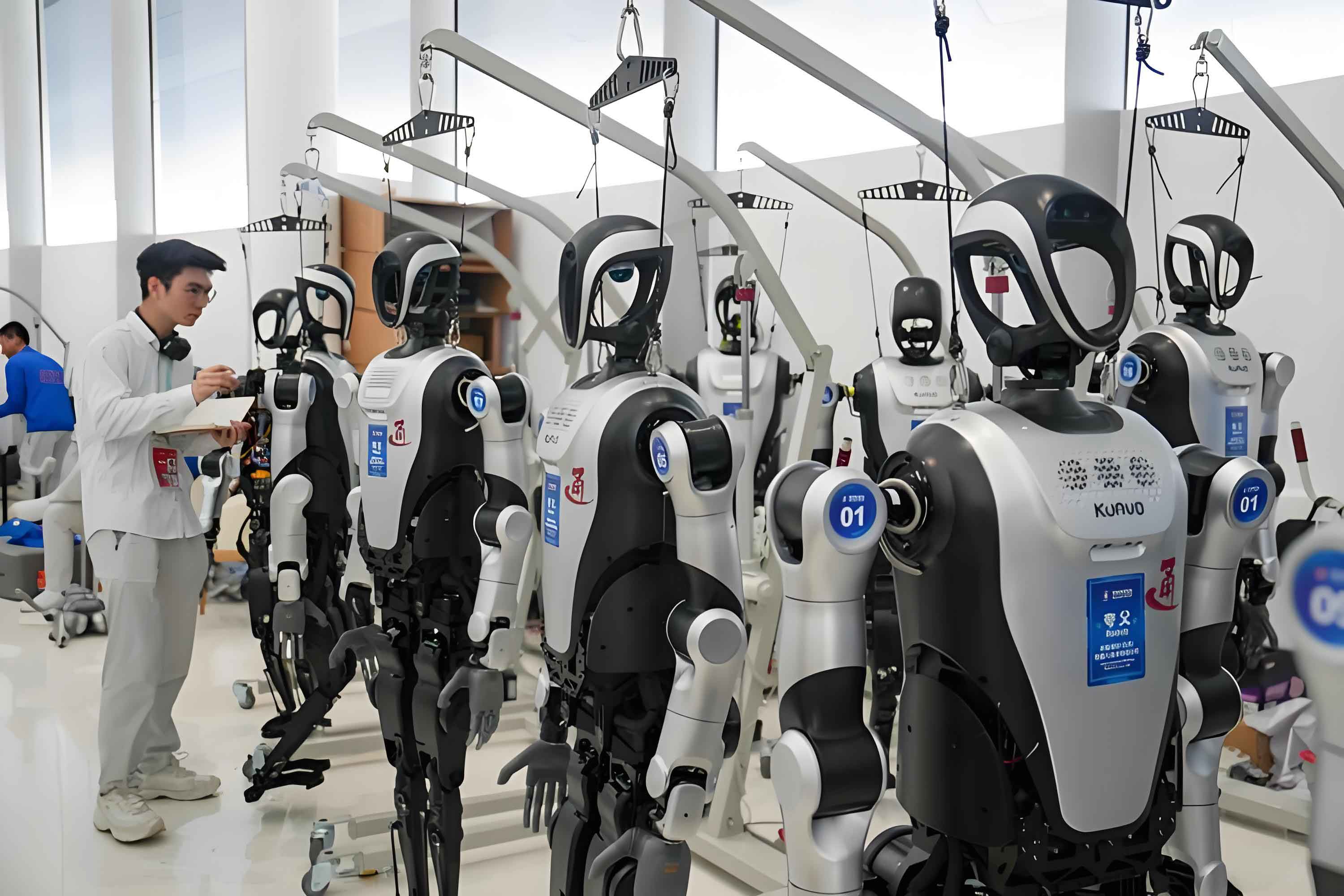
In terms of commercialization, the robotics industry has transitioned from a phase of exploration to initial breakthroughs. For example, in the security sector, national policies and departmental initiatives have provided clear signals for scaled deployment, indicating that pilot demonstrations and innovation research have yielded replicable results across multiple scenarios. The industry has reached an inflection point, with advancements in technology, product maturity, overall cost-effectiveness, and customer awareness all accelerating. From a commercial standpoint, the return on investment (ROI) for robots has become more reasonable. However, challenges remain in application deployment. Procurement and bidding processes in both government and business markets are not fully adapted to robotic characteristics, requiring collaborative efforts with clients to overcome. Additionally, the current base of robots is small, and human-robot collaboration models and assessment mechanisms need simultaneous establishment to ensure robots assist rather than burden frontline personnel. Technically, robots must adapt to complex environments while addressing cost issues to avoid contradictions between expense and price. Overall, commercialization necessitates innovation in procurement, collaboration mechanisms, scenario adaptability, cost control, and modular design to achieve tight integration of technology and market.
From a technical perspective, the progress in large models and AI visual algorithms has led to significant breakthroughs in the intelligentization and application of intelligent security robots. However, difficulties persist. Algorithms must adapt to changing environments and customer demands, while hardware requires improvements in site adaptability, passability, and battery life. In the security field, focusing on patrol robots, we can categorize them into indoor and outdoor types. Indoor environments are relatively uniform, with simpler issues and alerts, whereas outdoor settings pose greater challenges due to terrain, weather complexity, and high pedestrian density. Outdoor patrol robots have historically been applied in government projects, such as train station squares and night markets, but with the expansion of smart parks and industrial zones, outdoor security patrol applications are shifting from singular demands to universal safety patrol and warning needs. Simultaneously, indoor unmanned smart security patrol demands are emerging. To achieve commercial scale, it is crucial to develop robots with strong universality and generality, minimizing custom development, as widespread market application depends on products that are broadly applicable.
As embodied intelligence advances rapidly, I predict that intelligent security robots will exhibit trends toward greater intelligence, autonomy, diversity, and human-robot collaboration. In the security domain, development will focus on continuous technological innovation, product differentiation, ecosystem building, and the formulation of regulations and standards. Applications will expand from traditional areas like commercial buildings, hospitals, schools, and government agencies to emerging fields such as smart homes, marine monitoring, and industrial safety, covering more scenarios. Future products will evolve from being primarily “executive” to “autonomous,” becoming more intelligent; from “complex” forms to “simplified” ones, easier to maintain; from “singular” methods to “collaborative” approaches, more efficient; from “high-cost” to “low-cost,” more market-pervasive; and from “niche” scenarios to “universal” ones, widely applied. I hold a firm belief in the future development of intelligent security robots, confident that with larger-scale applications, cost reductions, and data accumulation, algorithm accuracy and efficiency will improve faster, propelling the industry into a positive cycle. This positive development is not only viable domestically but also competitive internationally.
In my experience, the development of service robots in the security sector has progressed significantly. Companies are dedicated to creating practical robotic products that provide full-stack solutions for public safety and industrial inspection, exploring innovative applications in more areas. Recent years have seen entry into a new development phase, with products achieving notable commercialization and large-scale deployment. For instance, deployments span high-end properties, large parks, communities, and commercial districts. In public safety, the focus is not solely on robots but on integrating large model technology to realize embodied intelligence, with solutions deeply merging various sensing equipment, IoT devices, security systems, and aerial drones to achieve integrated three-dimensional operations and prevention. Product-wise, next-generation offerings have been developed with technical reserves enabling complete domestic alternative solutions. Looking ahead, the mission remains to use robots to safeguard security, with ongoing upgrades in robotic equipment, collaboration, and embodiment.
Commercial service robots have been cultivated for years, aiming to develop highly versatile and universal products. Robot series are horizontally laid out, covering reception, logistics delivery, security patrols, and commercial cleaning—areas where robots can replace repetitive, mechanical labor-intensive human jobs. Core product matrices are established to meet diverse market needs, with deployments already realized in security, schools, hotels, smart factories, and office buildings. Strong R&D teams and continuous innovation investments have resulted in numerous patents in robotics, with all underlying technologies—such as human-robot interaction, facial recognition, autonomous navigation, chassis technology, autonomous movement, and motor drives—developed in-house. This full-chain control ensures product stability, steady iteration, and cost competitiveness. Future efforts will continue to deepen the commercial service robot field, driving innovation that is user-centric and effectively implemented.
Robotics firms often originate from academic backgrounds, specializing in security and inspection robots, primarily focusing on wheeled, tracked, and crawler-type robots. Current directions include public security and special inspections, covering commercial, office, industrial, park, and power scenarios. A commitment to technological innovation is maintained, with expertise in advanced robot chassis control, low-speed autonomous driving, image processing algorithms, and accumulations of hundreds of patents. Key achievements include autonomous navigation, obstacle avoidance, fusion positioning, multimodal perception, AI, and big data analytics. While existing business development is prioritized, future explorations will include humanoid robot-related technologies.
Established entities strategic in robotics explore specialized industry needs for unmanned hazardous tasks, providing robotic products and solutions for reconnaissance, detection, disposal, strategic material transport, and patrols to protect life and property. Current products include autonomous search robots, transport robots, intelligent explosive disposal robots, and avatar collaborative robots. For cutting-edge technologies like humanoid robots, future explorations and reserves are planned, with investments and outputs in large model technology, control software, power systems, and communication technologies, leading to more AI-based products gradually unveiled.
Specialized service robot companies focus on R&D, covering security robots, delivery robots, air purification robots, environmental recycling robots, and robot stations. Hundreds of patent technological achievements are held, with qualifications such as specialized and innovative enterprises and national high-tech certifications. Involvement in leading the development of industry standards for smart building robots and partnerships with municipal governments for smart city initiatives are common. Foundations in AI algorithms, L4-level indoor autonomous driving, swarm intelligence, and IoT technologies underpin fully self-developed ecosystems. Market demand drives continuous expansion of application scenarios, with deployments in exhibitions, buildings, parks, hospitals, airports, and schools, playing significant roles in smart city construction.
To summarize the key aspects, I present the following tables and formulas that encapsulate the core concepts and advancements in embodied intelligence and AI human robots.
| Factor | Description | Impact on Embodied Intelligence |
|---|---|---|
| Technological Breakthroughs | Advances in sensors, chips, algorithms, and generative AI | Enhances perception, decision-making, and autonomy of AI human robots |
| Social Influence | Leadership from entities like Tesla and OpenAI | Sets industry benchmarks and accelerates adoption of AI human robots |
| Capital Investment | Active financing in robotics, especially humanoid segments | Fuels R&D and commercialization of embodied intelligence systems |
In the context of perception and decision-making, we can model the capabilities of AI human robots using mathematical formulations. For instance, the perception function can be represented as:
$$ P(e) = f(s, m) $$
where \( P(e) \) denotes the perception of environment \( e \), \( s \) represents sensor inputs, and \( m \) symbolizes the model (e.g., a large AI model). This equation highlights how AI human robots integrate sensory data with advanced models to understand their surroundings.
Similarly, the decision-making process can be expressed as:
$$ D(a) = \arg\max_a U(a|s) $$
Here, \( D(a) \) is the decision for action \( a \), and \( U(a|s) \) is the utility function given state \( s \). This formulation underscores the role of AI in enabling robots to choose optimal actions autonomously, a key aspect of embodied intelligence in AI human robots.
| Robot Morphology | Advantages | Typical Applications in Security |
|---|---|---|
| Humanoid | Adapts to human environments, tool usage | Patrols in complex terrains, human-like interactions |
| Wheeled | High speed, stability on flat surfaces | Indoor security, logistics in structured areas |
| Tracked | All-terrain capability, ruggedness | Outdoor inspections, hazardous environments |
The influence of large models on robot intelligence can be quantified as:
$$ I = M(\text{data}) $$
where \( I \) represents the intelligence level, and \( M \) is the large model processing data. This illustrates how AI human robots leverage vast datasets through large models to achieve higher cognitive functions, driving the evolution from simple automation to embodied intelligence.
In conclusion, the fusion of embodied intelligence and AI large models is reshaping the future of robotics, with AI human robots at the forefront of this transformation. The security sector, in particular, stands to benefit immensely from these advancements, as robots become more autonomous, adaptable, and collaborative. Despite ongoing challenges in commercialization and technical maturity, the trajectory points toward widespread adoption and innovation. As we continue to refine technologies and address market needs, AI human robots will play an increasingly vital role in enhancing safety and efficiency across diverse domains, ultimately contributing to a smarter and more secure world.