
In an era where artificial intelligence is rapidly evolving, a significant shift is occurring from disembodied computational models to systems that interact physically with the world. Embodied intelligence, which integrates physical entities like robots with advanced AI brains, is emerging as a transformative force in education. This technology addresses long-standing issues of disconnection between cognitive processes and bodily experiences, as well as the alienation of knowledge construction from real-world contexts. By enabling seamless interaction between learners, environments, and intelligent systems, embodied intelligence promises to bridge the gap between theory and practice, fostering personalized and immersive educational experiences. Recent policy initiatives, such as Beijing’s Embodied Intelligent Technology Innovation and Industry Cultivation Action Plan and its inclusion in national government work reports, underscore its strategic importance in cultivating new productive forces and driving digital transformation in education.
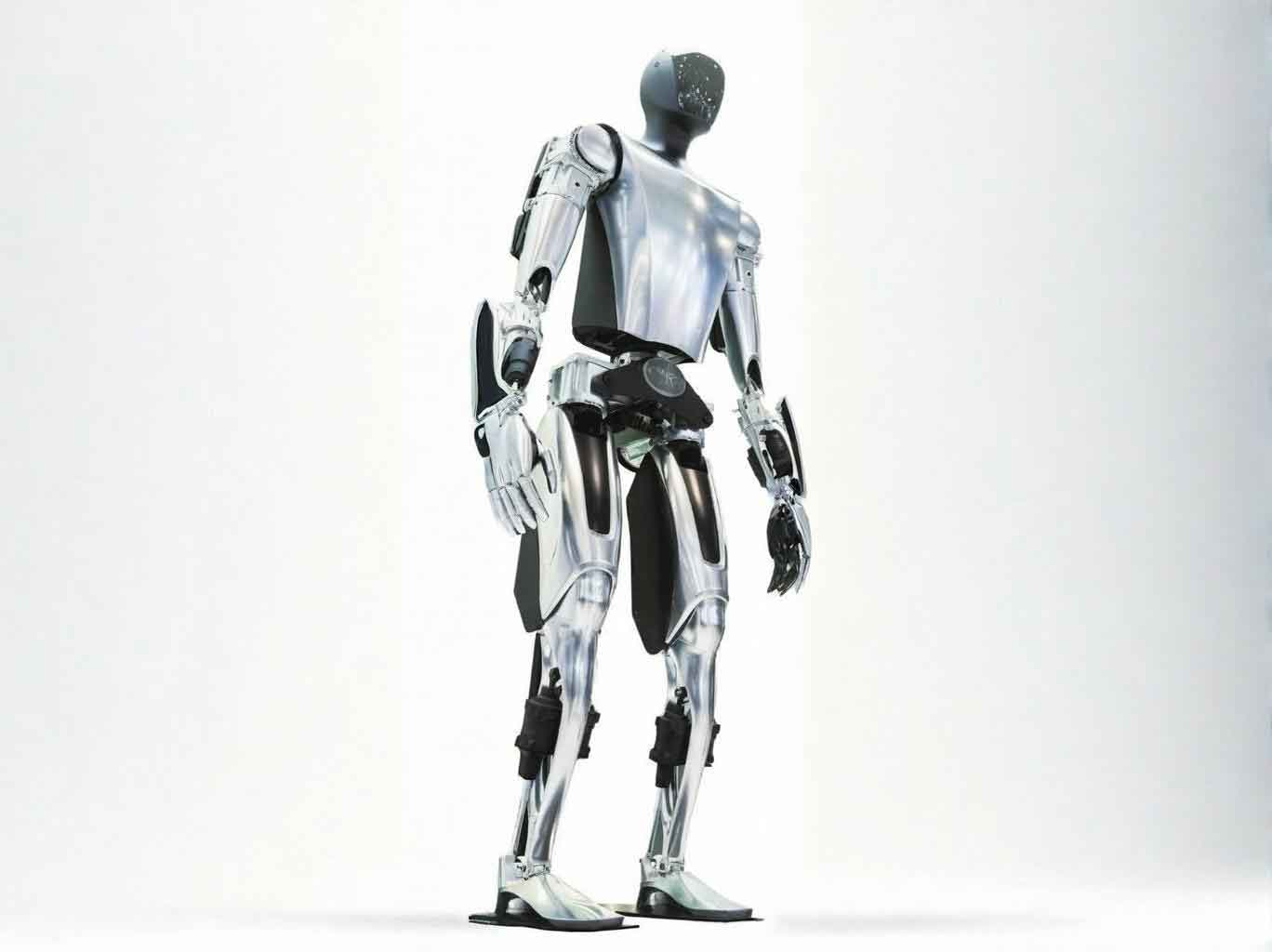
The core of embodied intelligence lies in its ability to merge physical embodiment with cognitive capabilities, creating a symbiotic relationship between body, brain, and environment. Unlike traditional AI, which often operates in abstract digital realms, embodied intelligence systems use robots and other physical entities to perceive, reason, and act in real-world settings. This approach aligns with embodied cognition theory, emphasizing that learning is inherently tied to bodily interactions and environmental contexts. As educational institutions worldwide grapple with challenges like student engagement and personalized instruction, embodied intelligence offers a pathway to more dynamic, adaptive, and effective learning models. This news report delves into the theoretical foundations, practical applications, and future directions of embodied intelligence in education, highlighting its potential to reshape how knowledge is acquired and applied.
Theoretical Foundations of Embodied Intelligence
Embodied intelligence represents a paradigm shift in artificial intelligence, moving beyond purely computational models to systems that engage with the physical world. Its theoretical roots can be traced back to early AI explorations, such as Alan Turing’s seminal 1950 paper on machine intelligence, which sparked debates about the nature of thinking machines. A pivotal moment came in 1986 when roboticist Rodney Brooks introduced the concept of behavior-based robots, arguing that true intelligence must be embodied and situated within an environment. This perspective redirected research focus from raw computational power to the interplay between physical bodies and their surroundings, positioning embodied intelligence as a critical step toward achieving general artificial intelligence. The advent of humanoid and biomimetic robots in the 21st century further accelerated this evolution, providing practical platforms for testing and deploying embodied intelligence systems.
At its essence, embodied intelligence combines “embodiment”—the presence of a physical form capable of sensing and acting—with “intelligence”—the capacity to process and respond to multimodal information. It is not merely the integration of large language models with robotic hardware; rather, it involves a closed-loop system where perception, cognition, decision-making, and action are continuously refined through environmental interactions. For instance, while large language models excel at language tasks, they lack the subjective perception that embodied intelligence gains through physical engagement. Similarly, humanoid robots are ideal manifestations but not synonymous with embodied intelligence, which can encompass various forms of physical agents. Crucially, embodied intelligence differs from virtual agents by emphasizing real-world feedback and adaptation, enabling systems to learn from experience and evolve autonomously.
The composition of embodied intelligence revolves around three key elements: the body, the brain, and the environment. The body, often a robot, serves as the physical interface, equipped with sensors and actuators to interact with the world. The brain, powered by models like large language models or vision-language-action models, processes information and drives cognitive functions. The environment acts as a dynamic testing ground, where the system perceives stimuli, executes actions, and refines its strategies. These components form a cohesive unit: the environment provides context, the body enables interaction, and the brain orchestrates learning and adaptation. This triad ensures that embodied intelligence systems can navigate complex scenarios, from educational settings to industrial applications, by continuously aligning their actions with real-world feedback.
Application Levels of Embodied Intelligence in Education
Embodied intelligence extends the principles of embodied cognition into educational practice, emphasizing that learning is an integrated process involving the mind, body, and environment. In this framework, applications are categorized into three progressive levels: primary embodiment, intermediate embodiment, and advanced embodiment. Each level builds on the previous one, creating a holistic learning journey that moves from situational immersion to creative cognition.
- Primary embodiment focuses on situational embedding, where technology breaks the constraints of traditional learning environments. Through mixed-reality setups, such as embodied mixed-reality learning environments, students engage in immersive experiences that stimulate interest and contextualize knowledge. For example, virtual or augmented reality tools can overlay digital elements onto physical spaces, allowing learners to explore historical sites or scientific phenomena without leaving the classroom. This level addresses the initial disconnect between abstract concepts and real-world contexts, laying the groundwork for deeper engagement.
- Intermediate embodiment emphasizes embodied participation, where learners actively interact with their surroundings through physical actions. By operating embodied robots or using motion-capture devices, students internalize knowledge through hands-on activities like virtual experiments or interactive simulations. Research has shown that varying degrees of embodiment in virtual labs can significantly enhance learning outcomes across different subjects and knowledge types. This approach counters passive learning methods by fostering experiential understanding, where bodily movements and environmental feedback reinforce cognitive processes.
- Advanced embodiment targets cognitive creativity and personalized knowledge construction. Here, embodied intelligence facilitates environments where learners manipulate virtual objects—such as shaping geometric forms or conducting complex experiments—to transform abstract ideas into tangible experiences. This level promotes deep restructuring of knowledge and innovation, enabling students to generate novel insights and adapt their learning to new contexts. The progression from primary to advanced embodiment ensures that education evolves from mere information transmission to a dynamic, embodied practice that cultivates critical thinking and problem-solving skills.
Implementation Framework for Embodied Intelligence in Education
The realization of embodied intelligence in educational settings is structured around a comprehensive framework that integrates virtual-physical environments, embodied interactions, and intelligent cognitive systems. This framework aligns with the three application levels—situational embedding, embodied participation, and cognitive creation—to provide a scalable approach for enhancing learning experiences.
Situational embedding involves constructing blended learning scenes that merge physical and virtual elements. In physical environments, embodied intelligence uses sensors and actuators to deliver multisensory stimuli, such as tactile feedback or visual overlays, creating immersive scenarios like science labs or historical reenactments. Virtual environments, powered by VR headsets or simulation platforms, generate realistic training data that can be transferred to real-world tasks. Mixed-reality environments combine both, using projections or augmented reality to bridge digital and physical spaces. For instance, students might interact with a virtual tutor superimposed onto their classroom, enabling real-time guidance and collaboration. These environments support embodied learning by situating education in contexts that mirror real-life challenges, thereby enhancing relevance and retention.
Embodied participation centers on multimodal interactions where embodied robots or devices engage learners through perception, cognition, decision-making, and action. Perception capabilities allow systems to gather data via cameras, microphones, and touch sensors, building spatial awareness through technologies like simultaneous localization and mapping. Cognition involves processing this information to form mental models, using methods like imitation learning or reinforcement to adapt behaviors. Decision-making translates insights into actions, such as task decomposition or motion planning, while execution involves precise control of physical movements. In education, this enables real-time monitoring of student states—like facial expressions or vocal tones—to tailor feedback and guidance. For example, an embodied robot might demonstrate a chemistry experiment, adjust its teaching strategy based on student confusion, or provide emotional support, thereby creating a responsive and personalized learning loop.
Cognitive creation leverages intelligent brains, such as multimodal large language models, to drive knowledge generation and innovation. Models like Google’s PaLM-E or OpenAI’s CLIP integrate text, image, and action data, enabling embodied systems to understand and generate content across modalities. In educational contexts, this facilitates the construction of detailed student profiles that inform adaptive teaching methods. By analyzing behavioral and emotional data, embodied intelligence can dynamically alter instructional approaches, sparking curiosity and self-directed learning. This aspect of the framework aligns with embodied cognition theory, where physical interactions fuel cognitive breakthroughs, ultimately empowering learners to reconstruct knowledge creatively and apply it in diverse scenarios.
Potential Research Directions for Embodied Intelligence in Education
As embodied intelligence gains traction, several research avenues emerge that could redefine educational practices. These directions focus on leveraging embodied robots and intelligent systems to address specific learning needs, enhance teacher support, and foster collaborative environments.
- Embodied personalized learning tailors educational experiences to individual students by combining physical interaction with adaptive algorithms. In STEM education, for instance, students can program biomimetic robots to explore mechanical principles, with real-time data feedback deepening conceptual understanding. Special education benefits from humanoid robots that replicate social scenarios for children with autism, reducing anxiety and improving attention. Sports training uses motion-capture and haptic feedback to correct techniques, accelerating skill acquisition. These applications highlight how embodied intelligence moves beyond one-size-fits-all approaches, instead using bodily engagement to customize learning paths and reinforce knowledge through experiential practice.
- Embodied teaching agents act as physical proxies for instructors, assisting in classroom management and student engagement. Robots like Furhat or Cobot S Kit use natural language and facial expressions to interact with learners, facilitating language practice or scientific demonstrations. In remote or underserved areas, these agents can simulate in-person presence, offering real-time tutoring or emotional support. For special needs education, they provide accessible interfaces that accommodate diverse learning styles. By serving as co-teachers or mentors, embodied robots alleviate instructional burdens, allowing human educators to focus on higher-level tasks while ensuring consistent, interactive learning experiences.
- Multi-agent collaborative work involves teams of embodied robots cooperating to solve complex educational tasks. Frameworks like Smart-LLM enable multiple robots to assume distinct roles—such as data collector, analyst, or presenter—in project-based learning. This mirrors real-world teamwork, teaching students about coordination and problem-solving. Integrated with brain-computer interfaces or educational metaverses, these systems could further expand cognitive boundaries, creating immersive, collaborative spaces. Research challenges include optimizing communication between agents and ensuring adaptability in dynamic settings, but the potential for enhanced group learning and innovation makes this a promising area for exploration.
- Embodied immersive learning utilizes technologies like virtual reality, mixed reality, and metaverse platforms to create fully engaging educational environments. Studies indicate that VR-based embodied learning not only boosts academic performance but also increases student interest and participation. By embodying avatars in virtual worlds, learners can manipulate objects, conduct experiments, or explore historical events, making abstract concepts tangible. This direction aligns with embodied cognition by emphasizing the role of physical presence in knowledge acquisition, offering a viable alternative to traditional, passive instruction methods.
Conclusion
Embodied intelligence stands at the forefront of artificial intelligence advancements, offering a tangible pathway to general AI while addressing critical gaps in educational practice. By uniting physical embodiment with cognitive processing, it transforms learning from a disembodied, theoretical exercise into an interactive, context-rich experience. The implementation framework and research directions outlined here provide a blueprint for integrating embodied robots and intelligent systems into classrooms, promoting personalized, collaborative, and creative education. However, challenges remain, including the need for robust data handling, ethical safeguards, and scalable technologies. As embodied intelligence continues to evolve, its success will depend on interdisciplinary collaboration among educators, technologists, and policymakers to ensure that these systems enhance—rather than replace—the human elements of teaching and learning. Ultimately, embodied intelligence holds the promise of fostering a more inclusive, adaptive, and effective educational ecosystem for future generations.