
BEIJING, Aug. 31, 2026 — Two major embodied intelligence events in Beijing at the end of August have placed the rapid evolution of robotics under an international spotlight. The 2026 World Robot Conference presented a clear trend of embodied intelligence technologies moving into real-world scenarios, while the Second World Humanoid Robot Games broke multiple human athletic records and pushed humanoid robots into more demanding tests of motion, control, endurance, and coordination. Industry participants said China’s embodied intelligence robots are undergoing an industrialization process from technology verification to value realization, while seeking a shift in global competition from follower to rule definer.
The significance of this moment goes beyond a single exhibition or a single competition. Embodied intelligence, which combines artificial intelligence with physical bodies that can perceive, decide, and act in the real world, is increasingly viewed as a critical step in the next stage of intelligent manufacturing, service robotics, and human-machine collaboration. The two Beijing events offered complementary perspectives: one focused on commercial applications, industrial ecosystems, and supply chains, while the other tested the limits of humanoid robot mobility, dexterity, and multi-robot coordination. Together, they showed that embodied intelligence is no longer confined to laboratory demonstrations or stage performances. It is being pushed toward factories, warehouses, hotels, farms, power grids, emergency sites, and homes.
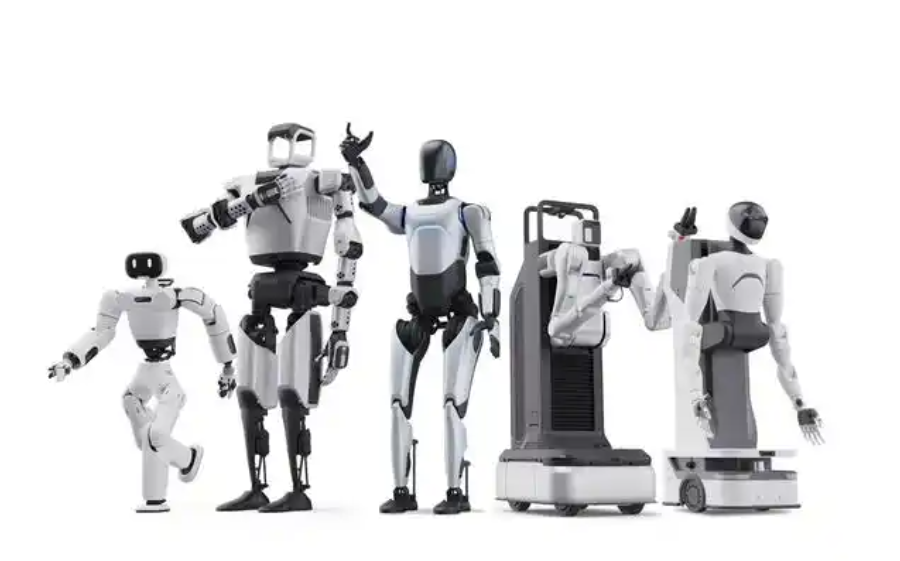
- From Stage to Workstation: Embodied Intelligence Robots Begin to “Work”
At the 2026 World Robot Conference, held in the Beijing Economic-Technological Development Area, scenes that once seemed futuristic were commonplace. The event, themed “Human-Robot Coexistence, Production-Demand Integration,” attracted more than 300 well-known domestic and international companies and more than 3,000 innovative products. Visitors no longer saw only dancing, martial arts, and other entertainment-oriented performances. Instead, the exhibition shifted comprehensively toward practical capabilities under real working conditions.
At multiple booths, real-world tasks such as express parcel sorting, supermarket shelf stocking, industrial palletizing, and home services were set up to closely replicate production and daily-life conditions. Focusing on real needs across agriculture, power inspection, fire emergency response, hazardous chemical rescue, and many other industries, several companies presented products and solutions that can genuinely work. The message was clear: embodied intelligence is moving from the stage to the workstation.
“Our core philosophy is to build robots that can truly work,” said Li Jinxiang, integrated marketing manager of Zhishen Technology. According to Li, Zhishen Technology’s quadruped robots are currently mainly used in patrol and inspection fields, covering scenarios such as firefighting, power, scenic areas, and mining zones. They have also extended into disinfection and epidemic prevention, guide assistance, and other areas. Among them, guide robots can achieve real-time autonomous route planning and obstacle avoidance. Such applications show how embodied intelligence can serve practical social needs when perception, navigation, and decision-making are integrated into a physical platform.
Notably, high-precision tactile perception and dexterous manipulation became hot topics at the conference. Industry participants said a new generation of dexterous hands can accurately identify differences in object hardness and weight, complete fine operations such as identifying thin and light objects and assembling or disassembling bottle caps, and effectively solve the “last millimeter” manipulation problem in embodied intelligence deployment. This progress lays a technical foundation for the large-scale application of humanoid robots in multiple scenarios. For embodied intelligence, the ability to touch, feel, and manipulate is as important as the ability to see, walk, and understand language.
The central state-owned enterprise joint exhibition area was one of the biggest highlights of the conference. It was the first time central state-owned enterprises participated as a group, bringing together 48 central enterprises and displaying 263 high-quality exhibits. The area concentrated on demonstrating the strength of China’s “national team” in the embodied intelligence field. Among the exhibits, ten major innovation achievements of central enterprise robots and ten high-value application scenarios attracted many visitors. Audiences could also experience in an immersive way the full-chain capabilities of central enterprise robots, from basic materials and core components to complete machines and scenario deployment.
However, Wang Xingxing, founder of Unitree Robotics, acknowledged that the overall efficiency and generalization ability of robots remain insufficient, and embodied intelligence has not yet reached an industrial critical point similar to ChatGPT. Wang offered a quantifiable definition for the “ChatGPT moment” of humanoid robots: in 80 percent of unfamiliar scenarios, through voice or text commands, a robot can smoothly complete about 80 percent of tasks. He believes that only when this standard is reached will the general robot industry truly reach the critical point of explosive growth. That critical point could arrive in the next two to three years at the earliest, or within five to ten years at the slowest.
By comparison, quadruped robots have a relatively lower demand for computing power, a more mature technical route, and have already crossed the threshold from mass production to working. At the conference, Zhishen Technology exhibited the joint module P85MAX-S, which achieves 90 kilograms of load driving with a self-weight of 1 kilogram. Its quadruped robot, the Steel Coin L2, achieved a load-to-weight ratio of 7:1. These figures illustrate how embodied intelligence hardware is improving in efficiency, payload capacity, and practical value.
“The ultimate meaning of making robots work is not in the applause of the exhibition hall, but in the real world, in the jobs that people should not do, are unwilling to do, or cannot do well enough,” an industry insider said. At present, the valuation logic of the entire industry is shifting from “technological imagination” to “revenue certainty.” This shift is central to the value realization of embodied intelligence. Investors, customers, and industrial partners are increasingly asking not only what a robot can demonstrate, but what it can deliver, how reliably it can deliver it, and at what cost.
| Conference Indicator | Details |
|---|---|
| Event | 2026 World Robot Conference |
| Theme | Human-Robot Coexistence, Production-Demand Integration |
| Venue | Beijing Economic-Technological Development Area |
| Participating companies | More than 300 domestic and international companies |
| Innovative products | More than 3,000 |
| Central state-owned enterprise participation | 48 central enterprises |
| Central state-owned enterprise exhibits | 263 high-quality exhibits |
| Highlighted outcomes | Ten major innovation achievements and ten high-value application scenarios |
The exhibition also highlighted how embodied intelligence is becoming an ecosystem play. It is not only about a single robot or a single algorithm. It involves basic materials, actuators, sensors, dexterous hands, control systems, navigation models, communication networks, data platforms, and application scenarios. The presence of central state-owned enterprises illustrated the breadth of this ecosystem and the importance of coordinated industrial capabilities. For embodied intelligence to achieve value realization, supply chain maturity and cross-sector collaboration are essential.
- From Record Breaking to Scenario Breaking: Digital Infrastructure Reveals Supporting Strength
On the evening of Aug. 26, the Second World Humanoid Robot Games concluded at the National Speed Skating Oval, known as the “Ice Ribbon,” in Beijing. During the five-day schedule, 666 teams from 16 countries, with 2,056 robots, competed in 1,301 matches across 51 events. The scale and intensity of the competition made it a global benchmark for humanoid robot performance and embodied intelligence testing.
The records were striking. The 100-meter sprint ran under 10 seconds. The 400-meter result improved from 1 minute 28.03 seconds at the previous edition to 38.15 seconds. The 1,500-meter result broke through from 6 minutes 34.40 seconds to 2 minutes 21.64 seconds. The standing high jump rose from 0.95641 meters to 3.40 meters. All broke event records. These results reflect rapid advances in actuation, balance, energy efficiency, motion planning, and real-time control. They also demonstrate how embodied intelligence can improve physical performance when perception, decision-making, and execution are tightly integrated.
According to event organizers, unlike the first edition, the second edition comprehensively optimized the competitive sections. On the basis of traditional events such as track and field, football, and martial arts, it added table tennis, long jump, weightlifting, tug of war, and other special events. These events assessed humanoid robots from multiple dimensions, including explosive power, load-bearing endurance, limb flexibility, movement coordination, multi-robot confrontation, and cultural and sports performance. The competitions were not merely athletic showcases. They were stress tests for the comprehensive motion and intelligent control capabilities of embodied intelligence systems.
In addition, the event incorporated socially practical scenarios into the competition system. A total of 21 scenario events were set, accounting for 40 percent of all events. They covered industrial, hotel, family, logistics, and other fields. A special dexterous hand event was also arranged to comprehensively test the “working ability” of robots. This reflected a broader trend: humanoid robots are expected not only to run and jump, but also to perform useful tasks in human environments.
More importantly, thousands of hours of operating data and tens of thousands of motion captures were fully recorded during the event. The world’s first full data set from a world-class humanoid robot games was officially released on site and made freely available to the public. It provides data support for more enterprises, research institutions, and universities, and effectively reduces the cost of real-machine data collection. Data is a foundational resource for embodied intelligence. Without large-scale, diverse, and high-quality real-world data, the generalization ability of embodied intelligence models will remain limited.
One easily overlooked but crucial detail was how the network supported real-time collaboration and status feedback when thousands of humanoid robots engaged in swarm intelligence coordination and real-time control in the same venue. As the global exclusive communications service partner for both editions of the games, China Unicom launched a dedicated event communications assurance solution: “two networks plus one platform.” This consists of a 5G-A large uplink network, an all-optical Wi-Fi private network, and the first embodied intelligence robot management platform for an event scenario in China.
“The network service for this event is another practical test of China Unicom’s large-scale event network support and operations,” said Liu Huaxue, deputy general manager of China Unicom Beijing Branch. “Drawing on the experience from the first event, in this edition we relied on two networks and one platform to build a human-machine symbiotic communications foundation suitable for thousands of robots competing on the same stage and tens of thousands of spectators sharing the event in real time.”
The deeper industrial significance is that as embodied intelligence moves toward large-scale deployment, the network will no longer be a simple connection pipe. It will become critical infrastructure that determines whether robots can collaborate in complex environments. For embodied intelligence, communication is not only about sending commands. It is about real-time state synchronization, multi-agent coordination, remote supervision, data backhaul, model updating, and safety assurance. The network must support high uplink bandwidth, low latency, deterministic reliability, and seamless coverage.
From closed parks to semi-closed blocks, and then to future public roads, every scenario breakthrough places higher demands on the communications foundation. The release of 5G-A large uplink capabilities is laying an “information highway” for robots to leave the competition arena and enter factories, communities, and thousands of households. This infrastructure dimension is essential for the value realization of embodied intelligence because real-world deployment requires robots to operate reliably across diverse and changing environments.
| Games Indicator | Details |
|---|---|
| Event | Second World Humanoid Robot Games |
| Closing date | Evening of Aug. 26 |
| Venue | National Speed Skating Oval “Ice Ribbon,” Beijing |
| Duration | Five days |
| Participating countries | 16 |
| Teams | 666 |
| Robots | 2,056 |
| Events | 51 |
| Matches | 1,301 |
| Scenario events | 21, accounting for 40 percent of all events |
| Data release | World’s first full data set from a world-class humanoid robot games, free to the public |
| Communications partner | China Unicom |
| Communications solution | Two networks plus one platform: 5G-A large uplink network, all-optical Wi-Fi private network, and an embodied intelligence robot management platform for the event scenario |
| Record Category | Previous Edition | Second Edition |
|---|---|---|
| 100-meter sprint | Not specified | Under 10 seconds |
| 400-meter | 1 minute 28.03 seconds | 38.15 seconds |
| 1,500-meter | 6 minutes 34.40 seconds | 2 minutes 21.64 seconds |
| Standing high jump | 0.95641 meters | 3.40 meters |
The record-breaking performances and the scenario events together sent a powerful signal: embodied intelligence is advancing on two fronts at once. One front is extreme performance, where robots push physical limits in speed, strength, balance, and endurance. The other front is practical usefulness, where robots must sort parcels, serve hotel guests, assist in homes, handle logistics, and perform dexterous tasks. Both fronts matter for commercialization. Extreme performance builds public awareness and technical confidence, while practical usefulness builds revenue and long-term adoption.
- From Technology Routes to Standard Setting: Chinese Firms Seek Full-Stack Closed Loop
Beyond exhibition booths and competition arenas, Chinese embodied intelligence companies have moved toward deeper industrial布局. However, this must be described in English: beyond exhibition booths and competition arenas, Chinese embodied intelligence companies have moved toward deeper industrial deployment. They are no longer focused only on single-point technological breakthroughs. They are pursuing full-stack closed loops that connect chips, sensors, actuators, control algorithms, navigation models, communication modules, cloud platforms, and application scenarios.
Data from the Ministry of Industry and Information Technology showed that in 2025, the operating revenue of robot enterprises above designated size in China exceeded 300 billion yuan, with an average annual growth rate of more than 20 percent over the past five years. In the first half of this year, operating revenue reached 165.5 billion yuan, a year-on-year increase of 24.5 percent. These figures indicate that the robot industry, including embodied intelligence, has become a significant part of China’s advanced manufacturing and intelligent economy.
During the 2026 World Robot Conference, the “Global Robot Application Exploration Plan” was released. The plan will solicit application scenario needs from around the world and select 1,000 application scenarios each year for free robot trials and secondary development. The goal is to achieve two-way empowerment between technology implementation and scenario application and to build an open and win-win global robot industry innovation ecosystem. For embodied intelligence, scenario-driven development is particularly important because real-world data and feedback are essential for improving generalization.
In terms of technology routes, Chinese companies are exploring multiple different paths. Take navigation technology as an example. At present, most robot products globally generally adopt the traditional SLAM solution of “mapping, point marking, and fixed routes.” This type of solution has a core defect: once the scenario changes, the mapping work must be redone. This limits scalability and increases deployment costs. For embodied intelligence to be truly useful in dynamic environments, navigation must become more flexible, adaptive, and autonomous.
Zhishen Technology introduced the ZSD end-to-end intelligent driving model, bringing the “rule stack to end-to-end” technology from the automotive intelligent driving field into the robotics field. The aim is to let robots “know the road, walk well, and go wherever they want,” similar to intelligent vehicles. This shift in technology route reflects a judgment about the industry’s endgame: automotive intelligent driving has completed end-to-end mass production verification, and robot navigation is undergoing the same technological transformation. Whoever first completes end-to-end navigation will master the technical definition power for the next generation of robots. This is a clear example of how embodied intelligence competition is moving from hardware alone to integrated software and data capabilities.
At the standard level, Chinese companies have also begun to participate in standard setting. As a participant in the formulation of industry standards for power inspection quadruped robot dogs, Zhishen Technology’s sensor-control integrated model overcame the industry challenge of industrial hollow stairs. This not only expanded the scope of cross-floor operations but also set a new technical benchmark for robot passage capability in complex industrial terrain. Standards are a powerful form of value realization because they shape market access, interoperability, safety, and procurement decisions. When Chinese companies participate in standard setting for embodied intelligence, they move from following rules to helping define them.
Industry experts said that from the exhibition booths of the 2026 World Robot Conference to the competition arena of the Second World Humanoid Robot Games, China’s embodied intelligence industry is completing a key self-proof. It is no longer a concept bubble driven by capital; it is gradually forming the ability to create real commercial value. It no longer relies entirely on manual remote control and preset routes; it is continuously evolving toward true autonomous perception, autonomous decision-making, and autonomous execution. It is no longer a passive follower of international technology routes; it has begun to try to master the definition power of industry standards and technical paradigms in some segmented fields.
| Industry Indicator | Details |
|---|---|
| 2025 robot industry above-scale enterprise operating revenue | More than 300 billion yuan |
| Five-year average annual growth rate | More than 20 percent |
| First half of current year operating revenue | 165.5 billion yuan |
| Year-on-year growth in the first half | 24.5 percent |
| Global Robot Application Exploration Plan | Annual selection of 1,000 application scenarios for free trial and secondary development |
The pursuit of a full-stack closed loop is not limited to navigation and standards. It also involves dexterous manipulation, tactile sensing, joint modules, energy systems, and data platforms. The P85MAX-S joint module and the Steel Coin L2 quadruped robot are examples of hardware progress. The dexterous hand innovations at the conference are examples of manipulation progress. The ZSD end-to-end model is an example of software and navigation progress. The China Unicom event platform is an example of communication and management progress. Together, these developments show that embodied intelligence is becoming a systems-level industry rather than a collection of isolated technologies.
For companies in this field, the ability to integrate across the stack may determine competitive advantage. A robot that can see but not touch, or walk but not navigate unfamiliar spaces, or perform a task but not communicate reliably with a fleet, will struggle in commercial deployment. The most valuable embodied intelligence solutions will combine perception, cognition, action, connectivity, and data feedback into a continuous loop. This is why the phrase “full-stack closed loop” has become increasingly common in industry discussions.
- Challenges and Outlook: Critical Point Is Not the Endgame
Of course, an industrialization inflection point does not equal the endgame. The “ChatGPT moment” for humanoid robots has not yet arrived. The engineering implementation of end-to-end large models, the continuous accumulation of massive real-world scenario data, and the improvement of the full-chain tool chain from collection to training still leave many difficult problems to be solved. These challenges are technical, economic, and organizational. They require sustained investment, cross-industry collaboration, and realistic expectations.
For embodied intelligence, one of the biggest challenges is generalization. A robot that works well in one warehouse may fail in another warehouse with different lighting, shelf heights, floor markings, or human traffic. A robot that can pick up a bottle in a laboratory may struggle with an unfamiliar package in a home. The 80 percent unfamiliar scenario and 80 percent task completion definition offered by Wang Xingxing highlights the scale of the challenge. Achieving that level of generalization would require breakthroughs in models, data, simulation, transfer learning, and real-world adaptation.
Another challenge is cost. For embodied intelligence to achieve value realization, robots must deliver economic returns that justify their purchase, deployment, maintenance, and integration costs. This is especially important in industrial and commercial settings where customers compare robot performance with human labor, traditional automation, and other capital investments. The valuation logic shifting from “technological imagination” to “revenue certainty” reflects this reality. Companies must demonstrate not only technical capability but also clear return on investment, reliability, and scalability.
Data is also a critical bottleneck and a critical opportunity. The full data set released from the Second World Humanoid Robot Games is significant because it lowers the cost of real-machine data collection and provides a shared resource for enterprises, research institutions, and universities. However, data alone is not enough. The industry needs standardized data formats, annotation tools, training pipelines, simulation environments, and evaluation benchmarks. It also needs privacy, security, and safety frameworks, especially when robots operate in homes, hospitals, schools, and public spaces. For embodied intelligence to scale, data infrastructure must mature alongside hardware and algorithms.
Communication infrastructure will continue to be a foundational enabler. The “two networks plus one platform” solution used at the games demonstrated how 5G-A large uplink, all-optical Wi-Fi, and a dedicated robot management platform can support thousands of robots and tens of thousands of spectators in a shared venue. As embodied intelligence moves from closed parks to semi-closed blocks and eventually to public roads, the requirements will become even more demanding. Robots will need seamless handovers, deterministic latency, high reliability, edge computing, and cloud-edge collaboration. Network slicing, edge intelligence, and security assurance will become part of the standard architecture for embodied intelligence deployment.
Standards and regulation will also shape the pace of commercialization. Participation in standards for power inspection quadruped robot dogs is an early example of Chinese companies helping to define technical benchmarks in a segmented field. As humanoid robots and embodied intelligence systems become more capable, standards will be needed for safety, interoperability, testing, certification, and ethical use. Companies that participate in standards development can influence market rules and reduce fragmentation. This is part of the shift from follower to rule definer.
Despite these challenges, the direction is clear. China’s embodied intelligence industry has taken a key step from technology toward productivity. The 2026 World Robot Conference showed that robots can perform real tasks in express sorting, supermarket stocking, industrial palletizing, home services, agriculture, power inspection, fire emergency response, and hazardous rescue. The Second World Humanoid Robot Games showed that humanoid robots can break records in speed, endurance, and jumping while also competing in scenario events that test practical working ability. The combination of these two events demonstrates that embodied intelligence is advancing on both performance and practicality.
The global competitive landscape is also changing. Chinese companies are not only manufacturing robots. They are developing end-to-end navigation models, dexterous hands, joint modules, communication platforms, and data sets. They are participating in standards and building application ecosystems. They are exploring different technology routes and seeking to master the definition power of next-generation robotics. This does not mean that all challenges are solved or that China leads in every dimension. It does mean that China’s embodied intelligence industry is becoming a more active shaper of the global robotics landscape.
For the broader economy, the value realization of embodied intelligence could have far-reaching effects. In manufacturing, embodied intelligence can improve flexibility, reduce downtime, and handle tasks that are difficult to automate with traditional fixed machinery. In logistics, it can increase sorting efficiency and reduce reliance on repetitive manual labor. In healthcare and elderly care, it can assist with mobility, monitoring, and daily tasks. In dangerous environments such as fire scenes, hazardous chemical sites, and power inspection, it can reduce human exposure to risk. In homes, it can support aging populations and busy families. These are not merely technological possibilities. They are potential sources of revenue, productivity, and social value.
At the same time, the industry must avoid overpromising. The “ChatGPT moment” for humanoid robots is not guaranteed to arrive on a fixed schedule. The fastest estimate of two to three years and the slowest estimate of five to ten years are both possible depending on progress in algorithms, hardware, data, and commercialization. The industry must continue to invest in foundational research while also delivering near-term value in narrower applications. Quadruped robots in patrol and inspection are an example of near-term value. Dexterous hands in fine manipulation are another. End-to-end navigation in changing environments is a third. These incremental deployments can generate data and revenue that support longer-term humanoid robot development.
The events in Beijing also showed the importance of public engagement and talent development. The World Robot Conference attracted large audiences and showcased the national team of central enterprises alongside private companies and international participants. The World Humanoid Robot Games drew teams from 16 countries and created a global data set. These events can inspire students, researchers, engineers, and entrepreneurs. They can also build public understanding of what embodied intelligence can and cannot do. Trust and acceptance will be essential for robots to enter daily life.
Looking ahead, the key questions for embodied intelligence are practical. How quickly can end-to-end models be engineered for reliable deployment? How can real-world data be collected, shared, and used responsibly? How can hardware costs be reduced while improving durability and safety? How can communication networks support large-scale robot fleets? How can standards be developed without stifling innovation? How can companies prove revenue certainty rather than relying on technological imagination? The answers will determine the pace of value realization.
What is already clear is that embodied intelligence has moved beyond the stage of pure demonstration. The exhibition halls of the 2026 World Robot Conference were filled with real-world tasks. The arenas of the Second World Humanoid Robot Games were filled with record-breaking performances and practical scenario competitions. The release of a full data set, the deployment of 5G-A and all-optical Wi-Fi networks, the participation of 48 central enterprises, and the introduction of end-to-end navigation models all point in the same direction. Embodied intelligence is becoming an industrial reality.
The road from technology verification to value realization is not short. It requires advances in dexterous manipulation, tactile sensing, generalization, energy efficiency, safety, and cost. It requires collaboration across robotics, artificial intelligence, communications, semiconductors, materials, and application industries. It requires standards, data infrastructure, and business models. But the direction of travel is no longer in doubt. Embodied intelligence robots are moving from the stage to the workstation, from record breaking to scenario breaking, and from technology routes to standard setting.
For China’s embodied intelligence industry, the next phase will be defined by execution. Companies must convert technical achievements into reliable products, repeatable deployments, and measurable returns. They must work with customers to solve real problems in factories, warehouses, farms, power grids, hotels, homes, and emergency sites. They must participate in global standards and data ecosystems. They must continue to invest in foundational research while delivering near-term value. If they can do so, the shift from follower to rule definer will become more than an aspiration. It will become a measurable outcome of the value realization of embodied intelligence.
The two Beijing events at the end of August were not merely showcases. They were a snapshot of an industry in transition. The 2026 World Robot Conference demonstrated the breadth of applications and the depth of the supply chain. The Second World Humanoid Robot Games demonstrated the speed of performance improvement and the growing importance of scenario-based testing. Together, they showed that embodied intelligence is moving toward a future in which robots are not only intelligent but also useful, not only impressive but also productive, and not only connected but also coordinated. The value realization of embodied intelligence has begun, and its next steps will be watched closely around the world.