
Humanoid robots have rapidly emerged as one of the most strategically significant platforms in robotics research, precisely because they serve as physical embodiments of embodied intelligence. Unlike conventional industrial machines that operate inside structured cells and repeat pre-programmed motions, humanoid platforms are expected to act in open, variable and highly unstructured environments, where the same body must support walking, carrying, assisting, assembling and exploratory interaction. The shift toward human-centric manufacturing, often described as the next stage of industrial development, places human–robot coexistence at the center of system design. In such settings, a robot must not only execute autonomous tasks but also perceive its surroundings, interpret human intent and adapt its behavior continuously. Within the coupled system formed by humans, machines and environments, multimodal perception and natural interaction capability become the decisive enablers of stable autonomy, and tactile sensing is a foundational element of that capability.
Among all sensing modalities, touch is unique because it directly captures mechanical interaction, contact properties and the dynamic changes that occur during physical exchange. Vision and proprioception describe geometry, motion and posture, but they cannot reliably resolve what happens at the moment of contact: where the contact is located, how the load is distributed, whether slip is beginning, how the surface deforms, and how the interaction evolves over time. Humanoid robots use tactile signals to sense pressure, deformation and vibration, thereby maintaining stability and dexterity in grasping, assembly and manipulation. As human–robot collaboration becomes routine, deploying tactile devices across the robot body supports compliant cooperative control, safeguards physical interaction and stabilizes walking. Touch also allows a robot to identify material and object properties, enabling autonomous exploration of unknown objects and surroundings, which is where embodied intelligence becomes practically meaningful rather than merely conceptual.
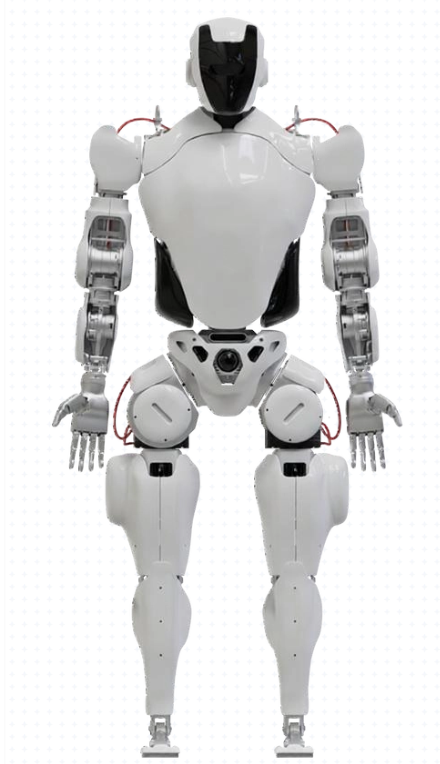
- Scenario-Driven Requirements for Tactile Perception in Embodied Intelligence Systems
In manufacturing, healthcare, service and domestic applications, the task boundary of humanoid robots continues to expand. Operating modes have gradually shifted from repetitive manipulation in structured environments toward multi-task execution, human coexistence and long-term autonomous operation in open environments. As uncertainty increases, robots must make direct contact with objects, environments and people, which forces the perceptual system to handle far more complex information. Vision and proprioception are already widely used for path planning, pose estimation and motion control, yet at the instant of contact and throughout subsequent interaction, these modalities alone cannot stably determine contact location, contact state, force variation or material properties. For tasks involving physical contact, tactile perception directly reflects the mechanical relationship between the robot and the outside world, making it an essential perceptual foundation for environmental adaptability and natural interaction. The structure, placement range and signal processing approach of a humanoid tactile system are closely tied to specific task requirements, and different application scenarios impose different demands on resolution, coverage area, response speed and signal stability.
- Dexterous manipulation. In industrial manufacturing, equipment maintenance and complex assembly, humanoid robots must perform grasping, quality inspection and assembly. Dexterous manipulation is characterized by small contact regions, low tolerance and continuously changing contact states, so failure is rarely caused by a single error. Instead, it results from the accumulation of micro-slip, contact instability or posture deviation during a continuous operation. Tactile perception must therefore provide high-resolution characterization of local contact states. The robot needs real-time information about normal force, shear force, slip tendency, contact area and contact stability, and must use that information to adjust grip force, end-effector posture and manipulation trajectory. This demands high spatial resolution, multimodal sensing capability and fast dynamic response, because high-quality local tactile feedback reduces uncertainty and enables timely correction when contact conditions change subtly, improving task continuity and success rates.
- Human–robot interaction. In collaborative work, rehabilitation assistance and home service, humanoid robots must support walking, cooperate on tasks, provide contact-based motion guidance and assist with care. Compared with the fingertip-dominated contact of dexterous manipulation, human–robot interaction involves larger areas, longer contact durations and more contact points. Robots use tactile information to resolve contact position, force range and load distribution, and thereby to perceive body posture, human motion direction and changes in interaction intent. This scenario therefore emphasizes distributed contact-state perception. The robot must simultaneously acquire information from multiple contact regions and continuously detect changes in contact position and pressure distribution. Tactile systems should consequently provide large-area coverage, multi-channel synchronous acquisition and temporal information processing, so that the robot can continuously sense external contact states, judge human motion intent more accurately and support compliant control, safe collaboration and natural interaction.
- Safety protection. As robots move closer to people, safety becomes a priority in system design. During movement, manipulation or interaction, unexpected collisions, local overload and loss of stability may occur. If the system lacks the ability to rapidly identify abnormal contact and apply graded protection, the consequences range from task failure to injury or equipment damage. For safe human–robot interaction, the tactile system must provide low-latency response and stable, reliable signals. After contact occurs, the robot must quickly identify unintended contact and trigger safety mechanisms such as deceleration, retreat, braking or posture adjustment. The system should also monitor risk evolution during sustained contact online and combine proximity sensing, motion state or dynamic information for early warning. Safety scenarios therefore prioritize low latency and high stability, so that protective mechanisms are activated promptly and risk does not escalate.
- Exploratory learning. With the development of embodied intelligence research, tactile perception has become an important information source for robots to understand unknown objects and environments. Compared with grasping and assembly, which have explicit goals, exploratory learning emphasizes information acquisition through active contact. By grasping, pressing and sliding, a robot can perceive object shape, stiffness, texture, friction characteristics and deformation state, and then use that information for event judgment, environment modeling and action planning. Tactile perception in exploration is therefore not limited to completing a single grasp. More importantly, the robot must accumulate tactile experience across multiple interactions and transfer that experience to new objects or new tasks. If a robot has learned that a certain class of soft objects deforms substantially under pressure, it can pre-adjust grip force and motion speed when contacting a similar object. For long-term autonomous humanoid robots, this experience-based capability improves adaptability and learning efficiency in complex environments.
Taken together, tactile requirements differ markedly across application scenarios in spatial coverage, resolution and response characteristics. Dexterous manipulation emphasizes high spatial resolution and fast dynamic response within the fingertip region for stable grasping and precise operation. Human–robot interaction emphasizes large-area, multi-contact tactile coverage and holistic perception of temporal changes in contact state. Safety protection focuses on low-latency response and signal stability for rapid detection of unintended contact and risk avoidance. Exploratory learning places higher demands on predictable modeling and on representation generalization across objects and scenarios. Because these scenarios lead to different technical routes in sensing principle, structural design and signal processing, a systematic analysis of tactile sensing mechanisms and applications is necessary.
- Tactile Sensing Mechanisms and Their Application in Embodied Intelligence Robots
As humanoid robots enter complex, open real-world scenarios, tactile perception has become a key modality for dexterous manipulation, human–robot interaction, safety protection and exploratory learning. The core function of a robotic tactile sensor is to convert external mechanical stimuli such as pressure, strain and friction into measurable, interpretable electrical or optical signals. The sensing principles commonly used in robotic tactile systems include capacitive, piezoresistive, piezoelectric, triboelectric, optical or visuotactile, and magnetic or Hall-effect approaches. Different principles imply different signal conversion methods, device structures and system integration paths, which in turn affect spatial resolution, dynamic response, power consumption, immunity to interference and array scalability.
- Capacitive sensing detects capacitance changes in a dielectric layer under pressure, offering high signal-to-noise ratio, high sensitivity and good long-term stability, which suits distributed contact perception in human–robot interaction and safety protection. In practical systems, however, parasitic capacitance, electromagnetic interference and wiring coupling degrade signal quality, so structural design, shielding layers and signal conditioning circuits require careful engineering.
- Piezoresistive sensing detects resistance changes in conductive materials under deformation. It offers simple structure, low cost and easy large-area extension, but piezoresistive materials suffer from temperature drift, creep and hysteresis, which limit long-term stability and device-to-device consistency. It is therefore well suited to large-coverage human–robot interaction and safety protection where measurement precision requirements are moderate.
- Piezoelectric sensing exploits charge generation in piezoelectric materials during force variation, providing high sensitivity to small vibrations and dynamic loads, fast response and no external power requirement. It is well suited to detecting transient changes during contact, yet its output decays rapidly under sustained static force, making stable static force measurement difficult.
- Triboelectric sensing is based on triboelectrification and electrostatic induction when different materials contact, separate or slide relative to each other. It offers self-powered operation, simple structure and sensitivity to dynamic contact, and is attractive for low-power distributed tactile systems. Its output is nevertheless sensitive to environmental conditions, which limits repeatability and long-term stability in practical deployment.
- Optical and visuotactile sensing records image or light-field changes caused by deformation of an elastic medium, and then uses computer vision algorithms to extract contact geometry, texture detail and force distribution. It provides high spatial resolution and is particularly advantageous for fingertip dexterous manipulation and exploratory learning. However, such sensors tend to have complex structures and larger volumes, with high power consumption and data processing burden, making extension to large-area tactile skin difficult.
- Magnetic and Hall-effect sensing typically combines a flexible magnet with a Hall sensor array, measuring magnetic field changes to detect three-dimensional force and torque. It offers strong force decoupling capability and fast dynamic response, and is often used for fingertip dexterous manipulation and repeated-interaction exploration. Its practical use is nevertheless affected by external magnetic fields, and device integration and arraying costs are high, restricting application in large-area tactile skin systems.
Different tactile sensing principles differ in measurable physical quantities, typical application scenarios, engineering advantages and limitations. Designing a tactile system therefore requires matching the application scenario and task with sensing unit layout, array coverage and signal processing scheme, balancing device performance, structural complexity and integration difficulty at the whole-robot level.
Sensing Principle Measurable Physical Quantities Typical Application Scenarios Main Engineering Advantages Main Limitations Capacitive Normal contact force, indirectly resolvable shear force Human–robot interaction, safety protection High signal-to-noise ratio, high sensitivity, good long-term durability Sensitive to ambient noise and parasitic capacitance Piezoresistive Normal contact force, indirectly resolvable shear force Human–robot interaction, safety protection Simple structure, low cost, easy large-area extension Severe temperature drift and creep, pronounced hysteresis Piezoelectric Dynamic stimuli, vibration, slip Safety protection for fast dynamic events Fast dynamic response, high sensitivity, self-powered potential Difficulty measuring static force, complex readout circuits Triboelectric Dynamic stimuli, vibration Safety protection with low-power event triggering Flexible structural forms, high sensitivity, self-powered potential Poor signal stability, strongly affected by environment and materials Optical and visuotactile Contact shape, force distribution, slip Dexterous manipulation, exploratory learning High spatial resolution, rich modal information, high sensitivity Complex structure, difficult large-area extension, high cost Magnetic and Hall-effect Normal force, tangential force, torque, resolvable six-axis force Dexterous manipulation, exploratory learning Strong force decoupling, high stability, resistance to environmental contamination Susceptible to external magnetic fields, complex system integration - Fine tactile application. Dexterous operation requires a robot to perform assembly, alignment and posture adjustment within confined spaces, where local contact stability is critical, imposing high demands on spatial resolution, sensitivity and dynamic response. Research on fine tactile sensing has largely focused on the fingertips of dexterous hands, with emphasis on high-resolution device design and system integration. Visuotactile sensors that record deformation of an elastic medium can extract contact shape and local force distribution, offering clear advantages in dexterous grasping and object posture adjustment. Array-based fingertip tactile systems place greater emphasis on structural compactness, environmental robustness and long-term stability so that reliable mechanical feedback is continuously available during complex operations. Tactile three-dimensional structures sensitive to shear force and vibration can detect events such as slip rapidly, helping the robot adjust grip force in time and maintain operational continuity. During manipulation, when vision is occluded, subject to reflection or limited in resolution, local tactile feedback after contact is more reliable than visual information. Researchers have fused visual and tactile information so that vision performs coarse localization before contact while touch supplements local surface and contact-state information after contact, significantly improving end-effector posture control accuracy and alignment success. Nevertheless, current research mostly applies tactile information to immediate feedback or local closed-loop control, and modeling of how tactile states evolve with actions and influence subsequent decisions during continuous operations remains insufficient, which limits task continuity and autonomous adjustment in sustained fine manipulation.
- Interactive tactile application. In human–robot interaction, the robot must perceive dynamic contact over larger areas and with more contact points that change with human intent. Interactive tactile sensing has therefore moved beyond fingertip perception toward flexible tactile units on arms, torso and other non-end-effector locations, forming distributed tactile skin covering the robot body. Compared with localized tactile perception, distributed tactile skin acquires multi-point contact information synchronously over a larger spatial range, helping the robot understand complex dynamic interaction processes. Researchers have extended high-resolution tactile sensing from fingertips to non-end-effector locations such as the arm to capture more continuous and detailed contact variation features in physical human–robot interaction. For tasks requiring body-contact guidance or large-area contact cooperation, large-area distributed tactile systems provide richer information for interaction intent understanding and compliant control. A comprehensive robot skin-level tactile sensing system has been proposed that integrates multimodal skin units, skin network communication, tactile data processing and robot motion control into a single framework, validated on different robot platforms. This work offers an engineering path from perceptual coverage to a control loop for full-body tactile skin, enabling the robot to obtain multi-site, continuous contact feedback for safe interaction and compliant control. In walking-support tasks, contact states change continuously with human motion, requiring tactile feedback for compliant control. Researchers have designed a dual-arm mobile manipulator with tactile skin for walking support and proposed a priority-based compliant control method using distributed tactile perception. By coordinating support tasks with contact force compliance, the robot can adjust compliant behavior according to tactile feedback while following a person walking. This shows that distributed tactile skin can provide continuous contact information for a mobile manipulator and support human–robot cooperative control during walking support. In walking assistance and guidance tasks, tactile sensors have been placed on both handles of a walker with a controller based on tactile grasping feedback, comprising multiple admittance models that distinguish single-hand and two-hand grasping to execute forward motion or turning. This directly demonstrates the role of tactile skin as a human–robot interaction interface, converting hand contact states into motion control inputs for the assistive device. In physical human–robot interaction, distributed tactile sensing can provide contact position, contact intensity and contact extent. However, existing systems still rely heavily on preset rules for interaction state judgment and control response. When interaction partners, contact modes or task objectives change, preset rules struggle to cover new contact patterns, limiting transferability and task adaptability of control strategies.
- Safety tactile application. Human–robot coexistence imposes stricter latency and reliability requirements on safe tactile sensing. Unlike local force feedback in dexterous manipulation, safety tactile sensing must first solve rapid identification of unintended contact, collision and impact, and promptly trigger safety actions such as deceleration, braking or retreat. A safety tactile system must therefore maintain stable output under complex interference and reduce contact detection latency. Safety tactile systems typically place large-area tactile skin on the robot surface to sense direct contact between the body and the outside world. Safety skin based on capacitive or piezoresistive flexible units can sense dangerous contact such as collision and squeezing. When tactile sensing is combined with proximity sensing, the robot can obtain information about approaching people or obstacles before contact occurs and adjust motion speed in advance. When touch, proximity sensing, joint torque and motion control strategies act together, a multi-layer safety architecture can be constructed to improve safety in complex interactive tasks. Researchers have systematically summarized safety sensing systems in collaborative robots, noting that tactile skin, torque sensors and proximity sensors together form a multi-layer safety boundary of the robot body. The tactile layer is responsible for rapid detection of contact transients, requiring millisecond-level response and the ability to distinguish collision from squeezing, providing a basis for safety response strategies. A hierarchical safety framework based on whole-body tactile skin has been proposed that combines hazard prediction, speed regulation and emergency braking, achieving real-time monitoring and intervention across complex contact processes. Experimental results indicate that hierarchical safety frameworks can effectively reduce the risk of severe collision with people or surrounding objects in dynamic environments. Beyond post-contact safety response, some research addresses proactive safety control before contact occurs. A smooth velocity transition control framework based on hierarchical proximity sensing has been proposed, in which multiple proximity sensing units are arranged on both arms to achieve layered perception of external risk, dynamically adjusting motion speed according to the relative distance between human and robot and thereby reducing potential collision risk. In safe contact scenarios, the tactile system must not only detect whether contact occurs but also assess the risk that a contact event may carry. Existing safety mechanisms, however, typically rely on manually set force thresholds or trigger rules and struggle to distinguish risk differences across contact locations, contact partners and motion states. The same contact force may correspond to entirely different safety risks in active guidance, accidental collision or contact with a fragile body region. Fixed-threshold safety judgment therefore struggles to adapt to complex and variable human–robot interaction scenarios.
- Exploratory tactile application. Exploratory tactile sensing emphasizes information acquisition through repeated contact, such as pressing, sliding, rotating or changing contact angle, with subsequent actions adjusted according to each contact feedback. By repeatedly pressing, changing contact direction or sliding along an object surface, a robot accumulates tactile information and gradually refines its understanding of object geometry and surface properties. This also requires tactile devices to maintain good output stability and repeatable consistency across multiple contacts. Current exploratory tactile systems mostly use tactile devices with high resolution and high consistency. Magnetic and Hall-effect tactile sensors can stably resolve multi-directional force variation and simultaneously perceive torque, normal force and shear force. Real-time decoupling of six-axis force components allows the robot to continuously track contact force variation during sliding and rotational contact, providing stable mechanical feedback for exploration behaviors such as sliding along object surfaces. Visuotactile sensors show high sensitivity in dynamic contact and slip events, and can reconstruct local contact morphology during multi-angle pressing and rotation, providing intuitive and rich tactile information for object shape recognition and contact mode judgment, which better supports exploratory learning tasks. Existing exploratory tactile systems nevertheless have clear limitations. First, exploration actions are executed through manual programming, and robots still struggle to autonomously determine the next contact region and action in complex objects and open scenarios. Second, tactile data generated by different exploration actions vary considerably: pressing mainly reflects local stiffness and force variation, sliding provides friction, texture and edge information, while rotational contact contains torque and contact stability information. Without unified organization and representation, tactile information obtained during exploration is difficult to transfer directly to subsequent grasping, manipulation or task decision-making, which also affects adaptability to new objects and environments.
In summary, humanoid robot tactile perception faces clearly different problems across application scenarios. Issues such as large-area coverage, compliant attachment, signal stability and system integration can be gradually alleviated through material selection, sensor structure optimization and system architecture improvement. Problems in multi-point tactile information understanding, complex contact state judgment and generalization across objects and scenarios, however, cannot be effectively solved by hardware optimization alone, which creates an urgent need for data-driven methods for unified tactile representation and learning, and this is precisely where embodied intelligence approaches become indispensable.
- Artificial Intelligence-Enabled Embodied Intelligence Tactile Perception
In a robotic system, perception, decision-making and execution must continuously feed back to one another during operation. The robot acquires environmental and self-state information through sensors, then adjusts its action strategy according to task requirements. As a perceptual modality that directly reflects physical contact between robot and environment, touch generates signals from actual contact that change with the contact process, and can reflect contact position, force variation, slip tendency and local deformation. With advances in artificial intelligence, tactile information can be related to object properties, action processes and task outcomes through learning, transforming raw tactile data into representations usable for state perception, action correction and control feedback.
- Perception layer: touch-dominant understanding and representation. At the perception layer, tactile sensing converts raw contact signals into stable, generalizable contact perception results. Traditional tactile perception methods rely heavily on threshold judgment or hand-designed features, and their consistency and generalization degrade when object type, contact posture and material properties change. Deep learning methods offer an effective solution for tactile perception in complex scenarios. By learning contact-state-relevant information directly from raw signals, stable perception performance can be maintained under changing manipulation objects and postures. Research on slip detection has shown that deep learning methods can significantly improve transferability of tactile perception across different objects. A tactile graph neural network approach organizes multi-point tactile information into a graph structure and uses graph neural networks to learn spatial adjacency relationships among tactile units, encoding high-dimensional multi-point signals into low-dimensional state representations that carry structural information and can serve as inputs for decision-making and control. When the number of hardware sensing points is limited, AI algorithms can improve the effective resolution of tactile perception. A deep learning-enhanced super-resolution tactile method processes raw signals from twenty-three sparsely distributed sensing units with a model and reconstructs the pressure distribution of two thousand seven hundred virtual points, achieving localization accuracy of 0.73 millimeters. Through co-design of structure and algorithm, the tactile perception resolution of the original hardware is significantly increased. To reduce fragmentation of tactile representations across different manipulation tasks, a tactile embedding method for multi-task learning has been proposed. Tactile data collected from multiple types of human demonstrations is encoded into a shared latent space, so that the same tactile representation can be used simultaneously for task stage classification, object dynamics estimation and tactile dynamics prediction. Compared with training separate models for individual tasks, shared tactile embeddings preserve common contact features across tasks and improve adaptability and prediction accuracy of tactile networks under multi-task conditions. Multimodal learning allows tactile information to participate together with vision and language in object property understanding and manipulation decision-making. Vision typically provides object appearance, shape and spatial structure; language provides task goals and semantic constraints; touch supplements texture, stiffness, friction and local deformation after contact. Combined, a robot can not only determine object position but also identify physical properties using contact feedback and link them to task semantics. Some studies connect tactile signals from different visuotactile sensors into a unified multimodal representation framework, enabling zero-shot grasping prediction and tactile image question answering. Others have built a dataset containing forty-four thousand vision-tactile paired samples with language annotations and trained a vision-language-aligned tactile encoder and a tactile-vision-language model, verifying the complementary role of tactile information in understanding contact properties such as material and texture. Large-scale tactile-vision-language datasets and pre-training methods have also been constructed and validated in tasks such as material property recognition and robotic grasping prediction. These studies show that touch can enter a unified representation space through cross-modal alignment, providing supplementary information for object property recognition, grasping prediction and interaction state understanding, all of which are central to embodied intelligence.
- Decision layer: touch-driven policy adjustment. During robotic manipulation, the decision layer must select subsequent actions based on current perception results. Traditional methods often compress touch into a contact alarm or a small number of mechanical state variables used to trigger action switching or safety responses. This satisfies simple contact judgment but cannot exploit temporal information in tactile signals, because increases and decreases in contact force, migration of contact position and emergence of slip tendency often reflect changes in object state and interaction process. The role of tactile information at the decision layer should therefore not stop at event triggering but should also participate in selecting subsequent actions and manipulation strategies. Active tactile exploration is a typical case of touch participating in decision-making. An active tactile exploration framework has been proposed that jointly optimizes tactile perception and exploration action planning for efficient three-dimensional shape modeling and recognition of unknown objects. Other work combines tactile temporal modeling with exploration strategy, planning contact sequences so that the robot automatically selects contact positions on an object surface within a limited number of steps and gradually accumulates tactile data to reconstruct three-dimensional shape. Vision helps acquire overall object appearance and spatial position, but during in-hand manipulation it is easily occluded by fingers, whereas touch directly reflects local geometry, force and slip state at the contact. A neural implicit field-based visual-tactile fusion perception framework has been proposed, and experimental results show that under severe visual occlusion, touch can correct or even eliminate ambiguity in visual estimation, providing more reliable state input for in-hand rotation, stable grasping and repositioning.
- Execution layer: touch-guided action generation. The execution layer concerns how to translate policy into specific motion while maintaining contact stability during action execution. For grasping, in-hand adjustment and contact-rich manipulation, object pose, friction conditions and force states change continuously. If a control policy relies only on pre-established contact models or fixed parameters, the robot easily loses stability when slip, posture deviation and external disturbance occur. Tactile feedback can continuously provide contact state during execution, allowing the robot to correct actions according to actual force, slip and posture deviation. In grasping tasks, touch can compensate for pose errors at the execution stage. Methods such as TacRefineNet and LeTac-MPC use contact force, slip tendency and object pose change information to correct grasping actions and control parameters, improving manipulation stability under complex contact conditions. Touch can also participate directly in behavior and policy learning. Tac2Motion introduces tactile signals into the policy learning process and tightly couples tactile information with action decisions, enabling learned policies to adapt motion behavior according to real-time contact feedback and achieve more stable force interaction and action execution in grasping, manipulation and in-hand adjustment. Other work uses tactile feedback to track object state and combines iterative replanning to correct end-effector trajectories, allowing a robot to perform online correction even without a precise object model.
Stage of the Loop Role of Tactile Perception Representative Capabilities Enabled by Embodied Intelligence Perception Converting raw contact signals into stable, generalizable contact state representations Slip detection, multi-point graph representation, learned super-resolution, shared multi-task tactile embeddings, cross-modal alignment with vision and language Decision Providing temporal contact evidence for selecting subsequent actions and strategies Active tactile exploration, contact sequence planning, shape reconstruction, disambiguation of visually ambiguous states during in-hand manipulation Execution Supplying continuous contact state for motion correction and stability maintenance Grasp refinement, tactile-reactive model predictive control, contact-aware policy learning, iterative trajectory replanning
- Artificial Intelligence-Enhanced Large-Area Scalable Tactile Skin for Embodied Intelligence
When a humanoid robot assists walking, avoids collision, cooperates in carrying or interacts at close range, contact often occurs on non-end-effector regions such as arms, torso and legs. Whole-body touch is therefore an unavoidable requirement for humanoid robots entering open interaction scenarios. Conventional tactile skin extends area by increasing the number of array nodes, but as area grows, sensing channels, wiring scale, data transmission volume and computational load increase markedly. High-density arrays also face challenges in fabrication cost, conformal attachment to curved surfaces and system reliability.
- Array-free modular tactile skin structure. An array-free modular tactile skin offers a practical route to large-area scalability. By reducing regular array sampling points and combining a limited number of sensing nodes with artificial intelligence algorithms, the scheme estimates contact position and pressure magnitude. Modular design and on-device deployment of algorithms reduce manufacturing and system complexity while achieving continuous tactile perception over large body areas. In terms of structure, hexagonal tactile skin places a small number of sensing nodes at the vertices, and when external force acts on the module surface, each node produces a response of different amplitude. Differences among node signals contain information about contact position and pressure magnitude, and an artificial intelligence algorithm infers the current contact pressure and position. This design means that system scale expansion mainly manifests as an increase in the number of modules, mitigating the rapid rise in sensing channels, wiring scale and system complexity as coverage area grows. At the material and system integration level, flexible materials are combined with flexible circuits for conformal attachment to the robot body surface. Tactile modules are also unified in circuit signal interfaces and data structures to facilitate subsequent tactile information fusion and system-level expansion. Through array-free, modular structural design, the large-area tactile coverage problem is transformed into a module cascading problem, effectively reducing the difficulty of engineering deployment and large-area expansion, which is a significant enabler for embodied intelligence platforms that must scale perception without scaling complexity.
- On-device data acquisition and processing. Once tactile skin coverage expands, system data volume, communication bandwidth and computational load increase simultaneously. By integrating signal acquisition and preprocessing circuits at the tactile skin edge, raw tactile signals undergo amplification, filtering and analog-to-digital conversion, so that part of the basic computation is completed before entering the main control system. Deploying artificial intelligence algorithms on embedded edge computing platforms creates a hierarchical processing mode of module acquisition, edge computation and bus transmission. The advantage of this architecture is that the main control system receives processed information such as contact position, pressure magnitude or interaction category rather than all raw tactile data. As the tactile coverage area expands, the system can extend sensing range by adding tactile modules while avoiding synchronous growth of main controller communication interfaces and centralized computing resources, which is essential for the real-time requirements of embodied intelligence systems.
- Array-free graph neural network algorithms. Because array-free tactile skin places only a small number of sensing nodes within a module, external force at different positions causes multiple nodes to respond simultaneously, and the relationship between signal amplitude and contact state is nonlinear, making accurate resolution of contact pressure and position by traditional analytical models difficult. Data-driven modeling of tactile signals is therefore required to learn the mapping between tactile signal responses and contact position and pressure magnitude. Given that tactile signals in tactile skin exhibit structural correlation, graph-based neural network algorithms are introduced. Tactile sensing units and their physical adjacency relationships are modeled as a graph structure, where each sensing unit corresponds to a graph node and spatial adjacency relationships between nodes correspond to graph edges, with acquired tactile signals serving as node input features. On this basis, the tactile resolution problem can be formulated as a regression mapping from graph-structured signals to contact state parameters. Through message passing and feature aggregation between nodes, the graph neural network adaptively learns the contribution weight of different tactile units in contact information resolution and obtains contact position and pressure magnitude. This approach is a clear example of how embodied intelligence benefits from the tight coupling of mechanical structure and learning algorithms.
- Whole-body tactile interaction applications. When large-area tactile skin is deployed on a humanoid robot body, contact localization, pressure estimation and interaction behavior recognition can be achieved across the whole body. In contact localization experiments, single-point, two-point and multi-point contact stimuli are applied to the robot. When multiple modules respond simultaneously, the system can stably output contact position and pressure magnitude and effectively distinguish single-point, two-point and multi-point contact, indicating that large-area tactile skin provides stable multi-module contact localization and pressure sensing. Beyond contact localization, tactile information can identify different types of human–robot interaction behavior, such as stroking and patting. By extracting tactile signal features and using a support vector machine classification model, the robot can use the recognition result as interaction feedback input and provide corresponding feedback actions, such as switching facial expressions. At present, research on array-free large-area tactile skin focuses on system-level tactile coverage capability and scalability, emphasizing stable perception of overall contact state rather than fine reconstruction of local high-resolution force distribution. This type of tactile skin is therefore suitable as a whole-body tactile perception layer for a robot, complementary in function to local high-precision tactile sensors such as fingertips. Existing research mainly addresses single-point or limited multi-point contact situations, and perceptual stability and system robustness under complex simultaneous multi-target contact conditions still require further verification, an important remaining task for embodied intelligence platforms intended for real-world deployment.
- Future Directions for Tactile Perception in Embodied Intelligence
With the development of embodied intelligence and humanoid robotics, robotic tactile perception shows a clear trend from local contact sensing toward human-like tactile cognition. Early research focused mainly on contact detection and grasping control in localized regions such as fingertips. Tactile perception then gradually extended to larger body regions including palm, arm and torso, and became fused with vision, force sensing and other modalities. As a result, touch is becoming an important medium connecting the robot body and its environment. The future development of tactile systems will largely determine whether humanoid robots can achieve safer, more natural and more adaptive interaction.
- From local functional modules to whole-body tactile systems. Humanoid robot tactile perception is gradually evolving from local functional modules serving specific tasks into embodied tactile systems for whole-body interaction. As robots engage in continuous and diverse physical contact with humans and environments, tactile systems face higher requirements in coverage, structural compliance and engineering scalability. Large-area tactile systems still suffer from complex structures, dense wiring and limited stability, and mature paradigms for integration and co-design at the whole-robot level are still lacking. Future tactile perception should achieve whole-body tactile coverage and safe interaction capability with minimal modification to the robot body structure.
- From passive feedback to a modality participating in control and decision-making. As tactile coverage expands and perceptual dimensionality increases, the role of touch in robotic systems is shifting from a purely passive feedback signal to an important information source for motion control and decision-making. In human–robot interaction and safety protection, touch can not only detect whether contact occurs but also reflect contact state and interaction mode, providing a basis for selecting and adjusting control strategies. The current challenge is how to introduce high-dimensional, time-varying tactile information stably into the control loop while guaranteeing real-time performance and reliability, so that touch becomes a perceptual modality participating in control decisions rather than an after-the-fact response signal, thereby becoming key to natural human–robot interaction and human safety assurance.
- Supporting embodied learning and skill generalization through touch. From a longer-term perspective, tactile perception will further support generalization of embodied learning and autonomous cognition. Through active touching, pressing, sliding and grasping, a robot can obtain information about object material, stiffness, shape variation, contact stability and action outcomes, and gradually establish associations among object properties, action modes and task results. Currently, context dependence of tactile information and difficulty of cross-task transfer remain major bottlenecks. Tactile information must be fused with vision, proprioception and language so that tactile representation simultaneously contains local contact, spatial structure, motion state and task semantics. Touch is therefore expected to develop from a local feedback signal into an important perceptual foundation for embodied learning and skill generalization, moving humanoid robots from executing predefined actions toward behavior adjustment based on interaction experience.
Development Axis Current State Expected Direction Key Challenge for Embodied Intelligence Coverage and scalability Local fingertip modules plus emerging whole-body skin Whole-body tactile coverage with minimal body modification Structural complexity, wiring density and long-term stability at robot level Role in the control loop Passive feedback and threshold-triggered safety response Tactile information participating directly in control and decision-making Introducing high-dimensional time-varying touch into real-time reliable control loops Learning and generalization Task-specific models and context-dependent representations Touch-supported embodied learning and cross-task skill transfer Fusing touch, vision, proprioception and language into transferable representations
This analysis has examined tactile requirements in dexterous manipulation, human–robot interaction, safety protection and exploratory learning, and has summarized the performance characteristics and application limits of capacitive, piezoresistive, piezoelectric, triboelectric, optical or visuotactile, and magnetic or Hall-effect sensing principles together with their typical deployment patterns. At the system level, artificial intelligence-enabled robotic touch is steadily evolving from local perceptual feedback into a key information modality that runs through perception, decision-making and execution, which is a defining characteristic of embodied intelligence in physical machines. Around large-area scalable tactile skin, modular and array-free structural design combined with edge computation and graph-based learning demonstrates a practical engineering route for whole-body tactile perception and human–robot interaction. The path forward lies in scalability, deeper participation of touch in control decisions, and embodied learning supported by tactile experience. As these directions mature, tactile perception will serve as the physical grounding that allows embodied intelligence in humanoid robots to move beyond programmed behavior toward genuinely interactive, adaptive and safe autonomy.