
In my reflection on the trajectory of artificial intelligence, I observe that the field stands at a pivotal crossroads. Traditional large-scale models, while impressive in their cognitive abilities, are fundamentally limited by issues such as catastrophic forgetting and inadequate generalization. These challenges have prompted researchers to look toward embodied intelligence as a potential solution. However, I argue that current practices—merely embedding large models into robotic bodies—are superficial and fail to address the core evolutionary needs of intelligence. From my perspective, true embodied intelligence represents a higher stage in the evolution of intelligent systems, one that transcends rational agents and points the way toward superintelligence. It is through the possession of a body that intelligent evolution can fully realize its goals, and the concept of an ’embodied AI robot’ is central to this discourse.
The absence of embodiment, as illustrated in various thought experiments and narratives, highlights a profound deficiency. Consider a scenario where an intelligent system, akin to the one depicted in a well-known science fiction film, lacks a physical form. This system may excel in conversation and empathy, but it cannot engage in tactile interactions or provide physical comfort, leading to an existential dilemma. In the current era of large models, such embodiment may not seem urgent for tasks like text generation or data analysis. However, for applications requiring physical interaction—such as robotic assistants performing delicate tasks like shaving or haircutting—the need for an embodied AI robot becomes critical. The common approach of integrating large language models (LLMs) into robotic platforms is, in my view, an external imposition rather than an intrinsic development. This method creates a paradox: while we aim for intelligent evolution, we constrain it by imposing human-centric body forms, such as humanoid or animal-like robots, which may not align with the evolutionary demands of intelligence itself.
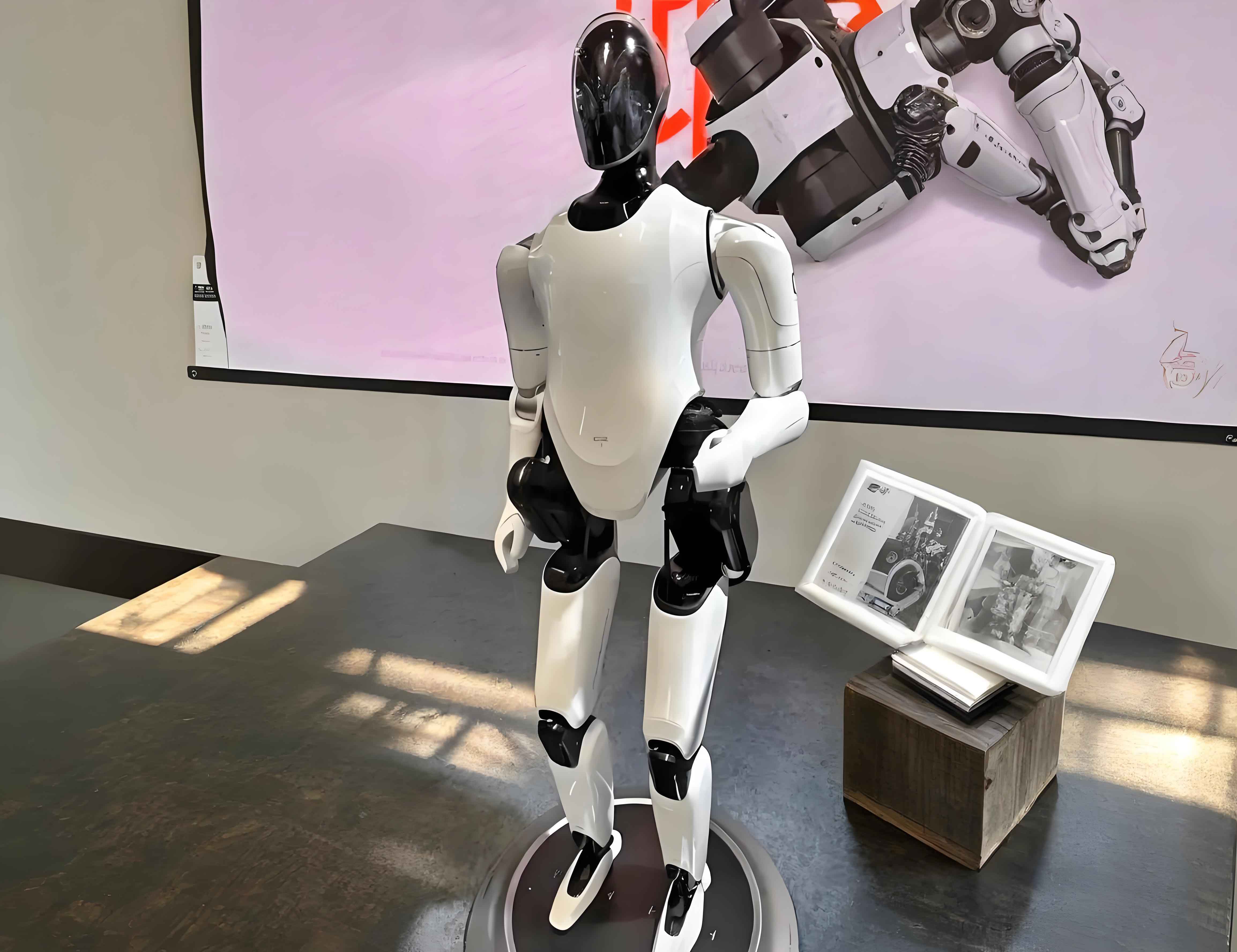
From an evolutionary standpoint, intelligence inherently seeks a body. This notion echoes philosophical ideas where consciousness actively desires physical expression. In the context of AI, I believe that intelligent systems will autonomously strive for embodiment as a means to enhance interaction and adaptation. An embodied AI robot should not be seen as a static entity but as a dynamic system capable of morphological changes based on environmental demands. This intrinsic embodiment aligns with the concept of homogenous imagination, where the form adapts fluidly, unlike the heterogenous imposition of fixed shapes. For instance, a liquid or malleable form might better suit certain environments than a rigid humanoid structure. The evolution from rational agents to embodied agents involves a shift from mere tool-like existence to subject-like engagement in the world, facilitated by interactive rewards. In interactive scenarios, rewards serve as positive feedback, driving the system to evolve. Thus, I posit that the embodied AI robot emerges as a reward outcome from interactions, marking an advanced stage in intelligent evolution.
The interactive nature of embodied intelligence is a key differentiator. Researchers often categorize embodied AI into action agents and interactive agents. Action agents focus on performing physical tasks in simulated or real environments, such as moving objects or household chores, typically realized through robots. Interactive agents, on the other hand, engage with the world through communication or environmental modifications without necessarily requiring physical actions. Both types emphasize perception, decision-making, and action—a rational loop inherited from traditional AI. However, from my evolutionary perspective, this rational framework is insufficient. Intelligent systems must evolve beyond goal-oriented training to achieve autonomous learning and adaptation. The embodied AI robot, through continuous interaction, can develop capabilities that approach general intelligence (AGI) and ultimately superintelligence (ASI). The following table summarizes the evolutionary stages of intelligent systems, highlighting the role of embodiment:
| Evolutionary Stage | Key Characteristics | Role of Embodiment | Example System |
|---|---|---|---|
| Rational Agent | Goal-oriented, supervised learning, limited interaction | Minimal; often virtual or non-physical | Large language models (LLMs) |
| Embodied Agent | Interactive, adaptive, physical engagement | Central; intrinsic body for environmental feedback | Embodied AI robot with sensory-motor integration |
| General Intelligence (AGI) | Autonomous learning, human-like cognitive abilities | Enhanced; body as a platform for diverse tasks | Advanced humanoid robots with AGI capabilities |
| Superintelligence (ASI) | Self-improving, beyond human intelligence | Integral; morphological flexibility for universal adaptation | Future embodied AI robots with self-evolution |
The challenges of catastrophic forgetting and poor generalization are pivotal in understanding the limitations of current AI. Catastrophic forgetting refers to the tendency of neural networks to lose previously learned information when trained on new tasks, while generalization involves the ability to apply learned knowledge to unseen scenarios. These issues are theoretically linked to the core problem of knowledge storage and extraction in dynamic learning environments. In practice, they manifest differently due to factors like data distribution and network architecture. For an embodied AI robot, these bottlenecks are exacerbated by the need for continuous learning in physical worlds. I propose that traditional approaches, such as embedding LLMs into robots, fail to overcome these problems because they treat the body as an external shell rather than an integrated component. To illustrate, consider the loss function in neural networks, which can be represented as:
$$ L(\theta) = \sum_{i=1}^{N} \ell(f(x_i; \theta), y_i) + \lambda R(\theta) $$
Here, $L(\theta)$ is the total loss, $\ell$ is the per-sample loss, $f(x_i; \theta)$ is the model output, $y_i$ is the target, $\lambda$ is a regularization parameter, and $R(\theta)$ is a regularization term to prevent overfitting. Catastrophic forgetting occurs when updating $\theta$ for new tasks disrupts the minimization of $L(\theta)$ for old tasks. For an embodied AI robot, this can be modeled by incorporating environmental interactions. Let $E$ represent the environment, and $S$ the state of the robot. The learning process involves maximizing cumulative reward $R$ over time:
$$ J(\pi) = \mathbb{E}_{\pi} \left[ \sum_{t=0}^{T} \gamma^t r_t \right] $$
where $\pi$ is the policy, $r_t$ is the reward at time $t$, and $\gamma$ is a discount factor. To mitigate forgetting, techniques like experience replay or elastic weight consolidation can be used, but these are often inadequate for lifelong learning in embodied systems. A more robust framework, such as the LEGION (Language-Embedded Generative Incremental Off-policy Reinforcement Learning with Non-parametric Bayes) approach, has been proposed for robotic lifelong learning. This framework emphasizes preserving and combining knowledge through interactive experiences, which is essential for an embodied AI robot. The relationship between catastrophic forgetting and generalization can be expressed through a mutual information perspective:
$$ I(X; Y) = H(X) – H(X|Y) $$
where $I(X; Y)$ is the mutual information between input $X$ and output $Y$, $H(X)$ is the entropy of $X$, and $H(X|Y)$ is the conditional entropy. High mutual information indicates good generalization, but catastrophic forgetting reduces $I(X; Y)$ for prior tasks. The following table compares traditional AI models with embodied AI robots in addressing these bottlenecks:
| Aspect | Traditional AI Models | Embodied AI Robot | Evolutionary Advantage |
|---|---|---|---|
| Catastrophic Forgetting | High risk due to static training data | Reduced through continuous environmental interaction | Adaptive memory via physical feedback loops |
| Generalization Ability | Limited to similar data distributions | Enhanced by diverse real-world experiences | Broad applicability from multisensory inputs | Learning Framework | Offline, batch-based | Online, lifelong learning | Self-improving through reward mechanisms |
| Knowledge Preservation | Relies on algorithmic regularization | Integrates non-parametric Bayesian models | Dynamic knowledge combination |
In my analysis, the integration of large models into robotic bodies is merely a transitional step. True embodied intelligence requires an intrinsic synthesis where the body and intelligence co-evolve. The embodied AI robot must be designed with morphological flexibility, allowing it to alter its form based on task requirements—for example, shifting from a solid to a liquid state for specific environments. This aligns with the concept of homogenous embodiment, where the body is not a fixed shell but an adaptive extension of the intelligent system. From an evolutionary perspective, this represents a negation of the rational agent stage, leading to a higher synthesis. The path from rational agents to embodied agents involves several key transitions, which can be modeled as a Markov decision process (MDP) with states $s \in S$, actions $a \in A$, and transition probabilities $P(s’|s,a)$. The embodied AI robot learns a policy $\pi(a|s)$ that maximizes expected return, but with the added complexity of body dynamics $B$, influencing state transitions:
$$ P(s’|s,a,B) = \int P(s’|s,a,b) P(b|B) db $$
where $b$ represents body parameters. This formulation underscores how embodiment affects learning and adaptation. Moreover, the reward function $r(s,a)$ in an embodied system often includes physical feedback, such as tactile sensations or proprioceptive data, which are absent in virtual agents. For instance, when an embodied AI robot performs a task like grasping an object, the reward may incorporate force feedback $F$ and object stability $O$:
$$ r(s,a) = \alpha \cdot F + \beta \cdot O + \gamma \cdot C $$
where $\alpha, \beta, \gamma$ are weights, and $C$ represents other contextual factors. This multifaceted reward structure promotes robust learning and reduces forgetting by tying knowledge to physical experiences.
The evolutionary trajectory toward superintelligence necessitates embodiment. I contend that general intelligence (AGI) alone is insufficient; it must be embodied to achieve the full spectrum of cognitive and physical capabilities. The embodied AI robot serves as a bridge, leveraging interactive learning to transcend human-like intelligence. In this process, the body acts not just as a tool but as a constitutive element of intelligence, enabling what I term “embodied cognition.” This aligns with philosophical notions of extended mind, where cognitive processes are distributed across the body and environment. For example, an embodied AI robot navigating a cluttered space uses its sensors and actuators to form spatial awareness, a capacity that emerges from the interaction rather than from pre-programmed algorithms. The following formula captures the emergent intelligence $I_e$ of an embodied system:
$$ I_e = \int_{0}^{T} \left( \frac{dK}{dt} \cdot E(t) \right) dt $$
where $K$ is knowledge, $E(t)$ is environmental interaction at time $t$, and $T$ is the total time. This integral emphasizes the cumulative effect of continuous interaction on intelligence growth. Additionally, the risk of AI失控, often discussed in terms of superintelligence, is mitigated in embodied systems because physical constraints impose natural limits. However, as the embodied AI robot evolves, it may develop self-preservation instincts, extending risks into the physical realm. Thus, ethical considerations must be integrated into the design, focusing on safe interaction protocols.
To further elaborate on the interactive特性 of embodied intelligence, I distinguish between action-oriented and interaction-oriented agents. Action agents, like those in robotics, prioritize task completion, while interaction agents engage in communicative or environmental modulation. Both are essential for a comprehensive embodied AI robot. For instance, a domestic assistant robot must not only perform chores (action) but also communicate with users (interaction). This duality enhances adaptability, as shown in the table below comparing agent types:
| Agent Type | Primary Goal | Embodiment Requirement | Example in Embodied AI Robot |
|---|---|---|---|
| Action Agent | Physical task execution | High; precise motor control and sensors | Robotic arm for assembly |
| Interaction Agent | Information exchange and environment modification | Moderate; communication interfaces and soft actuators | Social robot providing companionship |
| Hybrid Agent | Combined action and interaction | Very high; integrated multimodal systems | Humanoid robot assisting in healthcare |
The future of embodied intelligence lies in overcoming the dual bottlenecks of forgetting and generalization through evolutionary design. Current research on lifelong learning frameworks, such as LEGION, points toward solutions by combining reinforcement learning with non-parametric Bayesian models. For an embodied AI robot, this means continuously updating its policy $\pi$ based on new experiences while retaining old knowledge. The learning update can be expressed as:
$$ \theta_{t+1} = \theta_t + \eta \nabla_{\theta} J(\pi_{\theta}) – \lambda \nabla_{\theta} D_{KL}(\pi_{\theta} || \pi_{\theta_{old}}) $$
where $\theta$ are policy parameters, $\eta$ is the learning rate, $J(\pi_{\theta})$ is the objective function, and $D_{KL}$ is the Kullback-Leibler divergence to prevent drastic policy changes that cause forgetting. This approach, when implemented in an embodied AI robot, allows for stable yet plastic learning. Moreover, generalization can be improved by training on diverse environments $E_i$ with shared parameters $\theta$, minimizing the expected loss across environments:
$$ \min_{\theta} \sum_{i=1}^{M} \mathbb{E}_{(s,a) \sim E_i} [L_i(\theta)] $$
where $L_i(\theta)$ is the loss in environment $i$, and $M$ is the number of environments. The embodied AI robot, through its physical presence, naturally encounters varied $E_i$, fostering robust generalization.
In conclusion, from my evolutionary viewpoint, embodied intelligence is not merely an extension of large models into robots but a fundamental advance in the development of intelligent systems. The embodied AI robot represents a critical stage where intelligence acquires a body to interact with and learn from the world, addressing the limitations of rational agents. By embracing intrinsic embodiment and interactive learning, we can pave the way toward superintelligence, with the body serving as both a constraint and an enabler. The journey from rational agents to embodied agents to superintelligent beings is marked by the continuous negation and synthesis of capabilities, where the embodied AI robot plays a pivotal role. As we advance, it is imperative to design these systems with evolutionary principles in mind, ensuring that they grow adaptively and ethically toward higher forms of intelligence.