
In the ongoing digital transformation of education, a critical oversight persists: the systematic marginalization of the body. For too long, dominant pedagogical paradigms, influenced by disembodied cognitive models, have treated learning as a purely symbolic, abstract process. This perspective relegates the body to a passive vessel, a mere conduit for sensory input and motor output. Consequently, we face the paradox of physical presence devoid of meaningful engagement, leading to the accumulation of inert knowledge and hindering the development of higher-order cognitive skills that are deeply embedded in situational practice. This fundamental flaw calls for a radical reimagining of the teaching and learning process.
The theoretical foundation for this shift emerged in the late 20th century with the paradigm of embodied cognition. This framework represents a critical departure from traditional computationalist views of the mind. It posits that cognition is not confined to the brain but is fundamentally shaped, constituted, and extended through the body’s active engagement with its environment. From Merleau-Ponty’s phenomenology of the body to Varela’s enactive cognition and Clark’s extended mind hypothesis, the core consensus is clear: cognition is grounded in the sensorimotor capacities of the body and is dynamically reconstructed through continuous perception-action loops. Learning, therefore, must be understood not as a disembodied reception of information but as an emergent process arising from the learner’s embedded and co-evolving interaction with the world.
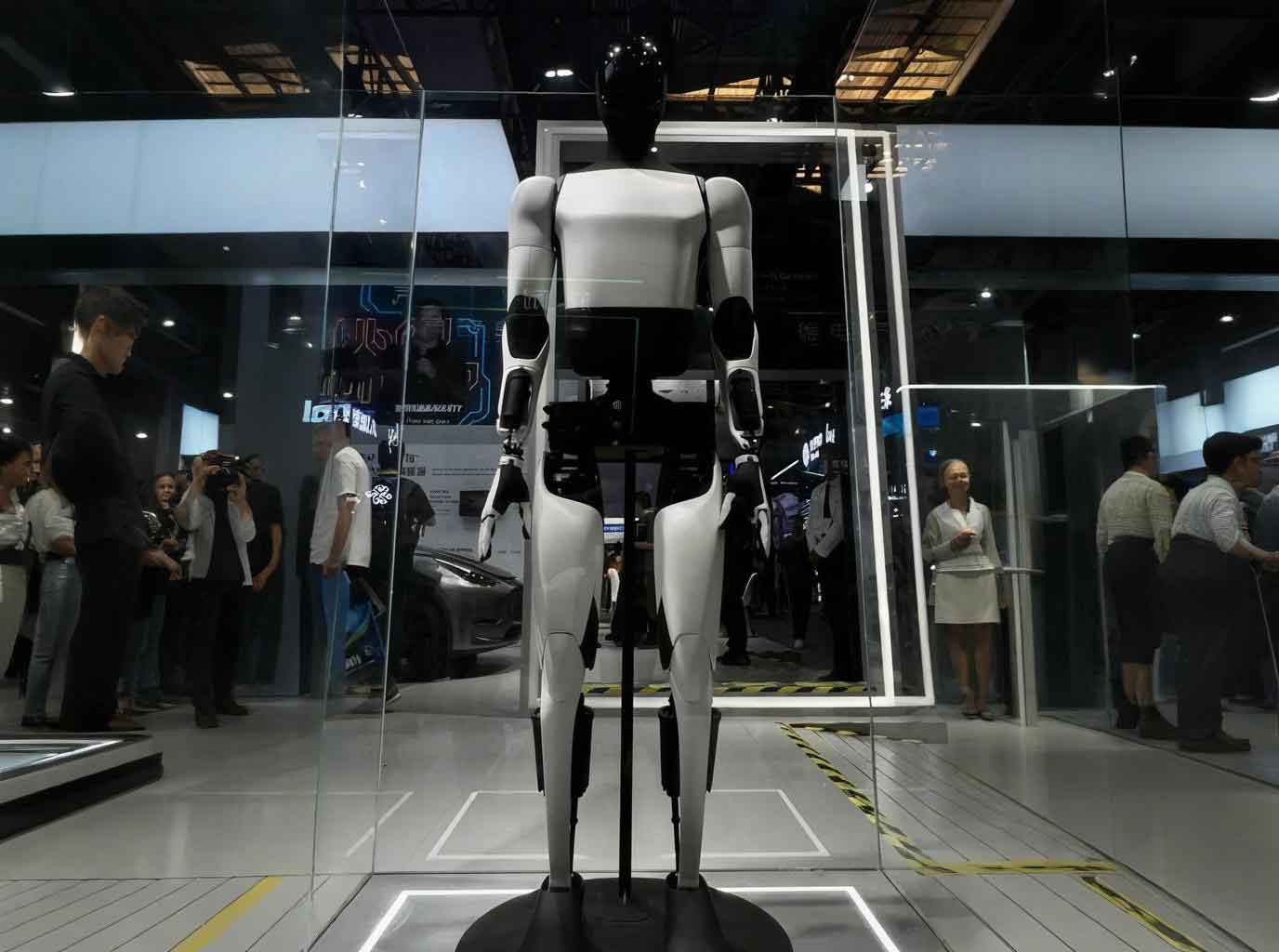
The practical realization of this theoretical vision is now becoming possible through advancements in embodied intelligence. Unlike traditional AI confined to digital datasets, embodied intelligence refers to systems where intelligence is grounded in a physical or simulated body that interacts with an environment. An embodied AI robot is a prime example—a physical agent that perceives its surroundings, makes informed decisions, and takes actions to achieve goals, learning and adapting from the consequences of those interactions. This represents a new intelligent paradigm that moves beyond software to a “mind-body” integrated system. The underlying logic of embodied AI robot development mirrors a “body-mind” integrated intelligence that evolves through worldly interaction, providing the technical substrate for exploring body-mind integrated pedagogy. In this view, learners construct understanding not just through abstract thought but through concrete actions and participation in the physical and social world via their own or a robotic body.
Despite growing interest, a significant theory-practice gap remains. Research is often fragmented, focusing on the efficacy of a single technology for a specific skill, without a systematic framework to explain the underlying mechanisms that drive learning across different contexts. There is a pressing need for a mid-level theoretical framework that can bridge cutting-edge technological practice and classic learning theory. This article, therefore, addresses the following core questions: How can we analytically deconstruct the core mechanisms through which embodied AI robot technology supports learning? How can we establish a “Perception-Action-Cognition” (PAC) cyclic interaction model to systematically restructure existing pedagogical interactions and pioneer new pathways for embodied learning?
The PAC Dynamic Cycle: A Framework for Body-Mind Integrated Learning
To operationalize the principles of embodied cognition for technology-enhanced learning, I propose the Perception-Action-Cognition (PAC) dynamic cycle framework. This integrative tool aims to clarify and predict the logic of learning activities within environments powered by embodied AI robot and related technologies. It illustrates not only the basic components of learning but, more importantly, the generative, cyclical relationships between them, driven by three core characteristics of embodied intelligence technology:
- Body-Mind Fusion: Intelligence is deeply coupled with a physical structure and its environmental interactions.
- Multimodal Integration: Intelligence is expressed through the synergistic coordination of multiple sensory modalities.
- Autonomous Evolution: The system’s behavioral patterns and cognitive models self-evolve through environmental interaction and feedback.
Constituent Elements and Cyclic Mechanisms
The core of the PAC framework reveals the inseparable, symbiotic relationship between bodily action, environmental perception, and mental construction, realized through three interlocking elements.
1. Physical Embodiment and Action: The Engine of the Cycle
Learning in an embodied environment does not begin with the passive reception of information but with the learner’s active action. This action is the starting point and core driver of the PAC cycle. Actions can range from manipulating a physical embodied AI robot or assembling models to performing fine motor gestures while wearing an XR headset. The essence of action is the learner exerting influence on the world to initiate a dialogue with it. Piaget established that action is the source of knowledge, the intermediary between subject and object. When an embodied AI robot acts as a physical proxy, the learner’s action boundary is vastly expanded. The robot, with its dexterous manipulation and stable locomotion, can perform exploratory or hazardous tasks on behalf of the learner, becoming a true extension of bodily capacity.
2. Multimodal Perception and Feedback: The Regulator of the Cycle
Action inevitably causes changes in the environment. The perception of these changes forms the input and regulatory phase of the cycle. The embodied intelligence system, through its multi-channel sensors (cameras, microphones, force-feedback devices), captures the consequences of the learner’s actions in real-time and translates them into multimodal, synchronous sensory feedback. This could be visual changes to a virtual object, corresponding auditory cues, or haptic vibrations. Gibson’s theory of affordances is crucial here. A well-designed embodied learning environment offers rich action possibilities, and the multimodal perception system allows the learner to clearly and immediately perceive these affordances and the effects of their actions, creating a tight “action-perception” coupling for adaptive self-regulation.
3. Cognitive Embodiment and Internalization: The Sublimation of the Cycle
This is the integrative, meaning-making phase. It emphasizes the trinity of cognition, body, and environment: cognition is the body’s cognition. Glenberg’s Indexical Hypothesis supports this, stating that abstract concepts must be indexed to bodily experience to be meaningful. Internalization is not a one-time event but a continuous iteration in a spiral of “perception-action-reflection.” To guard against behavioral reductionism, the PAC framework incorporates metacognitive monitoring and cognitive flexibility design, prompting learners to step back from immediate interaction to reflect on and adjust their implicit learning strategies.
Social Embodiment: The Situational Dimension
Social embodiment is not a separate layer but a dimension deeply embedded throughout the entire PAC cycle. Learning is always situated within a sociocultural context, and embodied intelligence technologies make rich social learning scenarios possible. In such scenarios, an individual’s actions must respond to peers, their perception extends to interpreting others’ intentions, and cognition is co-constructed through group interaction.
Dialogue with Classical Theories
The PAC framework does not seek to overthrow but to inherit and extend core ideas from classical theories within a technology-mediated context, as summarized below:
| Theoretical Dimension | Situated Cognition | Constructivism | PAC Framework |
|---|---|---|---|
| Nature of Cognition | Knowledge embedded in socio-cultural context. | Individual active construction of meaning. | Technology-mediated embodied action cycle. |
| Role of the Body | Participant in the situation. | Carrier of experience. | Engine of cognitive generation (starting point of action-perception loop). |
| Role of Technology | Tool supporting the situation. | Cognitive assistive tool. | Core regulator (multimodal perception-feedback hub). |
| Learning Process | Legitimate peripheral participation in community of practice. | Assimilation-Accommodation balance. | Dynamic, spiral iteration of Perception-Action-Cognition. |
| Core Innovation | Emphasizes social interaction. | Focuses on individual cognitive structure change. | Technology bridges physical embodiment and cognitive internalization in real-time. |
The PAC cycle can thus be formally described as a dynamic, recursive process where learning outcome $L$ at time $t+1$ is a function of the previous cognitive state $C_t$, the action taken $A_t$, and the multimodal feedback $F_t$ received from the environment mediated by the embodied AI robot or system:
$$ L_{t+1} = f(C_t, A_t, F_t(E, A_t)) $$
where $E$ represents the state of the environment. The quality of learning is optimized when the feedback $F_t$ is immediate, aligned with learning goals, and leverages the full multimodal capacities of the embodied AI robot platform.
From Technical Features to Pedagogical Change: Triple Mechanisms of Embodied Intelligence
Mechanism 1: Situational Anchoring – From Symbolic Learning to Experiential Understanding
This mechanism reconfigures the knowledge delivery path, anchoring abstract concepts in perceptible, meaningful experiences within operable virtual or mixed-reality simulations. It directly translates the situated cognition principle into a technical context. The core design principle is to create an isomorphic relationship between bodily movement and conceptual logic. Empirical studies, such as those using collaborative mixed reality for physics concepts, show that anchoring principles like Newton’s second law in multisensory, embodied interaction leads to deeper knowledge representation than symbol-based instruction. For instance, in a history lesson, students could navigate a VR reconstruction of the Roman Forum, interacting with virtual characters and participating in votes, thereby embodying concepts like “republic” through movement and choice.
Mechanism 2: Immediate Feedback – From Delayed Evaluation to Precision Skill Acquisition
This mechanism targets procedural knowledge and complex skills, solving the problem of delayed, vague feedback in traditional practice. The embodied AI robot or system captures the learner’s operation with high-precision sensors, uses AI algorithms for instant, quantifiable, multi-dimensional analysis, and provides precise feedback visually and haptically. This builds an efficient “practice-feedback-correction” loop, representing the ideal technological realization of Ericsson’s theory of deliberate practice. A meta-analysis of 72 embodied learning experiments confirms its general effectiveness, particularly for motor skill acquisition. In vocational training (e.g., welding with AR guidance) or sports coaching (e.g., golf swing analysis), feedback shifts from subjective advice (“raise your hand a bit”) to quantifiable guidance (“increase torso rotation by 5 degrees”).
The efficacy of feedback $E_f$ can be modeled as dependent on its latency $\lambda$, specificity $\sigma$, and multimodality $M$:
$$ E_f \propto \frac{\sigma \cdot M}{\lambda} $$
An embodied AI robot system minimizes $\lambda$ and maximizes $\sigma$ and $M$, leading to higher learning efficiency for sensorimotor skills.
Mechanism 3: Cognitive Mediation – Transforming Abstract Thought into Embodied Experience
This mechanism addresses the difficulty of teaching abstract concepts through language and symbols alone. The technology acts as a novel cognitive tool, externalizing and reifying abstract thought processes into operable, perceptible entities. Learners build intuitive understanding by interacting with these entities. This resonates strongly with Varela’s enactive view. Empirical evidence, such as studies where students using physical blocks to model lever problems outperformed formula-only learners on transfer tasks, supports this. In primary school coding education, students drag graphical blocks to control an embodied AI robot through a maze. A logic error results not in an abstract syntax error but in the robot getting stuck—a concrete, immediate consequence that fosters debugging and computational thinking.
| Core Mechanism | Theoretical Basis | Primary Function | Example Application | Key Challenge |
|---|---|---|---|---|
| Situational Anchoring | Situated Cognition, Enactive Theory | Grounds abstract knowledge in meaningful, interactive scenarios. | VR historical site exploration; GIS-based virtual geography field trips. | Preventing cognitive overload; ensuring accurate virtual models to avoid misconception reinforcement. |
| Immediate Feedback | Deliberate Practice Theory, Cybernetics | Provides real-time, precise, multimodal correction for skill development. | AR-guided welding/surgery training; inertial motion unit-based sports coaching. | Avoiding disruptive feedback that breaks flow; designing scaffolds that fade to promote self-evaluation. |
| Cognitive Mediation | Enactive Cognition, Embodied Design | Externalizes abstract reasoning into manipulable objects/processes. | Programming via embodied AI robot control; virtual physics sandbox for law discovery. | Requiring careful teacher facilitation to bridge embodied experience and formal abstract expression. |
From Concept to Practice: Implementation Pathways for Body-Mind Integration
1. Technological Architecture: Building a Modular, Layered Support Platform
An ideal system should be open and modular. I propose a three-layered architecture:
Perception & Interaction Layer (The “Nerve Endings”): This hardware layer connects the learner’s body to the digital world. It requires high-precision, low-latency motion capture (inertial, optical, or fused sensing) and faces challenges in ergonomics, battery life, and multi-device data sync.
Data & Model Integration Layer (The “Central Processing Core”): This middle layer fuses multimodal data streams (visual, auditory, physiological, behavioral) on a unified timeline. It hosts a repository of interpretable AI models (for posture assessment, engagement detection, social network analysis) and provides APIs for educators and developers to build custom analytical tools.
Application, Service & Feedback Layer (The “Instructional Interface”): This top layer provides the user interface, translating data and intelligence into pedagogical aids like intelligent tutoring systems and adaptive learning environments. Key development focuses on rapid authoring tools (allowing teachers to build embodied lessons via drag-and-drop) and adaptive feedback systems powered by multi-agent architectures (e.g., LLM-based tutor, coach, peer agents).
| Architecture Layer | Core Components | Primary Function | Key Technologies & Challenges |
|---|---|---|---|
| Perception & Interaction | Sensors, HMDs, Haptic Devices, Embodied AI Robots | Capture learner action; deliver multimodal feedback. | Inertial/Optical sensing, force feedback. Challenges: Latency, ergonomics, power. |
| Data & Model Integration | Multimodal Learning Analytics Platform, AI Model Repository, APIs | Fuse multimodal data; run analytics/models; enable extensibility. | Time-series data fusion, explainable AI models. Challenge: Model interpretability for teachers. |
| Application & Feedback | Intelligent Tutoring Systems, Adaptive Environments, Authoring Tools | Deliver personalized instruction & adaptive feedback; empower teacher content creation. | LLM-based multi-agent systems, no-code/low-code authoring tools. Challenge: Balancing guidance with learner autonomy. |
2. Instructional Design: From Transmitting Knowledge to Curating Embodied Experience
The central constraint is often not technology but the required transformation of the pedagogical system. The teacher’s role shifts from knowledge disseminator to architect and facilitator of embodied learning experiences. Following embodied learning design frameworks, instruction should:
- Transform Tasks: From “knowledge recitation” to “cognitive expeditions” that are open-ended and provoke cognitive conflict through hands-on problem-solving.
- Reconstruct Scaffolding: From “verbal prompts” to “situationally embedded” supports within the technological environment (e.g., highlighting key components, simplifying models) that are adaptive and fade as competence grows.
- Require Teacher Development: Teachers need sustained professional development to evolve from “technology operators” to “experience creators,” involving collaborative lesson analysis and design within TPACK frameworks adapted for embodied contexts.
3. Scenario Fusion: Creating Hybrid Blended Learning Ecologies
The ultimate goal is to develop ability in real-world contexts. Applications should therefore blend virtual and physical environments. Augmented Reality (AR) is key for overlaying digital information onto real-world tasks (e.g., biology lab work). Collaborative spatial computing platforms can create shared hybrid spaces where local and remote learners interact via avatars or shared digital objects (e.g., a virtual urban planning sandbox). The ideal ecology enables seamless switching and data continuity across scenarios, creating a personalized, adaptive learning lifecycle.
Challenges and Critical Reflections
A critical stance is not a denial of potential but a necessity to ensure technology serves the fundamental purpose of education: the free and holistic development of the person. Risks must be analyzed across technical, pedagogical, and ethical dimensions.
Technical Bottlenecks: The Long Road from “Usable” to “Reliable & Comfortable”
- Fragility of Natural Interaction: Speech, gesture, and vision recognition degrade in noisy, dynamic real-world classrooms. Unmet expectations in the embodied interaction loop can break immersion and hinder learning.
- Health & Digital Well-being: Prolonged use of VR/AR can cause eyestrain, dizziness, and musculoskeletal issues. Wearable discomfort is a barrier. A deeper concern is whether over-reliance on highly stimulating, instant-feedback virtual environments undermines the development of resilience, patience, and intrinsic motivation for real-world challenges.
Pedagogical Alignment Risks: The Tension Between Technical Logic and Educational Essence
- The Tyranny of Efficiency: The algorithmic drive for optimal, error-free paths can conflict with the non-linear, trial-and-error nature of deep learning. If an embodied AI robot tutor corrects every minor deviation, it risks becoming a controller, depriving learners of the opportunity to learn from “productive failure” and develop perseverance and critical thinking.
- The Myth of “Physical Presence = Cognitive Engagement”: High behavioral participation does not guarantee deep cognitive activity. There is a risk of promoting “cognitive offloading,” where learners outsource thinking to the system, potentially leading to the erosion of internal cognitive capacities. This underscores the need for the fundamental philosophical shift from a “disembodied mind” to an “embodied mind” in educational practice.
The Ethical Abyss: From Data Surveillance to the Crisis of Human Agency
- Privacy and Pervasive Monitoring: Embodied AI robot systems collect unprecedented intimate data (biometric, behavioral, emotional). The risk is the emergence of an educational “surveillance capitalism,” where learners are constantly quantified, potentially fostering performance-oriented “datafied” learning that stifles innate curiosity.
- Algorithmic Cultural Bias: AI models and LLMs trained on dominant cultural datasets can embed subtle biases. An embodied AI robot tutor designed with Western cultural norms may inadvertently marginalize learners from other backgrounds, creating new, insidious forms of inequality.
- The Ultimate Challenge: Preserving Human Agency: The deepest question is how to defend human subjectivity in an era of deepening human-machine fusion. If students learn primarily within highly structured, technology-curated environments, do they risk losing the ability to think independently and solve problems in the messy, uncertain real world? Technology must remain a tool that amplifies, not colonizes, human cognition. Ensuring human agency is the non-negotiable ethical boundary for embodied AI robot development in education.
Conclusion: Towards a Human-Centric Embodied Future
The integration of embodied intelligence into education signifies more than a technical upgrade; it is a catalyst for a profound paradigm shift. The PAC dynamic cycle framework and the analysis of its underlying mechanisms provide a lens to understand the deep operational logic of this transformation. Its value lies in enabling the concrete transformation, autonomous construction, and psychological integration of abstract concepts through situated, body-embedded interaction—a powerful echo of Dewey’s “learning by doing,” Piaget’s constructivism, and Papert’s constructionism.
Achieving genuine body-mind integration is fraught with challenges. Technology is value-neutral, but its design and application are not. Moving toward a prudent and visionary embodied educational future requires concerted, multidisciplinary effort. Researchers must build transparent and fair AI systems. Developers must adopt human-centered, value-sensitive design frameworks that embed ethics throughout the product lifecycle. Teachers must evolve into creative architects of embodied learning experiences. Policymakers must establish robust governance to set ethical guardrails and protect educational equity.
Looking forward, the embodied AI robot in education has the potential to evolve beyond its current form into a strong embodied agent as envisioned by enactive theory—a collaborative partner that co-constructs situational understanding and facilitates intellectual growth alongside the learner. Further convergence with technologies like brain-computer interfaces may one day realize truly neural-embodied education, blurring the boundaries between mind, body, and environment.
Ultimately, the mission of education is to cultivate “whole persons” with critical thinking, creative potential, and humanistic care. Embodied intelligence offers an unprecedented opportunity to rediscover the wisdom of the body in learning and to construct more humane, holistic learning experiences. The embodied turn in education, facilitated by next-generation AI, aims to foster harmonious relationships between humans, technology, and the environment. It is a return to the educational creed that “education is life,” “education is growth,” and “education is experience,” re-invigorating the classroom with vitality and ensuring education remains deeply humanistic. This is the true calling for education in the post-information age.