
In a landmark gathering that highlighted the rapid evolution of robotics, the 2025 Greater Bay Area International Embodied Intelligence Robot Industry Conference served as a pivotal platform for industry leaders to underscore the critical role of sensory systems in advancing embodied intelligence. The consensus emerging from the event is clear: the burgeoning market for embodied robots is poised to catalyze a multi-trillion-yuan sensor industry in China, creating a new growth frontier beyond traditional domains like consumer electronics and automotive electronics. This surge is simultaneously accelerating the market share expansion and technological breakthroughs of domestic sensor manufacturers, positioning them to challenge long-standing international dominance.
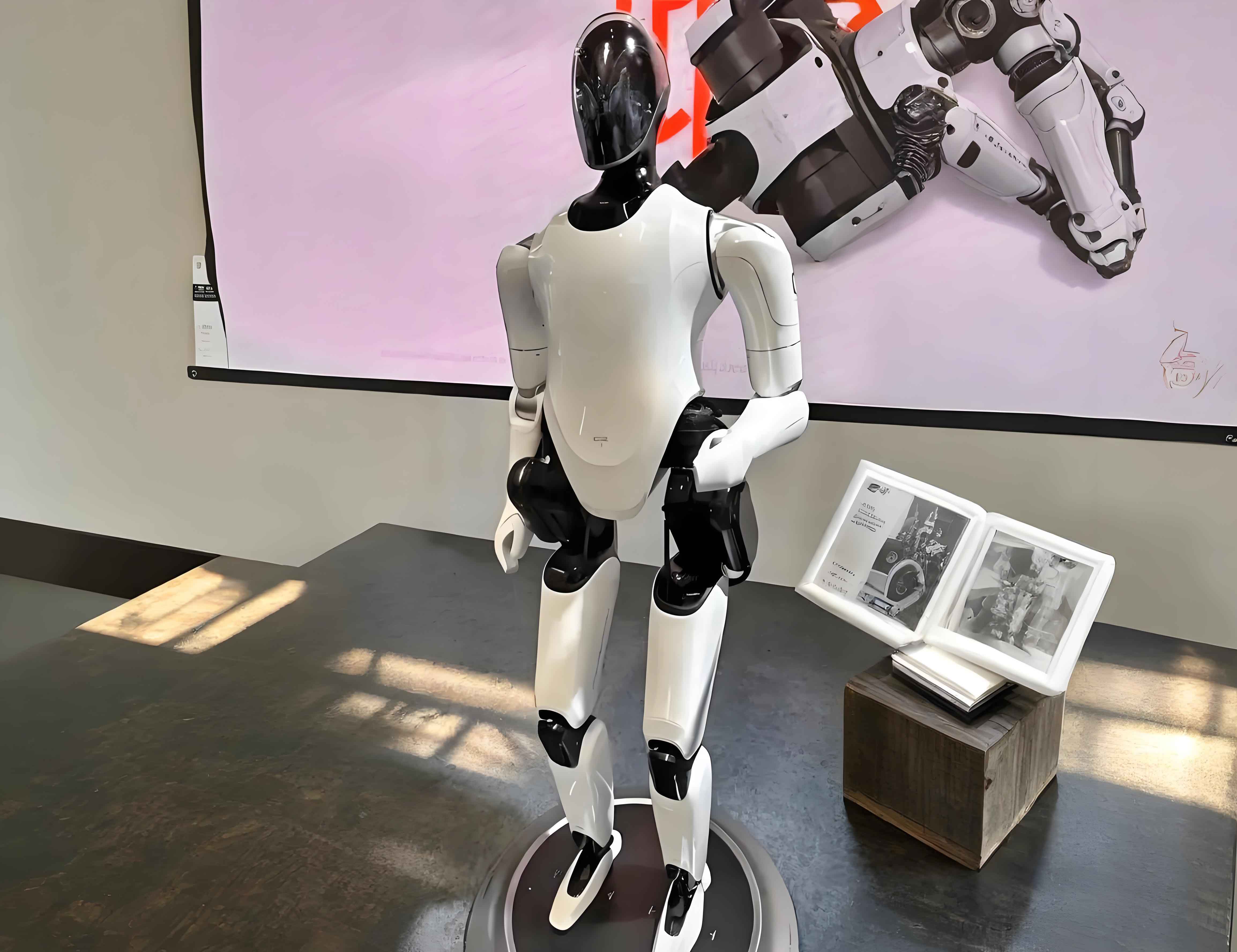
The conference illuminated how embodied intelligence is fundamentally reshaping the requirements for robotic systems. Unlike their industrial counterparts, which operate in fixed, repetitive paths, embodied robots must seamlessly integrate into dynamic human environments. This demands advanced perceptual capabilities—enabling them to see object contours and textures, sense manipulation forces and nuances, and judge environmental changes. Consequently, sensors for vision, touch, force, and even temperature and humidity have become indispensable, propelling them to the forefront of robotic innovation.
Wang Xuanye, Ecosystem Sales Director at Daimeng (Shenzhen) Robotics Technology Co., emphasized this paradigm shift during his presentation. “Regardless of the specific general capabilities of a robot, its application value is largely determined by the operational proficiency of its upper limbs. Such operational capability is fundamentally dependent on perception, which is enhanced through specialized software and hardware,” he stated. This sentiment echoes across the industry, as embodied intelligence increasingly relies on sophisticated sensor arrays to enable complex, human-like interactions.
The practical manifestations of this trend were vividly demonstrated by the “Tiangong” humanoid robot, developed by the Beijing Humanoid Robot Innovation Center. In a historic feat this August, Tiangong secured the gold medal in the 100-meter dash at the 2025 World Humanoid Robot Games, completing the race in 21.5 seconds autonomously—without any remote control. A representative from Keli Sensing shared insights with Securities Times, revealing that Tiangong’s stable running at speeds up to 6 kilometers per hour was enabled by inertial sensors (IMUs) installed in its head, torso center, and waist. These sensors, supplied by Keli’s invested company, Wuxi Beiwei Sensing Technology Co., provide real-time data on Tiangong’s posture, orientation, and tilt, facilitating balance control and motion planning. By integrating this sensory input with visual capabilities and LiDAR, Tiangong achieves precise positioning and navigation in complex settings, showcasing the integral role of sensors in advanced embodied intelligence applications.
The expansion of the embodied robots sector is acting as a powerful catalyst for the sensor market. According to a Southwest Securities research report, perception systems, predominantly composed of sensors, account for approximately 20% of a robot’s total cost. Data from Guanyan Report Network indicates that China’s sensor market surpassed the 4000-billion-yuan mark in 2024, reaching 4061.2 billion yuan, an 11.4% year-on-year increase. Projections suggest this market will grow to 5793.4 billion yuan by 2027, driven significantly by the demands of embodied intelligence platforms.
However, this growth presents both immense opportunities and formidable challenges for Chinese sensor manufacturers. The high-end sensor market has historically been dominated by international giants. Huayuan Securities research notes that the top five foreign manufacturers control 88% of the IMU market share, while six-axis force sensor markets are led by American and Japanese firms. In the realm of flexible electronic skin, overseas companies maintain a technological lead, with domestic products still facing gaps in reliability and consistency.
Despite these hurdles, the technological supremacy of foreign players is being progressively eroded. At the conference, numerous domestic enterprises showcased robust innovations. Daimeng Robotics, for instance, unveiled the world’s first millimeter-thick visuo-tactile sensor with independent intellectual property rights and mass-production capabilities. Wang Xuanye elaborated on this breakthrough, noting that the sensor’s thickness has been dramatically reduced from several centimeters to just a few millimeters while maintaining high resolution. With tens of thousands of perception units packed into a single square centimeter, this technology empowers embodied robots with the ability to “distinguish objects and recognize textures,” enabling precise manipulation even in intricate scenarios. Such advancements are critical for enhancing the perceptual faculties of embodied intelligence systems.
The battle for market share in the sensor domain is intensifying, with domestic companies making significant inroads. In electronic skin technology, firms like Yuejiang and Tujian Technology have demonstrated their prowess at global exhibitions. The six-axis force sensor segment is witnessing vigorous efforts from Keli Sensing, Kunwei Technology, and Landian Chukong. An representative from Anpeilong highlighted the cost challenges, stating, “Sensors for humanoid robots are generally expensive; a single six-axis force sensor can cost over ten thousand yuan. We aim to leverage our accumulated advantages from the automotive industry chain to produce sensors for the robotics sector that are both low-cost and highly reliable.” This approach aligns with the broader push to make embodied intelligence more accessible through affordable, high-performance components.
Market data corroborates this upward trajectory for domestic sensors. A MIR Rui Industrial research report revealed that in 2024, shipments of six-axis force sensors for humanoid robots in China surged by 1100% year-on-year. The domestic production rate for these sensors has climbed from 19% four years ago to 57.8%, indicating a rapid shift toward local sourcing as embodied robots become more prevalent.
Nevertheless, industry insiders caution that breaking through the “high-end barriers” erected by overseas manufacturers remains a complex endeavor. Key challenges persist. Firstly, domestic capabilities in sensor chip manufacturing are insufficient. Production lines in China often struggle to meet the reliability and stability standards required for high-end applications in automotive and humanoid robotics, forcing many companies to rely on overseas wafer fabs for production. Secondly, foreign products have undergone extensive, large-scale market validation over extended periods, establishing a formidable “customer barrier.” Overcoming this requires not only technological superiority and competitive pricing from domestic players but also significant time to build trust and demonstrate long-term performance in embodied intelligence applications.
The ongoing developments underscore a transformative period for the sensor industry, fueled by the rise of embodied robots and embodied intelligence. As these intelligent systems evolve, the demand for advanced, cost-effective sensors will only intensify, setting the stage for a prolonged contest between domestic innovators and international incumbents. The outcomes of this battle will profoundly influence the global landscape for robotics and artificial intelligence, with China’s sensor makers poised to play an increasingly pivotal role in shaping the future of embodied intelligence.