
The efficient coordination of multi-robot systems in dynamic, resource-constrained, and physically complex environments represents a significant frontier for intelligent automation. Applications ranging from logistics and manufacturing to disaster response and advanced field operations demand systems that are not only collectively intelligent but also deeply aware of and responsive to their immediate physical surroundings. Traditional approaches often treat the decision-making agent as a disembodied planner, leading to a disconnect between high-level strategy and low-level physical execution, manifesting as coordination inefficiencies, delayed responses to perturbations, and systemic fragility under stress.
In this article, I present a swarm control framework designed to bridge this gap by fundamentally integrating the principles of Embodied AI. An embodied AI robot is not merely a processor on wheels; it is a system whose intelligence is deeply grounded in and emerges from continuous sensorimotor interaction with its environment. This perspective shifts the paradigm from “sense-plan-act” in discrete cycles to a tightly coupled “perception-decision-action-feedback” loop. The proposed framework leverages this embodied foundation to enhance individual adaptability while introducing a novel mechanism for explicit behavioral diversity regulation at the swarm level. This dual focus—individual embodiment and controlled collective heterogeneity—aims to achieve superior performance in tasks characterized by partial observability, spatial constraints, and frequent disturbances.
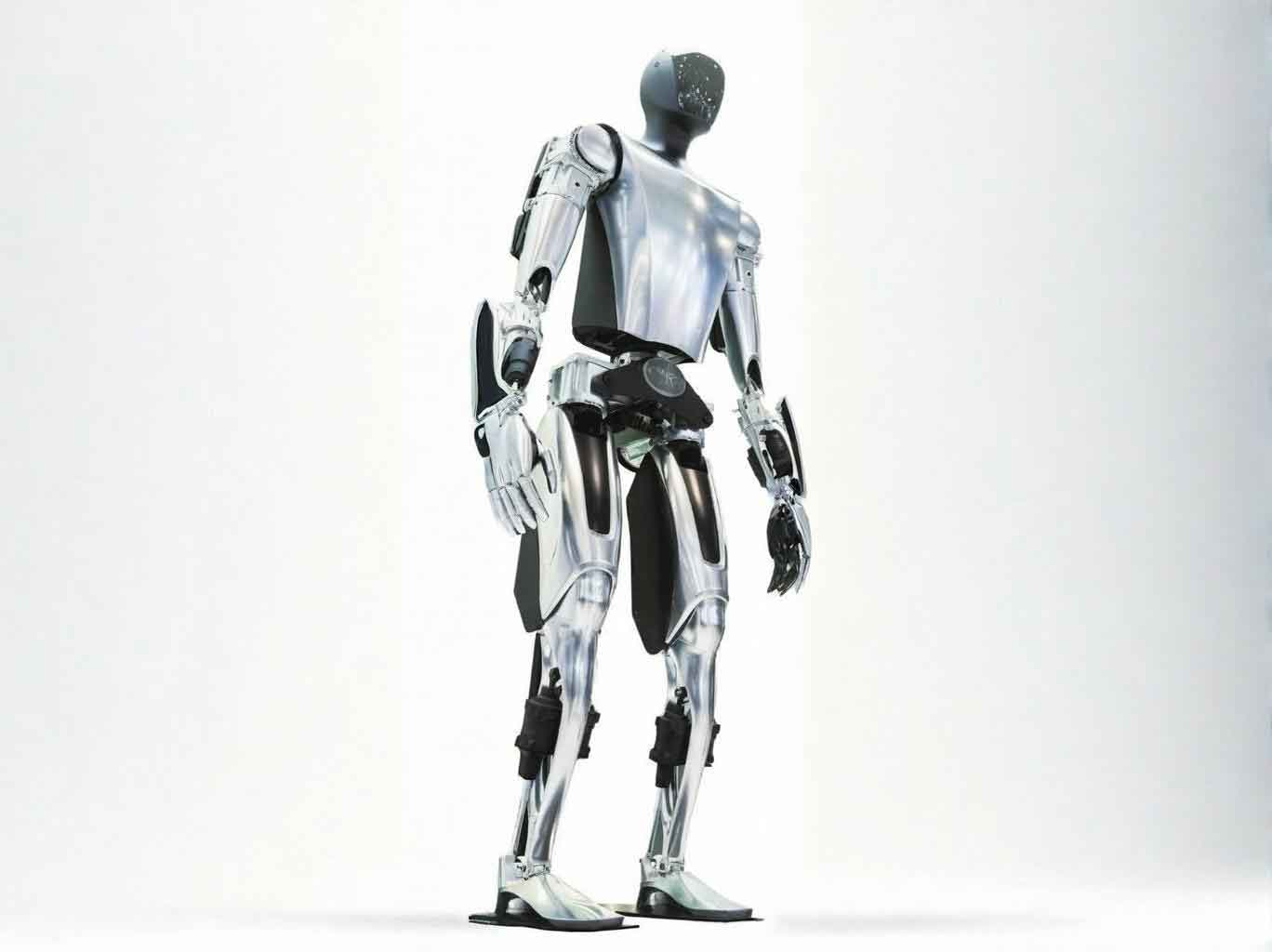
The core insight is that the cognitive capabilities of an embodied AI robot are shaped by its physical structure and its ongoing interaction with the world. This embodiment allows for real-time compensation for disturbances, such as deck sway or unexpected obstacles, through direct sensory feedback rather than delayed replanning. Simultaneously, at the swarm level, a homogeneous set of agents often suffers from coordination bottlenecks and conflict. By explicitly promoting and regulating a diversity of behaviors—such as different path-following styles, task-prioritization schemes, or interaction protocols—the collective can discover more robust and efficient solutions. The challenge lies in balancing this beneficial diversity with the need for coherent group cooperation. My framework addresses this by dynamically fusing individual, experience-driven policies with a shared, cooperative policy, where the fusion coefficient is autonomously tuned based on a real-time assessment of the swarm’s behavioral diversity against a target value.
I. Methodological Framework
The proposed framework, which I term the Embodied Dual-Policy Fusion with Behavioral Diversity Regulation (EDPF-BDR), is built upon a formal multi-agent embodied decision-making model and consists of several interconnected modules.
1.1. The Embodied Decision-Making Model
I model the environment as a Partially Observable Markov Decision Process (POMDP) for a set of N embodied agents, $\mathcal{I} = \{I_1, …, I_N\}$. Each embodied AI robot $I_i$ has a physical presence and interacts with the world through a continuous cycle. The global state $s_t \in \mathcal{S}$ at time $t$ encapsulates all agent states (position, velocity, load) and environmental factors (obstacles, task states). Crucially, an individual agent does not have access to $s_t$. Instead, it receives a local observation $o_t^i = \mathcal{O}_i(s_t)$, which includes its own proprioceptive data (e.g., from IMU, wheel encoders) and exteroceptive data (e.g., local occupancy from lidar/vision, nearby agent states). This partial observability is a fundamental constraint for an embodied AI robot operating in a large, cluttered space.
The joint action space is $\mathcal{A} = \mathcal{A}_1 \times … \times \mathcal{A}_N$, where an action $a_t^i$ for an embodied AI robot can be a movement command, a task interaction (load/unload), or a communication/wait action. The state transition function $\mathcal{P}(s_{t+1}|s_t, \mathbf{a}_t)$ models the stochastic outcome of the joint action $\mathbf{a}_t$, incorporating physical dynamics and environmental randomness.
1.2. Architecture Overview
The system architecture is modular, centered on the “perception-decision-action-feedback” loop inherent to an embodied AI robot. The key components are:
- Embodied Perception Module: Fuses multi-modal sensor data (proprioceptive and exteroceptive) to construct a rich, ego-centric representation of the local state $o_t^i$, including dynamic elements like predicted trajectories of neighbors.
- Dual-Network Cooperative Module: The core of the decision-making apparatus, featuring two policy networks trained in parallel.
- Diversity Estimation Module: Quantifies the behavioral heterogeneity of the swarm in real-time.
- Policy Fusion Module: Dynamically blends the outputs of the two policy networks based on the current diversity estimate.
- Environment Module: The physical (or simulated) world where the embodied AI robot executes actions and receives new observations and rewards.
1.3. Dual-Policy Network Design
To balance individual adaptability with group coordination, I employ a dual-policy structure trained under the Centralized Training with Decentralized Execution (CTDE) paradigm.
1. Heterogeneous Network (Individual Policy $\pi_{\text{indep}}$): Each embodied AI robot maintains its own instance of this network with unique parameters $\theta_{\text{indep}}^i$. It processes a history of local observations $[o_{t-3}^i, o_{t-2}^i, o_{t-1}^i, o_t^i]$ using a ConvLSTM to capture spatio-temporal context. This history is crucial for an embodied AI robot to infer the dynamics of its surroundings. The encoded features are combined with the agent’s internal state vector and processed through an LSTM to output an individual action probability distribution $\pi_{\text{indep}}(a_t^i | o_t^i; \theta_{\text{indep}}^i)$ and a local value estimate $V_{\text{indep}}$. This network is trained to maximize individual cumulative reward, promoting specialization and exploration.
2. Homogeneous Network (Shared Policy $\pi_{\text{shared}}$): All agents share this network with parameters $\theta_{\text{shared}}$. During training, it takes the global state $s_t$ as input and outputs a shared action probability distribution $\pi_{\text{shared}}(a_t^i | s_t; \theta_{\text{shared}})$ for each agent, along with a centralized value estimate $V_{\text{shared}}$. This network is trained to maximize the global team reward, learning cooperative conventions and conflict-resolution strategies that benefit the collective.
The final executed policy for an embodied AI robot is a fusion of these two:
$$
\pi_{\text{final}}(a_t^i | o_t^i) = \text{Normalize}\left( \pi_{\text{shared}}(a_t^i | o_t^i; \theta_{\text{shared}}) + \lambda \cdot \pi_{\text{indep}}(a_t^i | o_t^i; \theta_{\text{indep}}^i) \right)
$$
where $\lambda$ is the dynamic fusion coefficient controlled by the diversity regulation mechanism.
1.4. Embodied Reward Shaping
The reward function for an embodied AI robot must reflect the tight coupling between its actions and the physical environment. Beyond sparse task-completion rewards, I incorporate dense, perception-driven signals. A key component is an adaptive congestion penalty that allows the agent to sense and react to local traffic density, a direct consequence of physical embodiment in a shared space.
$$
r_{t}^{s,i} = \delta \left( \delta_v \cdot \frac{U(v, t-\beta_l, t+\beta_h)}{n} + \delta_e \cdot \frac{U((v_1, v_2), t-\beta_l, t+\beta_h)}{n} \right)
$$
Here, $U(v, \cdot)$ and $U((v_1, v_2), \cdot)$ represent the utilization of a node $v$ and edge $(v_1, v_2)$ over a recent time window, $n$ is a normalization constant, and $\delta, \delta_v, \delta_e$ are scaling weights. This term $r_{t}^{s,i}$ is added to the agent’s total reward $R_t^i$, which also includes components for successful task completion, penalties for collisions, timeout, overload, and execution errors.
| Action/Event | Reward Value | Embodiment Rationale |
|---|---|---|
| Move / Wait (per step) | $r_{\text{step}} = -0.1$ | Encourages time-efficient paths, a physical constraint. |
| Reach Goal | $r_{\text{goal}} = +3.0$ | Primary task completion signal. |
| Timeout | $r_{\text{timeout}} = -0.5$ | Penalizes slow physical operation. |
| Collision | $r_{\text{collision}} = -0.2$ | Critical for physical safety of the embodied AI robot. |
| Overload | $r_{\text{overload}} = -0.4$ | Respects physical payload limits of the robot. |
| Efficient Loading (>80% capacity) | $r_{\text{efficient}} = +0.5$ | Promotes optimal use of physical resources. |
| Execution Error | $r_{\text{error}} = -1.0$ | Ensures accurate physical task execution. |
| Congestion Avoidance | $r_{t}^{s,i}$ (Eq. above) | Direct feedback from perceived local density. |
1.5. Explicit Behavioral Diversity Regulation
This is the novel mechanism for controlling swarm heterogeneity. I explicitly quantify the behavioral diversity $D_{\text{current}}$ of the swarm at each training batch. For a batch of observations $\mathcal{B}$, diversity is computed as the average pairwise Wasserstein distance between the individual policy outputs of all agent pairs:
$$
D_{\text{batch}} = \frac{2}{N(N-1)|\mathcal{B}|} \sum_{o \in \mathcal{B}} \sum_{i=1}^{N} \sum_{j=i+1}^{N} W_2\left( \pi_{\text{indep}}(\cdot|o; \theta_{\text{indep}}^i), \pi_{\text{indep}}(\cdot|o; \theta_{\text{indep}}^j) \right)
$$
An exponentially moving average maintains a stable estimate: $D_{\text{current}} \leftarrow (1-\tau) D_{\text{current}} + \tau D_{\text{batch}}$.
The system is given a target diversity level $D_{\text{target}}$. The fusion coefficient $\lambda$ in Eq. (1) is then dynamically adjusted to drive $D_{\text{current}}$ towards $D_{\text{target}}$:
$$
\lambda = \frac{D_{\text{target}}}{D_{\text{current}} + \epsilon}
$$
where $\epsilon$ is a small constant. If the swarm’s behavior becomes too homogeneous ($D_{\text{current}} < D_{\text{target}}$), $\lambda$ increases, giving more weight to the individual policies and encouraging differentiated behavior. If behavior becomes too chaotic ($D_{\text{current}} > D_{\text{target}}$), $\lambda$ decreases, strengthening the cohesive shared policy. Furthermore, a diversity regularization loss $L_d = (D_{\text{current}} – D_{\text{target}})^2$ is added to the individual policy’s training objective to provide a direct learning signal.
1.6. Training Objectives
The two policy networks are trained jointly. The homogeneous (shared) network is optimized using a Multi-Agent PPO (MAPPO) loss, leveraging the global state and team reward. The heterogeneous (individual) networks are optimized using an Independent PPO (IPPO) style loss, based on local observations and individual rewards, augmented with the diversity loss $L_d$. The total losses are:
$$
\begin{aligned}
\mathcal{L}_{\text{share}} &= \beta_p \mathcal{L}^{\text{shared}}_{\pi} + \beta_v \mathcal{L}^{\text{shared}}_{v} + \beta_i \mathcal{L}^{\text{shared}}_{\text{valid}} – \beta_e \mathcal{H}_{\text{shared}} \\
\mathcal{L}_{\text{indep}} &= \beta_p \mathcal{L}^{\text{indep}}_{\pi} + \beta_v \mathcal{L}^{\text{indep}}_{v} + \beta_i \mathcal{L}^{\text{indep}}_{\text{valid}} – \beta_e \mathcal{H}_{\text{indep}} + \beta_d L_d
\end{aligned}
$$
where $\mathcal{L}_{\pi}$ is the clipped PPO policy loss, $\mathcal{L}_{v}$ is the value function loss, $\mathcal{L}_{\text{valid}}$ penalizes invalid actions, $\mathcal{H}$ is an entropy bonus for exploration, and $\beta$ terms are weighting coefficients.
II. Experimental Analysis and Results
To validate the framework, I conducted experiments in a simulated carrier-based aircraft ammunition transportation scenario—a quintessential example of a dynamic, resource-constrained, and safety-critical environment for an embodied AI robot swarm. The deck is modeled as a constrained grid with static obstacles, multiple supply points, and aircraft targets.
2.1. Experimental Setup and Metrics
I evaluate the system under three conditions to test the adaptability of the embodied AI robot swarm: 1) Baseline (No Disturbance), 2) Deck Sway (modeled as a sinusoidal roll: $\theta(t) = A \sin(2\pi f t)$), and 3) Sudden Obstacles (randomly appearing blockages). The core hypothesis is that an optimal level of regulated diversity ($D_{\text{target}} \approx 2$) will yield the best performance. I compare against an unconstrained baseline (no explicit diversity control) and a fully homogeneous baseline ($D_{\text{target}} = 0$).
Key performance metrics are:
- Task Success Rate (%): Percentage of ammunition requests delivered within the allowed time window.
- Average Cumulative Reward: The mean total reward per episode across the swarm, reflecting overall efficiency and safety.
- Number of Collisions: The total physical conflicts between agents or with obstacles, a direct measure of safe embodied operation.
2.2. Performance Under Baseline (No Disturbance) Conditions
The results clearly demonstrate the non-monotonic impact of behavioral diversity. The unconstrained and fully homogeneous ($D_{\text{target}}=0$) swarms perform poorly, especially as the number of embodied AI robot units increases, suffering from low success rates and high collisions due to coordination failures and traffic jams.
| Number of Embodied AI Robots | Unconstrained | $D_{\text{target}}=0$ | $D_{\text{target}}=0.5$ | $D_{\text{target}}=1$ | $D_{\text{target}}=2$ | $D_{\text{target}}=2.5$ | $D_{\text{target}}=3$ |
|---|---|---|---|---|---|---|---|
| 2 | 28.73 | 20.16 | 73.13 | 85.92 | 98.67 | 95.93 | 91.40 |
| 4 | 10.50 | 8.80 | 53.47 | 69.84 | 95.00 | 85.00 | 67.92 |
| 6 | 4.20 | 3.49 | 47.12 | 58.01 | 74.08 | 66.85 | 59.45 |
| 8 | 0.63 | ~0.00 | 31.84 | 43.32 | 57.60 | 51.27 | 44.91 |
Introducing controlled diversity dramatically improves performance, with $D_{\text{target}}=2$ consistently achieving the peak success rate across all swarm sizes. The average cumulative reward curves show that this setting enables faster learning, higher final reward, and greater stability. The collision counts are also minimized at this optimal diversity level, confirming that a well-regulated mix of behaviors allows the swarm of embodied AI robot units to self-organize and avoid conflicts more effectively than either purely individualistic or purely homogeneous strategies.
2.3. Robustness to Physical Perturbations
The embodied nature of the framework is critically tested under disturbance.
Deck Sway: The sinusoidal motion challenges the low-level control and path-following accuracy of each embodied AI robot. The performance trends hold, but absolute metrics decrease. Again, $D_{\text{target}}=2$ provides the most robust performance. The diversity mechanism allows some agents to adopt more conservative, stability-focused paths while others may take calculated risks, leading to a collectively adaptive response that outperforms rigid, homogeneous strategies.
| Number of Robots | Unconstrained | $D_{\text{target}}=0$ | $D_{\text{target}}=2$ | $D_{\text{target}}=3$ |
|---|---|---|---|---|
| 4 | 8.41 | 6.72 | 83.62 | 57.31 |
| 8 | 0.31 | ~0.00 | 47.55 | 36.01 |
Sudden Obstacles: This tests high-level re-planning and inter-agent coordination. The unexpected blockages cause significant disruption. The EDPF-BDR framework with $D_{\text{target}}=2$ shows remarkable resilience. The embodied perception module helps agents detect the obstacle early. More importantly, the behavioral diversity means the swarm does not have a single point of failure in its reaction; some agents may immediately stop and recalculate, others may broadcast warnings, and others may utilize pre-learned alternative routes. This spectrum of responses allows the swarm to overcome the blockage more efficiently than a uniform reaction could.
| Metric | Unconstrained | $D_{\text{target}}=0$ | $D_{\text{target}}=2$ |
|---|---|---|---|
| Success Rate (%) | ~0.00 | ~0.00 | 45.83 |
| Avg. Cumulative Reward | Low, Unstable | Low, Unstable | High, Stable |
| Collision Count | Very High | High | Lowest |
2.4. Ablation and Comparative Analysis
An ablation study confirms the contribution of key components. Removing the embodied congestion reward ($r_{t}^{s,i}$) leads to increased localized traffic jams. Disabling the diversity regulation (fixing $\lambda=1$) results in performance degradation, typically settling at a suboptimal equilibrium between exploration and cooperation, validating the need for explicit, target-driven control.
Furthermore, a comparison with prominent MARL baselines like MAPPO and QMIX, under identical network scales and training steps, shows that the EDPF-BDR framework achieves higher cumulative reward and, most distinctly, significantly lower collision counts. This underscores the advantage conferred by explicitly modeling the embodied AI robot perspective and proactively managing swarm heterogeneity.
III. Conclusion and Future Directions
In this work, I have argued for and demonstrated a fundamental shift in designing multi-robot swarm controllers: the integration of embodied AI principles with explicit mechanisms for behavioral diversity regulation. The proposed EDPF-BDR framework moves beyond treating agents as abstract decision-makers and instead grounds them as embodied AI robot units, whose intelligence is shaped by real-time sensorimotor loops. By dynamically fusing an individual, experience-based policy with a team-oriented shared policy, and carefully tuning this fusion to maintain an optimal level of swarm diversity, the system achieves a powerful balance. It gains the individual adaptability needed to handle physical disturbances and the collective coherence required for efficient, collision-free cooperation in tightly constrained spaces.
The experimental results across varying swarm sizes and under significant physical perturbations (deck sway, sudden obstacles) provide strong evidence. Performance metrics—success rate, cumulative reward, and collision count—all peak at a specific, regulated diversity level ($D_{\text{target}} \approx 2$ in our setup), revealing the non-monotonic nature of the diversity-performance relationship. This finding highlights that diversity is not merely a beneficial byproduct of training but a critical, controllable parameter for system optimization.
Looking forward, several exciting directions emerge. First, the framework should be tested on physical hardware with realistic sensor noise, actuator delays, and imperfect communication to fully validate its embodied claims. Second, investigating online adaptation of the $D_{\text{target}}$ parameter based on real-time task complexity or environmental volatility could further enhance autonomy. Third, extending the diversity metric beyond policy outputs to include functional specialization (e.g., some embodied AI robot units excel at transport, others at precise docking) could unlock even more powerful forms of heterogeneous cooperation. Finally, the principles here could be applied to other domains where embodied agents operate in crowded, dynamic arenas, from warehouse logistics and smart factories to autonomous vehicular traffic management and planetary exploration rovers. The era of truly intelligent swarms lies in robots that are not only connected but are also consciously embodied and strategically diverse.