
In a significant milestone for the robotics industry, Zhiyuan Innovation (Shanghai) Technology Co., Ltd. has secured a project collaboration valued at tens of millions of yuan with Fuling Precision Industry Co., Ltd., marking the first large-scale commercial deployment of embodied robots in China’s industrial domain. This pioneering initiative will see nearly 100 units of the Expedition A2-W embodied robots implemented across Fuling Precision’s manufacturing facilities, representing the global debut of embodied intelligence robots in smart manufacturing scenarios at scale. The partnership underscores a pivotal shift from technological validation to practical, widespread application, heralding a new era for industrial automation powered by advanced embodied intelligence systems.
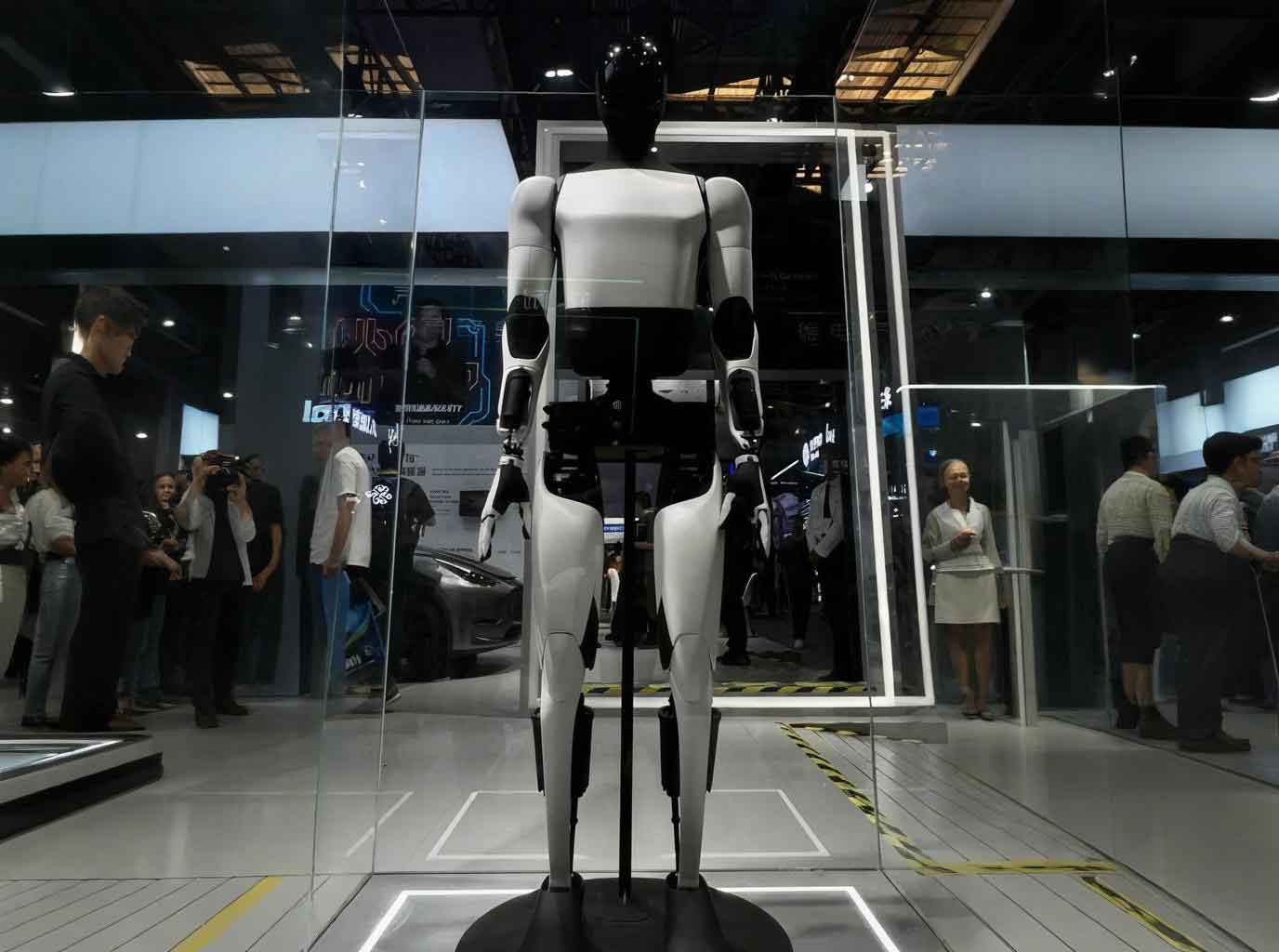
The year 2025 is widely regarded as the inaugural year for mass production of embodied intelligence robots, with industrial environments emerging as the primary arena for their commercial scalability. The successful deployment of Expedition A2-W units not only signifies an upgrade in industrial ecosystem collaborations but also demonstrates the maturity of China’s embodied robot supply chain, encompassing core component suppliers, system integrators, manufacturing enterprises, and research institutions. According to Zhang Xinyuan, Research Director at Beijing Kefangde Technology Development Co., Ltd., this development opens up unprecedented opportunities for all stakeholders involved in the embodied intelligence ecosystem, fostering innovation and economic growth.
Embodied robots, characterized by their integrated perception, cognition, and action capabilities, are fundamentally distinct from traditional industrial robots. Unlike conventional systems that operate in structured environments with pre-programmed tasks, embodied intelligence robots excel in unstructured settings through environmental awareness, autonomous decision-making, and flexible execution. Zhou Di, an expert from the National Science and Technology Expert Database of the Ministry of Science and Technology, emphasized that these attributes position embodied robots as the future of robotics technology, enabling adaptability in dynamic industrial landscapes.
The Expedition A2-W model, specifically designed for flexible intelligent manufacturing scenarios, exemplifies the capabilities of embodied intelligence. It features 40 active degrees of freedom in its joints and humanoid dexterous hands, combined with a wheeled chassis, allowing it to perform tasks such as disassembling and stacking transfer boxes, transporting materials, and handling loading and unloading operations. In a notable demonstration in July, the Expedition A2-W successfully completed a two-shift operation, moving over 800 transfer boxes per shift with zero errors during a three-hour live broadcast, showcasing its reliability in prolonged, high-intensity, and dynamically interfered environments.
Technical breakthroughs are the core drivers accelerating the commercialization of embodied intelligence. Zheng Yangyang, an AI Robotics Industry Researcher at Samoyed Cloud Technology Group, highlighted that anti-interference capabilities and flexible production capacities are critical thresholds for embodied robots transitioning from laboratory research to production lines. The ability to maintain performance under real-world conditions is essential for widespread adoption, and the Expedition A2-W’s achievements validate the progress in these areas.
The rapid expansion of application scenarios is laying a solid foundation for the large-scale implementation of embodied intelligence in industrial sectors. Lin Xianping, Deputy Secretary-General of the China Urban Expert Think Tank Committee, noted that beyond logistics and搬运, embodied robots offer unique advantages in precision assembly, equipment inspection, and high-risk operations. Their software-driven flexibility allows for seamless task switching, while imitation and reinforcement learning enable continuous optimization of operations, broadening their market potential. The versatility of embodied intelligence systems is expected to drive adoption across diverse industries, including automotive manufacturing, electronics assembly, and warehousing.
Capital markets are playing a crucial role in propelling humanoid robots from laboratories to factories, with future prospects pointing toward household applications. Cao Zhe, Chief Investment Officer of Beijing Aiwen Zhilue Investment Management Co., Ltd., expressed confidence in this trajectory, citing increased investor interest. Data from the Gaogong Robot Industry Research Institute reveals that in the first half of 2025, the domestic embodied intelligence industry chain witnessed 144 financing events, totaling 19.5 billion yuan, with an average single financing round of 135 million yuan. Notable cases include Xinghai Tu Artificial Intelligence Technology Co., Ltd., which secured over USD 100 million in Series A4 and A5 funding, and Beijing Xingdong Julian Technology Co., Ltd., which completed nearly 5 billion yuan in Series A financing. These investments, led by top-tier venture capital firms, reflect professional capital’s confidence in the commercialization of embodied intelligence and indicate a transition from research and development to industrialization phases.
Market size projections further underscore the growth potential of embodied robots. According to data from Zhongyan Puhua Industry Research Institute, China’s embodied intelligence market reached 864.7 billion yuan in 2024, a 65% year-on-year increase, and is expected to exceed 973.1 billion yuan in 2025, with estimates pointing to 4 trillion yuan by 2030. This expansion is driven by policy support, technological advancements, and increasing demand for automation, positioning embodied intelligence as a key component of future industrial strategies.
In response to these trends, numerous companies within the embodied intelligence产业链 are actively disclosing their布局 and progress. For instance, Tianqi Automation Engineering Co., Ltd. has partnered with several automotive and parts manufacturers to develop solutions for embodied robots in automotive and other industrial manufacturing scenarios. The company has invested in establishing the Wuxi Embodied Intelligent Robot Industrial Data Collection and Training Center Project, aimed at enhancing AI systems’ adaptability to complex environments through realistic simulations and training.
Similarly, Zhejiang Zhucheng Technology Co., Ltd. has entered into a strategic joint venture agreement with Shenzhen Ubtech Robotics Co., Ltd., focusing on collaborative research and development in the fields of intelligent service robot component wiring harnesses and connectors. This collaboration aims to leverage embodied intelligence to improve product performance and expand application ranges.
Shanghai Step Electric Corporation Co., Ltd. plans to launch a general controller for embodied intelligence by the end of 2025 and introduce整机 products in the embodied or humanoid robot domain. Currently, prototype development is progressing orderly, with completion expected by December 2025. These initiatives highlight the broader industry movement toward integrating embodied robots into mainstream manufacturing processes.
Yu Feng Hui, a Senior Researcher at Pangoal (Beijing) Information Consulting Co., Ltd., advised that listed companies in the embodied intelligence industry chain should focus on technological research and development, with precise investments to overcome core challenges such as sensor accuracy and motion control algorithms. Additionally, deep market research is essential to identify diverse scenario needs and launch products that align with practical applications, thereby continuously expanding the scope of embodied intelligence in line with industrial expansion trends.
The successful commercialization of embodied robots in industrial settings not only enhances production efficiency but also addresses labor shortages and safety concerns. As embodied intelligence continues to evolve, its impact is anticipated to extend beyond manufacturing to sectors like healthcare, retail, and domestic services, ultimately transforming how humans interact with machines. The collaboration between Zhiyuan Innovation and Fuling Precision serves as a benchmark for future deployments, demonstrating the tangible benefits of embodied robots in real-world operations.
In summary, the large-scale adoption of embodied intelligence in industry marks a transformative phase in robotics, driven by innovation, investment, and interdisciplinary collaboration. With robust policy backing and growing market acceptance, embodied robots are poised to redefine industrial automation, offering scalable solutions that combine flexibility, intelligence, and reliability. As the ecosystem matures, the integration of embodied intelligence into everyday industrial practices will likely accelerate, fostering sustainable development and competitive advantages in the global market.
| Event | Description | Impact |
|---|---|---|
| Collaboration between Zhiyuan Innovation and Fuling Precision | Deployment of nearly 100 Expedition A2-W embodied robots in industrial settings | First large-scale commercial use of embodied robots in China’s industrial sector |
| Financing in H1 2025 | 144 financing events totaling 19.5 billion yuan in the embodied intelligence industry chain | Accelerated transition from R&D to industrialization phase |
| Market Size Growth | Projected increase from 864.7 billion yuan in 2024 to 973.1 billion yuan in 2025 | Highlighted expansion potential of embodied intelligence applications |
| Technological Demonstrations | Expedition A2-W achieving zero errors in high-intensity tasks | Validated reliability and adaptability of embodied robots in dynamic environments |
The advancements in embodied intelligence are not limited to hardware; software innovations play an equally critical role. Machine learning algorithms, particularly those involving imitation and reinforcement learning, enable embodied robots to continuously improve their performance based on environmental feedback. This dynamic learning capability is essential for handling complex, non-repetitive tasks that are common in industrial settings. As embodied robots become more integrated into production lines, their ability to learn and adapt in real-time will reduce downtime and increase overall efficiency, making them invaluable assets for modern manufacturers.
Moreover, the environmental benefits of embodied robots are gaining attention. By optimizing resource use and minimizing waste through precise operations, embodied intelligence systems contribute to sustainable manufacturing practices. For example, in logistics and assembly, embodied robots can reduce material handling errors and energy consumption, aligning with global trends toward green industry. This aspect further enhances the appeal of embodied robots for companies aiming to meet environmental, social, and governance (ESG) criteria.
Looking ahead, the convergence of embodied intelligence with other emerging technologies, such as 5G, Internet of Things (IoT), and edge computing, is expected to unlock new possibilities. These integrations will facilitate faster data processing and communication, enabling embodied robots to operate seamlessly in interconnected smart factories. The synergy between embodied robots and digital twins, for instance, could allow for virtual testing and optimization of processes before physical implementation, reducing risks and costs.
In conclusion, the successful large-scale commercial deployment of embodied robots in the industrial sector, as exemplified by the Zhiyuan Innovation and Fuling Precision collaboration, marks a pivotal moment in the evolution of automation. With continued investment, technological refinement, and strategic partnerships, embodied intelligence is set to revolutionize not only manufacturing but also various aspects of daily life. The journey from laboratory prototypes to factory floors and eventually to households underscores the transformative potential of embodied robots, positioning them as key enablers of the fourth industrial revolution.