
The rapid acceleration of global population aging presents a profound challenge to traditional elderly care systems. Data indicates a significant and growing proportion of the population is entering their senior years, straining existing care infrastructure. Traditional models, heavily reliant on family support and institutional care, are increasingly untenable due to declining birth rates, changing family structures, and a critical shortage of professional caregivers. This mismatch between supply and demand is further exacerbated by the evolving, diversified needs of the elderly population, who seek not only basic physical assistance but also emotional companionship, social engagement, and personalized healthcare management. In this context, the concept of “Smart Elderly Care” has emerged as a pivotal strategy, leveraging advanced technologies to create sustainable, efficient, and humane care solutions. At the heart of this technological evolution lies the companion robot, a device designed to transcend mere functional utility and provide holistic support. The true potential of these companion robots is unlocked not just through advanced mechanics or algorithms, but through deliberate and sophisticated emotional design. This analysis explores the critical importance, theoretical framework, and practical implementation of emotional design in developing effective companion robots for the elderly.
The imperative for emotionally intelligent companion robots stems from a multifaceted crisis in elderly care. The scarcity of human caregivers is a primary driver, creating an urgent need for assistive technologies that can augment care capacity. However, simply automating physical tasks is insufficient. Social isolation and loneliness among the elderly are well-documented factors leading to depression, cognitive decline, and deteriorated physical health. A companion robot, therefore, must address this emotional void. Furthermore, the desire for aging in place—remaining in one’s own home and community—is strong among seniors. A well-designed companion robot can be the technological linchpin that makes independent living safer and more fulfilling for longer periods. It acts as a bridge, not a replacement, maintaining the user’s connection to their environment, their loved ones, and their own sense of autonomy.
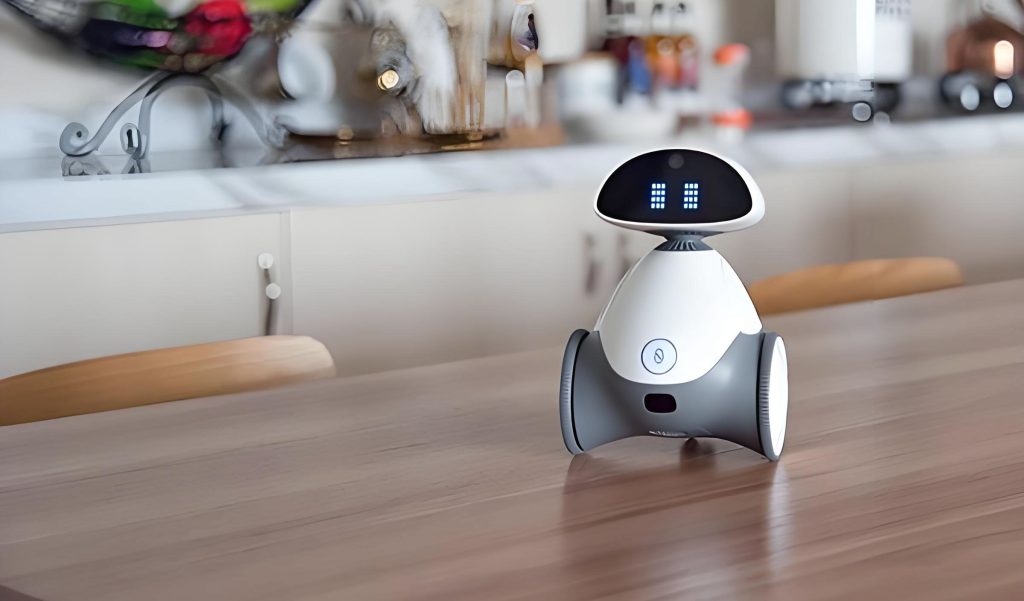
The development of companion robots has seen varied trajectories internationally. Early iterations, often in Japan and Europe, focused on physical assistive tasks like patient transfer and mobility support (e.g., RIBA-II). The evolution then shifted toward social robots with basic interaction capabilities, exemplified by Pepper. The current frontier involves integrating deeper cognitive functions, such as affective computing and personalized adaptation, seen in prototypes like CAREE-O-BOT. Domestically, the industry, though starting later, has progressed rapidly. Companies have moved from producing basic interactive home robots to developing more integrated systems capable of health monitoring, remote telepresence, and simple daily task assistance. The convergence of national strategic support for AI and robotics with pressing demographic needs has created a fertile ground for innovation in smart elderly care solutions, with the emotionally intelligent companion robot positioned as a key product of this synergy.
| Region | Early Phase (Pre-2015) | Intermediate Phase (2015-2020) | Current/Future Focus |
|---|---|---|---|
| International (e.g., Japan, EU, USA) | Physical assistance (lifting, transport), telepresence. | Social interaction, basic emotion recognition, autonomous navigation. | Affective AI, long-term adaptive behavior, personalized care routines, human-robot collaboration. |
| Domestic | Basic educational/entertainment robots for home. | Integrated service robots with health monitoring, voice interaction, and SLAM navigation. | Deep integration of AIGC, emotional companionship, predictive health analytics, and comprehensive ecosystem building. |
Theoretical Framework for Emotional Design in Companion Robots
Emotional design for a companion robot is not a singular feature but a multi-layered approach that governs how the robot is perceived, understood, and interacted with. It draws from principles in human-computer interaction (HCI), psychology, and design theory. A foundational model can be structured across three interconnected layers: the Perceptive Layer, the Cognitive Layer, and the Behavioral Layer. Each layer contributes to the formation of a coherent and believable “personality” that the elderly user can relate to and trust.
The Perceptive Layer: Form, Expression, and Voice. This is the most immediate layer, concerning the robot’s physical and auditory presence. The visual design must balance familiarity and functionality. Anthropomorphic or zoomorphic designs can foster attachment and ease of communication but must avoid the “uncanny valley.” Non-threatening, soft contours, warm color palettes, and appropriate scale are crucial. Facial expression, even if abstract (using lights or simple shapes), is vital for conveying internal state and responsiveness. Similarly, the voice of the companion robot must be carefully crafted—clear, calm, with adjustable speed and pitch, capable of expressing empathy through prosody rather than just words. Haptic feedback, through gentle touch or vibration, can also be part of this layer, providing comforting physical reassurance.
| Design Dimension | Considerations for Elderly Users | Emotional Goal |
|---|---|---|
| Physical Form | Stable base, non-intimidating height, rounded edges, lightweight materials, tactilely pleasant surfaces. | Trust, Safety, Approachability |
| Facial & Bodily Expression | Simple, legible expressions (eyes, mouth lights); expressive but not overly complex gestures. | Communicating state (listening, thinking, happy), Empathy |
| Voice & Sound | Natural, slow-paced speech; warm vocal tone; clear alert sounds distinct from alarms. | Calmness, Clarity, Reassurance |
The Cognitive Layer: Understanding and Personalization. This layer constitutes the “brain” of the emotional design. It involves the robot’s ability to perceive the user’s state and context, reason about it, and maintain a persistent model of the user’s preferences and history. Affective computing techniques are central here. The companion robot must employ multi-modal sensing—analyzing speech tone (paralanguage), facial expressions via camera, and even physiological data from wearables—to infer the user’s emotional state (e.g., happy, lonely, anxious, in pain). This can be modeled as a probabilistic estimation:
$$
P(E_m | S_v, S_a, S_p, C_t)
$$
Where \( P(E_m) \) is the probability of emotional state \( m \), given visual signals \( S_v \), audio signals \( S_a \), physiological signals \( S_p \), and contextual information \( C_t \) (time of day, location, recent activity). Beyond momentary affect, the robot builds a Long-Term User Model (LTUM), learning routines, favorite topics, family members’ names, and health baselines. This model allows the companion robot to proactively offer relevant content, remember past conversations, and adapt its interaction style, creating a genuine sense of being “known” and cared for as an individual.
The Behavioral Layer: Action and Interaction. This layer translates perception and cognition into action. It defines the robot’s “personality” through its behavioral repertoire. Key aspects include:
- Proactive vs. Reactive Behavior: A balanced companion robot doesn’t just respond to commands. It can initiate appropriate interaction based on context—greeting in the morning, suggesting a walk after lunch, or playing soothing music if it detects signs of agitation.
- Empathic Response Generation: Upon detecting sadness, the robot should not offer a logical solution but an empathic utterance (“That sounds difficult. Would you like to talk about it or would you prefer a distraction?”) and maybe suggest calling a family member.
- Consistency and Predictability: While adapting, the robot’s core behavioral traits (patience, positivity) should remain consistent, fostering trust. Sudden, unexplained changes in behavior are disconcerting.
- Collaborative Action: The robot should frame assistance as collaboration (“Let’s take your blood pressure together”) rather than paternalistic control, preserving the user’s dignity and autonomy.
The interaction between these layers can be conceptualized as a continuous loop: Perception feeds into Cognitive analysis, which triggers Behavioral responses, which in turn affect the user’s state and thus new Perceptual inputs. The quality of this loop defines the emotional efficacy of the companion robot.
Functional System Architecture of an Emotionally-Designed Companion Robot
The emotional design framework must be physically and digitally instantiated through a robust functional architecture. A holistic companion robot system integrates several core modules, each contributing to the overall goal of safety, health, companionship, and independence.
| Module | Key Functions | Emotional Design Integration |
|---|---|---|
| User Interaction & Communication | Natural Language Processing (NLP), Voice Synthesis, Computer Vision for gesture/expression recognition, Touch Interface. | Empathic voice, recognizing user’s affective state from face/voice, personalized conversation. |
| Daily Life Assistance | Reminder systems (medication, appointments), Light object fetching, Smart home control (lights, thermostat). | Proactive, polite reminders; framing assistance as collaborative help; celebrating task completion. |
| Health Monitoring & Medical Support | Vital sign measurement (BP, SpO2, heart rate), Fall detection, Telemedicine gateway, Symptom logging. | Calm explanation during checks; reassuring words during alerts; facilitating warm human contact via telemedicine. |
| Safety & Security | 24/7 environmental monitoring, Emergency call button/SOS, Anomaly detection (e.g., stove left on). | Providing constant, unobtrusive “presence”; emergency response with clear, calm instructions. |
| Social Interaction & Entertainment | Video/audio calls with family, Curated content (music, news, games), Cognitive exercise games, Simple dialogue. | Facilitating emotional connection with family; adapting entertainment to mood; encouraging engagement. |
Health Monitoring: A Core of Trust. The health module is particularly sensitive and requires meticulous emotional design. Beyond simple data collection, the robot must interpret and act. For instance, a predictive algorithm could analyze trends in vital signs and activity levels:
$$
HRI_t = \alpha \cdot \Delta BP_t + \beta \cdot \Delta HRV_t + \gamma \cdot \Delta Activity_t + \epsilon
$$
Where \( HRI_t \) is a Health Risk Index at time \( t \), calculated from weighted changes in blood pressure, heart rate variability, and activity. A rising \( HRI \) could trigger a gentle inquiry (“You seem less active today, and your heart rate is slightly elevated. Are you feeling okay?”) before escalating to a family alert. This demonstrates care and vigilance, building profound trust.
Privacy, Security, and Maintenance: The Foundation of Trust. Emotional bonds cannot form without fundamental trust in the system’s integrity. Data privacy is paramount. All personal data, from health metrics to conversation snippets, must be encrypted end-to-end. The user should have transparent control over what data is collected and shared, often through simple voice commands (“Robot, don’t record our chat today”). Furthermore, the system must be reliable and easy to maintain. Over-the-air updates should seamlessly add new features or improve interactions. The robot’s ability to verbally guide a caregiver through simple troubleshooting (e.g., “Please check my charging port for debris”) reduces frustration and maintains the continuity of companionship.
The Future: Integrating AIGC and Digital Twins for Deeper Companionship
The next evolutionary leap for the elderly companion robot lies in the integration of Advanced Artificial Intelligence, particularly Large Language Models (LLMs) like GPT-4 and generative AI (AIGC), with Digital Twin technology. This convergence will push emotional design into uncharted territory of depth and personalization.
LLMs as the Engine of Nuanced Interaction: Current rule-based or limited-NLP dialogue systems often feel repetitive and shallow. Integrating a sophisticated LLM, properly constrained for safety and empathy, allows the companion robot to engage in truly open-ended, context-aware, and emotionally resonant conversations. It can discuss memories, explore complex topics, tell personalized stories, and provide cognitive stimulation far beyond pre-scripted responses. The LLM can be fine-tuned on the user’s own life history (with consent), making references and connections that feel profoundly personal.
Digital Twin for Predictive and Preventive Care: A Digital Twin is a dynamic virtual replica of the elderly user, fed by real-time data from the robot, wearables, and smart home sensors. This model simulates the user’s physiological and behavioral state. By running simulations, the companion robot can move from reactive to predictive care. For example, the Digital Twin might simulate that a slight change in sleep pattern combined with reduced gait stability predicts a higher fall risk in the next 48 hours. The robot can then proactively suggest specific balance exercises, adjust home lighting schedules, and increase its physical proximity monitoring. This transforms the companion robot from a companion to a true health guardian.
The Synergistic Future: Imagine a scenario: The Digital Twin flags early signs of social withdrawal and mild cognitive fluctuation. The LLM-powered companion robot initiates a engaging reminiscence therapy session, generating custom photo albums from the user’s digital library and prompting stories. It then facilitates a video call with a grandchild, suggesting topics of mutual interest pulled from past conversations. All this occurs seamlessly, driven by a deep, empathetic understanding of the individual’s holistic state. The formula for this integrated awareness could be represented as a fusion of models:
$$
\text{Companion Action} = \Phi( \text{LLM}(Conversation, LTUM), \text{Digital Twin}(Physio, Behavior), \text{Emotional Design Rules} )
$$
Where \( \Phi \) is a decision fusion function that synthesizes insights from conversation, physiological/behavioral simulation, and core emotional design principles to choose the most appropriate supportive action.
Conclusion
The development of effective elderly companion robots represents a critical response to the demographic and social challenges of aging populations. As this analysis has detailed, the cornerstone of their effectiveness lies in comprehensive emotional design—a deliberate approach that spans perceptive form, cognitive understanding, and behavioral expression. This design philosophy transforms a functional machine into a believable social agent capable of providing not just assistance, but genuine companionship, emotional support, and sustained engagement. The integration of emerging technologies like affective AI, large language models, and digital twins promises to deepen this emotional connection further, enabling predictive care and hyper-personalized interaction. Ultimately, the goal is to create companion robots that honor the dignity, individuality, and emotional needs of the elderly, empowering them to live safer, healthier, and more connected lives in their chosen environments. The journey forward requires continued interdisciplinary collaboration between robotics engineers, AI scientists, gerontologists, psychologists, and designers, always guided by ethical principles and a deep, empathetic understanding of the human experience in later life.