
The accelerating trend of population aging presents a profound societal challenge, characterized by a rapidly escalating demand for emotional support and daily companionship among the elderly. Concurrently, the relentless advancement of artificial intelligence (AI) is catalyzing deep transformations across all facets of society, offering novel and promising avenues to address these pressing geriatric needs. This confluence of demographic shift and technological progress positions AI-driven companion robots as a pivotal solution. Unlike conventional smart devices, an embodied companion robot provides a physical, interactive presence capable of delivering not only practical assistance but also meaningful emotional engagement. This article details the design, implementation, and validation of a novel emotional solace system for elderly care, built upon a humanoid companion robot platform. The system integrates advanced speech interaction, personalized voice synthesis, and expressive motion to create a holistic慰藉 experience.
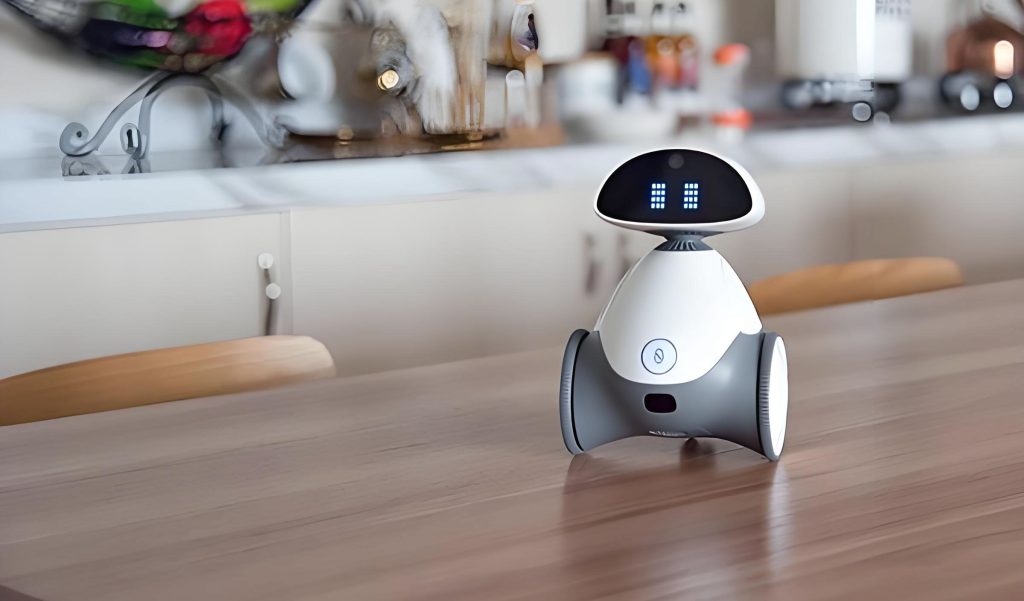
The core objective of this companion robot is to mitigate feelings of loneliness and anxiety by providing consistent interaction, entertainment, and empathetic communication. The designed system moves beyond simple command-response protocols, aspiring to foster a sense of connection and well-being. Its effectiveness stems from a synergistic integration of robust hardware, intelligent software models, and carefully crafted interactive modalities, all working in concert to serve the unique emotional landscape of elderly users.
Current Landscape of Assistive and Companion Robots
Research into robots for elderly support has gained significant momentum globally, focusing on various aspects from practical aid to social companionship. Early systems, such as the Care-o-bot developed by the Fraunhofer Institute, emphasized functional assistance—handling objects, controlling appliances, and triggering emergency alerts—thereby enhancing safety and independence. Scholars like Vercelli et al. have systematically analyzed the feasibility of integrating robotic technologies into healthcare frameworks, outlining roles for these machines in assisting both seniors and their caregivers through daily routines and health monitoring.
The evolution has increasingly incorporated affective computing. For instance, Yang et al. proposed a hybrid system applying homeostatic drive theory and environmental stimuli, enabling a companion robot to learn and adapt its services based on human feedback, achieving high user satisfaction. Research by Oh et al. and Lee et al. has delved into designing interaction modalities and functional archetypes specifically tailored to elderly preferences, confirming positive reception through usability studies.
In domestic research, efforts have diversified. Studies have explored voice-controlled navigation systems for companion robots, design methodologies combining FAST and QFD for optimal feature development, and investigations into the affective impact of robot morphology (e.g., “cuteness”). Other works have examined biomimetic designs, such as pet-like companion robots, and specialized robots for medication delivery. While these contributions are valuable, a cohesive system that seamlessly integrates deep emotional companionship, personalized interaction, and engaging physical presence within a single companion robot platform remains an area for further exploration and refinement.
System Architecture and Design Philosophy
The proposed emotional solace system is architected around a central, embodied agent—a bipedal humanoid companion robot—that serves as the primary human-robot interface. The design philosophy prioritizes multi-modal interaction, personalization, and reliability. The system framework, illustrated conceptually, can be decomposed into three interconnected layers: the Robotic Agent Layer, the Local Computation & Intelligence Layer, and the Interaction Modality Layer.
The Robotic Agent Layer is instantiated by the Yanshee robot, a versatile humanoid platform. It acts as the physical conduit for all interactions, equipped with an array of sensors and actuators. Its key components and functions are summarized below:
| Module | Primary Function | Key Components/Technology |
|---|---|---|
| Auditory Perception | Captures user speech and environmental audio. | Microphone array, Audio preprocessing circuit. |
| Vocal Output | Delivers synthesized speech, music, and verbal feedback. | Integrated speaker system. |
| Motional Actuation | Executes dances, gestures, and assistive movements. | Multi-joint servo system (17+ DOF), Motion control API. |
| Central Processing | On-board data processing, sensor fusion, and network communication. | ARM-based processor, Linux OS. |
| Visual Output (Optional) | Displays simple expressions or information. | LED matrix or screen. |
The Local Computation & Intelligence Layer resides on a local computer/server and handles the heavy-weight AI processing. This separation ensures the companion robot remains responsive while leveraging powerful models. This layer is responsible for:
- Natural Language Understanding and Generation: Hosting a large language model (LLM) for conducting deep, context-aware conversations.
- Personalized Voice Synthesis: Training and running a voice cloning model to generate speech in a familiar voice (e.g., a family member’s).
- System Orchestration: Managing the data flow between the robot and the AI models via stable network protocols (TCP/IP, Sockets).
The Interaction Modality Layer defines the core user experiences, which are realized through the synergy of the first two layers. The primary modalities include:
| Modality | Description | Emotional & Functional Value |
|---|---|---|
| Deep Conversational Dialogue | LLM-powered, empathetic, and engaging chats on various topics. | Reduces loneliness, provides cognitive stimulation, offers emotional validation. |
| Personalized Voice Interaction | Responding in a pre-trained, familiar voice model. | Enhances comfort, triggers positive memories, strengthens perceived social presence. |
| Entertainment Performance | Executing programmed dance, acrobatic, or opera performance routines. | Provides joy, distraction, and visual-auditory entertainment, fostering positive affect. |
| Ambient Music Playback | Playing soothing music, classic songs, or opera pieces. | Creates a calming atmosphere, manages mood, and enriches the living environment. |
The interaction flow can be abstractly represented. The user’s speech signal $S_u$ is captured by the robot, converted to text $T_u$, and transmitted to the local server. The LLM processes this input in context $C$ to generate a textual response $T_r$.
$$T_r = \text{LLM}(T_u, C)$$
Subsequently, $T_r$ is sent to the voice synthesis module $V$, which uses the selected voice model $M_v$ to produce the audio response $A_r$.
$$A_r = V(T_r, M_v)$$
$A_r$ is sent back to the companion robot for playback, completing the loop. For motion playback, a trigger command initiates a pre-compiled motion sequence $MS$ from the robot’s local storage.
$$A_{\text{robot}} \rightarrow \text{Execute}(MS)$$
where $A_{\text{robot}}$ represents the robot’s action actuator system.
Technical Implementation and Module Specification
The realization of this companion robot system relies on specific tools, models, and programming frameworks. The software environment is detailed as follows:
| Device/Platform | Software/Modules & Purpose |
|---|---|
| Yanshee Companion Robot | Linux OS, Python for sensor control (audio I/O), YanAPI for motion/music control, Network services (SSH, VNC). |
| Local Computer/Server | WinSCP/VNC for file/remote management, GPT-SoVITS for voice model training, LLM (e.g., LLaMA) deployment environment. |
Robot-Computer Integration and Communication
A stable bidirectional link is foundational. The Yanshee companion robot hosts a lightweight Linux system accessible via IP network. Connection is established in a two-step process: First, a mobile app discovers the robot’s IP address on the local network. Second, this IP is used in VNC viewer for remote desktop access and in WinSCP for secure file transfer. This allows developers to deploy code, audio files (to /home/pi/documents/music), and motion files (to /home/pi/documents/motion) directly onto the companion robot. The communication protocol is standardized TCP/IP with Socket programming, ensuring low-latency data exchange for real-time interaction.
Intelligent Speech Interaction Pipeline
This pipeline enables the companion robot’s core conversational ability. The process is sequential and automated:
1. Speech-to-Text (on robot): The onboard Python script captures audio via pyaudio, performs endpoint detection, and sends the audio stream to a cloud-based or lightweight local ASR service, yielding text $T_u$.
2. Query Processing (on server): $T_u$ is packaged and sent via sockets to the local server. The server forwards $T_u$ and the conversation history $H$ to the deployed LLM (e.g., a quantized LLaMA model).
$$R_{\text{LLM}} = f_{\text{LLM}}(T_u, H; \theta)$$
where $\theta$ represents the model parameters.
3. Text-to-Speech with Personalization: The generated response text $R_{\text{LLM}}$ is passed to the voice synthesis engine. The engine loads the designated voice model $M_{\text{target}}$ (e.g., a family member’s model). The synthesis process can be simplified as:
$$A_{\text{output}} = G_{\text{Sovits}}(E_{\text{GPT}}(R_{\text{LLM}}), M_{\text{target}})$$
where $E_{\text{GPT}}$ represents text encoding and $G_{\text{Sovits}}$ is the generative voice model.
4. Audio Playback (on robot): The synthesized audio file $A_{\text{output}}$ is sent back to the companion robot, which uses its pygame or similar library to play it through its speakers.
Personalized Voice Model Training
Creating a familiar voice for the companion robot is crucial for emotional resonance. We utilize the GPT-SoVITS framework for few-shot voice cloning. The procedure is methodical:
- Data Preparation: A short (3-10 minute) clean audio recording of the target speaker is processed using Ultimate Vocal Remover (UVR5) to remove background noise and music, producing a pure speech dataset $D_{\text{clean}}$.
- Audio Segmentation and Alignment: $D_{\text{clean}}$ is fed into the GPT-SoVITS toolchain. It is automatically segmented into utterances, and an Automatic Speech Recognition (ASR) model (e.g., Damo ASR) transcribes them, creating aligned text-speech pairs $(T_i, S_i)$.
- Model Training: These pairs are used to train two core models:
- SoVITS (Soft VITS): A variational autoencoder that learns the speaker’s timbre and acoustic features. Its loss function includes reconstruction loss and KL divergence.
$$\mathcal{L}_{\text{SoVITS}} = \mathbb{E}_{q(z|x)}[\log p(x|z)] – \beta D_{KL}(q(z|x) || p(z))$$
where $x$ is the acoustic feature, $z$ is the latent variable. - GPT (Generative Pre-trained Transformer): A model that learns the prosody and linguistic mapping for the specific speaker. Training uses standard language modeling loss.
The combined model files (
.ckpt,.pth) constitute $M_{\text{target}}$. - SoVITS (Soft VITS): A variational autoencoder that learns the speaker’s timbre and acoustic features. Its loss function includes reconstruction loss and KL divergence.
- Deployment: $M_{\text{target}}$ is placed on the server. During interaction, the synthesis module loads this model upon request to generate personalized speech, making the companion robot’s voice uniquely comforting.
Robot Motion Design and Choreography
The expressive capability of this companion robot is unlocked through precise servo control. The Yanshee platform provides a high-level YanAPI and a Blockly-based visual programming interface that generates Python code. A complex motion $M$ is a time-series sequence of target angles for each servo $s$ at each time step $t$.
$$M = \{ \Theta_{s,t} \} \quad \text{for } s \in [1, N], t \in [1, T]$$
where $\Theta_{s,t}$ is the target angle for servo $s$ at time $t$, $N$ is the total number of servos, and $T$ is the sequence duration.
Design process:
1. Pose Definition: Key poses are defined by setting angles for all servos, $\vec{\Theta}_{k} = (\Theta_{1}, \Theta_{2}, …, \Theta_{N})$.
2. Trajectory Interpolation: Smooth trajectories between poses are generated using interpolation functions (e.g., cubic spline). The angle for servo $s$ over time is given by:
$$\Theta_s(t) = f_{\text{interp}}(t; \vec{\Theta}_{s, \text{start}}, \vec{\Theta}_{s, \text{end}}, \tau)$$
where $\tau$ is the movement duration.
3. Choreography: Sequences of poses are chained for dances or acrobatics. The YanAPI function start_play_motion('sequence_name') triggers playback. Music-synchronized performances are achieved by aligning the motion timeline $T_M$ with the audio timeline $T_A$, ensuring beats match movements.
Validation and Efficacy
The integrated companion robot system was deployed in real-world settings such as community elderly activity centers and care homes for preliminary validation. The robot engaged with seniors through conversations in a familiar voice, performed traditional opera and dance routines, and played requested music. Qualitative feedback and structured interviews were collected to assess impact.
Key findings from this observational study indicated a positive reception:
- Emotional State Improvement: Over 75% of participating elderly users reported a noticeable uplift in mood and a reduction in feelings of loneliness after interactions with the companion robot.
- System Satisfaction: Approximately 80% of users expressed satisfaction with the multifunctional capabilities of the system, particularly highlighting the comfort brought by the personalized voice and the enjoyment derived from the visual performances.
- Engagement: The companion robot successfully initiated and sustained engagement, with many users proactively starting conversations or requesting specific shows repeatedly.
These results, while preliminary, underscore the potential of a well-designed, multi-modal companion robot to deliver meaningful emotional solace.
Conclusion and Future Trajectory
This article has presented a comprehensive framework for an elderly-focused emotional solace system built upon a humanoid companion robot. By integrating a robust hardware platform (Yanshee), large language models for dialogue, few-shot voice cloning for personalization, and meticulously designed motion sequences, the system achieves a level of interactive depth and affective resonance that distinguishes it from conventional voice-assistant devices. The companion robot serves not merely as an appliance but as an embodied social actor capable of providing entertainment, companionship, and personalized emotional support.
The future development of such companion robot systems lies in the deeper integration of multimodal AI. The next generation of companion robots will likely perceive user state from a fusion of speech prosody, facial expression (via integrated cameras), posture, and even vital signs, allowing for more nuanced and context-aware emotional support. The response generation will evolve from single-modal (text-to-speech) to multi-modal, where the companion robot’s language, tone, facial expression (if available), and gesture are jointly generated to form a coherent empathetic response. This can be conceptualized as finding the optimal multi-modal action $\mathcal{A}^*$:
$$\mathcal{A}^* = \underset{\mathcal{A} \in \{\text{Speech, Motion, Expression}\}}{\arg\max} \, P(\mathcal{A} | \mathcal{S}_{\text{user}}, C, \mathcal{M}_{\text{robot}})$$
where $\mathcal{S}_{\text{user}}$ is the multimodal user state, $C$ is context, and $\mathcal{M}_{\text{robot}}$ is the robot’s capabilities.
Challenges remain, including ensuring robust operation in diverse acoustic environments, handling strong regional accents, managing the computational cost of advanced models, and conducting long-term studies to measure sustained psychological impact. However, the trajectory is clear: as AI and robotics continue to converge, the role of the intelligent companion robot in promoting emotional well-being and healthy aging will become increasingly significant and sophisticated, offering a scalable complement to human care and enriching the lives of the elderly population.