
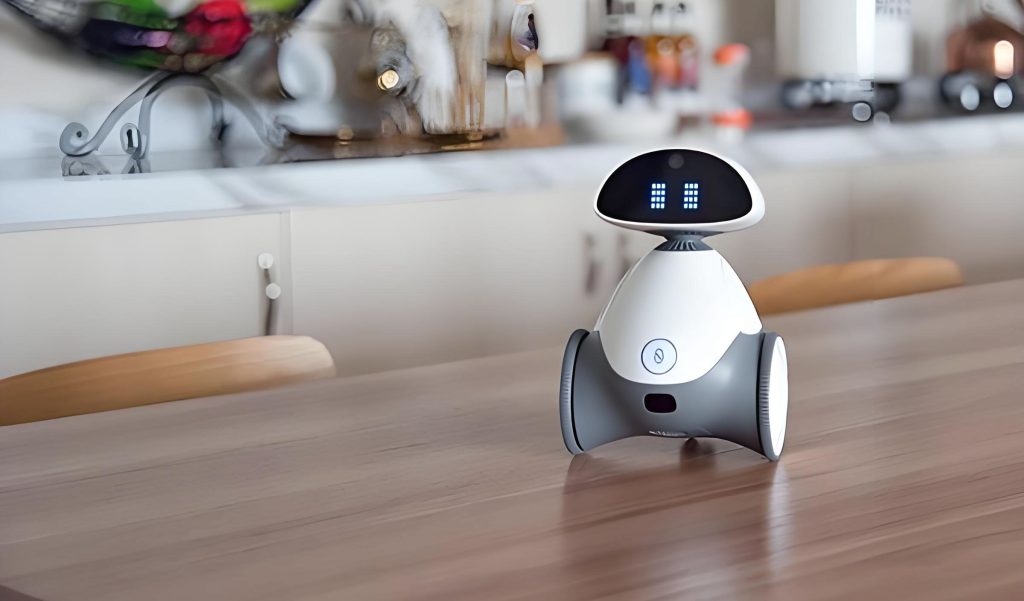
In today’s fast-paced society, young parents from the 80s and 90s generations often face immense pressure from work and life, leaving them with limited time and energy to accompany their children. This has led to the rise of children’s intelligent companion robots in the market, aiming to address the need for companionship and education. However, based on my observations and research, these companion robots frequently end up being neglected by children after initial novelty wears off. They become mere symbolic comforts for parents rather than effective tools for engagement. As a researcher focused on interaction design, I believe this issue stems not from the product’s inherent value but from flaws in its interaction design. In this article, I will explore how game theory can be leveraged to redesign the interaction models of companion robots, thereby enhancing their long-term appeal and functionality for children.
The core problem lies in the interaction design of current companion robots. Most functions, such as educational activities and entertainment features, are non-mandatory and rely on voluntary engagement from children. Without compelling reasons to use them consistently, children quickly lose interest. From my perspective, this is where game theory offers valuable insights. Games are inherently engaging due to elements like achievement, feedback, and social interaction, which can be applied to product interaction design to increase user involvement. By integrating these principles, we can transform companion robots from passive devices into dynamic partners that foster sustained interaction.
Interaction Design and Games: A Convergent Perspective
Interaction design, as a discipline, originated in the realm of computing and graphical interfaces but has since expanded to encompass any system where communication occurs between entities. In my view, interaction design fundamentally involves crafting dialogues between humans and machines, focusing on user experience and usability. For products like companion robots, this means designing interactions that are not only intuitive but also enjoyable. On the other hand, games have evolved as instinctual activities for relieving boredom and stress. They combine participation (“play”) with narrative (“drama”) to deliver pleasure. Key components of games include goals, obstacles, rules, and participants, all orchestrated to create a flow of engagement.
From my analysis, interaction design and game design share a common ground: both study how users interact with systems. However, their emphases differ. Traditional product interaction design prioritizes usability and efficiency, ensuring tasks are completed smoothly. In contrast, game interaction design emphasizes immersion and engagement, keeping players voluntarily involved. This distinction arises from functional attributes—practical products are often mandatory, while games are optional. Yet, as products like companion robots blend practical and entertainment functions, the lines blur. Functions such as video calling may be practical, but educational games within the robot are more akin to entertainment. Therefore, for non-mandatory features, incorporating game-like elements can boost engagement. In the context of companion robots, this means applying theories from game design to make interactions more compelling and sticky for children.
| Design Type | Primary Focus | Key Metrics | Example in Companion Robots |
|---|---|---|---|
| Product Interaction Design | Usability and user experience | Efficiency, error reduction | Video call functionality |
| Game Interaction Design | Immersion and engagement | Retention time, enjoyment | Educational mini-games |
To formalize this, let me define engagement in interaction design. Engagement (E) can be modeled as a function of motivation (M), feedback (F), and challenge (C): $$E = f(M, F, C)$$ where higher values indicate better immersion. In games, motivation often stems from achievement needs, feedback provides reinforcement, and challenge aligns with skill levels to induce flow states. For companion robots, we can adapt this model: $$E_{\text{robot}} = \alpha \cdot M_{\text{achievement}} + \beta \cdot F_{\text{immediate}} + \gamma \cdot C_{\text{balanced}}$$ where $\alpha$, $\beta$, and $\gamma$ are weighting factors based on child psychology. This formula underscores the importance of integrating game elements to enhance engagement.
Analyzing the Interaction Design of Children’s Intelligent Companion Robots
Children’s intelligent companion robots are typically targeted at infants to pre-teens, offering functions like education, entertainment, and parental monitoring. From my evaluation, these companion robots leverage AI technologies such as voice recognition and video interaction, but their interaction design often falls short in sustaining interest. The primary issue is that most features—such as language translation, story-telling, or dance movements—are non-essential from a child’s perspective. Without external mandates, children lack incentives to use them repeatedly. Even practical functions like video calls may be outperformed by smartphones in terms of usability, leading to neglect.
I categorize the functions of companion robots into two types: mandatory and non-mandatory. Mandatory functions, like scheduled parental calls, rely on usability design. Non-mandatory functions, which constitute the majority, require engagement design. For instance, a companion robot’s English lesson module is only effective if children choose to interact with it regularly. Current designs fail to provide ongoing reasons for such choices, resulting in short interaction lifespans. To address this, we must shift from a utility-centric approach to an engagement-centric one, drawing from game theory to redesign the interaction flow.
| Function Type | Examples | Interaction Requirement | Current Issue |
|---|---|---|---|
| Mandatory (Practical) | Video calls, parental controls | High usability, low engagement need | Often replaced by better devices |
| Non-mandatory (Entertainment) | Educational games, storytelling | High engagement need, low usability focus | Rapid disinterest from children |
The interaction lifecycle of a companion robot can be described in three phases: initial experience, ongoing use, and long-term evaluation. Most companion robots succeed in the first phase through novelty but falter in the second due to lack of sustained engagement. Mathematically, the interaction lifespan (L) can be expressed as: $$L = \int_{0}^{T} E(t) \, dt$$ where E(t) is engagement over time T. If E(t) decays quickly, L remains short. By applying game principles, we aim to maintain E(t) at a higher level, extending L to achieve the intended long-term companionship.
Improving Companion Robot Interaction Design with Game Theory
Based on my research, game theory offers several mechanisms to enhance engagement, which I have adapted for companion robots. These include systems for achievement needs, immediate feedback, flow states, and social interaction. By embedding these into the interaction design, we can create a more compelling experience that encourages daily use and fosters a bond between the child and the companion robot.
Achievement Needs and Immediate Feedback
In games, achievement is a powerful motivator. Players feel a sense of accomplishment when overcoming challenges, and immediate feedback reinforces this feeling. For companion robots, we can implement similar systems. I propose an intimacy system and a level system that provide continuous feedback and rewards. The intimacy system simulates a growing friendship: each day, the child earns intimacy points by interacting with the companion robot for the first time. Points decay daily to encourage consistent engagement. This mirrors social bonds in games, where maintaining relationships requires regular interaction.
Let me define the intimacy system mathematically. Let I(t) represent intimacy at time t, with daily gain G and decay D. The state transition can be modeled as: $$I(t+1) = \max(0, I(t) + G \cdot \delta_{\text{first use}} – D)$$ where $\delta_{\text{first use}}$ is 1 if the child uses the companion robot for the first time that day, else 0. G is set to 1 point, and D is 1 point per day, with a cap of 100. This ensures balance and habit formation. The companion robot’s responses can vary based on I(t), offering personalized animations or messages to enhance emotional connection.
| Action | Intimacy Change | Condition | Purpose |
|---|---|---|---|
| First use of any function | +1 point | Per day, maximum 100 | Encourage daily interaction |
| Daily midnight reset | -1 point | If intimacy > 0 | Promote consistency |
| High intimacy (≥60) | Unlocks bonuses | Linked to level system | Enhance motivation |
Flow State and Level System
The flow theory, introduced by Csikszentmihalyi, describes a state where individuals are fully immersed in an activity due to a balance between skill and challenge. For companion robots, we can design a level system that adapts to the child’s growing abilities. Each interaction earns experience points (XP), and leveling up unlocks new content or features. The level system is tied to the intimacy system: when intimacy is high, XP gains are boosted, creating synergy.
Formally, let Lvl denote the robot’s level, and XP(t) be experience points. The level-up condition is: $$\text{Lvl up if } XP(t) \geq \text{Threshold}(Lvl)$$ where Threshold(Lvl) increases with level, such as: $$\text{Threshold}(Lvl) = 50 \cdot Lvl^2$$ This increasing difficulty maintains challenge. XP accumulation is given by: $$XP(t+1) = XP(t) + \text{Base Gain} + \text{Bonus}(I(t))$$ Here, Base Gain is 1 XP per interaction, and Bonus(I(t)) is 5 XP if I(t) ≥ 60. This linkage encourages children to maintain intimacy for faster progression.
| Component | Mathematical Representation | Impact on Engagement |
|---|---|---|
| Experience Gain | ΔXP = 1 + 5·I(t)/60 if I(t) ≥ 60 | Provides immediate feedback |
| Level Threshold | T(Lvl) = k · Lvl^α (e.g., α=2) | Ensures escalating challenge |
| Flow State | Balance when ΔXP ≈ T(Lvl) – XP(t) | Sustains immersion over time |
The flow state can be visualized using a curve where skill and challenge intersect. For the companion robot, we aim to keep the child in this zone by adjusting task difficulty based on their interaction history. The flow condition is: $$\text{Flow if } \left| \text{Skill} – \text{Challenge} \right| < \epsilon$$ where Skill is proxied by Lvl, and Challenge is set by the level thresholds. This ensures the companion robot remains engaging without being too easy or frustrating.
Social Needs and Virtual Game Systems
Social interaction is a key driver in games, as players share achievements and compete with friends. For companion robots, we can incorporate a virtual game system where children customize their robot’s attributes (e.g., speed, strength) based on level gains. These attributes enable gameplay, such as completing puzzles or battling other robots, fostering social comparison and collaboration.
Let A be a vector of attributes: $$A = [a_1, a_2, \dots, a_n]$$ where each attribute a_i corresponds to a skill like agility or intelligence. Each level-up allows the child to allocate points to A: $$A_{\text{new}} = A_{\text{old}} + \Delta A \quad \text{with} \quad \sum \Delta A = \Delta Lvl$$ This customization enhances ownership and motivation. The virtual games can include cooperative missions or competitive leaderboards, leveraging social needs. For instance, children can compare their companion robot’s stats with friends, akin to leaderboards in online games.
To quantify social engagement, consider a network model where each child’s companion robot interacts with others. Let S_i be the social score for child i, influenced by shared achievements: $$S_i(t+1) = S_i(t) + \lambda \cdot \sum_{j \neq i} \text{Interaction}(i,j)$$ where λ is a scaling factor, and Interaction(i,j) measures collaborative or competitive exchanges. This model encourages repeated use to boost social standing.
Integrated Interaction Model for Companion Robots
Combining these elements, I propose an enhanced interaction model for companion robots. The model integrates intimacy, level, and virtual game systems into a cohesive framework. The interaction flow begins with daily check-ins to build intimacy, progresses through experience accumulation for leveling, and culminates in gameplay that leverages social features. This creates a feedback loop where each interaction reinforces the next.
The overall engagement E can now be refined as: $$E = w_1 \cdot I(t) + w_2 \cdot \text{Lvl} + w_3 \cdot S(t)$$ where w_1, w_2, w_3 are weights reflecting the importance of each system. By tuning these weights through user testing, we can optimize for long-term engagement. The companion robot’s interface should display these metrics prominently, as shown in the conceptual diagram below, to provide constant feedback and goals.
| System | Key Variables | Game Theory Basis | Expected Outcome |
|---|---|---|---|
| Intimacy System | I(t), daily gain/decay | Social bonding, consistency | Daily usage habits |
| Level System | Lvl, XP, thresholds | Achievement, flow state | Sustained challenge |
| Virtual Game System | Attributes A, social score S | Customization, competition | Social engagement |
In practice, this model can be implemented via software updates to existing companion robots. For example, a companion robot might start a day by greeting the child and showing intimacy status. As the child engages in educational activities, XP accumulates, and level-ups unlock new stories or games. The virtual game system allows the child to apply attribute points to solve puzzles, with progress shareable with friends. This transforms the companion robot from a static tool into a dynamic companion that grows with the child.
Conclusion
Through my exploration, I have demonstrated that game theory holds significant potential for improving the interaction design of children’s intelligent companion robots. By incorporating elements like achievement systems, immediate feedback, flow states, and social features, we can address the core issue of neglect and enhance long-term engagement. The proposed models—intimacy, level, and virtual game systems—offer a structured approach to redesigning interactions, making companion robots more akin to engaging playmates than disposable gadgets.
This methodology is not limited to companion robots; it can be extended to other entertainment-focused products where voluntary use is critical. Future research could delve deeper into personalized adaptation, using machine learning to tailor challenges based on individual child behavior. Additionally, longitudinal studies are needed to validate the effectiveness of these systems in real-world settings. As technology evolves, the fusion of game theory and interaction design will continue to enrich how we create meaningful connections between humans and machines, ensuring that companion robots fulfill their promise as true companions for the next generation.