
As the technological landscape accelerates, the relationship between humans and intelligent systems is undergoing a profound transformation. We are moving beyond simple command-and-response interactions towards a paradigm where humans and artificial agents form integrated teams, sharing goals, responsibilities, and a common operational picture. This shift from human-machine interaction to human-agent collaboration presents both immense opportunities and significant cognitive challenges. The central question I aim to explore is: how can we design these partnerships to be as natural, efficient, and robust as the best human teams? I argue that the answer lies at the intersection of two critical concepts: Embodied Intelligence and Shared Representation. The former provides the necessary framework for agents to understand and act within the physical world, while the latter constitutes the cognitive glue that binds the human and the agent into a cohesive, synergistic unit. By examining the mechanisms through which shared representations are formed, maintained, and leveraged, we can develop principles for engineering collaborative intelligence that is fundamentally aligned with human cognitive and social processes.
The Embodied Intelligence Paradigm: A Foundation for True Partnership
Traditional artificial intelligence, often characterized by symbolic reasoning or isolated pattern recognition in disembodied systems, faces inherent limitations when deployed in dynamic, real-world environments. Its intelligence is frequently abstract, lacking a grounded connection to the physical laws, sensory richness, and action consequences that define our reality. The paradigm of embodied intelligence offers a revolutionary alternative. It posits that true intelligence emerges from the continuous, sensorimotor interaction between an agent and its environment. An embodied AI robot is not merely a processor in a shell; it is a system whose cognitive processes are shaped by and deeply dependent on having a body that perceives, acts, and experiences physical feedback.
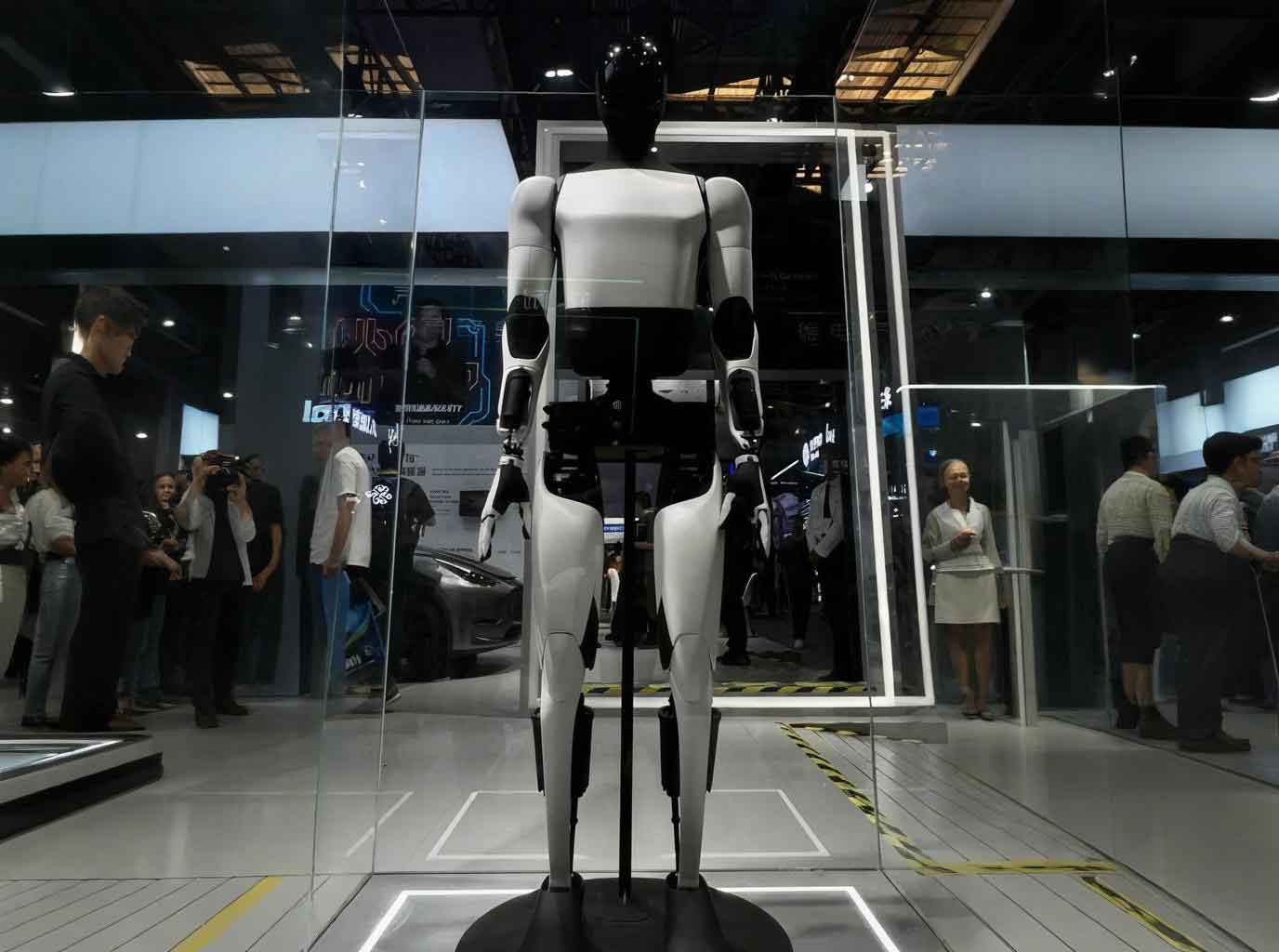
This paradigm fundamentally redefines the potential for collaboration. Consider the following comparative analysis:
| Aspect | Traditional AI in Collaboration | Embodied AI Robot in Collaboration |
|---|---|---|
| Task Allocation | Static, pre-programmed roles based on fixed capabilities. Struggles with unexpected changes. | Dynamic role adaptation. The robot can assess the state of the world (via its sensors) and its own physical capabilities to negotiate or assume tasks in real-time. |
| Intent Alignment | Unidirectional. The human must translate intent into explicit commands or parameter adjustments the system understands. | Bidirectional. The robot can infer intent from human posture, gaze, or tool use (implicit), and communicate its own intent through motion and gesture, enabling fluent coordination. |
| Environmental Understanding | Relies on pre-loaded models or specific sensor data. Understanding is often brittle and lacks commonsense physics. | Develops a “grounded” understanding through interaction. Pushing an object teaches it about weight and friction; this embodied knowledge informs future collaborative actions. |
| Learning & Adaptation | Requires extensive retraining on new datasets. Adaptation is slow and not situated. | Can learn from demonstration and physical trial-and-error in the specific context of the collaboration, leading to rapid, task-specific skill acquisition. |
The mathematical formulation of an embodied agent can be conceptualized as a Partially Observable Markov Decision Process (POMDP) coupled with a learning body schema. At time \(t\), the agent receives an observation \(o_t\) from its sensors, which is a partial, noisy reflection of the true world state \(s_t\). It maintains an internal belief state \(b_t\) and chooses an action \(a_t\) from its motor repertoire. The core of embodied intelligence is that the action \(a_t\) changes the agent’s own sensorimotor relationship to the world, generating a new observation \(o_{t+1}\). The learning objective is to find a policy \(\pi\) that maximizes the expected cumulative reward \(R\), where the reward itself is often intrinsically linked to successful interaction and goal achievement within the environment:
$$
\pi^* = \arg\max_{\pi} \mathbb{E}_{\pi}\left[\sum_{t=0}^{T} \gamma^t R(s_t, a_t) \right]
$$
However, for an embodied AI robot collaborating with a human, the reward function \(R\) is no longer solely about a task metric; it must incorporate elements of legibility, predictability, and alignment with the human partner’s expectations—all of which are facets of building a shared representation.
The Multidimensional Framework of Shared Representation
Cognitive science has long established that successful human collaboration relies on the formation of shared mental models—mutual understandings of the task, each other’s roles, capabilities, and the evolving situation. I posit that effective human-agent collaboration is predicated on constructing a functional analogue: a Shared Representation. This is not a single, monolithic model but a multidimensional cognitive structure co-constructed and maintained by both partners. For the human, it involves representing the goals, actions, and potential states of the embodied AI robot. For the robot, it involves forming predictive models of the human’s intentions, actions, and psychological state. We can deconstruct this shared representation into three primary, interacting dimensions.
1. Shared Embodiment (Body Schema & Affordances)
This dimension concerns the representation of physical capabilities and body schema. In human teams, we intuitively understand our partner’s reach, strength, and dexterity. For collaboration with an embodied AI robot, this translates to a mutual understanding of kinematic and dynamic constraints. The human needs a mental model of what the robot can physically do (e.g., its payload, grip strength, degrees of freedom). Conversely, advanced robots are now capable of learning a “body schema”—an internal model of their own kinematics and dynamics—and can extend this to model the human’s body schema or even the combined system of human+robot+tool. This allows for fluent coordination in shared physical tasks like co-carrying an object. The affordances (action possibilities) of the environment are perceived relative to this shared embodiment.
Key Neural Correlates & Implications for Embodied AI Robot Design:
| Brain Region | Function in Humans | Implication for Embodied AI Robot |
|---|---|---|
| Premotor Cortex (PMv) | Mirror neuron system; maps observed actions onto one’s own motor repertoire. | Algorithms for action observation and mimicry, enabling learning from demonstration and action understanding. |
| Parietal Cortex (particularly IPL) | Integrates multisensory information to update body schema; crucial for tool use. | Dynamic body schema updating through sensor fusion; essential for safe physical Human-Robot Interaction (pHRI) and adaptive tool use. |
2. Shared Situation Awareness (Context & Goals)
This dimension involves maintaining a common operational picture. Both partners must be “on the same page” regarding the state of the task environment, the current sub-goals, and potential obstacles. A breakdown here leads to confusion and conflict. An embodied AI robot contributes to this not just by sharing processed data (e.g., “object detected at coordinates X,Y”), but by actively shaping the shared awareness through its actions. For instance, a robot might point its sensor gaze at a hazard, physically moving to get a better view, thereby directing the human’s attention and co-constructing the situational understanding. This is fundamentally an active, embodied process, not just a data transfer.
The robot’s internal model for situation awareness can be represented as a dynamic belief update, often formalized using Bayesian filtering. If the robot’s belief about the world state is \(b_t = P(s_t | o_{0:t}, a_{0:t-1})\), a key collaborative function is to infer the human’s belief \(b_t^H\). The robot can then act to reduce the divergence \(D_{KL}(b_t || b_t^H)\), for example by moving to reveal an occluded object or signaling its intent.
3. Shared Sociality (Intent, Trust, & Role)
This is the most complex dimension, encompassing the social and psychological layers of collaboration. It includes:
- Intent Alignment: Predicting what the partner will do next and why. An embodied AI robot can signal intent through legible, predictable motion trajectories (e.g., arcing motions rather than sudden moves).
- Trust Calibration: The human’s appropriate level of reliance on the robot. This is dynamic and based on the robot’s perceived competence, transparency, and reliability in the specific context.
- Role Fluidity: A clear but adaptable understanding of who is leading, following, or supporting at any given moment. This is not static but negotiated based on task demands and each agent’s momentary capabilities.
Key Neural Correlates & Implications for Embodied AI Robot Design:
| Brain Network | Function in Humans | Implication for Embodied AI Robot |
|---|---|---|
| Theory of Mind (ToM) Network (mPFC, TPJ, pSTS) | Inferring beliefs, desires, and intentions of others. | Implementing computational models of the human partner (e.g., Bayesian ToM, inverse reinforcement learning) to predict human goals and actions. |
| Mentalizing & Mirror Systems | Understanding actions in terms of underlying goals. | Action recognition and goal inference beyond mere motion tracking, enabling proactive assistance. |
The interplay between these dimensions is continuous. A shared bodily understanding (Dimension 1) enables the construction of accurate situation awareness (Dimension 2), which in turn facilitates correct inference of social intent and appropriate role-taking (Dimension 3). For example, if the robot understands its own and the human’s body schema, it can better predict that a human reaching towards a heavy object likely intends to lift it, allowing the robot to proactively position itself to assist—an act that builds trust and demonstrates fluid role adaptation.
Neurocognitive Mechanisms Informing Embodied Collaboration
The human brain possesses specialized circuitry for social and collaborative cognition. While an embodied AI robot does not have a biological brain, designing its cognitive architecture to be functionally analogous to these mechanisms can drastically improve collaboration fluency. Three core systems are particularly relevant.
1. The Predictive Coding Framework for Joint Action: The brain constantly predicts sensory consequences of its own and others’ actions. When I collaborate with a partner, my motor system generates efferent copies of my own commands and, remarkably, also simulates the predicted sensory outcomes of my partner’s actions. This is a powerful mechanism for coordination. We can model this for an embodied agent. Let the robot’s internal forward model predict the next state given its action and its model of the human’s action:
$$
\hat{s}_{t+1} = f(s_t, a_t^{robot}, \hat{a}_t^{human})
$$
Here, \(\hat{a}_t^{human}\) is the robot’s estimate of the human’s action, derived from its ToM model. The discrepancy between the predicted sensory input \(\hat{o}_{t+1}\) and the actual input \(o_{t+1}\) generates a prediction error. Minimizing this error drives learning about the human’s behavior and the joint dynamics of the task, continuously refining the shared representation.
2. The Role of Inhibitory Control in Turn-Taking and Action Selection: Smooth collaboration requires suppressing one’s own prepotent action when it is the partner’s turn or when a joint plan requires a specific sequence. The prefrontal cortex (PFC), particularly the dorsolateral PFC (dlPFC), is central to this inhibitory control. In a collaborative embodied AI robot, this translates to arbitration mechanisms. The robot must balance executing its own planned action with the need to pause, yield, or modify its plan based on the human’s actions. This can be framed as a meta-control problem. The robot’s policy \(\pi\) is now contextualized by a collaboration state \(c_t\) (e.g., “my turn,” “human’s turn,” “simultaneous assist”):
$$
a_t^{robot} = \pi(s_t, b_t^H, c_t)
$$
The collaboration state \(c_t\) is determined by a higher-level arbitration module, analogous to the PFC’s executive function, which inhibits the default task policy when necessary to maintain coordination harmony.
Engineering Enhanced Collaboration: Pathways Based on Shared Representation
Understanding the theory of shared representation allows us to propose concrete engineering and design pathways to enhance the performance of human-embodied AI robot teams.
A. Enhancing Shared Embodiment via Design and Training
The goal is to make the robot’s physical capabilities and intentions transparent and predictable to the human.
| Method | Principle | Application Example |
|---|---|---|
| Legible Motion Planning | Generate robot trajectories that clearly communicate intent and goal. This reduces the human’s cognitive load in predicting the robot’s next move. | Instead of taking the shortest path, the robot’s arm arcs around the human’s workspace before grasping, signaling its target clearly. |
| Adaptive Impedance Control | Allow the robot to physically “comply” and be guided by the human, enabling kinesthetic teaching and fluid co-manipulation. | In a co-carrying task, the robot adjusts its stiffness based on the force it senses from the human, creating a sense of shared load and control. |
| Cross-Training | Have the human and robot practice by switching roles or observing each other’s task execution. This builds mutual mental models of capabilities. | The human operates the robot via teleoperation to complete a task, then observes the robot performing it autonomously, reinforcing an understanding of its automation logic. |
B. Enhancing Shared Situation Awareness via Transparency and Explainable AI (XAI)
The robot must be able to communicate its perception, its current goal, and the rationale for its decisions.
$$
\text{Robot Communication} = \text{“I see [Perception]. My goal is [Objective]. I am doing [Action] because [Reason].”}
$$
This can be achieved through multimodal channels: augmented reality (AR) overlays showing the robot’s field of view and planned path, simple auditory cues (“Re-planning due to obstacle”), or natural language updates via integrated large language models (LLMs). The key is that the explanation is situated—tied to the physical context that both agents share.
C. Enhancing Shared Sociality via Trust-Calibrated Autonomy and Role Adaptation
This involves designing the robot’s level of autonomy and its role-taking behavior to dynamically match the human’s trust and the task’s demands.
| Concept | Implementation | Benefit |
|---|---|---|
| Trust-Estimation Models | The robot models the human’s real-time trust \( \tau_t \) based on cues like intervention frequency, eye gaze, or physiological signals. The autonomy level \( \alpha_t \) is a function of trust and task criticality: \( \alpha_t = g(\tau_t, \text{criticality}) \). | Prevents both complacency (over-trust) and micromanagement (under-trust), optimizing overall team performance. |
| Dynamic Role Allocation | Formalize role allocation as an optimization problem minimizing joint cost (e.g., time, energy, risk) given the current capabilities and states of both agents. | Enables fluid switching from “robot-led” precision assembly to “human-led” exploratory troubleshooting, leveraging the strengths of each partner. |
| Prosocial Behavior Design | Program reward functions for the robot that include terms for human comfort, effort reduction, and goal achievement—not just task completion speed. | The robot behaves as a considerate teammate, for example, positioning materials within the human’s ergonomic reach, fostering long-term cooperation. |
Future Frontiers and Challenges
While the framework of embodied intelligence and shared representation provides a robust roadmap, several frontiers demand exploration to realize the full potential of human-embodied AI robot teams.
1. The Neuroergonomics of Collaboration: Future systems could move beyond simply modeling human cognition to interacting with it in a closed loop. Imagine lightweight, non-invasive neuroimaging (like fNIRS or EEG) used to estimate a human’s cognitive load, situational awareness, or trust state in real-time. The embodied AI robot could then adapt its behavior proactively—simplifying its communication when cognitive load is high, or providing more explanation when confusion is detected. This creates a truly symbiotic, adaptive loop.
2. Long-Term Team Learning and Shared History: The most effective human teams build a shared history. Future collaborative robots must develop persistent “partner models” that accumulate over time. The robot would learn individual human preferences, habitual mistakes, and expert skills, personalizing its collaboration style. This long-term memory, built from embodied interactions, would be a key differentiator from a generic tool.
3. Ethical and Safety Frameworks for Shared Agency: As agency and responsibility become distributed, new ethical questions arise. If a human-robot team makes an error, how is accountability determined? The transparency of the shared representation—who knew what, and when—will be critical for forensic analysis. We must design not only for performance but for auditability and the ethical alignment of the joint system’s actions.
4. Scaling to Multi-Agent, Heterogeneous Teams: The principles discussed must scale beyond dyads to teams involving multiple humans and multiple embodied AI robots. This introduces complexities of networked shared representations, requiring efficient communication protocols (both machine-to-machine and machine-to-human) to maintain a coherent “team mind.”
In conclusion, the journey toward seamless human-agent collaboration is fundamentally a journey toward building better shared minds. By grounding artificial agents in the physical world through embodied intelligence and by intentionally engineering the cognitive bridges of shared representation—across the dimensions of body, situation, and sociality—we can transform robots from sophisticated tools into genuine teammates. This requires a deeply interdisciplinary effort, marrying insights from cognitive neuroscience, psychology, robotics, and human-computer interaction. The goal is clear: to create collaborative systems where the whole is truly greater than the sum of its parts, unlocking new frontiers in fields from advanced manufacturing and surgery to exploration and daily assistance.