
In an era where humanoid robots are increasingly integrated into daily life and commercial services, a critical challenge persists: how to design these machines to be more welcoming and trustworthy. A recent study delves into this issue, focusing on enhancing the affinity of humanoid robot appearances through a novel combination of user-centered research and artificial intelligence. By leveraging Kansai Engineering methods and Stable Diffusion models, researchers have developed a framework to quantify and generate highly亲和力 designs, paving the way for more acceptable and emotionally engaging humanoid robots. This approach not only addresses user reluctance but also sets a new standard for AI-assisted design in robotics.
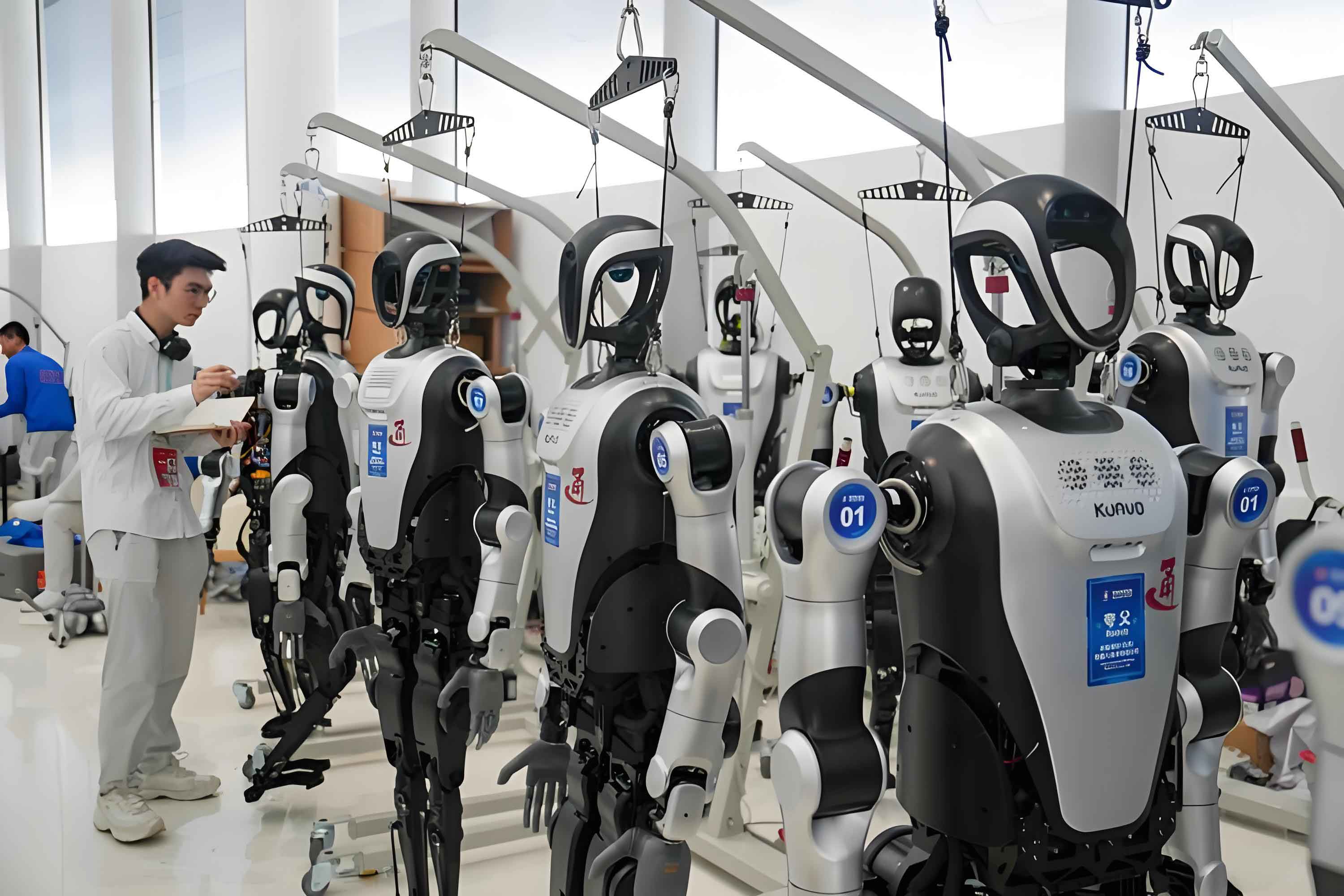
The growing presence of humanoid robots in various sectors, from healthcare to customer service, underscores the need for designs that foster positive human-robot interactions. Traditional engineering-focused approaches often result in humanoid robots that appear cold and rigid, leading to user discomfort and reduced adoption. Affinity in design, which emphasizes aligning products with human physiological and psychological factors, is key to overcoming this barrier. It evokes feelings of pleasure, comfort, and ease, making humanoid robots more relatable. This study bridges the gap between abstract emotional concepts and tangible design elements, using advanced AI tools to bring亲和力 to the forefront of humanoid robot development.
-
Understanding Affinity in Humanoid Robot Design Through Kansai Engineering
The research employed Kansai Engineering, a method that translates emotional perceptions into engineering design elements, to systematically analyze how affinity manifests in humanoid robot appearances. By breaking down design components such as shape, material, texture, and color, the study identified key factors that influence user perceptions. A comprehensive questionnaire was developed, involving 645 valid responses, to gather data on user preferences across these elements. Participants evaluated various aspects of humanoid robot designs, including head shape, eye style, body proportions, materials, and colors, based on three affinity dimensions: approachability, gentleness, and liveliness. This multi-faceted approach ensured a robust understanding of what makes a humanoid robot appear亲和力, moving beyond subjective impressions to data-driven insights.
The questionnaire materials were abstracted to isolate specific design features. For instance, head shapes included squares, circles, vertical and horizontal跑道圆, and semi-circles, while eye designs ranged from circular to rectangular forms. Body proportions were categorized into infant-like, child-like, adolescent, and adult forms, further divided into slender and robust types. Materials like plastic, cloth, metal, and transparent substances were tested with different surface treatments, and colors covered warm, cool, and neutral hues with variations in saturation and brightness. This meticulous design allowed for precise measurement of how each element contributes to the overall亲和力 of a humanoid robot, providing a foundation for quantitative analysis.
Statistical methods, including Kendall and Pearson correlation analyses, were applied to examine relationships between the three affinity dimensions. Results showed strong positive correlations among approachability, gentleness, and liveliness for most design elements, confirming their consistency in measuring affinity. However, some material surfaces and color saturations exhibited negative correlations, such as increased approachability with decreased liveliness, highlighting the nuanced interplay between different aspects of亲和力 in humanoid robot design. These findings underscore the importance of a holistic approach, where multiple design factors are optimized together to achieve the desired emotional impact.
-
Key Findings on Design Elements and Affinity Scores
The analysis revealed that certain design elements significantly enhance the亲和力 of humanoid robots. In terms of shape, rounded and smooth contours were preferred, with horizontal跑道圆 heads and vertical跑道圆 eyes scoring highest. Body proportions leaning toward younger, slender forms, such as adolescent figures, were rated more亲和力 than taller, robust adult forms. For materials, cloth with textured surfaces, like plush finishes, outperformed others, while metal was consistently rated low in亲和力 despite higher liveliness scores. Colors played a crucial role, with low-saturation warm tones like light yellow and soft orange being most effective, whereas high-saturation cool colors and black scored lower. These insights were compiled into an affinity score table, assigning numerical values to each design feature to guide future humanoid robot development.
Design Element Feature Code Affinity Score Description Head Shape A4 3 Horizontal跑道圆, rounded and smooth Eye Style B3 3 Vertical跑道圆, gentle appearance Body Proportion C3 4 Adolescent slender form, youthful Material D3 3 Cloth with plush texture, soft feel Color E1 4 Low-saturation warm tone, inviting Further details from the study show that height inversely affects亲和力, with shorter humanoid robot designs receiving higher scores. In color analysis, white and light grays were favored among neutrals, while saturation adjustments could make cool colors more亲和力 by reducing intensity. The affinity score table serves as a practical tool for designers, enabling them to quickly evaluate and select features that enhance the humanoid robot’s emotional appeal. This quantitative approach marks a shift from intuition-based design to evidence-driven strategies, ensuring that humanoid robots can better meet user expectations in diverse settings.
The implications of these findings extend beyond aesthetics; they influence user trust and acceptance. For example, a humanoid robot with a high-affinity design is more likely to be perceived as friendly and safe, encouraging interaction in environments like homes or retail spaces. By prioritizing these elements, developers can reduce the “uncanny valley” effect, where overly human-like robots cause discomfort. The study’s results provide a clear roadmap for creating humanoid robots that are not only functional but also emotionally resonant, addressing a key barrier in robotics adoption.
-
AI-Driven Model Training with Stable Diffusion for Affinity-Focused Design
To translate these research insights into practical applications, the study utilized Stable Diffusion (SD), an AI image generation technology based on latent diffusion models. SD consists of components like text encoders, latent diffusion models with Unet, and autoencoder decoders, which work together to denoise average noise images into clear pictures. However, generating亲和力 humanoid robot designs with SD alone is challenging due to difficulties in capturing specific details through prompts. To overcome this, the researchers trained custom SD models using the affinity score table to guide sample selection and creation, ensuring the AI could produce designs that align with user preferences.
The training process involved multiple steps: sample preparation, annotation, iterative training, and model selection. Samples were curated to reflect high-affinity features, such as rounded shapes and soft materials, and were refined using tools like Controlnet and Photoshop to enhance details. Each sample was annotated with descriptors like “affinity robot,” “organic form,” and specific element codes to train the model accurately. Parameters such as Learning Rate (1×10⁻⁴), Iteration (10), Batch Size (5), and Epoch (10) were optimized, with Loss values monitored to achieve ideal results around 0.08. Methods like Dreambooth and Lora were employed; Dreambooth adjusted all neural network layers for comprehensive learning, while Lora offered faster training by inserting new computation layers, balancing quality and efficiency in humanoid robot design generation.
Through iterative training cycles, the models improved in generating亲和力 humanoid robot appearances. For instance, initial models produced cartoonish designs, but later iterations incorporated realistic proportions and details based on affinity scores. The final models could generate a wide range of styles, from minimalist to sci-fi, all maintaining high亲和力. An XY cross-plot analysis helped select the best-performing models, with weights between 0.6 and 0.8 yielding optimal results. This AI-driven approach allows for rapid prototyping of humanoid robot designs, reducing development time and costs while ensuring emotional appeal.
Training Round Key Improvements Affinity Score Increase Application in Humanoid Robot Design 1 Basic亲和力 features, cartoonish style 12 Initial concept generation for humanoid robot 2 Enhanced realism, adjusted proportions 14 More lifelike humanoid robot models 3 Refined details, diverse elements 16 High-affinity humanoid robot variants The trained SD models can be used independently or combined with style-specific models to create a matrix of design options. Designers can input prompts based on the affinity score table to generate multiple humanoid robot concepts quickly, then filter them using the scores to identify the most亲和力 ones. This method not only accelerates the design process but also introduces a level of customization previously unattainable, enabling humanoid robots to be tailored for specific contexts, such as healthcare or education, where亲和力 is crucial for user engagement.
-
Practical Applications and Future Directions in Humanoid Robot Development
The integration of affinity-focused design and AI tools has significant implications for the future of humanoid robots. In practical terms, this approach can be applied across various sectors to improve user experiences. For example, in elderly care, a humanoid robot with a亲和力 appearance could reduce anxiety and encourage interaction, while in retail, it could enhance customer service by appearing more approachable. The ability to generate numerous design variants quickly allows companies to test and iterate on humanoid robot appearances before physical prototyping, saving resources and increasing the likelihood of market success.
Moreover, the study’s methodology offers a replicable framework for other emotional design challenges in robotics. By combining quantitative user research with AI training, developers can address issues like trust, comfort, and joy in humanoid robot interactions. Future research could expand on this work by conducting cross-cultural studies to validate affinity dimensions globally, or by exploring how亲和力 designs interact with robot behaviors and voices for a holistic approach. Additionally, advancements in AI, such as more sophisticated diffusion models, could further refine the generation of humanoid robot appearances, making them even more aligned with human emotions.
Despite its contributions, the study has limitations, such as a relatively homogeneous participant group, which may affect the generalizability of results. Broader surveys involving diverse demographics could enhance the robustness of affinity scores. Furthermore, as humanoid robots evolve, there is potential to integrate real-time user feedback into AI models, allowing for dynamic design adjustments based on contextual needs. This could lead to adaptive humanoid robots that modify their appearances to suit different environments or user moods, pushing the boundaries of personalized robotics.
In conclusion, this research marks a pivotal step in humanoid robot design, demonstrating how affinity can be systematically measured and implemented through AI. By prioritizing user emotions, developers can create humanoid robots that are not only technologically advanced but also deeply connected to human needs. As the field progresses, these insights will likely inspire new innovations, fostering a future where humanoid robots are seamless and welcomed partners in everyday life.
The exploration of affinity in humanoid robot design, supported by Stable Diffusion models, represents a transformative shift in robotics. This study successfully quantifies emotional appeal and leverages AI to generate designs that enhance user acceptance and trust. As humanoid robots become more prevalent, such approaches will be essential for bridging the gap between machines and humans, ensuring that these innovations serve society in meaningful and empathetic ways. The continued collaboration between design research and artificial intelligence promises to unlock new possibilities, making humanoid robots an integral and亲和力 part of our world.