
The discourse surrounding the development of a robust robotics industry is pivotal for nations navigating the modern technological landscape. This exploration delves into the theoretical and practical dimensions of establishing a domestic robotics industry, using the specific context of China’s ongoing journey as a focal point. We define the robotics industry as the manufacturing sector dedicated to producing robots, encompassing entities that specialize in complete robot systems, key components, and essential peripheral equipment. The industry’s formation is not an isolated event but a complex process driven by the interplay of technological capabilities, economic imperatives, and social dynamics.
The genesis of a viable robotics industry can be marked by two key indicators. Firstly, the existence of dedicated manufacturers whose primary revenue and capacity for expanded reproduction stem from the sales of robots and related subsystems. Secondly, the presence of a growing market demand supported by a functional sales and service ecosystem. The scale of this industry can be quantified through metrics such as the number of manufacturing firms, employment figures, total production and sales value, and their annual growth rates, often represented by a set of industry health indicators $I$:
$$ I = \{ N_f, N_e, V_{prod}, V_{sales}, G_{prod}, G_{sales} \} $$
where $N_f$ is the number of firms, $N_e$ is total employment, $V$ denotes value, and $G$ denotes annual growth rate.
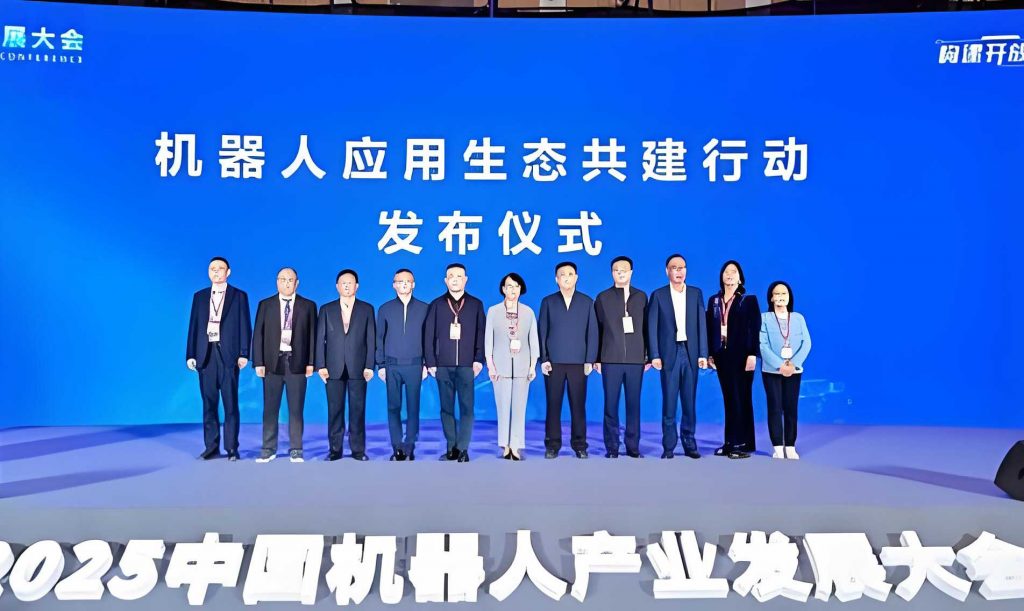
Within the broader socio-economic system, the robotics industry occupies a leading position. It is a nascent manufacturing sector that supplies advanced automation equipment to other industries, thereby elevating overall productivity levels and generating significant economic and social returns. This relationship can be conceptualized as the industry acting upon other sectors $S$ with a productivity multiplier effect $\alpha(t)$:
$$ P_{total}(t) = \sum_{i} P_{i}(t) + \alpha(t) \cdot R_{cap}(t) $$
where $P_{total}$ is total societal productivity, $P_i$ is the productivity of sector $i$, and $R_{cap}$ is the deployed capital in robotics.
The Formation Mechanisms of a Robotics Industry
The formation mechanism refers to the constraining and enabling relationships between the technological, economic, and social subsystems. To analyze these interactions, we can simplify the state of each subsystem into a binary condition: mature (“+”) or immature (“-“). This simplification yields eight possible states for industry development, as summarized in the table below.
| State | Technology (T) | Economy (E) | Society (S) | Implied Mechanism |
|---|---|---|---|---|
| 1 | + | + | + | Natural Growth |
| 2 | + | + | – | Maturity-Driven Traction |
| 3 | + | – | + | Maturity-Driven Traction |
| 4 | + | – | – | Tracking Development |
| 5 | – | + | + | Maturity-Driven Traction |
| 6 | – | + | – | Tracking Development |
| 7 | – | – | + | Tracking Development |
| 8 | – | – | – | Pre-formation (Dormant) |
From this matrix, three primary formation mechanisms can be deduced:
1. Natural Growth Mechanism (Mechanism I – State 1): This occurs when all three subsystems—technological, economic, and social—are mature. Under these ideal conditions, the robotics industry emerges organically from market forces and technological advancement. The historical formation of the United States’ robotics industry approximates this model.
2. Maturity-Driven Traction Mechanism (Mechanism II – States 2, 3, 5): In this scenario, two conditions are mature while one lags. The momentum from the mature subsystems, coupled with proactive governmental policies within the social subsystem (such as targeted technology import strategies, subsidies, or strategic planning), can “pull” the immature subsystem to maturity. Japan’s successful cultivation of its robotics industry is a classic example of this mechanism, where strong economic drivers and social consensus traction addressed specific technological gaps.
3. Tracking Development Mechanism (Mechanism III – States 4, 6, 7): Here, only one subsystem is mature. The strategy involves leveraging the leading subsystem, actively employing government influence to foster maturity in the others, while simultaneously tracking and learning from advanced robotics technologies abroad. The industry forms rapidly once conditions converge at a higher level of readiness. This mechanism is often observed in developing nations embarking on their China robots and broader automation journeys.
Essential Conditions for Industry Formation
Examining the history of mature global robotics industries allows us to define the “mature” state of each subsystem condition.
Technological Conditions
A mature technological foundation for China robots is not merely about robot assembly but encompasses an integrated ecosystem:
- Robot Performance: Complete robots must possess comprehensive technical performance (repeatability, accuracy, payload, speed) that meets quality and volume demands, with reliability (Mean Time Between Failures – MTBF) and maintainability suited to production rhythms. This can be expressed as a performance-reliability function: $P_{sys} = f(Accuracy, Payload, Speed, MTBF)$.
- Core Technology & Components: Breakthroughs in core technologies (e.g., precision reducers, servo motors, controllers) and a high degree of component localization are essential to control costs and supply chains.
- Integrated Production System: An established production system includes not only robot OEMs but also manufacturers of auxiliary and peripheral equipment (grippers, vision systems, conveyors).
- User Readiness: Potential adopting enterprises must possess a baseline level of automation and managerial competence to integrate and maintain robotic systems effectively.
Economic Conditions
Economic factors are the primary motivator for industry formation:
- Macroeconomic Demand: Rapid economic growth, technological progress, and national development strategies that emphasize automation create a “pull” for robotics.
- Viable End-Product Markets: The final goods produced with robots (e.g., automobiles, electronics) must have strong and stable domestic and international markets. The demand for robots $D_r$ is derived from the demand for these end-products $D_e$ and the robot’s value-add $\beta$: $D_r \propto \beta \cdot D_e$.
- Favorable Product Structure: A manufacturing landscape characterized by medium/small batch sizes and high product variety favors the flexibility of robots over dedicated hard automation.
- Solvent Demand: Enterprises must have the capital and positive return-on-investment (ROI) calculus to afford robotic systems. The basic ROI formula is critical: $$ ROI = \frac{\text{Net Benefits (Labor savings, quality gains)} – \text{Annualized Cost}}{\text{Initial Investment}} $$ A positive and attractive ROI is fundamental.
- Resource Availability: Ample material resources (metals, energy) for both the robotics industry and its client industries are necessary.
Social Conditions
Social factors can accelerate or decelerate the process:
- Stability & Openness: A stable, open society facilitates technology transfer, international collaboration, and long-term investment planning.
- Labor Dynamics: The cost, availability, and demographic structure of labor are crucial. An aging population, rising labor costs, and an increasing reluctance to perform dangerous (3D: Dirty, Dangerous, Demanding) jobs create social and economic pressure for automation, a highly relevant factor for the future of China robots.
- Education & Skills: A well-educated populace and a robust technical/vocational training system are needed to produce the designers, engineers, technicians, and operators for a robotics ecosystem.
- Strategic Prioritization: Government recognition of robotics as a strategic high-technology sector, leading to dedicated R&D funding and supportive policies, is a powerful social catalyst.
| Subsystem | Key Mature Conditions |
|---|---|
| Technological (T) | Reliable robot performance; Core tech/component mastery; Integrated production chain; High user readiness. |
| Economic (E) | Strong macro growth; Healthy end-markets; Multi-variety production; Positive ROI; Abundant resources. |
| Social (S) | Social stability/openness; Supportive labor dynamics; Advanced education system; Government strategic focus. |
Current State Analysis: The Context for China Robots
Assessing the position of China robots development requires a candid look at the status of each subsystem.
Technological Status
A foundational R&D network has been established, with nearly a hundred entities involved. Mastery of first-generation “playback” robot technology has been achieved, albeit at performance levels akin to the international mid-1970s. Key challenges persist:
- Reliability: Mean Time Between Failures remains low (tens of hours), primarily due to immature control system components, manufacturing processes, and design methodologies.
- Core Technologies: Research in key areas like advanced control algorithms and high-precision components remains a bottleneck, though domestic capabilities are growing.
- Systemic Imbalance: A tendency to focus on complete machine assembly (“zheng ji”) over core components (“yuan jian”) and peripheral support (“pei tao”) hinders the formation of a robust industrial chain.
- User Base Readiness: The general automation level in Chinese industry is low, with a high proportion of semi-mechanized and manual processes. Manufacturing tolerances in key sectors like automotive can be insufficient for high-precision robotic applications like arc welding.
The technological maturity score $S_T$ for China robots could be modeled as a weighted sum of factors: $$ S_T = w_1 R_{robot} + w_2 M_{core} + w_3 I_{chain} + w_4 U_{readiness} $$ where weights $w_i$ reflect strategic importance, and current values for each factor are moderate to low.
Economic Status
The economic equation for China robots adoption presents a mixed picture:
- Cost-Benefit Analysis: The high initial cost of a first-generation robot system (robot unit plus peripherals can be 4-5x the base price) contrasts with historically low labor costs. The annual fully-loaded cost of a worker has been a fraction of the robot’s price, making the ROI calculation challenging for many enterprises.
- Product Structure: Much of the manufacturing base still relies on large-volume, low-variety production, which is efficiently served by dedicated machinery, reducing the immediate incentive for flexible robots.
- Market Drivers: Positive signs exist. The competitive landscape for final goods like automobiles and machinery is intensifying. Improving product quality for export markets creates a powerful demand for automation. The domestic automotive sector is poised for growth, which would drive demand for welding, painting, and assembly China robots.
- Resource Constraints: General conditions of demand exceeding supply for resources like steel and energy can constrain both the production of robots and the expansion of the industries that would use them.
The economic feasibility $F_E$ can be seen as: $$ F_E = \frac{(S_L + Q_G + F_G)}{C_I} $$ where $S_L$ is labor savings, $Q_G$ is quality gains, $F_G$ is flexibility gains, and $C_I$ is total investment cost. For many potential Chinese users, $C_I$ has been high while $S_L$ has been relatively low.
Social Status
The social environment for China robots is evolving dynamically:
- Policy & Openness: The “reform and opening-up” policy has created a more stable and connected environment. Robotics has been listed as a key technology in national plans (e.g., the Five-Year Plans), with dedicated ministries coordinating development.
- Labor Force Shifts: While labor abundance was once a deterrent, profound demographic changes are underway. The one-child policy legacy, population aging, and rising living standards are altering labor supply and attitudes. There is growing social and economic pressure to replace human labor in hazardous jobs (of which there are millions), with the associated costs of healthcare and compensation providing a financial rationale for automation.
- Skills Gap: A significant shortage of high-skilled technicians and engineers proficient in mechatronics exists. The knowledge structure in many factories is not aligned with the needs of maintaining advanced China robots. Educational institutions are beginning to offer specialized programs, but scale is lacking.
- International Context: Global high-tech competition incentivizes domestic capability development. Simultaneously, a more open international technology transfer environment (compared to earlier decades) offers opportunities for strategic partnerships and technology acquisition to accelerate the development of China robots.
The social propensity for adoption $P_S$ is a function: $$ P_S = g(Policy, Demographics(t), Skills(t), Intl\_Context) $$ This function is currently trending positive over time $t$.
Formation Pathway and Strategic Countermeasures
Synthesizing the mechanism analysis with the current state assessment, we posit that the formation of a distinctive robotics industry is transitioning from a Tracking Development phase towards a Maturity-Driven Traction phase. The strategic objective, therefore, is not immediate, large-scale industrialization but the targeted achievement of small-batch commercialization as a critical precursor. This requires coordinated policies to cultivate the subsystems. The following countermeasures are proposed to guide the development of China robots:
1. Strategic Product Selection for Initial Commercialization
The first wave of commercial China robots should focus on applications where technical requirements align with current capabilities and address clear social needs. Prime candidates include:
– Application Focus: Spray painting, spot welding, palletizing/handling.
– Robot Type: Dedicated, fixed/variable sequence, and “simple” robots.
Rationale: These applications have lower baseline accuracy requirements for existing production lines (easing integration), involve more tractable technical challenges (improving reliability), address acute labor issues in undesirable jobs, and match the current investment capacity of potential users. The selection logic can be framed as an optimization: $$ \max_{a \in A} [ \lambda_1 Tech\_Match(a) + \lambda_2 Social\_Need(a) + \lambda_3 Econ\_Viability(a) ] $$ where $A$ is the set of potential applications and $\lambda$ are weighting factors.
2. Development of “Smart-Simple” Robots
Instead of merely replicating first-generation playback robots, a leapfrogging strategy involves integrating selected sensing capabilities (e.g., basic vision or force sensing) into otherwise simple or dedicated robot architectures. This creates a hybrid between first and second-generation capabilities that is highly applicable to tasks like arc welding or complex handling, offers a unique value proposition, avoids redundant complexity for reliability, and prepares the market for more advanced future China robots.
3. Prioritizing Multi-Use Core Technologies and Components
R&D must shift from a machine-centric to a component-centric view. The goal for initial commercialization should be a high domestic content ratio (e.g., >70%). Research on key components (controllers, drives, sensors) should be designed for versatility across robotics and other mechatronic products (e.g., CNC machine tools), achieving economies of scale and strengthening the broader industrial base that supports China robots.
4. Fostering Integrated Industrial Entities
Encourage the formation of regional or sector-based robotics “professional companies” through high-tech lateral alliances. These entities should integrate R&D, manufacturing, application engineering, sales, and service into a cohesive value chain. This counters fragmentation and “re-invention of the wheel.” Establishing demonstration centers, factories, and production lines is vital to showcase successful integration, build user confidence, and shift the culture from “research for accreditation” to “development for application.”
5. Implementing Targeted Financial Instruments
Use fiscal and credit tools to de-risk the initial market creation for China robots:
– Supply-side: Provide R&D grants and production subsidies for strategically selected robot types.
– Demand-side: Offer low-interest loans, interest subsidies, or favorable leasing arrangements to enterprises adopting specified robots.
– Leasing Models: Establish robot leasing as a primary commercialization vehicle. This dramatically lowers the entry barrier for small and medium-sized enterprises, accelerating market penetration. The lease payment $L$ can be structured to ensure provider viability and user affordability: $$ L = \frac{C_{robot} \cdot (1 + r)^n + C_{service}}{n} + M $$ where $r$ is a subsidized rate, $n$ is lease term, $C_{service}$ is maintenance cost, and $M$ is margin.
6. Strategic International Collaboration and Technology Sourcing
Actively pursue technology transfer, joint development, and joint-venture partnerships with leading international firms. In areas where the technology gap is wide, licensing proven designs can shortcut the development timeline for reliable commercial China robots. The guiding principle should be “import, digest, assimilate, and re-innovate” to build indigenous capabilities.
7. Aligning with Export-Oriented Manufacturing
Given that domestic adoption conditions may mature gradually, the initial output of commercial China robots could target export markets where demand exists. More importantly, the primary economic driver should be enhancing the competitiveness of China’s export-oriented manufacturing sectors (automobiles, machinery, electronics). By improving the quality and consistency of these final goods, robotics adoption creates its own demand pull, creating a virtuous cycle for the industry.
8. Building a Comprehensive Human Capital Pipeline
Developing China robots requires parallel development of human capital at all levels:
– Higher Education: Expand undergraduate and graduate programs in robotics, mechatronics, and AI, with a focus on systems engineering.
– Vocational Training: Mandate and support the creation of training centers within large enterprises and technical colleges to produce robot operators, maintenance technicians, and integration specialists.
– Reskilling: Develop programs for workers displaced or affected by automation to transition to new roles (e.g., robot supervision, programming, maintenance).
– Sales & Service Training: Cultivate a professional cadre for the critical sales, marketing, and after-sales service functions, which are often overlooked in technology-driven industries.
Synthesis and Concluding Perspective
The journey toward a mature, self-sustaining robotics industry is a marathon, not a sprint. For China robots, the path is uniquely shaped by the complex interplay of a massive manufacturing base in transition, rapid technological learning, shifting demographic and social norms, and strategic state direction. The analysis suggests that the industry is in a critical incubation period, where the mechanisms of tracking development and maturity-driven traction are both at play. Success hinges on avoiding the dual pitfalls of impatience (pushing for mass production before technological and market readiness) and complacency (failing to actively cultivate the necessary conditions).
The proposed countermeasures are interdependent. Strategic product selection (Measure 1) and financial incentives (Measure 5) create an initial market pull. Developing “smart-simple” robots (Measure 2) and core components (Measure 3) builds technological push. Forming integrated companies (Measure 4) and building human capital (Measure 8) create the necessary industrial organization and skills. International collaboration (Measure 6) accelerates learning, while export alignment (Measure 7) embeds the industry in a competitive global value chain.
The ultimate formation of the industry can be conceptualized as achieving a system equilibrium where the maturity levels of Technology ($M_T$), Economy ($M_E$), and Society ($M_S$) cross a critical threshold $\Theta$, triggering sustained growth: $$ \min(M_T, M_E, M_S) \geq \Theta $$. The current task for stakeholders in the China robots ecosystem is to execute a coordinated strategy that elevates all three metrics in concert, leveraging the unique strengths and addressing the specific constraints of the Chinese context. By doing so, the vision of a globally competitive, innovative, and socially beneficial robotics industry can be realized, serving as a cornerstone for the next phase of advanced manufacturing and technological prowess.