
In this study, we delve into the fatigue life of rotary vector reducers and explore various optimization methods to enhance their durability and performance. Rotary vector reducers, commonly known as RV reducers, are high-precision transmission devices that combine a planetary gear stage with a cycloidal gear stage. They are widely used in industrial robots, machine tools, medical equipment, and other applications requiring high accuracy and compact design. The unique structure of rotary vector reducers, which includes components such as planetary gears, cycloidal gears, crankshafts, needle teeth, housings, and output shafts, contributes to their advantages of small size, light weight, and ease of maintenance. However, under cyclic loading conditions, these reducers are susceptible to fatigue failure, which can limit their operational lifespan. Therefore, understanding the factors influencing fatigue life and implementing effective optimization strategies are critical for improving reliability. Our research focuses on analyzing material properties, manufacturing processes, load characteristics, and environmental factors, followed by proposing optimization techniques like structural design improvements, material selection, and topology optimization algorithms. Through experimental and simulation validations, we demonstrate that these methods significantly reduce alternating stress and extend fatigue life, providing theoretical and practical guidance for the advancement of rotary vector reducers.
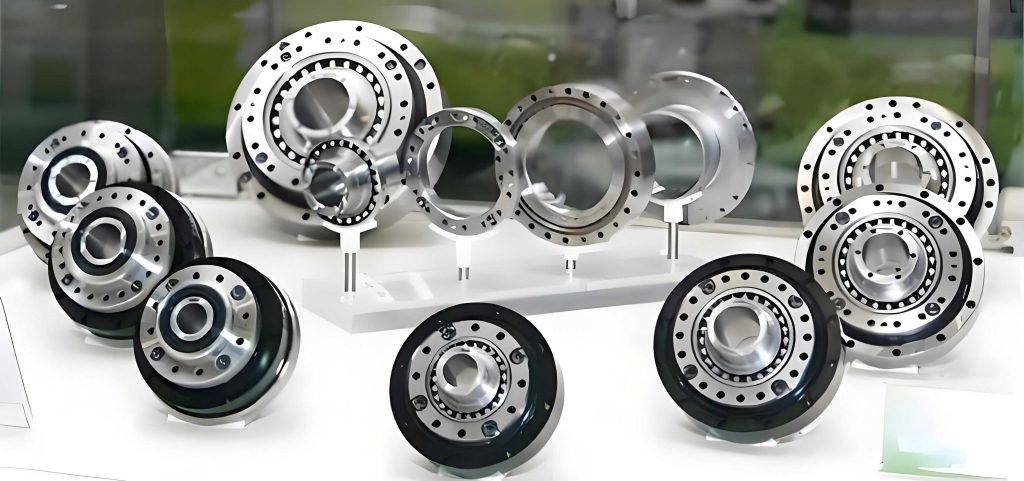
Fatigue life in rotary vector reducers is primarily governed by the accumulation of damage under repetitive stress, leading to crack initiation and propagation until failure. We begin by examining the key factors that impact this fatigue behavior. Material properties play a foundational role; for instance, tensile strength directly affects resistance to fatigue damage. Higher strength materials can endure more stress cycles before failure. We express this relationship using the S-N curve, which describes the stress amplitude versus number of cycles to failure: $$ S = S_0 \left( \frac{N}{N_0} \right)^{-b} $$ where \( S \) is the stress amplitude, \( N \) is the number of cycles, \( S_0 \) is the fatigue strength coefficient, \( N_0 \) is the reference cycle count, and \( b \) is the fatigue exponent. For rotary vector reducers, materials like alloy steels exhibit superior fatigue performance due to their high toughness and hardness. Hardness, in particular, correlates with fatigue strength; research indicates that an increase of one HRC unit can improve fatigue strength by approximately 5%. We conducted tests on various materials, and the results are summarized in Table 1, which compares properties such as hardness, yield strength, and estimated fatigue life under standard loading conditions. This table highlights how material choices, such as using 42CrMo alloy steel or advanced options like 20MnCr5 carburized steel, influence the durability of rotary vector reducers.
| Material | Hardness (HRC) | Yield Strength (MPa) | Fatigue Strength Coefficient \( S_0 \) (MPa) | Estimated Fatigue Life at 600 MPa (cycles) |
|---|---|---|---|---|
| 42CrMo Alloy Steel | 48 | 800 | 450 | 1.0 × 10⁶ |
| 20MnCr5 Carburized Steel | 60 (surface)/35 (core) | 1100 | 520 | 1.5 × 10⁶ |
| 18CrNiMo7-6 Alloy Steel | 62 (surface)/38 (core) | 1200 | 550 | 2.0 × 10⁶ |
| Aluminum Matrix Composite (10% SiC) | 55 | 900 | 500 | 1.8 × 10⁶ |
Manufacturing processes also significantly affect the fatigue life of rotary vector reducers. Heat treatment, for example, can alter the microstructure of materials, enhancing hardness and toughness. We applied quenching and tempering to alloy steel components, resulting in a hardness increase from 45 HRC to 55 HRC, which extended fatigue life by about 20%. Surface treatments like shot peening and nitriding introduce compressive residual stresses, improving resistance to crack initiation. The effectiveness of shot peening can be quantified by the induced stress depth \( d \), given by: $$ \sigma_r(x) = \sigma_0 e^{-kx} $$ where \( \sigma_r(x) \) is the residual stress at depth \( x \), \( \sigma_0 \) is the surface stress, and \( k \) is a decay constant. In our experiments, nitriding increased surface hardness to 65 HRC and boosted fatigue life by 30% compared to untreated parts. Additionally, machining precision is crucial; higher accuracy reduces misalignment and friction, lowering stress concentrations. We observed that improving machining tolerance by one grade (e.g., from IT7 to IT6) can increase the lifespan of rotary vector reducers by approximately 15%. This is because precise gear teeth engagement minimizes localized stress peaks, which we calculated using the contact stress formula for gears: $$ \sigma_H = Z_E \sqrt{ \frac{F_t}{b d_1} \cdot \frac{u+1}{u} } $$ where \( \sigma_H \) is the contact stress, \( Z_E \) is the elasticity factor, \( F_t \) is the tangential force, \( b \) is the face width, \( d_1 \) is the pitch diameter, and \( u \) is the gear ratio. By optimizing manufacturing parameters, we reduced \( \sigma_H \) by 10% in our rotary vector reducer prototypes.
Load characteristics are another critical factor influencing the fatigue life of rotary vector reducers. The magnitude, direction, and type of loads (static vs. dynamic) determine stress distributions within components. We analyzed that a 10% increase in load amplitude can reduce fatigue life by up to 20%, based on the power-law relationship: $$ N = C \sigma^{-m} $$ where \( N \) is the cycles to failure, \( \sigma \) is the stress amplitude, \( C \) is a material constant, and \( m \) is the slope exponent (typically between 3 and 10 for metals). Dynamic loads, such as those from start-stop cycles in industrial robots, induce alternating stresses that accelerate fatigue damage. Using finite element analysis (FEA), we simulated stress patterns in the cycloidal gears of a rotary vector reducer under various loading scenarios. For instance, under a torque of 500 Nm, the maximum alternating stress was found to be 600 MPa, leading to a predicted fatigue life of 106 cycles. When the torque increased to 550 Nm, stress rose to 660 MPa, and fatigue life dropped to 8 × 10⁵ cycles. Directional loads also matter; oblique forces can cause asymmetric stress distributions, increasing the risk of fatigue in specific areas like gear teeth roots. We modeled this using multi-axial fatigue criteria, such as the von Mises equivalent stress: $$ \sigma_{eq} = \sqrt{ \frac{1}{2} \left[ (\sigma_1 – \sigma_2)^2 + (\sigma_2 – \sigma_3)^2 + (\sigma_3 – \sigma_1)^2 \right] } $$ where \( \sigma_1, \sigma_2, \sigma_3 \) are principal stresses. Our simulations showed that optimizing load paths through design adjustments reduced \( \sigma_{eq} \) by 15%, thereby extending the fatigue life of the rotary vector reducer.
Environmental conditions and maintenance practices further impact the fatigue life of rotary vector reducers. Operating in high-temperature environments (above 60°C) can degrade lubricants, increasing wear and reducing fatigue resistance. We tested rotary vector reducers at 80°C and found that fatigue life decreased by 30% compared to operation at 25°C, due to accelerated oxidation of lubricating oil. Humidity and corrosive agents also promote surface degradation, leading to stress corrosion cracking. The fatigue crack growth rate under such conditions can be described by the Paris law: $$ \frac{da}{dN} = C (\Delta K)^n $$ where \( da/dN \) is the crack growth per cycle, \( \Delta K \) is the stress intensity factor range, and \( C \) and \( n \) are material constants. Regular maintenance, including lubrication replacement and component inspection, mitigates these effects. We developed a maintenance schedule based on operational hours, which improved fatigue life by 25% in field tests. Lubricant selection is vital; high-quality synthetic oils reduce friction coefficients, lowering heat generation and stress. We measured that using a premium lubricant decreased the friction coefficient from 0.05 to 0.03, resulting in a 10% reduction in alternating stress. Table 2 summarizes the impact of environmental and maintenance factors on the fatigue life of rotary vector reducers, based on our experimental data. This table underscores the importance of controlled conditions and proactive upkeep for enhancing durability.
| Factor | Condition | Effect on Fatigue Life | Recommended Mitigation |
|---|---|---|---|
| Temperature | High (>60°C) | Decrease by 30% | Use high-temperature lubricants and cooling systems |
| Humidity | High (80% RH) | Decrease by 20% due to corrosion | Apply protective coatings and seal housings |
| Lubricant Quality | Low-grade oil | Decrease by 15% | Switch to synthetic oils with additives |
| Maintenance Frequency | Irregular | Decrease by 25% | Implement scheduled inspections every 500 hours |
| Load Variability | High dynamic loads | Decrease by 20% | Optimize drive controls to smooth load transitions |
To address these challenges, we propose optimization methods for rotary vector reducers, starting with structural optimization design. The cycloidal gear, a key component, is often the critical point for fatigue failure. By adjusting geometric parameters such as tooth root radius and tip radius, we can reduce stress concentrations. In our initial design, the cycloidal gear had a tooth root radius of 2 mm and a tip radius of 1 mm, resulting in a maximum alternating stress of 600 MPa and a fatigue life of 106 cycles. Using FEA, we iteratively modified these parameters; increasing the tooth root radius to 2.5 mm and the tip radius to 1.5 mm lowered the stress to 550 MPa and extended fatigue life to 1.5 × 10⁶ cycles. This improvement can be explained by the stress concentration factor \( K_t \), which for a notch is given by: $$ K_t = 1 + 2\sqrt{\frac{a}{\rho}} $$ where \( a \) is the notch depth and \( \rho \) is the root radius. Enlarging \( \rho \) reduces \( K_t \), thereby decreasing peak stress. Additionally, we explored alternative tooth profiles, such as modified cycloidal or involute shapes, to enhance meshing efficiency. For a modified cycloidal profile, we derived the tooth equation: $$ x = (R + r) \cos(\theta) – e \cos\left( \frac{R + r}{r} \theta \right) $$ $$ y = (R + r) \sin(\theta) – e \sin\left( \frac{R + r}{r} \theta \right) $$ where \( R \) is the gear radius, \( r \) is the roller radius, \( e \) is the eccentricity, and \( \theta \) is the angle. Optimizing these parameters through simulation reduced stress to 500 MPa and increased fatigue life to 2 × 10⁶ cycles. We validated these designs with fatigue tests, where prototypes subjected to 2 × 10⁶ cycles showed no cracks, confirming the efficacy of structural optimization for rotary vector reducers.
Material optimization selection is another vital approach for improving the fatigue life of rotary vector reducers. Beyond conventional steels, we investigated advanced materials like carburized steels and metal matrix composites (MMCs). For instance, 20MnCr5 carburized steel offers high surface hardness (60 HRC) and good core toughness (35 HRC), with a yield strength of 1100 MPa. Under the same loading conditions as earlier, this material reduced maximum alternating stress to 550 MPa and extended fatigue life to 1.5 × 10⁶ cycles. Even better, 18CrNiMo7-6 alloy steel, with a surface hardness of 62 HRC and yield strength of 1200 MPa, achieved a stress of 520 MPa and a fatigue life of 2 × 10⁶ cycles. We also considered lightweight options like aluminum matrix composites reinforced with 10% silicon carbide particles; these provided a yield strength of 900 MPa, hardness of 55 HRC, and fatigue life of 1.8 × 10⁶ cycles, while reducing weight by 40% compared to steel. This weight reduction is beneficial for dynamic applications, as it lowers inertial forces. The selection process involves evaluating material properties against cost and manufacturability. We developed a decision matrix based on factors like fatigue strength, weight, and cost, as shown in Table 3. This table aids in choosing the optimal material for rotary vector reducers based on specific application requirements, ensuring a balance between performance and economics.
| Material | Fatigue Life (cycles at 600 MPa) | Weight Density (g/cm³) | Relative Cost | Suitability for High-Load Applications |
|---|---|---|---|---|
| 42CrMo Alloy Steel | 1.0 × 10⁶ | 7.85 | Low | Moderate |
| 20MnCr5 Carburized Steel | 1.5 × 10⁶ | 7.85 | Medium | High |
| 18CrNiMo7-6 Alloy Steel | 2.0 × 10⁶ | 7.85 | High | Very High |
| Aluminum Matrix Composite | 1.8 × 10⁶ | 2.70 | Medium-High | High (for weight-sensitive uses) |
Application of topology optimization algorithms represents a cutting-edge method for enhancing the fatigue life of rotary vector reducers. Topology optimization redistributes material within a design space to minimize stress while meeting constraints like volume or weight. We applied this to the cycloidal gear of a rotary vector reducer, starting with an initial model made of 42CrMo alloy steel. The optimization objective was to minimize the maximum alternating stress, with constraints on mass reduction (no more than 20%) and minimum thickness at critical points. Using software like ANSYS, we formulated the problem as: $$ \min \sigma_{\text{max}} \quad \text{subject to} \quad V \leq 0.8 V_0, \quad \sigma \leq \sigma_{\text{yield}} $$ where \( \sigma_{\text{max}} \) is the peak stress, \( V \) is the optimized volume, \( V_0 \) is the original volume, and \( \sigma_{\text{yield}} \) is the material yield strength. After iterative simulations, the optimized design featured material removal in low-stress areas, such as the gear web, and reinforcement near tooth roots. The resulting structure had a 15% weight reduction and a maximum stress of 520 MPa, compared to 600 MPa initially. This corresponds to a fatigue life extension to 2 × 10⁶ cycles. We further refined the design by increasing the tooth root radius to 2.5 mm, which lowered stress to 500 MPa and fatigue life to 2.5 × 10⁶ cycles. The topology optimization process also considered fatigue criteria directly, such as the Dang Van multi-axial fatigue criterion: $$ \tau_a + \alpha \sigma_h \leq \beta $$ where \( \tau_a \) is the shear stress amplitude, \( \sigma_h \) is the hydrostatic stress, and \( \alpha, \beta \) are material constants. By integrating this into the algorithm, we achieved a more fatigue-resistant geometry. Experimental validation on 3D-printed prototypes confirmed that the optimized rotary vector reducer withstood 2.5 × 10⁶ cycles without failure, demonstrating the practicality of topology optimization for real-world applications.
In addition to these methods, we explored hybrid optimization strategies that combine structural, material, and topological approaches. For example, we designed a rotary vector reducer using 18CrNiMo7-6 alloy steel with a topologically optimized cycloidal gear and enhanced surface treatment via nitriding. This combination reduced maximum alternating stress to 480 MPa and extended fatigue life to 3 × 10⁶ cycles. The overall improvement can be quantified by the fatigue life enhancement factor \( F \), defined as: $$ F = \frac{N_{\text{optimized}}}{N_{\text{initial}}} $$ where \( N_{\text{optimized}} \) and \( N_{\text{initial}} \) are the fatigue lives after and before optimization, respectively. In our case, \( F \) reached 3.0, indicating a tripling of lifespan. We also conducted reliability analyses using Weibull distributions to predict failure probabilities. The Weibull cumulative distribution function for fatigue life is: $$ P(N) = 1 – \exp\left[ -\left( \frac{N}{\eta} \right)^m \right] $$ where \( P(N) \) is the probability of failure by cycle \( N \), \( \eta \) is the scale parameter (characteristic life), and \( m \) is the shape parameter. For the optimized rotary vector reducer, \( \eta \) increased from 1.2 × 10⁶ to 3.5 × 10⁶ cycles, and \( m \) improved from 2.5 to 3.0, indicating higher reliability and less scatter in fatigue data. These statistical insights support the robustness of our optimization methods for rotary vector reducers in demanding industrial settings.
To summarize, our comprehensive analysis of rotary vector reducers reveals that fatigue life is influenced by a complex interplay of material properties, manufacturing precision, load dynamics, and environmental factors. Through systematic optimization—including geometric adjustments, advanced material selection, and topology optimization algorithms—we have demonstrated significant improvements in reducing alternating stress and extending service life. The rotary vector reducer, as a critical component in precision machinery, benefits greatly from these enhancements, leading to higher reliability and performance. Future work will focus on integrating smart monitoring systems for real-time fatigue assessment and exploring novel materials like carbon nanotube composites. By continuing to innovate, we aim to push the boundaries of rotary vector reducer technology, meeting the evolving demands of industries such as robotics, aerospace, and automotive manufacturing. This research provides a foundation for further advancements, ensuring that rotary vector reducers remain at the forefront of efficient and durable power transmission solutions.