
The paradigm of embodied AI posits that cognition emerges from the tight coupling of a physical body with its environment. An intelligent agent must interact with the physical world to form transferable representations. The dexterous hand, serving as the primary end-effector for an embodied AI robot, is the critical interface for this interaction. Its degrees of freedom (DoF), force control precision, and response bandwidth fundamentally determine the agent’s ability to manipulate and comprehend the micro-world.
However, the existing “hand-brain” communication link is constrained by significant limitations. Traditional wired connections, using flexible cables, introduce additional inertia and friction, severely hampering the hand’s natural motion agility and range. Meanwhile, conventional wireless protocols like Wi-Fi and Bluetooth struggle to simultaneously meet the stringent requirements of ultra-low latency, ultra-high reliability, and massive node concurrency, creating a technical bottleneck characterized by the need for “millimeter-level precision with millisecond-level latency.”
SparkLink 1.0, a new-generation short-range wireless communication standard developed collaboratively by over 300 Chinese entities, presents a promising solution. By incorporating technologies such as Polar codes, centralized scheduling, and an elastic Time Division Duplex (TDD) frame structure, it achieves remarkable performance metrics: an air-interface latency as low as 20 μs and a transmission success rate of 99.999% within a single 20 MHz carrier. This study systematically investigates the feasibility of applying SparkLink technology to embodied AI robot dexterous hands. Employing a “performance-demand” coupling analysis and a “technology-economics-ecosystem” three-dimensional assessment framework, we quantify its potential, dissect the challenges for large-scale deployment, and propose actionable pathways forward.
1. Technical Feasibility Analysis
The core feasibility of SparkLink lies not in isolated parameter advantages but in its cross-layer architectural synergy with the extreme demands of dexterous hand control. Its physical, Media Access Control (MAC), and security layers are jointly designed to align with the requirements of “sub-millisecond closed-loop control, five-nines reliability, ten-thousand-node networks, and microsecond-level synchronization.” SparkLink offers two operational modes: SparkLink Basic (SLB) for high-performance scenarios and SparkLink Low Energy (SLE) for power-sensitive tasks.
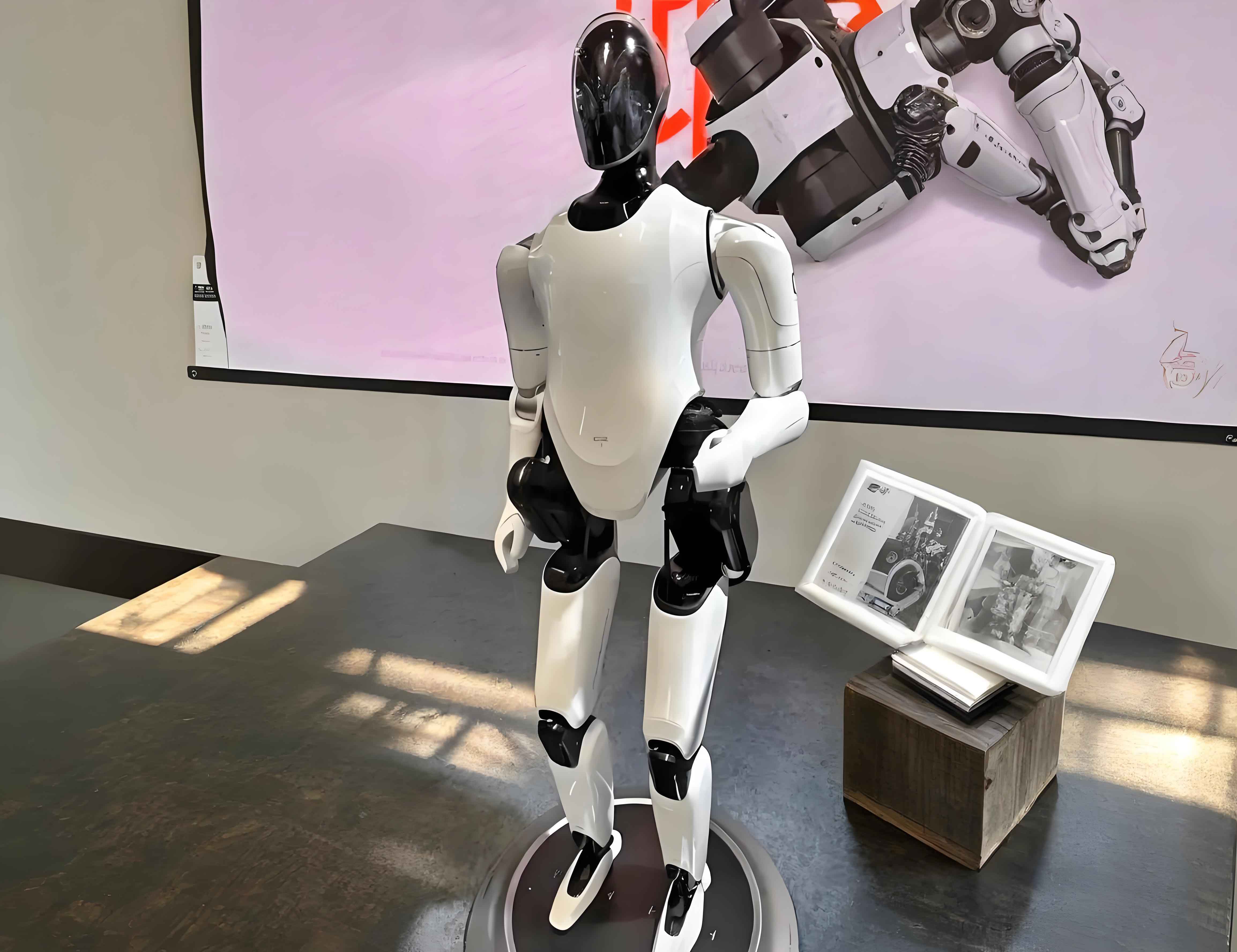
We analyze this “scenario-protocol” deep coupling mechanism across five key dimensions, providing quantitative comparisons with Wi-Fi 7 and Bluetooth 5.3.
1.1 Latency and Reliability
Latency and reliability are paramount for real-time control. The end-to-end latency budget for stable force/position control in an embodied AI robot dexterous hand is typically under 1 ms. SparkLink SLB’s 20 μs air-interface latency is a game-changer, as shown in the comparative analysis below. This enables truly deterministic wireless communication essential for delicate operations.
The reliability is mathematically quantified by the Block Error Rate (BLER). SparkLink employs a Hybrid Automatic Repeat Request (HARQ) mechanism combined with robust Forward Error Correction (FEC), such as Polar codes. The probability of successful transmission after $K$ HARQ rounds can be modeled as:
$$P_{success} = 1 – (P_{e})^{K+1}$$
where $P_{e}$ is the initial BLER after the first transmission. With Polar code strengthening, $P_{e}$ can be driven below $10^{-5}$, leading to a final $P_{success} > 0.99999$, satisfying the “not more than one error in 100,000 operations” threshold for critical applications like surgical robotics.
| Metric | SparkLink (SLB) | Wi-Fi 7 | Bluetooth 5.3 |
|---|---|---|---|
| Air-interface Latency | 20 μs | ~5 ms (best effort) | ~15-20 ms |
| Comparative Factor | 1x (Baseline) | ~250x higher | ~750x higher |
| Typical Reliability | >99.999% | 99.9% – 99.99% | ~99.9% |
1.2 Bandwidth and Concurrency
Modern embodied AI robot dexterous hands are dense sensor arrays, integrating high-resolution tactile skins, joint encoders, IMUs, and sometimes vision sensors. This generates massive multi-modal data streams. Concurrently, controlling dozens of actuators requires managing many nodes within a small physical space.
SparkLink SLB provides a peak physical layer data rate exceeding 900 Mbps in the downlink (G-link) with a 20 MHz bandwidth, sufficient for multiple high-definition data streams. Its centralized scheduling supports up to 4,096 logical nodes with 80-user data concurrency within 1 ms. This allows a single G-node (master controller) to manage all sensors and actuators of a complex dexterous hand, with ample room for future expansion.
The concurrent user capacity $C$ can be related to the scheduling efficiency $\eta$ and available time-frequency resources $R$: $C = \eta \times R / r_{user}$, where $r_{user}$ is the average resource unit per user. SparkLink’s efficient scheduling achieves a high $\eta$, enabling its high concurrency.
| Metric | SparkLink (SLB) | Wi-Fi 7 | Bluetooth 5.3 |
|---|---|---|---|
| Peak Data Rate (20MHz) | >900 Mbps | ~1.4 Gbps* (theoretical, varies) | 24 Mbps |
| Max Connected Nodes | 4,096 | 256 | 8 (Active) |
| Concurrency within 1ms | 80 users | Dependent on MU-MIMO/OFDMA | Typically 3 |
*Wi-Fi 7 rates scale with channel width; comparison here uses a similar 20MHz reference for SparkLink.
1.3 Synchronization Precision
Precise multi-finger coordination in an embodied AI robot hand requires microsecond-level synchronization among all sensors and actuators. SparkLink inherits synchronization concepts from 5G, achieving a timing accuracy of ±30 ns. This hardware-level synchronization ensures all data sampling and control commands are referenced to a unified clock, enabling precise cooperative control algorithms that are impossible with software-synchronized traditional wireless protocols.
The synchronization error $\Delta t_{sync}$ directly impacts the phase error in coordinated motion. For a finger moving at velocity $v$, the positional desynchronization $\Delta x$ is: $\Delta x = v \cdot \Delta t_{sync}$. With $\Delta t_{sync} \approx 1 \mu s$, even for a high-speed joint ($v \sim 1 m/s$), $\Delta x \approx 1 \mu m$, which is negligible for most dexterous tasks.
1.4 Elastic Frame Structure
Dexterous hand communication is highly asymmetric: a persistent uplink “data deluge” from numerous sensors and sporadic downlink control commands. Fixed resource allocation schemes waste bandwidth. SparkLink’s elastic TDD frame supports 14 uplink/downlink slot ratios (12 with extended Cyclic Prefix). This allows dynamic allocation, e.g., dedicating 70% of slots to uplink to handle tactile array data bursts.
This improves spectrum utilization by up to 18% compared to static schemes. In an “80% UL – 20% DL” configuration, the achievable uplink throughput $T_{UL}$ can be estimated as: $T_{UL} = B \cdot \eta_{UL} \cdot \log_2(1 + SNR)$, where $B$ is bandwidth, and $\eta_{UL}$ is the uplink efficiency factor enhanced by dynamic allocation. This meets the high uplink demand efficiently.
1.5 Anti-Interference and Security
Industrial and medical environments are RF-challenged. SparkLink’s use of Polar coding lowers the minimum required SNR for operation, providing a coverage gain. Its adjacent channel interference rejection ratio exceeds 70 dB, ensuring coexistence in the 2.4 GHz ISM band. Security is critical for embodied AI robot applications. SparkLink employs 256-bit symmetric keys with dual encryption algorithms (ZUC/AES), supports forward secrecy, and achieves a 75% signaling compression rate, providing a full-link trusted channel.
| Feature | SparkLink (SLB/SLE) | Typical Wi-Fi/Bluetooth |
|---|---|---|
| Key Anti-Interference Tech | Polar Codes, Centralized Scheduling, >70 dB adjacent channel rejection | OFDM, AFH (Adaptive Frequency Hopping) |
| Min Operational SNR | Approx. -5 dB (Polar code gain) | Higher requirement |
| Security Framework | 256-bit keys, ZUC/AES dual encryption, Forward Secrecy, Mandatory mutual authentication | AES-CCM (Bluetooth), WPA3 (Wi-Fi) |
2. Application Potential and Value
The value of SparkLink extends beyond solving current bottlenecks; it enables a fundamental transformation of dexterous hand systems, unlocking new capabilities for the embodied AI robot.
2.1 Cable-Free Reconstruction
Eliminating cables removes the primary physical constraint, restoring the hand’s full kinematic potential. This enhances workspace, agility, and simplifies maintenance. It enables truly mobile manipulation for service robots and allows remote surgical systems to operate without cable-induced friction or interference.
2.2 Rebalancing the Edge-Cloud-Device Continuum
The high-bandwidth, low-latency link enables intelligent redistribution of computational tasks. Raw, high-fidelity sensor data can be streamed in real-time to nearby edge servers for complex AI perception processing (e.g., tactile recognition, slip detection), while time-critical control loops remain on the local device. This facilitates a dynamic “compute offloading” model. The decision to offload a task weighing $W$ bits can be modeled by comparing local and remote computation times, including transmission time $T_{tx}(W)$:
$$T_{local} = W / C_{local}$$
$$T_{remote} = T_{tx}(W) + W / C_{remote} + T_{rx}$$
where $T_{tx}(W) = W / R_{SLB}$, with $R_{SLB}$ being the SparkLink data rate. Given $R_{SLB}$ is high and $T_{tx}$ is low, offloading becomes viable for more complex $W$, enhancing the hand’s intelligence.
2.3 Native Scenario Innovation
SparkLink’s precision synchronization and massive connectivity enable previously impractical applications. Multiple embodied AI robot hands can form tightly synchronized collaborative clusters for large-scale assembly. In VR/AR, ultra-responsive data gloves with real-time force feedback can create unprecedented immersion. Distributed sensor networks across a factory floor, all synchronized via SparkLink, could provide a unified perception field for multiple robots.
3. Challenges and Strategic Countermeasures
Transitioning from lab validation to mass production requires overcoming hurdles across three domains: ecosystem maturity, system integration, and cost competitiveness.
3.1 Ecosystem Maturity and Construction
Challenge: The ecosystem is nascent. There is a scarcity of specialized, compact, low-power SLB/SLE chips/modules optimized for robotics. Developer tools, protocol stacks, and community support are limited compared to Bluetooth/Wi-Fi. Crucially, vertical standards (e.g., for robotic interfaces, data formats, QoS levels) are still under development, risking fragmentation.
Countermeasures:
1. Foster industry-academia-research collaboration to co-develop robot-optimized SparkLink solutions.
2. Promote open-source reference designs and protocol stack adaptations for robotics to lower the entry barrier.
3. Accelerate the formulation and adoption of domain-specific SparkLink application standards for robotics to ensure interoperability.
3.2 System Integration and Power Management
Challenge: Integrating the sophisticated SparkLink protocol stack into a resource-constrained dexterous hand is complex. The compact design with metal and motors presents significant antenna design and EMI challenges. Balancing the higher power draw of SLB mode (compared to SLE) with battery life in mobile embodied AI robot applications is critical.
Countermeasures:
1. Employ hardware acceleration for PHY/MAC layers and prune unnecessary protocol features to reduce CPU load.
2. Implement intelligent, context-aware power management. The system can sleep in SLE mode and switch to high-performance SLB mode only during critical manipulation phases. The average power $P_{avg}$ can be minimized by optimizing the duty cycle $D$ of the SLB mode: $P_{avg} = D \cdot P_{SLB} + (1-D) \cdot P_{SLE} + P_{static}$.
3. Utilize advanced antenna techniques (e.g., LDS) and adaptive RF tuning to overcome the challenging RF environment inside the hand.
3.3 Cost and Market Acceptance
Challenge: Early-stage costs for SparkLink components are high due to low economies of scale. Market inertia favors entrenched, well-understood technologies like Bluetooth. Competing standards continue to evolve.
Countermeasures:
1. Drive cost reduction through economies of scale by promoting SparkLink adoption across broader IoT sectors (smart cars, homes).
2. Adopt a value-driven, rather than cost-driven, initial market strategy. Target high-end applications (surgery, aerospace) where the superior performance translates directly into measurable ROI (e.g., yield improvement, success rate), justifying a premium.
3. Clearly articulate and demonstrate unique, differentiated advantages. For example, showcase “zero-cable” smart assembly lines enabled by SparkLink’s reliability and latency, creating a compelling benchmark.
4. Conclusion
This study demonstrates a strong feasibility case for SparkLink technology in embodied AI robot dexterous hands. Its quantifiable advantages in latency (20 μs), reliability (99.999%), bandwidth (>900 Mbps), and concurrency (4,096 nodes) provide an engineering-ready deterministic wireless foundation capable of supporting millisecond-level force control loops. The technology’s potential to enable cable-free design, sophisticated edge-cloud-device collaboration, and novel multi-agent applications can fundamentally advance the capabilities of embodied AI robot platforms.
The path from validation to widespread adoption requires concerted effort to mature the ecosystem, solve integration challenges, and drive down costs. A collaborative strategy involving industry leaders, academic research, and supportive policy is essential. As the SparkLink standard evolves from 2.0 to 3.0 and domestic chip manufacturing advances, SparkLink-enabled dexterous hands are poised to become a standard feature for next-generation embodied AI robots, marking a significant leap forward for intelligent robotic manipulation.