
The accelerated development of the intelligent industry represents a pivotal phase in our city’s economic transformation. A systematic analysis of the development status of the embodied AI robot industry chain, identification of its bottlenecks, and the proposal of targeted recommendations are of paramount importance for fostering high-quality industrial growth.
Current Status of Chongqing’s Embodied AI Robot Industry Chain
In recent years, leveraging its foundational strengths in manufacturing and the opportunities presented by national AI innovation pilot zones, our city has made sustained efforts in the layout, innovation, and application of the embodied AI robot industry chain. A developmental posture characterized by “solid foundational support, an embryonic industrial form, and diverse application scenarios” has taken shape, laying a firm groundwork for subsequent breakthroughs.
Consolidating Industrial Foundations and Gaining First-Mover Advantages in Segments
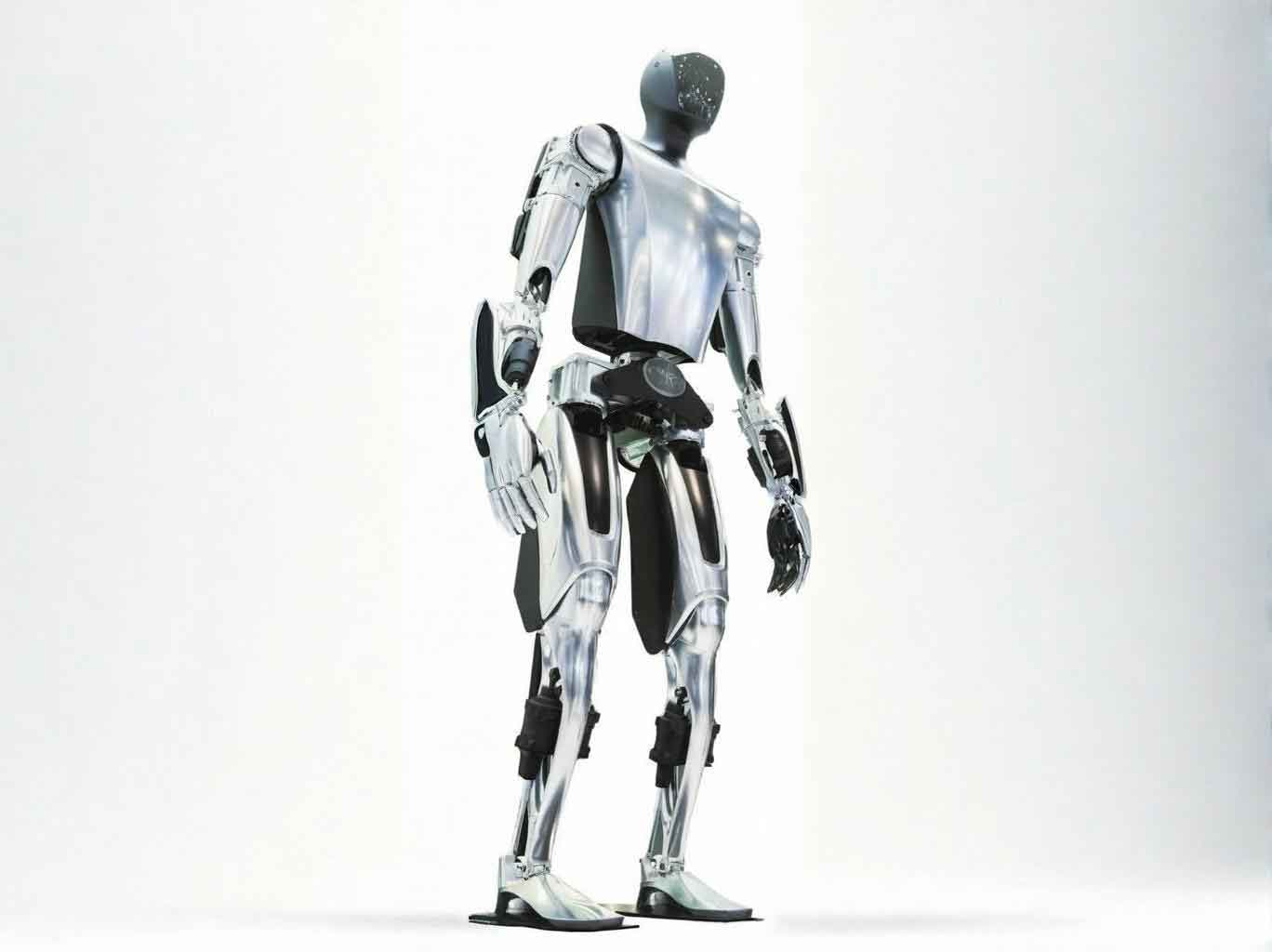
As a major national manufacturing base, our city provides vast application scenarios and industrial support for embodied AI robot technologies. The deep integration of informatization and industrialization, along with advanced digitalization levels in manufacturing, creates fertile ground for technological deployment. Several distinctive industrial clusters have emerged in key segments, as summarized below:
| Segment | Core Players/Clusters | Key Developments & Metrics (Representative, 2024) |
|---|---|---|
| Intelligent Connected Vehicles (ICVs) | Major automotive OEMs and their ecosystems. | L4 autonomous test mileage >12 million km; ICV sales >350k units (28% of total);规模化应用 of multi-sensor fusion perception systems. |
| Industrial Robots | Clusters in key development zones, hosting over 30 enterprises. | Annual output of 12k units;协作机器人 with embodied intelligence features now constitute 15% of output, deployed in welding, assembly. |
| Service Robots | Educational institution-driven cluster cultivating startups. | Annual output value exceeded 800 million RMB, +40% YoY;情感交互机器人 and care robots piloted in nursing homes, service halls. |
Accelerated Layout of Innovation Platforms and Gradual Enhancement of R&D Capability
Focusing on the core technological chain of “Perception–Decision–Execution” for embodied AI robot systems, our city has established a number of municipal and higher-level innovation platforms. As of the end of 2024, a significant portion of the city’s AI innovation bases are dedicated to embodied intelligence. The distribution and output of key platforms are as follows:
| Platform Tier | Examples/Footing | Cumulative Output (2024) |
|---|---|---|
| National-Level Platforms | Centers focusing on industrial big data and robot innovation. | R&D in embodied perception algorithms and control systems. |
| Municipal-Level R&D Centers | Engineering research centers依托 leading universities and enterprises. | Undertook 18 national research projects; obtained 236 invention patents. |
| Enterprise Innovation Hubs | Global R&D centers and industrial internet research institutes. | Dedicated teams >500 personnel; combined R&D investment ~4.2 billion RMB (3.5% of revenue). |
Preliminary Expansion of Application Scenarios and Emerging Demonstration Effects
Adopting a “scenario-driven” core strategy, our city has opened a batch of application scenarios tailored to its urban characteristics and industrial needs, propelling embodied AI robot technologies from laboratories to production lines.
| Scenario Domain | Specific Applications & Locations | Reported Efficacy/Scale |
|---|---|---|
| Industrial Scenarios | 智能巡检机器人 in automotive press shops;协作机器人 for screen assembly in electronics. | Fault detection rate ↑ to 98%, O&M cost ↓ 30%; Productivity ↑ 20%, defect rate ↓ 15%. |
| Urban & Public Scenarios | “Vehicle-Road-Cloud” ICV pilot zones; service robots in commercial districts. | Traffic efficiency ↑ 25% on pilot roads;日均 service interactions >6000. |
| Social & Livelihood Scenarios | 情感交互机器人 in elderly care; surgical robots in hospitals. | Serving >800 seniors across 12 facilities; >300 minimally invasive surgeries, avg. time ↓ 40 mins. |
Critical Bottlenecks in Chongqing’s Embodied AI Robot Industry Chain
Despite preliminary achievements, significant bottlenecks persist when benchmarked against advanced domestic regions and the requirements for high-quality development. These constraints, including insufficient chain synergy, stalled technology transfer, limited scenario leadership, and weak factor support, hinder industrial upgrading.
Insufficient Industrial Chain Synergy and Overall Competitiveness
The industrial chain structure exhibits a pronounced weakness at both ends. Upstream, a heavy reliance on external sources for core components creates vulnerabilities. The dependency can be expressed as:
$$ D_{component} = \frac{Q_{imported}}{Q_{total}} \times 100\% $$
For high-precision sensors, $D_{sensor} > 90\%$; for specialized chips, $D_{chip} > 90\%$. Downstream, application scenarios are concentrated in industry, with limited penetration into healthcare and elderly care. Intra-regional competition and a lack of integration between large and small enterprises further dilute competitiveness.
| Aspect | Specific Issue | Metric / Manifestation |
|---|---|---|
| Chain Structure | “Weak Ends, Strong Middle” | Local配套率 for high-end sensors <10%;民生 scenario coverage <25%. |
| Regional Coordination | Homogeneous Competition & Lack of Planning | City-wide robot gross margin ~18% (10 ppt below national avg.); Cross-regional (e.g., Chengdu-Chongqing) projects仅占 15%. |
| Enterprise Integration | Limited ‘Chain Leader’ Spillover | Large firms involve only ~20% local SMEs in projects;仅 15 out of 120+ SMEs possess core R&D capability. |
Disconnect in Technological Innovation and Conversion, Leading to Insufficient Core Competitiveness
A critical gap exists between R&D outputs and commercializable products. Core technologies remain externally dependent, and the intermediate试验 (pilot-scale) phase is underdeveloped, acting as a major filter in the innovation funnel:
$$ P_{commercial} = P_{research} \times \eta_{pilot} \times \eta_{scale} $$
Where $\eta_{pilot}$ represents the pilot-scale conversion efficiency. Currently, $\eta_{pilot}$ is critically low due to few platforms and inadequate funding.
| Challenge Area | Key Deficiencies | Comparative Metrics (2024) |
|---|---|---|
| Core Tech Dependence | Motion control algos, perception hardware, industrial software. | 0 local firms in national industrial software top 50; >90% MES/PLM reliance on foreign vendors. |
| Pilot-Scale (中试) Weakness | Insufficient platforms, low enterprise service coverage, lack of funding. | Only 2 dedicated pilot platforms; service coverage <30%;企业 pilot funding占 R&D ~15% (vs. 35% in Shenzhen). |
| Platform Fragmentation | ~60% of platforms are academia-led, with poor resource sharing and collaboration. | Instrument duplication rate ~40%; cross-platform projects仅占 12%. |
The result is a专利转化率 (patent conversion rate) below 20% for the embodied AI robot field.
Limited Leading Role of Scenario-Driven Development and Untapped Market Demand
Scenario openness is insufficient in breadth and depth. Applications are fragmented, lacking integrated solutions, and market entry for innovative local products is hindered by risk aversion.
| Issue | Description | Quantitative Indicator |
|---|---|---|
| Narrow Scenario Coverage | Focus on industry & governance;民生 scenarios仅占 25%, mostly small pilots. | Only 18 embodied AI scenarios on 2024市级清单 (vs. 50 in Shenzhen, 35 in Chengdu). |
| Fragmented, Isolated Applications | Lack of cross-regional/domain integrated scenarios showcasing full “Perception-Decision-Action” loop. | Scenarios are单打独斗 (standalone), e.g., separate ICV, service robot, inspection pilots. |
| Weak First-Use/First-Purchase Support | State-owned entities hesitant to adopt local innovations; lack of risk补偿机制. | Local firms win only ~18% of SOE projects (vs. 45% for non-local firms). |
Weak Supporting Capacity of Factor Allocation, Constraining Long-Term Momentum
A significant shortage of high-end talent and skilled technicians, misaligned financial support, and inadequate digital infrastructure form critical constraints. The overall competitiveness $C_{industry}$ can be modeled as a function of these factors:
$$ C_{industry} = f(T_{alent}, F_{inance}, I_{nfrastructure}, \epsilon) $$
Currently, each variable presents a limiting value.
| Factor | Specific Shortcomings | Quantitative Gap / Disadvantage |
|---|---|---|
| Talent | Shortage of top experts;技能人才 gap; education-practice disconnect. | 仅 8 national-level experts;技能人才缺口 ~12k; university practice教学占比 <30%. |
| Finance | Over-reliance on bank loans (70%);产品适配性差. | 仅 5 types of dedicated bank products; avg.融资成本 for SMEs: 6.8%. |
| Lack of VC/PE focus. | Local VC/PE allocation to field仅占 8% (12 ppt below national avg.). | |
| Digital Infrastructure | 算力 deficit; high power costs; incomplete network coverage. | 算力缺口 37% (智能算力占比 <20%); Industrial electricity price: 0.65 RMB/kWh; 5G-A coverage in key parks仅 60%. |
Strategic Recommendations for Advancing Chongqing’s Embodied AI Robot Industry
Forging a Highly Synergistic Industrial Chain System to Enhance Overall Competitiveness
The first step is to conduct a comprehensive mapping of the embodied AI robot industry chain, followed by targeted actions to fill gaps and strengthen weak links. The strategy must empower “chain leader” enterprises and cultivate specialized SMEs.
| Action Line | Concrete Measures | Targets & Incentives |
|---|---|---|
| Precise Chain Strengthening | Create & dynamically update (quarterly) a full-chain map from “Components → Core Tech → Assembly → Apps”. | Generate “补链清单” for missing/weak links (e.g., sensors, chips, control algos). |
| Empowering Chain Leaders | Designate ~5市级链主企业. Implement “一企一策” support. | Grants up to 10 million RMB to open tech platforms,场景资源, supply chains. |
| Cultivating Specialized SMEs | Identify and support专精特新 and单项冠军 enterprises in the field. | Rewards of 2m/5m RMB respectively. Goal: >10国家级专精特新 firms by 2027. |
Deepening Regional Synergy: Building a “Chengdu-Chongqing联动, City-Wide Integration” Pattern
Cross-regional collaboration is key to avoiding redundancy and building a complementary, powerful regional cluster for embodied AI robot development.
| Collaboration Dimension | Proposed Mechanism | Operational Targets |
|---|---|---|
| Chengdu-Chongqing Dual-City Synergy | Jointly formulate industrial规划. Establish “1 Alliance + 3 Shared Platforms”. | Launch 10 joint key-tech projects by 2025; achieve chain互补. |
| Intra-City Layout Coordination | Clarify differentiated positioning for major zones (core parts, service robots,工业互联网+). | Create “区县协作清单”. Raise local配套率 to 40% by 2025. |
| Integration with National Strategy | Leverage西部陆海新通道 to build export service platforms. | Increase product出口率 to 20% by 2027, targeting SE Asia & Europe. |
健全 a Multi-Faceted Factor Guarantee Mechanism to Solidify the Development Foundation
Sustained growth requires robust, tailored support in talent, finance, and infrastructure. This demands innovative, multi-layered policy interventions.
| Factor Area | Policy & Initiative Recommendations | Scale & Targets |
|---|---|---|
| Talent System | Launch “Embodied AI Elite Plan” to attract top experts. | Offer up to 1m/0.6m RMB research funds + 1m RMB salary补贴. |
| Reform local university & vocational college curricula; build industry-academia bases. | Increase practice教学占比 to 50%; train >2000 skilled personnel annually. | |
| Financial Innovation | Establish a 10-billion-RMB industry guidance fund; push for IPO listings. | Leverage to 30-billion-RMB fund pool. Offer up to 10m RMB reward for listings. Goal: >10 listed firms by 2027. |
| Set up 2-billion-RMB risk compensation fund; encourage insurance product innovation. | Compensate 40% of bad bank loan principal; develop “product liability”, “R&D中断险”. | |
| Digital Infrastructure | Build dedicated embodied AI robot算力中心;试点 “Western Compute to CQ”. | Achieve 2 EFLOPS scale by 2025 (智能算力占比 50%). Eliminate算力缺口 by 2027. |
| Establish “Municipal Embodied AI Test & Verification Center”. | Provide sensor, safety, compatibility testing. Achieve mutual recognition with national platforms. |