
In a rapidly evolving technological landscape, embodied robots are emerging as a transformative force, with their ability to generalize across diverse environments standing out as a critical enabler for widespread adoption. According to industry leaders, the path to commercialization for embodied intelligence begins in business-to-business (B2B) sectors before moving into consumer homes, driven largely by advancements in large-scale model generalization. This shift is not just a theoretical ideal but a practical strategy being pursued by companies like Beijing Galaxy General Robotics Co., Ltd. (Galaxy General), which has made significant strides in developing embodied intelligence systems.
The concept of embodied robots revolves around machines that can perceive, understand, decide, and act in real-world settings, moving beyond single-task automation to become versatile assistants. Wen Airong, Vice President of Galaxy General, emphasized in an exclusive interview that the future of embodied robots lies in their capacity to switch between multiple skills in various scenarios. “We believe that embodied robots should not be limited to repetitive tasks in isolated environments; instead, they must adapt and learn, leveraging embodied intelligence to serve as intelligent partners in both industrial and domestic spheres,” Wen stated. This vision underscores the importance of generalization—the ability of embodied robots to apply learned behaviors to new, unseen situations—as the cornerstone for cross-scene deployment.
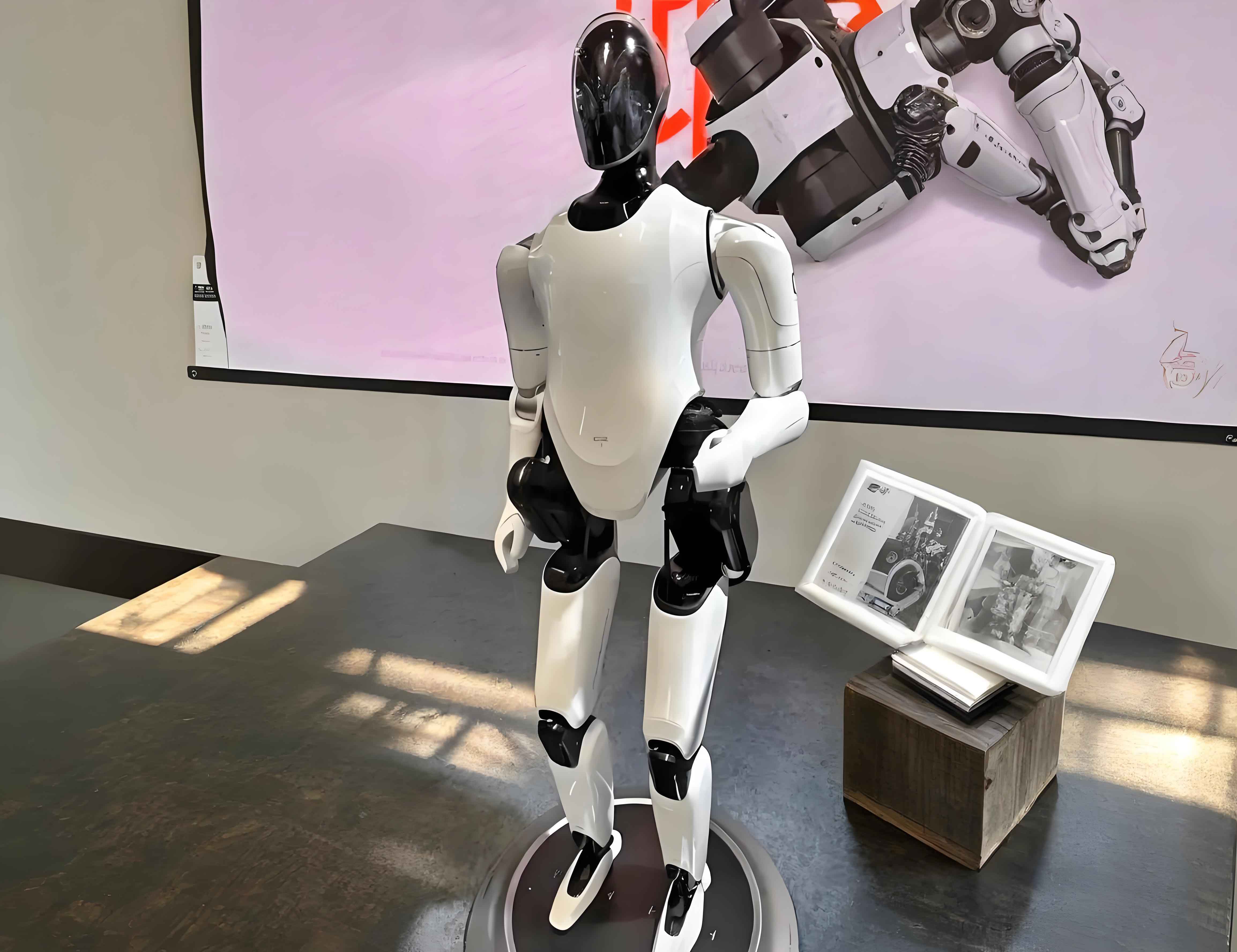
Globally, the robotics sector is witnessing a surge in investment, reflecting growing confidence in the potential of embodied intelligence. Data from IT桔子 reveals that in the first eight months of this year, the primary market financing for the robotics field reached 38.624 billion yuan, which is 1.8 times the total financing for the entire year of 2024. This uptick is largely attributed to the rising interest in embodied robots, which are increasingly viewed as the next “super terminal” following smartphones, thanks to their human-centric design and adaptability. The embodied robots market is poised for exponential growth, with embodied intelligence driving innovations that could redefine how humans interact with machines in everyday life.
Galaxy General, a key player in this domain, has demonstrated the practical applications of embodied robots through its recent achievements. In late August, the company released a high-quality synthetic dataset-driven embodied large model and an open-source synthetic dataset, marking a significant milestone as part of national high-quality dataset series outcomes. Their flagship product, the embodied large model “Galbot,” has already been deployed in retail settings for routine operations, showcasing the real-world impact of embodied intelligence. Moreover, in late June, Galaxy General secured a new round of funding totaling 1.1 billion yuan, led by CATL and Puquan Capital. Since its inception just two years ago, the company has accumulated over 2.4 billion yuan in total financing, highlighting investor confidence in the embodied robots sector.
The synergy between robust funding, technological breakthroughs, and expanding commercial applications paints a promising picture for Galaxy General’s trajectory in the embodied large model arena. “Unlike traditional specialized robots that perform singular tasks, our goal is to enable embodied robots to navigate and operate seamlessly across different environments,” Wen Airong explained. This ambition is backed by the company’s in-house development of both robot hardware and embodied large models, such as the “Grocery VLA” model, which empowers robots in retail scenarios to grasp tightly arranged items like beverages, bottles, bags, and even goods hanging from hooks. This end-to-end capability—encompassing perception, understanding, decision-making, and execution—is fundamental to achieving the generalization that embodied intelligence promises.
To better understand the current state and future potential of embodied robots, it is essential to delve into the key areas where embodied intelligence is making an impact. The following sections explore the capital trends, technological innovations, application scenarios, and challenges associated with embodied robots, emphasizing the role of generalization in driving progress.
1. Capital Influx and Market Dynamics
The robotics industry, particularly the segment focused on embodied robots, is experiencing unprecedented financial backing. The substantial increase in funding—386.24 billion yuan in the first eight months of this year alone—signals a broader recognition of embodied intelligence as a game-changer. This investment surge is not merely a short-term trend but a reflection of long-term confidence in the ability of embodied robots to revolutionize sectors from manufacturing to personal care. For instance, Galaxy General’s cumulative financing of over 2.4 billion yuan within two years underscores the market’s appetite for innovations that enhance the generalization capabilities of embodied robots. Such financial support enables companies to accelerate research and development, pushing the boundaries of what embodied intelligence can achieve in diverse settings.
2. Technological Foundations of Embodied Intelligence
At the heart of embodied robots lies embodied intelligence, which integrates advanced algorithms, sensor technologies, and large-scale models to enable adaptive behavior. Galaxy General’s self-developed embodied large model, “Grocery VLA,” exemplifies this approach by providing a closed-loop system where robots can dynamically interact with their surroundings. This model allows embodied robots to handle complex tasks in retail environments, such as identifying and manipulating objects of varying shapes and sizes, demonstrating a level of generalization that was previously unattainable. The use of high-quality synthetic datasets further enhances this capability, as it provides rich, diverse training data that improves the robots’ ability to generalize to new scenarios. Embodied intelligence, in this context, is not just about raw processing power but about creating systems that can learn and evolve, much like human cognition, to perform tasks efficiently across different contexts.
3. Application Scenarios: From Retail to Healthcare
The versatility of embodied robots is evident in their expanding range of applications, driven by embodied intelligence. In retail, for example, Galaxy General’s robots have been deployed to assist with inventory management, customer service, and even autonomous operations during night shifts. This not only boosts efficiency and reduces labor costs but also enhances the consumer experience by introducing innovative interactions. Wen Airong highlighted that in these settings, embodied robots complement human workers rather than replace them, taking over repetitive or hazardous duties and freeing people for more creative endeavors. Similarly, in healthcare and elderly care, embodied robots show immense potential. They can guide patients through medical examinations, distribute medications, provide overnight monitoring, import patient data, and aid in post-surgical rehabilitation. Moreover, in caregiving contexts, embodied robots can offer emotional support to the elderly, serving as companions that alleviate loneliness—a testament to the empathetic possibilities of embodied intelligence.
4. Achievements and Recognitions
Galaxy General’s progress in embodied robots has been validated through competitive accolades. At the inaugural World Humanoid Robot Sports Games held in August, the company’s robots clinched the championship in the medicine sorting scenario competition. This victory not only showcases the technical prowess of their embodied intelligence systems but also reinforces the importance of generalization in real-world challenges. The ability to sort and handle medical items accurately under pressure demonstrates how embodied robots can adapt to critical tasks, paving the way for broader adoption in high-stakes environments like hospitals and clinics.
5. Challenges in Domestic Adoption
Despite the promising advancements, integrating embodied robots into household settings remains a formidable challenge. Wen Airong acknowledged that home environments are highly variable, with diverse layouts, objects, and user needs that complicate task execution. For embodied robots to function effectively as domestic assistants—akin to a保姆—they must navigate this complexity through continuous data collection and model refinement. “To achieve the level of flexibility required for home services, we need to gather data from a wider array of scenarios and iteratively train our models,” Wen noted. This underscores the ongoing need for research and development in embodied intelligence to enhance generalization, ensuring that embodied robots can handle the unpredictability of everyday life.
6. The Future Outlook for Embodied Robots
Looking ahead, the trajectory for embodied robots points toward greater integration into both industrial and personal spheres, fueled by embodied intelligence. As models like Galaxy General’s “Galbot” evolve, we can expect embodied robots to become more adept at cross-scene generalization, enabling seamless transitions between tasks in factories, retail outlets, healthcare facilities, and homes. The emphasis on human-robot collaboration will likely grow, with embodied robots serving as supportive partners that enhance productivity and quality of life. However, achieving this vision requires sustained investment in data infrastructure, model training, and ethical considerations to ensure that embodied intelligence develops in a way that benefits society as a whole.
In conclusion, the journey of embodied robots from specialized tools to generalized assistants hinges on the continuous improvement of embodied intelligence. With companies like Galaxy General leading the charge, the potential for these machines to transform industries and households is immense. As Wen Airong aptly summarized, “Embodied robots are not about displacing humans but about creating synergies where machines handle the mundane, allowing people to focus on innovation and connection.” The key to unlocking this future lies in mastering generalization—a challenge that will define the next era of robotics and artificial intelligence.
The following unordered list summarizes the core aspects of embodied robots and embodied intelligence discussed in this article:
- Embodied robots rely on embodied intelligence for adaptive behavior across multiple environments.
- Generalization capabilities enable embodied robots to perform tasks beyond their initial training, making them suitable for diverse scenarios.
- Investment in the embodied robots sector is growing rapidly, with significant funding supporting technological advancements.
- Applications of embodied robots span retail, healthcare, and domestic settings, highlighting their versatility.
- Challenges include the need for extensive data and model iteration to handle the variability of home environments.
- Future developments in embodied intelligence will focus on enhancing cross-scene generalization and human-robot collaboration.
As the field of embodied robots continues to evolve, the integration of embodied intelligence will be crucial for achieving the dream of machines that can truly understand and assist in the complexities of human life. The progress made by companies like Galaxy General serves as a beacon, illuminating the path toward a future where embodied robots are an integral part of our daily routines, driven by the power of generalization.