
2026 is being viewed as a critical year for the commercialization of humanoid robots. During the first half of the year, a broad group of A-share companies involved in humanoid robots and the supporting supply chain reported notable growth, with profit improvement signals emerging across complete-machine manufacturers, core hardware suppliers, and system integration providers. The shift is significant because it suggests that humanoid robots are no longer being discussed only as a long-term technological vision. Instead, humanoid robots are beginning to appear in financial statements through revenue growth, order conversion, and improving profitability.
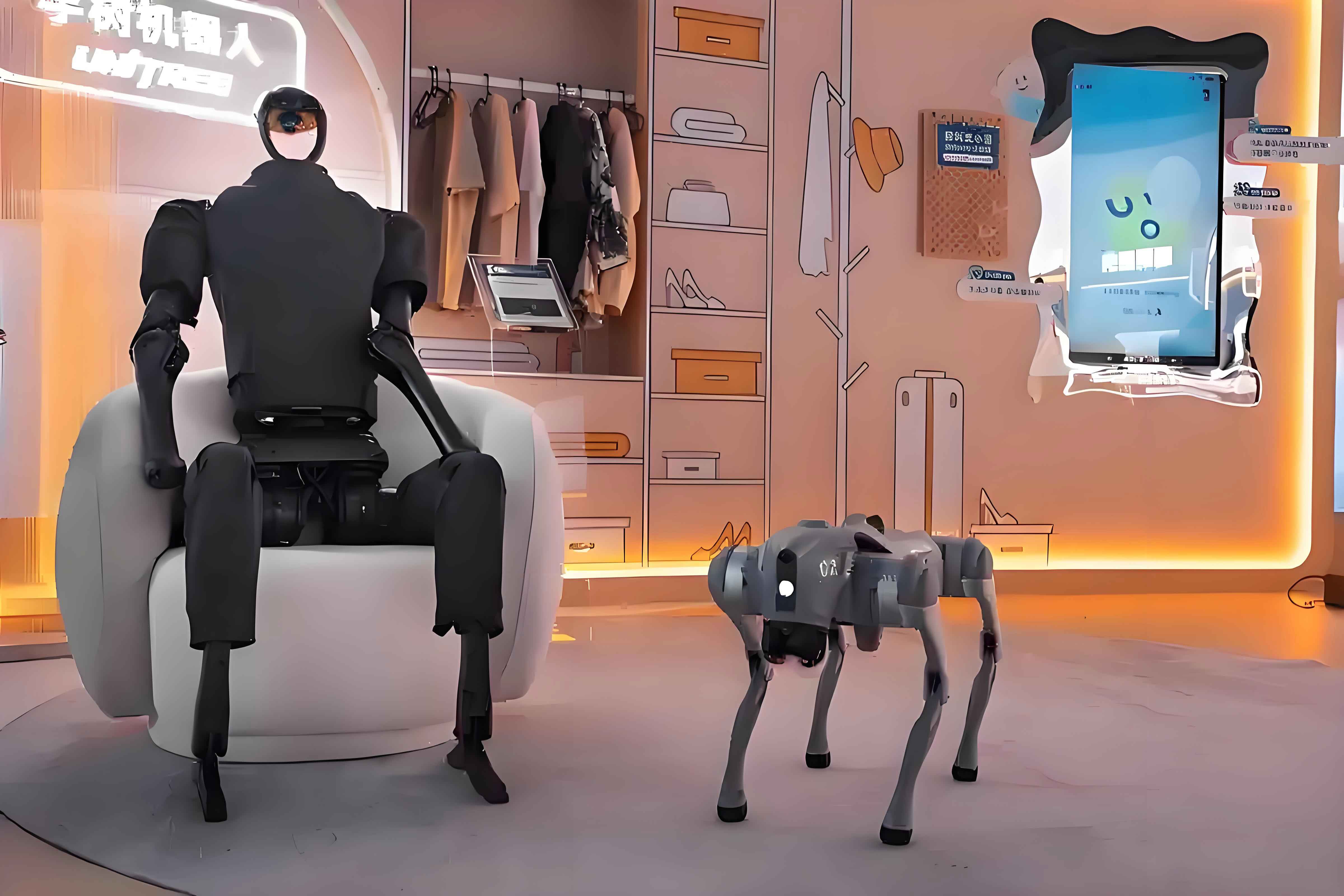
Wind data show that the A-share humanoid robots concept sector includes 119 companies. Among them, more than 80 percent achieved year-on-year revenue growth in the first half, while more than half achieved year-on-year growth in net profit. Since the beginning of 2026, companies connected to humanoid robots have moved more deeply into real-world application scenarios and accelerated commercialization. That push has helped drive first-half earnings increases across the humanoid robots supply chain, from full-machine developers to component makers and system integrators.
The first-half reporting season therefore offers a useful snapshot of how humanoid robots are moving from concept-driven expectations toward performance-driven validation. The data do not suggest that every challenge has been solved, nor do they indicate that humanoid robots have already reached full-scale mass adoption. What they do show is that a growing number of companies in the humanoid robots ecosystem are translating technical capabilities, customer engagements, and product launches into measurable financial progress. For investors and industry participants, that is a meaningful change in the narrative around humanoid robots.
In previous cycles, humanoid robots often attracted attention because of demonstrations, prototypes, and long-term market projections. The emphasis was frequently on what humanoid robots might eventually become. In the first half of 2026, the emphasis is shifting toward what humanoid robots and their supply chains are actually delivering. Revenue growth is visible across multiple layers of the value chain, and profit trends are improving in several segments. This does not eliminate uncertainty, but it does strengthen the case that humanoid robots are entering a more practical phase of commercial development.
- Humanoid Robots Shift From Theme Investment to Commercial Delivery
The transition now underway is best described as a shift from theme investment to commercial delivery. Humanoid robots have long been viewed as a category with enormous potential because they combine artificial intelligence, advanced mechanics, motion control, sensing, and human-like interaction. However, potential alone does not create a sustainable industry. Sustainable growth requires real applications, repeat orders, reliable products, and improving unit economics. The first-half results from companies in the humanoid robots supply chain suggest that some of these requirements are beginning to be met.
Complete-machine developers are among the most visible participants in the humanoid robots market because their products directly represent the category. Yet the health of the humanoid robots industry depends just as much on suppliers of joints, motors, reducers, sensors, screws, and control modules. When component makers begin to report higher revenue and better profit trends, it indicates that humanoid robots are moving beyond one-off prototype builds and toward more repeatable production. That is a crucial distinction for any emerging hardware category, and it is especially important for humanoid robots because the complexity of the product requires a deep and coordinated supply chain.
The first-half data also point to a broader convergence between humanoid robots and industrial robotics. Many companies that built their businesses around industrial robots, factory automation, or motion control are now positioning themselves in the humanoid robots opportunity. This convergence can accelerate development because industrial robot companies already possess experience in precision manufacturing, reliability engineering, and customer support. At the same time, humanoid robots demand new capabilities in embodied intelligence, dexterous manipulation, mobility, and human-robot interaction. The overlap between industrial robotics and humanoid robots is therefore both an advantage and a challenge.
For the humanoid robots ecosystem, the most encouraging signal is not simply that revenue is rising. It is that revenue growth is appearing across different parts of the chain. If only one or two companies reported strong results, it would be difficult to argue that the humanoid robots industry as a whole was improving. But the first-half performance includes full-machine developers, industrial robot suppliers, joint motor manufacturers, motion control companies, and rare-earth magnet producers. That breadth supports the view that humanoid robots are becoming a more diversified commercial opportunity.
Another important signal is the improvement in profitability or loss reduction. Revenue growth can be achieved through shipments, but profitability requires pricing power, cost control, product mix, and operational efficiency. In the case of humanoid robots, profitability is particularly important because the industry must eventually demonstrate that it can scale without relying indefinitely on external funding. The first-half reports show that some companies are moving in that direction, even if the journey remains early.
- Full-Machine Leaders Show Revenue and Profit Momentum
Among complete-machine companies, Unitree Robotics and UBTech both reported strong first-half performance in revenue and profit-related metrics. In the first half of 2026, Unitree Robotics achieved operating revenue of 1.152 billion yuan, representing year-on-year growth of 48.54 percent. Its net profit attributable to shareholders was 274 million yuan, compared with a loss of 32.0245 million yuan in the same period a year earlier. The swing from loss to profit is a notable development for a company associated with humanoid robots and advanced robotics platforms.
UBTech reported total revenue of 1.27 billion yuan in the first half, an increase of 104.2 percent year on year. Its adjusted EBITDA was negative 170 million yuan, but the loss was reduced by 150 million yuan compared with the prior year. UBTech’s revenue growth was mainly driven by a sharp increase in revenue from full-size embodied intelligent humanoid robots, which rose 1445.0 percent year on year. That figure is especially relevant because it shows that demand for more advanced humanoid robots can translate into substantial revenue growth when products move into commercial deployment.
The performance of these full-machine leaders matters for the entire humanoid robots supply chain. When companies selling humanoid robots increase revenue, they create demand for components such as joint modules, motors, reducers, sensors, and precision structural parts. When they improve profitability or reduce losses, they become more capable of investing in research and development, production capacity, and customer support. In that sense, the progress of full-machine developers can act as a pull factor for the broader humanoid robots ecosystem.
At the same time, the results also show that humanoid robots remain an evolving business. UBTech still reported negative adjusted EBITDA, which indicates that significant investment and scale-building costs remain part of the picture. Unitree Robotics moved into profit, but the industry as a whole is still at an early stage of commercialization. The key question is whether these trends can continue as production volumes increase and as competition intensifies. For humanoid robots, the first-half figures are encouraging, but they are not the end point.
The full-machine segment also highlights the importance of product definition. Humanoid robots can take different forms and serve different use cases. Some are designed for research and development, some for industrial tasks, some for service environments, and some for embodied intelligence applications. The revenue growth at UBTech from full-size embodied intelligent humanoid robots suggests that customers are beginning to see value in more capable humanoid robots. The profit improvement at Unitree Robotics suggests that commercial discipline and product demand can combine to produce better financial outcomes.
For the humanoid robots industry, these full-machine results provide a reference point. They demonstrate that humanoid robots can generate meaningful revenue, but they also show that profitability depends on execution. The market will likely watch whether full-machine companies can maintain growth, expand deliveries, and improve margins as they scale. Those outcomes will influence confidence across the humanoid robots supply chain, from component suppliers to system integrators.
- Industrial Robot Peers Add to Humanoid Robots Momentum
Industrial robot companies are also contributing to the momentum around humanoid robots. In the first half, several industrial robot complete-machine companies reported generally higher performance. EFORT achieved operating revenue of 656 million yuan, up 28.93 percent year on year. Its net loss attributable to shareholders narrowed by 62.48 percent, a significant improvement in profitability. Topstar reported operating revenue of 1.288 billion yuan, up 18.61 percent year on year, and net profit attributable to shareholders of 104 million yuan, up 262.99 percent. Yuejiang Technology reported first-half operating revenue of 316 million yuan, up 106.6 percent year on year.
Other industrial robot companies such as Estun and Luoshi Robotics also operate in areas that overlap with humanoid robots, including motion control, servo systems, robot bodies, and automation solutions. The article notes that their first-half performance generally improved. This matters because industrial robot companies often possess manufacturing know-how, customer relationships, and engineering teams that can be adapted to humanoid robots. As humanoid robots move toward commercialization, the boundary between industrial robotics and humanoid robotics is becoming less rigid.
The connection between industrial robots and humanoid robots is not merely conceptual. Many humanoid robots require precise joint actuation, real-time control, force sensing, and reliable motion planning. These are areas where industrial robot companies have accumulated experience. Humanoid robots also require higher levels of mobility, balance, and interaction, which go beyond traditional industrial robot applications. The companies that can combine industrial reliability with embodied intelligence may be well positioned in the humanoid robots market.
Yuejiang Technology’s revenue growth of 106.6 percent in the first half is particularly notable because it shows that demand for collaborative and intelligent robotics can expand quickly. Although the provided data do not break down how much of that growth came directly from humanoid robots, the company’s position in the broader robotics ecosystem makes it relevant to the humanoid robots theme. As humanoid robots become more capable, they may increasingly share components, software architectures, and manufacturing processes with collaborative robots and industrial automation platforms.
EFORT’s narrowed loss and Topstar’s sharp net profit increase also suggest that robotics companies can improve financial performance when product demand and operational execution align. For the humanoid robots supply chain, these examples are encouraging because they show that the underlying robotics manufacturing base is strengthening. A robust industrial robotics foundation can support the development of humanoid robots by providing mature supply chains, quality control processes, and engineering talent.
The broader lesson is that humanoid robots are not developing in isolation. They are emerging from a wider robotics and automation ecosystem that already includes industrial robots, collaborative robots, servo drives, motion controllers, and sensors. As that ecosystem grows, humanoid robots can benefit from shared technologies and economies of scale. The first-half results from industrial robot companies therefore add another layer of evidence that the humanoid robots value chain is becoming more commercially active.
- Core Components Begin to Convert Orders Into Earnings
Core components are a critical part of the humanoid robots story because they determine performance, reliability, and cost. Several companies involved in reducers, servo motors, lead screws, sensors, and related components have begun to translate orders into earnings. Langxin Electric, which focuses on robot joint motors, reported first-half operating revenue of 667 million yuan, up 12.11 percent year on year, and net profit attributable to shareholders of 44.51 million yuan, up 0.39 percent. The company stated that the high gross margin characteristics of the robotics track are expected to optimize its overall profit structure over the medium and long term.
Leadshine Technology focuses on two core categories for humanoid robots: robot joint modules and dexterous hands. In the first half of 2026, the company achieved revenue of 1.247 billion yuan, up 39.92 percent year on year, and net profit attributable to shareholders of 194 million yuan, up 62.79 percent. Leadshine Technology has achieved self-research and mass production of planetary joint modules, harmonic joint modules, multi-degree-of-freedom dexterous hands, and other core components. Its products have received batch orders from mainstream domestic robot manufacturers, and the pace of commercialization continues to accelerate.
JL Mag Rare-Earth reported first-half operating revenue of 4.649 billion yuan, up 32.57 percent year on year, setting a record high for the same period. The company has obtained a designated project for embodied robot motor rotors from a world-renowned technology company and has delivered small-batch products. This is an important example of how humanoid robots and embodied intelligence can create demand in specialized materials and precision components. Motor rotors are essential for efficient and controllable actuation, which is central to the performance of humanoid robots.
The progress among component suppliers is significant because humanoid robots require a large number of high-performance parts. A single humanoid robot may need joints, motors,减速器? Wait, no Chinese. Need avoid Chinese. Let’s continue in English. A single humanoid robot may require multiple joints, compact motors, reducers, sensors, and control modules. The ability to mass produce these components reliably and affordably is essential for lowering the cost of humanoid robots. When component companies report growing revenue and batch orders, it suggests that demand is moving from sample-stage procurement toward more repeatable supply relationships.
Dexterous hands are another important area. Humanoid robots need hands capable of grasping, manipulating, and interacting with objects in unstructured environments. Multi-degree-of-freedom dexterous hands are complex products that combine mechanical design, sensing, and control algorithms. Leadshine Technology’s mass production of dexterous hands and joint modules indicates that the supply chain for humanoid robots is maturing in areas that were previously considered difficult to industrialize. This is a positive signal for the commercialization of humanoid robots because dexterity is often a bottleneck for practical applications.
Joint modules are equally important because they determine the range, strength, and precision of motion. Planetary joint modules and harmonic joint modules are widely relevant to humanoid robots, as well as to collaborative robots and other advanced robotic systems. When a company can mass produce these modules and win batch orders from mainstream robot manufacturers, it strengthens the industrial base for humanoid robots. The same logic applies to joint motors, which must deliver high torque density, responsiveness, and durability in a compact form factor.
JL Mag Rare-Earth’s small-batch delivery of motor rotors for an embodied robot project shows that humanoid robots are beginning to influence demand in upstream materials and components. Rare-earth magnets are used in many high-performance motors, and humanoid robots require motors that are both powerful and efficient. As humanoid robots move toward larger production volumes, demand for specialized motor components could increase. However, the first-half data also show that this process is still at an early stage, with small-batch deliveries rather than full-scale mass production in some cases.
- Selected First-Half 2026 Results Across the Humanoid Robots Supply Chain
| Company | Segment | First-Half 2026 Revenue | Revenue Year-on-Year | Profit Metric | Profit Year-on-Year or Change |
|---|---|---|---|---|---|
| Unitree Robotics | Full-machine humanoid robots and advanced robotics | 1.152 billion yuan | +48.54% | Net profit attributable to shareholders: 274 million yuan | Compared with a loss of 32.0245 million yuan in the prior-year period |
| UBTech | Full-machine humanoid robots and embodied intelligence | 1.27 billion yuan | +104.2% | Adjusted EBITDA: -170 million yuan | Loss reduced by 150 million yuan |
| EFORT | Industrial robot complete machines and automation | 656 million yuan | +28.93% | Net loss attributable to shareholders | Loss narrowed by 62.48% |
| Topstar | Industrial robots and automation solutions | 1.288 billion yuan | +18.61% | Net profit attributable to shareholders: 104 million yuan | +262.99% |
| Yuejiang Technology | Industrial and collaborative robots | 316 million yuan | +106.6% | Not provided in the reviewed dataset | Not provided in the reviewed dataset |
| Langxin Electric | Robot joint motors | 667 million yuan | +12.11% | Net profit attributable to shareholders: 44.51 million yuan | +0.39% |
| Leadshine Technology | Robot joint modules and dexterous hands | 1.247 billion yuan | +39.92% | Net profit attributable to shareholders: 194 million yuan | +62.79% |
| JL Mag Rare-Earth | Motor rotors for embodied robots and other applications | 4.649 billion yuan | +32.57% | A record high for the same period | Net profit data not provided in the reviewed dataset |
The table above summarizes selected first-half 2026 results from companies discussed in the dataset. It should be read as a snapshot rather than a complete account of the humanoid robots industry. The companies operate in different segments and have different business mixes, so their financial results are not directly comparable. Nevertheless, the table highlights an important pattern: growth and profit improvement are appearing across multiple layers of the humanoid robots value chain.
For humanoid robots, this pattern matters because the industry requires coordination across many specialties. Full-machine developers need reliable components. Component suppliers need predictable orders. System integrators need platforms that can be deployed in real environments. When all three groups show signs of progress, the humanoid robots ecosystem becomes more resilient. The first-half data do not prove that the industry has reached maturity, but they do show that more pieces of the commercial puzzle are falling into place.
The presence of both revenue growth and profit improvement is also notable. In many emerging technology sectors, revenue can grow quickly while profits remain elusive. Humanoid robots are no exception, and several companies in the ecosystem are still investing heavily in research, development, and capacity. However, the fact that some companies are improving net profit, reducing losses, or winning batch orders suggests that the humanoid robots supply chain is beginning to generate operating leverage. That is an essential condition for long-term commercial sustainability.
- Profit Inflection Nears as Orders and Mass Production Advance
The humanoid robots industry is currently described as being at a breaking dawn moment, moving from technical breakthroughs toward large-scale commercialization. The first-half 2026 reports show that supply chain orders continued to grow, and the industry profit inflection is gradually approaching. This does not mean that profitability is guaranteed or that all companies will succeed. It does mean that the direction of travel is becoming clearer. Humanoid robots are moving from laboratory demonstrations and pilot projects toward real deployments and repeat business.
CICC pointed out that the core driving force of the global humanoid robots industry will shift from theme investment based on technological imagination to industry value realization based on mass production progress and actual scenario orders. This is a concise way to describe the transition now underway. In the early phase, humanoid robots attracted capital because of their long-term potential. In the next phase, humanoid robots will need to prove that they can be produced, sold, deployed, and supported at scale. The first-half results provide early evidence that this transition is beginning.
Mass production progress is important because humanoid robots are complex hardware products. Unlike software, which can be distributed at near-zero marginal cost, humanoid robots require physical manufacturing, assembly, testing, shipping, and maintenance. Every step in the process must be reliable and cost-effective. When companies report batch orders, self-research mass production, and small-batch deliveries, they are describing the early stages of this industrial build-out. For humanoid robots, these operational milestones are as important as technical demonstrations.
Actual scenario orders are equally important. A humanoid robot that performs well in a controlled demonstration may face unexpected challenges in a factory, warehouse, hospital, retail environment, or service setting. Real-world deployment tests durability, safety, perception, and interaction. It also reveals whether customers are willing to pay for the value that humanoid robots provide. The first-half data suggest that more companies are engaging with real scenarios and converting those engagements into revenue. That is a positive development for the humanoid robots market.
The shift from technological imagination to value realization also changes how the humanoid robots industry should be evaluated. Investors may need to focus less on concept announcements and more on delivery volumes, order backlogs, gross margins, customer concentration, and after-sales support. Industry participants may need to prioritize reliability, cost reduction, and integration with existing workflows. The companies that can execute on these dimensions are more likely to capture value as humanoid robots scale.
At the same time, the profit inflection is still approaching rather than fully arrived. Some companies in the humanoid robots supply chain continue to report losses or negative adjusted EBITDA. Others report modest profit growth despite revenue increases. This suggests that the industry is still in an investment phase. The challenge is to maintain momentum while improving efficiency. If humanoid robots can continue to grow revenue while gradually improving profitability, the industry will become more attractive to long-term capital and strategic partners.
- What the Humanoid Robots Data Reveal About the Next Phase
The first-half 2026 data reveal several important themes for humanoid robots. First, demand is broadening. Humanoid robots are not only a full-machine story. They are also a component story, a materials story, a motion control story, and a system integration story. Companies across these areas are reporting growth. Second, commercialization is becoming more concrete. Batch orders, mass production, designated projects, and small-batch deliveries are appearing in company disclosures. Third, profitability is improving in selected cases, even if the overall industry remains early.
For humanoid robots, the next phase will likely be defined by execution. Companies will need to demonstrate that they can scale production without sacrificing quality. They will need to show that customer orders are repeatable rather than one-time. They will need to manage costs as they add capacity. They will also need to prove that humanoid robots can deliver measurable value in specific use cases. The first-half results provide a foundation, but they also set higher expectations for the future.
Full-machine developers will play a central role because they define the product experience. Unitree Robotics and UBTech have shown that humanoid robots can generate significant revenue growth. Their performance will influence customer confidence and supplier demand. If they continue to improve, they can help pull the humanoid robots supply chain forward. If growth slows or losses widen, the ecosystem may face a more difficult period. The balance between growth and profitability will be closely watched.
Component suppliers will also be critical because they determine whether humanoid robots can be produced at scale. Joint modules, motors, reducers, sensors, dexterous hands, and motor rotors are not commodity items. They require precision engineering and consistent quality. Companies such as Leadshine Technology, Langxin Electric, and JL Mag Rare-Earth are demonstrating that progress is possible. Their ability to win batch orders and deliver products will be an important indicator of the humanoid robots industry’s manufacturing readiness.
Industrial robot companies add another dimension. Their experience in factory automation, motion control, and reliability can help humanoid robots move into industrial and commercial environments. Companies such as EFORT, Topstar, Yuejiang Technology, Estun, and Luoshi Robotics operate in adjacent markets that may increasingly overlap with humanoid robots. As humanoid robots become more capable, they may be integrated into workflows that already use industrial robots, collaborative robots, and automated systems. This convergence could create new opportunities and new competition.
The data also suggest that the humanoid robots supply chain is becoming more visible to investors. More than 80 percent of the 119 A-share humanoid robots concept companies reported year-on-year revenue growth in the first half, and more than half reported year-on-year net profit growth. That breadth is notable. It indicates that the humanoid robots theme is no longer confined to a small group of pure-play companies. It now includes diversified industrial, electrical equipment, materials, and automation companies that are exposed to the humanoid robots opportunity.
However, breadth can also create complexity. Not every company with exposure to humanoid robots will benefit equally. Some may have only a small portion of revenue tied to humanoid robots. Others may face competition from larger or more specialized suppliers. The first-half data should therefore be read carefully. Revenue growth and profit improvement are positive signs, but the quality, durability, and scale of humanoid robots-related revenue matter. The market will likely reward companies that can demonstrate clear product differentiation and repeatable demand.
- Risks and Execution Priorities for Humanoid Robots Commercialization
Despite the encouraging first-half results, humanoid robots commercialization still faces execution priorities. The industry must continue to improve reliability. Humanoid robots operate in complex environments and must handle unpredictable conditions. They need robust hardware, advanced perception, and safe control systems. Reliability is not only a technical issue. It is also a commercial issue because customers will not adopt humanoid robots at scale if downtime and maintenance costs are too high.
Cost reduction is another priority for humanoid robots. Many components used in humanoid robots are sophisticated and expensive. Joint modules, dexterous hands, sensors, and high-performance motors all contribute to the total cost. As production volumes increase, economies of scale may help reduce costs. But companies must also design for manufacturability and simplify where possible. The first-half results from component suppliers suggest that mass production is beginning, but cost reduction will remain a central challenge for humanoid robots.
Order conversion and customer adoption are also critical. Batch orders are an important milestone, but they must lead to repeat orders and larger deployments. Customers need to see clear return on investment from humanoid robots. In industrial settings, that may mean improved productivity, flexibility, or safety. In service settings, it may mean better customer experience or reduced labor burden. The more clearly humanoid robots can demonstrate value, the more likely adoption will accelerate.
Profitability discipline will matter as well. Revenue growth can mask inefficiencies if companies scale too quickly without controlling costs. The first-half data show that some companies are improving profitability, but others are still investing heavily. For the humanoid robots industry to mature, companies must balance growth with financial sustainability. That means managing research and development spending, production capacity, inventory, and customer credit. It also means choosing the right applications and avoiding overextension.
Competition is another factor that will shape the humanoid robots landscape. As more companies enter the market, differentiation will become more important. Full-machine developers will compete on capability, cost, and ecosystem. Component suppliers will compete on performance, reliability, and price. System integrators will compete on domain knowledge and deployment speed. The first-half results suggest that the market is still expanding, but competition will intensify as humanoid robots move toward scale.
Finally, the humanoid robots industry must continue to develop standards and interoperability. Different robots may use different interfaces, communication protocols, and safety requirements. Standards can reduce integration costs and accelerate adoption. They can also help component suppliers serve multiple customers more efficiently. The first-half data do not directly address standards, but the growing involvement of industrial robot companies and component makers suggests that the ecosystem is becoming more structured. That structure can support the next phase of humanoid robots growth.
- Conclusion
The first-half 2026 results show that humanoid robots and their supply chain are moving from concept炒作? Wait, no Chinese. Need avoid Chinese. I accidentally typed Chinese. Need correct. Continue in English only. The first-half 2026 results show that humanoid robots and their supply chain are moving from concept-driven speculation toward earnings delivery. Companies across full-machine development, industrial robotics, core components, and materials reported growth, profit improvement, order progress, or loss reduction. The data are not uniform, and the industry remains early, but the direction is clear.
Unitree Robotics and UBTech demonstrated that humanoid robots can generate meaningful revenue growth. Industrial robot companies such as EFORT, Topstar, and Yuejiang Technology showed that the broader robotics manufacturing base is strengthening. Component suppliers such as Langxin Electric, Leadshine Technology, and JL Mag Rare-Earth showed that orders for joint motors, joint modules, dexterous hands, and motor rotors are beginning to translate into financial results. Together, these developments support the view that humanoid robots are entering a more commercial phase.
CICC’s assessment that the global humanoid robots industry will shift from theme investment to value realization based on mass production and actual scenario orders captures the current moment well. The first-half reports suggest that this shift is underway. Humanoid robots are no longer only a story about future potential. They are increasingly a story about production, orders, revenue, and profitability. That does not make the outcome certain, but it makes the industry more investable and more relevant to the broader economy.
For the humanoid robots supply chain, the next milestones will be repeat orders, higher production volumes, cost reduction, and sustained profitability. For full-machine developers, the focus will be on product reliability, application fit, and customer value. For component suppliers, the focus will be on quality, scale, and integration with leading robot platforms. For industrial robot companies, the focus will be on leveraging existing capabilities while adapting to the unique demands of humanoid robots. If these priorities are met, the humanoid robots industry can continue its transition from promise to performance.
The first half of 2026 may be remembered as a period when humanoid robots began to show up more clearly in financial results rather than only in technology headlines. The numbers are not yet overwhelming, and the industry still faces significant challenges. But the breadth of improvement across the humanoid robots value chain is a meaningful signal. It suggests that the commercialization of humanoid robots is no longer a distant possibility. It is becoming a measurable business reality, with revenue, orders, and profit trends that can be tracked, compared, and evaluated.