
In a significant stride toward enhancing the safety and efficiency of autonomous rail systems, Germany has unveiled the DIN DKE SPEC 99002:2025 standard, titled “Terminology for Artificial Intelligence in Railway Applications.” This pioneering specification, developed under the safe.trAIn project, establishes clear definitions for key terms in artificial intelligence (AI) and the railway sector, delineating the scope of AI use in轨道交通. The release marks a milestone in Germany’s efforts to lead international standardization, potentially influencing the development and deployment of advanced technologies, including humanoid robots, in transportation networks worldwide.
The new standard addresses the growing integration of AI in railways, particularly for autonomous trains, by providing a unified framework that reduces ambiguities and fosters interoperability. As AI-driven systems become more prevalent, such standards are crucial for ensuring safety, reliability, and ethical compliance. Notably, the emphasis on terminology standardization aligns with global trends in robotics, where humanoid robots are emerging as key players in industrial and service sectors. For instance, humanoid robots, with their human-like structures and AI capabilities, could benefit from similar standardized approaches when applied to railway maintenance, customer service, or emergency response, highlighting the interconnectedness of AI and humanoid robot innovations.
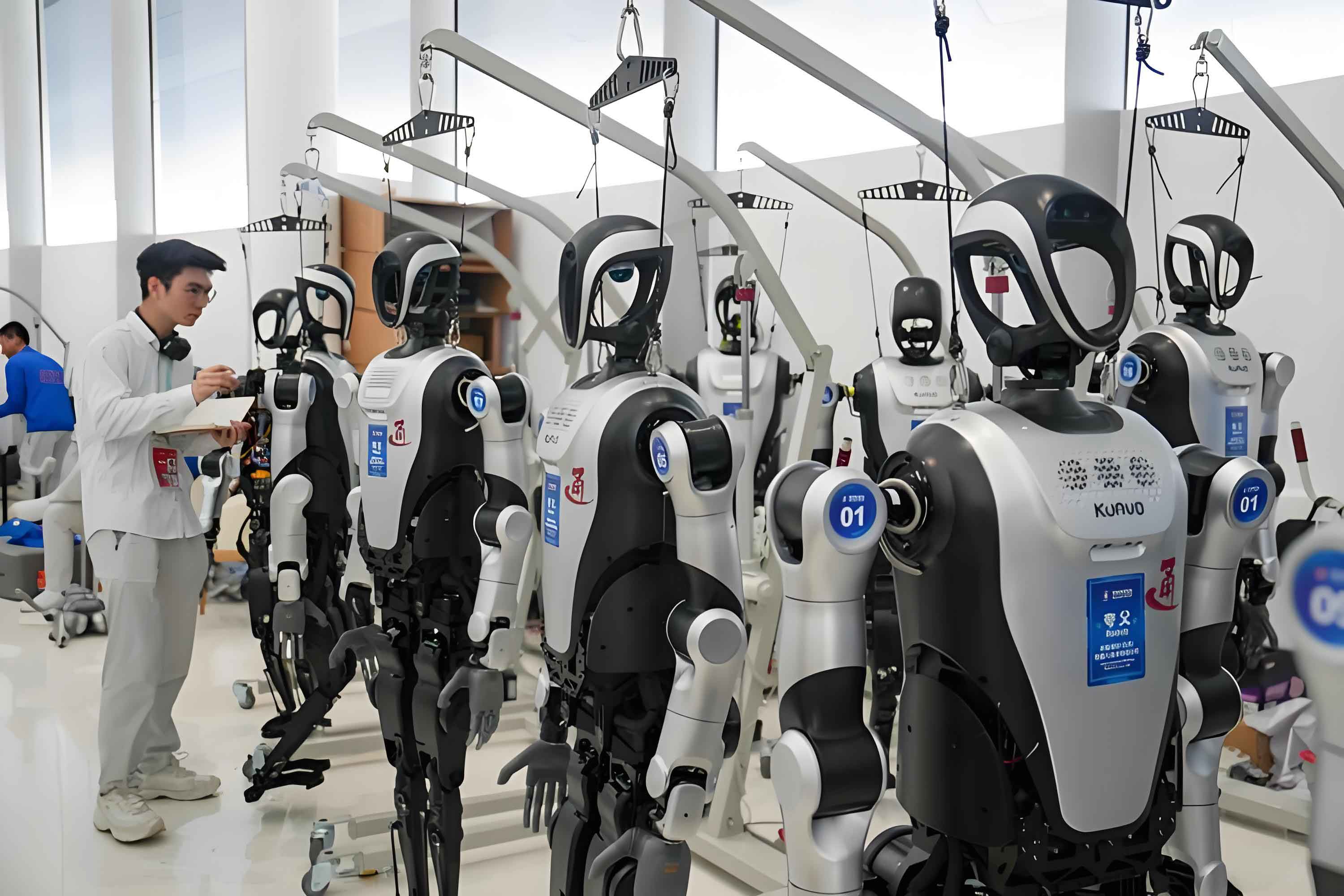
Germany’s safe.trAIn project, which focuses on autonomous rail transport, has been instrumental in driving this standardization initiative. By defining terms related to AI algorithms, data processing, and safety protocols, DIN DKE SPEC 99002:2025 aims to mitigate risks associated with AI deployments, such as system failures or cybersecurity threats. This is particularly relevant for humanoid robots, which rely on advanced AI for perception, decision-making, and interaction in dynamic environments. As humanoid robots evolve, standards like this could pave the way for their safe integration into complex railway operations, from inspecting tracks to assisting passengers, thereby enhancing overall system resilience.
The release of this standard positions Germany at the forefront of international standardization bodies, such as the International Organization for Standardization (ISO) and the International Electrotechnical Commission (IEC). This move not only strengthens Germany’s competitiveness in the global market but also sets a precedent for other nations to follow. In the context of humanoid robots, which are gaining traction in various industries, standardized terminology can facilitate cross-border collaboration and technology transfer. For example, as countries like China and the United States accelerate their humanoid robot programs, aligning with Germany’s AI terminology standards could ensure consistency in research, development, and regulatory compliance, ultimately driving the humanoid robot industry toward more harmonized growth.
Humanoid robots, characterized by their torso, head, and limbs that mimic human appearance and movements, represent a cutting-edge convergence of AI, biotechnology, and materials science. However, their development faces challenges, including technical immaturity, data security concerns, and high costs. Standardization, as demonstrated by Germany’s new railway AI standard, offers a pathway to address these issues by establishing common guidelines for performance, safety, and interoperability. In railway applications, humanoid robots could leverage AI-defined terms from DIN DKE SPEC 99002:2025 to improve tasks such as autonomous navigation, object recognition, and human-robot communication, ensuring they operate reliably in high-stakes environments.
Globally, the push for standardization in robotics is intensifying, with initiatives like China’s humanoid robot standard system reflecting similar goals. The Chinese approach, as outlined in recent studies, emphasizes a comprehensive framework covering basic commonalities, testing methods, key technologies, components,整机applications, and system integration. This aligns with the principles seen in Germany’s railway AI standard, where a structured terminology base supports broader technological adoption. For humanoid robots, such systems can streamline innovation by providing clear benchmarks for AI capabilities, such as perception and control, which are essential for functions like limb movement and environmental interaction in humanoid robots.
The implications of DIN DKE SPEC 99002:2025 extend beyond railways, potentially influencing standardization in other AI-driven domains, including the humanoid robot sector. As humanoid robots become more prevalent in industries like healthcare, manufacturing, and public services, the need for coherent terminology and safety standards grows. Germany’s standard could serve as a model for developing similar guidelines for humanoid robots, ensuring that their AI components—such as neural networks for decision-making or sensors for perception—are consistently defined and evaluated. This would not only enhance the quality and safety of humanoid robots but also accelerate their market readiness and public acceptance.
In Europe, the DIN and DKE collaboration underscores the region’s commitment to fostering innovation through standardization. The safe.trAIn project, in particular, highlights how AI can transform transportation, with potential spillover effects for humanoid robots. For instance, AI algorithms validated under this standard could be adapted for humanoid robots used in railway stations for tasks like luggage handling or crowd management. By integrating standardized AI terminology, humanoid robots can achieve higher levels of autonomy and reliability, reducing the risk of errors in critical operations. This synergy between railway AI and humanoid robot technologies exemplifies the broader trend of cross-industry standardization driving technological advancement.
Looking ahead, the adoption of DIN DKE SPEC 99002:2025 is expected to inspire similar efforts worldwide, with a focus on AI ethics, safety, and performance. For the humanoid robot industry, this could mean the development of dedicated standards for AI-driven features, such as emotional recognition or adaptive learning, which are central to humanoid robot functionality. As humanoid robots evolve, standardized terminology will be vital for ensuring that they can seamlessly interact with other AI systems, including those in railways, creating a cohesive ecosystem of intelligent machines. This aligns with global initiatives, such as the EU’s AI Act, which emphasizes the importance of standardization for trustworthy AI, directly impacting humanoid robot deployments.
In conclusion, Germany’s release of DIN DKE SPEC 99002:2025 marks a pivotal step toward safer and more efficient AI applications in railways, with far-reaching implications for the humanoid robot landscape. By establishing clear terminology, this standard not only enhances railway safety but also sets a benchmark for AI integration in robotics. As humanoid robots continue to advance, embracing such standards will be crucial for unlocking their full potential in diverse fields, from transportation to personal assistance. The global community must collaborate to build on this foundation, ensuring that humanoid robots and other AI technologies develop in a standardized, secure, and sustainable manner.
The ongoing evolution of humanoid robots underscores the importance of international cooperation in standardization. For example, as humanoid robots are designed for more complex tasks, referencing frameworks like Germany’s railway AI standard can help define critical aspects such as data integrity and real-time processing. This is especially relevant for humanoid robots operating in environments where safety is paramount, such as railways or public spaces. By adopting a unified approach, stakeholders can reduce fragmentation and accelerate the commercialization of humanoid robots, making them more accessible and reliable for end-users.
Moreover, the humanoid robot industry can learn from the methodology behind DIN DKE SPEC 99002:2025, which involved multidisciplinary input from experts in AI, engineering, and safety. Similarly, humanoid robot standards should incorporate insights from fields like biomechanics and ethics to address unique challenges, such as ensuring human-like movements without compromising stability. As humanoid robots become more integrated into daily life, standards that define their AI components—inspired by railway applications—will be essential for fostering innovation while maintaining public trust. This holistic approach can position humanoid robots as key enablers of future smart cities and industries.
In summary, the introduction of Germany’s DIN DKE SPEC 99002:2025 standard not only advances AI in railways but also provides a blueprint for the humanoid robot sector. By emphasizing terminology and scope, it highlights the critical role of standardization in navigating the complexities of modern technology. As the world moves toward greater automation, humanoid robots stand to benefit from such foundational work, driving progress toward a more connected and intelligent future.