
In an era where humanoid robots are poised to redefine global technological competition, the race to establish robust standardization frameworks has taken center stage. Humanoid robots, characterized by their human-like appearance and capabilities, are emerging as pivotal assets in industries ranging from manufacturing to healthcare. As nations strive to harness the potential of humanoid robots, the development of standardized systems is critical to ensuring safety, interoperability, and innovation. Recent initiatives in China highlight a concerted effort to build a unified standard system for humanoid robots, addressing core challenges such as cross-disciplinary integration, data security, and real-time performance. This move could set a precedent for global standards, influencing how humanoid robots evolve and integrate into society.
The concept of humanoid robots, as defined by standards like GB/T 12643–2025, refers to robots with torsos, heads, and limbs that mimic human appearance and movements. Unlike traditional robots, humanoid robots leverage artificial intelligence to replicate human perception, decision-making, interaction, and execution. However, the rapid advancement of humanoid robots brings forth complexities, including immature core technologies, security vulnerabilities, and high costs. Standardization serves as a foundational pathway to scientific management, economic growth, and technological progress, offering a blueprint for quality assurance and industry-wide collaboration. The push for humanoid robot standards is not just a national priority but a global imperative, as these machines could revolutionize how we live and work.
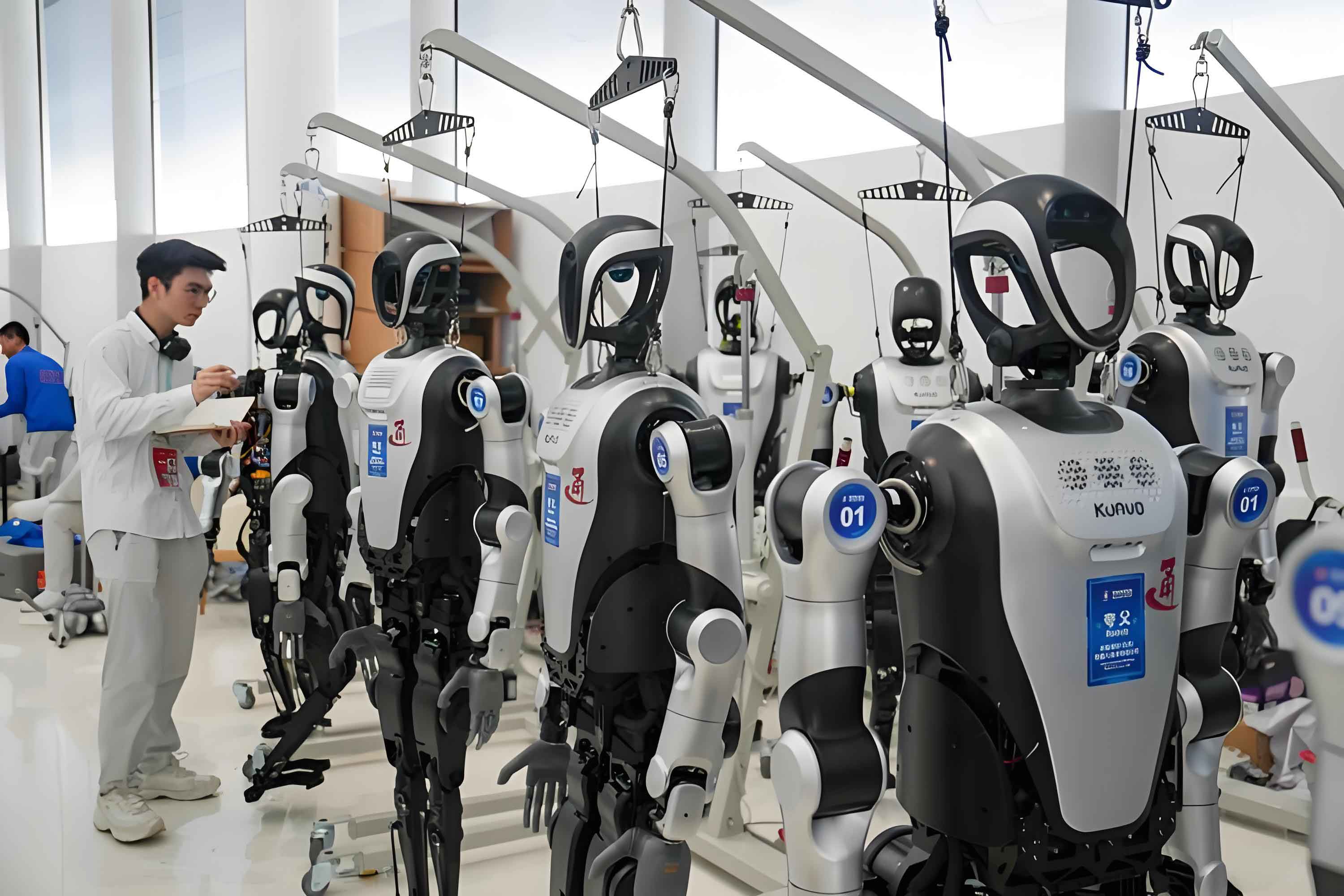
Humanoid robots represent a fusion of cutting-edge technologies, including AI, biotechnology, and new materials, yet they face significant hurdles. For instance, the integration of software and hardware in humanoid robots remains a challenge, often leading to performance issues in dynamic environments. As applications of humanoid robots expand into sectors like automotive factories, elderly care, and medical services, the demand for reliable standards grows. A well-structured standard system for humanoid robots can streamline development, reduce risks, and foster international cooperation, ultimately accelerating the adoption of these advanced machines. This article delves into the current state of humanoid robot standardization, with a focus on China’s initiatives, and explores the proposed framework that could shape the future of humanoid robots worldwide.
Current State of Humanoid Robot Standardization
The global landscape for humanoid robots is evolving rapidly, with China emerging as a key player through its “technology breakthrough + industry landing” dual-drive model. In terms of technology, humanoid robots have seen advancements in motion control, AI interaction, and sensor fusion, enhancing their ability to navigate complex terrains and interact naturally. On the industrial front, clusters in cities like Shenzhen and Shanghai are fostering ecosystems for humanoid robots, enabling practical applications in diverse fields. However, the lack of comprehensive standards poses a barrier to scalability and safety for humanoid robots.
Governments worldwide are recognizing the strategic importance of humanoid robots. In China, policies such as the “14th Five-Year Plan for Robot Industry Development,” the “Robot+ Application Action Implementation Plan,” the “New Industry Standardization Navigation Project Implementation Plan (2023–2035),” and the “Humanoid Robot Innovation Development Guidance” have been instrumental in promoting standardization. These policies emphasize multi-departmental coordination and foundational work to support the growth of humanoid robots. Regional governments are also aligning with national strategies, creating a top-down policy体系 that encourages standardization across the entire产业链 for humanoid robots.
Standardization organizations have played a crucial role in this journey. In 2021, the National Robot Standardization Technical Committee (SAC/TC 591) was established to oversee national standard formulation for robots, excluding toys and unmanned aerial vehicles. The formation of the SAC/TC 591 Humanoid Robot Standardization Working Group (WG 02) in 2023 marked a significant milestone, accelerating standardization efforts for humanoid robots. By September 2024, China’s Ministry of Industry and Information Technology proposed the establishment of a dedicated humanoid robot standardization technical committee, signaling a transition from conceptual stages to mass production for humanoid robots. Additionally, social organizations like the China International Economic and Technical Cooperation Promotion Association and the Zhejiang Enterprise Technological Innovation Association have actively developed group standards for humanoid robots, responding swiftly to market needs.
Despite these efforts, the standardization of humanoid robots is still in its infancy. Existing standards are fragmented, primarily covering basic aspects such as terminology, classification, and safety requirements. As of April 2025, six national standards for humanoid robots under SAC/TC 591 have been approved for development, and five industry standards are under review. Local standards, like Shanghai’s dataset management规范 for humanoid robots, are also in the征求意见 phase. Group standards, such as T/CAMETA 001061–2025 for voice interaction in humanoid robots and T/CIET 982–2025 for human-machine interaction, provide technical specifications but lack holistic coverage. The table below summarizes key standards related to humanoid robots, illustrating the current patchwork approach.
| Sequence Number | Standard Number | Standard Name | Standard Level | Status |
|---|---|---|---|---|
| 1 | Not Available | Humanoid Robots – Simulation Testing Platform Technical Specification | National Standard | Under Drafting |
| 2 | Not Available | Humanoid Robots Technical Requirements – Part 2: Environmental Perception | National Standard | Under Drafting |
| 3 | Not Available | Humanoid Robots Technical Requirements – Part 3: Decision Planning | National Standard | Under Drafting |
| 4 | Not Available | Humanoid Robots Technical Requirements – Part 4: Motion Control | National Standard | Under Drafting |
| 5 | Not Available | Humanoid Robots Technical Requirements – Part 5: Operation and Manipulation | National Standard | Under Drafting |
| 6 | Not Available | Humanoid Robots – Basic Commonality – Training Field Environment Construction Technical Specification | Industry Standard | Completed Draft Review and Opinion Collection |
| 7 | Not Available | Humanoid Robots – Basic Commonality – Training Data Management Requirements | Industry Standard | Completed Draft Review and Opinion Collection |
| 8 | Not Available | Humanoid Robots – Basic Commonality – Intelligence Grading Technical Requirements | Industry Standard | Completed Draft Review and Opinion Collection |
| 9 | Not Available | Humanoid Robots – Components and Modules – Electric Drive Integrated Joint Requirements and Test Methods | Industry Standard | Completed Draft Review and Opinion Collection |
| 10 | Not Available | Humanoid Robots – Components and Modules – Dexterous Hand Technical Specification | Industry Standard | Completed Draft Review and Opinion Collection |
| 11 | Not Available | Humanoid Robot Dataset Management规范 | Local Standard | Under Opinion Collection |
| 12 | T/CAMETA 001061–2025 | Humanoid Robot Voice Interaction Technical Specification | Group Standard | Current |
| 13 | T/CIET 982–2025 | Humanoid Robot Human-Machine Interaction General Technical Conditions | Group Standard | Current |
| 14 | T/CIET 965–2025 | Humanoid Robot Using Planetary Roller Screw Pair Technical Requirements | Group Standard | Current |
| 15 | T/CIET 963–2024 | Humanoid Robot Using Flexible Tactile Sensors | Group Standard | Current |
| 16 | T/CIET 653–2024 | Humanoid Robot Using Hollow Cup Motor Technical Requirements | Group Standard | Current |
| 17 | T/CIET 648–2024 | Humanoid Robot Technical Requirements | Group Standard | Current |
| 18 | T/QDAIIA 011–2024 | Humanoid Robot Evaluation规范 | Group Standard | Current |
| 19 | T/SAIAS 017–2024 | Humanoid Robots – Classification and Grading Application Guide | Group Standard | Current |
These standards address various aspects of humanoid robots, such as voice interaction, human-machine interfaces, and component specifications. For example, T/CAMETA 001061–2025 defines terms and requirements for voice interaction systems in humanoid robots, ensuring consistency in design and testing. T/CIET 982–2025 outlines general conditions for human-machine interaction in humanoid robots, including safety and ethical considerations. Similarly, T/CIET 965–2025 and T/CIET 963–2024 focus on components like planetary roller screws and flexible tactile sensors for humanoid robots, respectively. However, the current standards do not fully cover critical areas like the “brain” (AI decision-making), “cerebellum” (motion control), and “limbs” (physical structure) of humanoid robots, highlighting the need for a unified framework.
In terms of standard systems, China has seen multiple proposals. The “National Robot Standard System Construction Guide” from 2017 provided initial direction. In 2024, the “Humanoid Robot Standardization Research Report” from events like the Zhijiang Tongxin conference proposed a system with six parts: basic commonality, basic support, key capabilities, products and services, industry applications, and safety/governance for humanoid robots. The Ministry of Industry and Information Technology’s proposal in September 2024 outlined a system comprising basic commonality, safety, whole-machine and key technologies, components and modules, and applications for humanoid robots. Additionally, the “Humanoid Robot Standardization White Paper (2024 Edition)” by SAC/TC 591 suggested a framework with basic universals, components, modules, and whole machines for humanoid robots. Despite these efforts, a cohesive, hierarchical system for humanoid robots is yet to be established, necessitating further planning and collaboration.
Building a Standard System for Humanoid Robots
The construction of a standard system for humanoid robots is grounded in legal frameworks, policies, and existing standards to ensure科学性,合理性, timeliness, and coordination. Key references include the “Standardization Law of the People’s Republic of China,” the “National Standardization Development Outline,” and specific policies like the “Humanoid Robot Innovation Development Guidance.” Technical standards such as GB/T 1.1–2020 for standardization document structure and GB/T 13016–2018 for system construction principles provide methodological support. This foundation ensures that the standard system for humanoid robots aligns with national and international best practices, facilitating the growth of humanoid robots in a structured manner.
The development of the standard system for humanoid robots follows several core principles:
- Clear Requirements and Comprehensive System: The system must be based on a thorough analysis of the development status and challenges of humanoid robots, identifying standardization needs and objectives. By systematically梳理 the relationships between technologies and elements, the system achieves comprehensiveness and科学性 for humanoid robots.
- Emphasis on Key Areas and Moderate Foresight: Considering policy guidance and industry trends, the system prioritizes standards for future-focused areas of humanoid robots. This ensures前瞻性 and leadership, keeping the system relevant as humanoid robots evolve.
- Coordination and Appropriate Hierarchy: Standards are organized based on the characteristics of humanoid robot technologies, with clear hierarchies to avoid conflicts. Common and specific standards form a coordinated whole, enhancing the efficiency of humanoid robot development.
- Openness and Dynamic Updates: Given the rapid technological advances in humanoid robots, the system remains adaptable and regularly updated. This openness allows for the integration of new innovations in humanoid robots, maintaining long-term applicability.
Based on these principles, the proposed standard system for humanoid robots includes six main components, as illustrated in the framework below. This structure draws from the “National Robot Standard System Construction Guide” and aligns with the development goals outlined in the “Humanoid Robot Innovation Development Guidance.” The system encompasses basic commonality, detection and evaluation methods, key technologies, components, whole-machine and applications, and system integration for humanoid robots. Each part plays a distinct role: basic commonality standards form the foundation, detection methods enable testing, key technologies drive innovation, and components and applications constitute the core of humanoid robots.
The key technologies segment is particularly crucial for humanoid robots, as it covers the “brain,” “cerebellum,” and “limbs” that enable human-like capabilities. The “brain” standards include perception, decision-making, and human-machine interaction for humanoid robots,规范 their ability to integrate with humans and environments. The “cerebellum” standards focus on system simulation, control methods, and motion control hardware for humanoid robots, enhancing their coordination and robustness in unstructured settings. The “limbs” standards address mechanical arms, dexterous hands, legs, and bodies of humanoid robots, supporting high-dynamic and precision movements. This hierarchical approach ensures that humanoid robots can achieve advanced functionalities while maintaining safety and interoperability.
Implementation Recommendations for the Humanoid Robot Standard System
To effectively operationalize the standard system for humanoid robots, several strategies are proposed. First, strengthening top-level design and overall planning is essential. Governments should lead by formulating policies for system implementation, establishing regular supervision mechanisms, and monitoring compliance. By defining clear goals, tasks, and priority areas for humanoid robots, authorities can coordinate resources across government agencies, research institutions,行业协会, and enterprises. This collaborative approach, often termed “industry-university-research-application,” will drive the steady implementation of standards for humanoid robots, fostering a cohesive ecosystem.
Second, continuous evaluation and improvement mechanisms are vital for the longevity of the standard system for humanoid robots. Regular assessments of implementation effects and needs should be conducted, with timely revisions to the system’s structure and content. A rapid response channel for standard updates will allow the system to adapt to changing trends in humanoid robots, ensuring it remains aligned with technological advancements and market demands. This iterative process will help address emerging challenges in humanoid robots, such as ethical concerns or new application scenarios.
Third, accelerating the formulation and implementation of key standards is a priority. Initial efforts should focus on basic commonality standards for humanoid robots, including unified terminology, definitions, and symbols to ensure accurate communication. Core technical standards for perception, decision-making, control, and human-machine interaction in humanoid robots must be developed to规范 performance指标. Additionally, strict safety and ethical standards for humanoid robots are necessary to guarantee secure operation and responsible use. By prioritizing these areas, the standard system can provide a solid foundation for the widespread adoption of humanoid robots.
These recommendations emphasize the importance of a proactive and adaptive approach to standardizing humanoid robots. As humanoid robots become more integrated into daily life, a robust standard system will not only mitigate risks but also unlock new opportunities for innovation. For instance, in healthcare, standardized humanoid robots could assist in surgeries or patient care with greater reliability. In manufacturing, they could enhance efficiency through interoperable systems. By implementing these strategies, stakeholders can ensure that humanoid robots develop in a safe, efficient, and sustainable manner.
Conclusion and Future Outlook
The establishment of a standard system for humanoid robots is a cornerstone for high-quality development in the industry. While progress has been made in standardization efforts for humanoid robots, challenges such as fragmentation and technological immaturity persist. The proposed system, comprising basic commonality, detection and evaluation methods, key technologies, components, whole-machine and applications, and system integration for humanoid robots, offers a comprehensive framework to address these issues. By providing a reference for规范化 and标准化, this system can facilitate the broader application and innovation of humanoid robots across various sectors.
Looking ahead, the global community must collaborate to harmonize standards for humanoid robots, ensuring compatibility and safety on an international scale. As humanoid robots continue to advance, their potential to transform industries and improve quality of life is immense. However, this potential can only be realized through concerted efforts in standardization, research, and policy alignment. The journey toward fully standardized humanoid robots may be long, but with continued focus on building inclusive and dynamic systems, the future of humanoid robots looks promising. This initiative not only benefits technological advancement but also contributes to economic growth and societal well-being, making humanoid robots a key driver of the next industrial revolution.
In summary, the push for humanoid robot standardization reflects a broader trend toward intelligent automation. By learning from initiatives in regions like China and integrating global insights, the world can move closer to a future where humanoid robots are safe, efficient, and universally accepted. As standards evolve, they will pave the way for breakthroughs in AI, robotics, and beyond, ultimately shaping how humanity interacts with technology. The focus on humanoid robots in this context underscores their transformative potential, highlighting the need for ongoing dialogue and cooperation among all stakeholders involved in the ecosystem of humanoid robots.