
As I explore the rapid advancements in robotics, I find that humanoid robots represent a transformative technology with the potential to revolutionize various sectors, from healthcare to manufacturing. These humanoid robots mimic human form and functions, integrating artificial intelligence, sensors, and machine learning to interact seamlessly in human-centric environments. However, the proliferation of humanoid robots introduces complex challenges to social order, legal frameworks, and ethical values. In my analysis, traditional hierarchical regulatory systems, which rely on rigid, top-down controls, are increasingly inadequate for managing the dynamic and uncertain nature of humanoid robots. This inadequacy stems from the inability of such systems to adapt quickly to technological innovations, leading to potential gaps in risk management and stifling innovation. Therefore, I argue for a shift toward experimental regulation, which treats governance as a learning process through iterative testing, evaluation, and refinement. A key tool in this approach is the “regulatory sandbox,” which allows controlled experimentation to develop evidence-based strategies for humanoid robots, balancing development and safety.
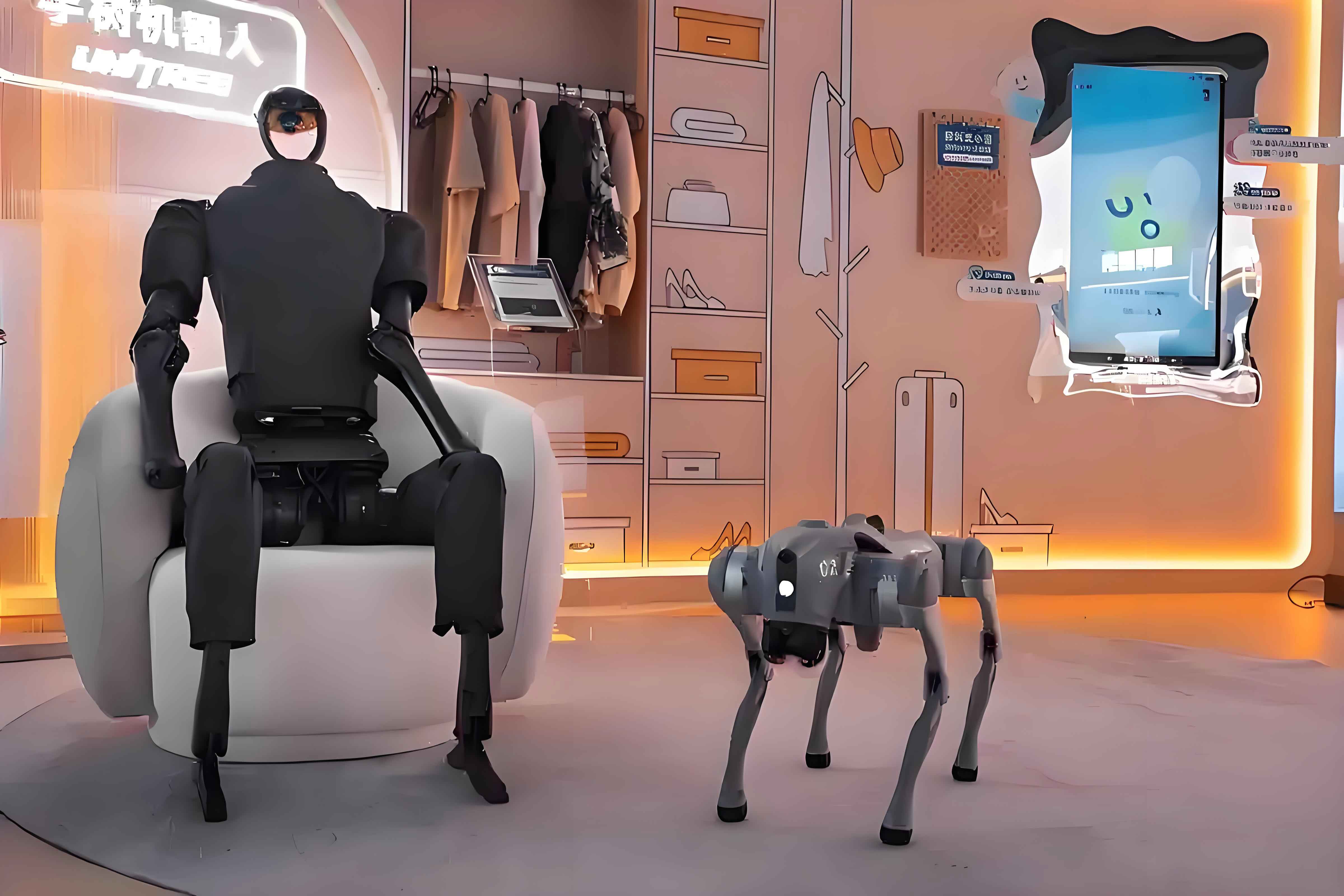
In my view, humanoid robots are not merely mechanical devices; they embody a convergence of multiple disciplines, including AI, materials science, and neuroscience. The technical logic of humanoid robots involves hardware components like cameras and sensors, combined with software such as natural language processing and machine learning algorithms. This integration enables humanoid robots to perform tasks ranging from personal assistance to complex industrial operations. However, this complexity also amplifies risks. For instance, humanoid robots can challenge traditional legal doctrines, such as liability and privacy, due to their autonomous decision-making capabilities. To illustrate the multifaceted risks, I summarize them in the following table:
| Risk Category | Description | Impact on Humanoid Robots |
|---|---|---|
| Legal Risks | Challenges to legal personhood and liability frameworks | Humanoid robots may blur lines of responsibility, requiring new laws |
| Ethical Risks | Issues like bias in AI algorithms and autonomy | Humanoid robots could perpetuate discrimination or make unethical decisions |
| Privacy Risks | Data collection through sensors and cameras | Humanoid robots might infringe on personal privacy by storing sensitive information |
| Social Risks | Disruption to employment and human interactions | Widespread use of humanoid robots could lead to job displacement or social isolation |
From my perspective, the limitations of hierarchical regulation become evident when addressing these risks. Hierarchical systems, characterized by fixed rules and slow adaptation, struggle with the pace of innovation in humanoid robots. For example, they often impose uniform standards that may not account for the diverse applications of humanoid robots, leading to either over-regulation or under-regulation. In contrast, experimental regulation embraces flexibility and learning. I see this as a recursive process where regulatory goals are set broadly, implemented with discretion, and revised based on continuous feedback. Mathematically, this can be modeled as an iterative learning process: $$ R_{t+1} = R_t + \alpha (E_t – R_t) $$ where \( R_t \) represents the regulatory measure at time \( t \), \( E_t \) is the evaluation outcome, and \( \alpha \) is the learning rate. This equation highlights how experimental regulation for humanoid robots evolves through feedback, ensuring that governance remains adaptive.
As I delve deeper, the regulatory sandbox emerges as a pivotal instrument for experimental regulation of humanoid robots. A regulatory sandbox provides a controlled environment where innovators can test humanoid robots under supervision, while regulators gather data on risks and benefits. This tool addresses key challenges by fostering collaboration among stakeholders, such as businesses, consumers, and government agencies. For instance, in a sandbox, humanoid robots can be evaluated for safety and efficacy without the full burden of compliance, reducing uncertainty for developers. The benefits of regulatory sandboxes for humanoid robots can be quantified using a cost-benefit analysis formula: $$ \text{Net Benefit} = \sum_{i=1}^{n} (B_i – C_i) \cdot P_i $$ where \( B_i \) and \( C_i \) are the benefits and costs of sandbox testing for humanoid robots in scenario \( i \), and \( P_i \) is the probability of that scenario. This emphasizes the importance of evidence-based decision-making. Moreover, I have compiled a table comparing traditional and experimental regulatory approaches for humanoid robots:
| Aspect | Hierarchical Regulation | Experimental Regulation with Sandbox |
|---|---|---|
| Flexibility | Low; rigid rules | High; adaptable to humanoid robots’ evolution |
| Stakeholder Involvement | Limited to top-down directives | Broad, including public and industry input for humanoid robots |
| Risk Management | Reactive; addresses issues after they arise | Proactive; tests humanoid robots in controlled settings |
| Innovation Support | Often stifles due to slow processes | Encourages through safe experimentation with humanoid robots |
In my assessment, institutionalizing regulatory sandboxes for humanoid robots requires a structured approach. First, experimental legislation should authorize these sandboxes, providing a legal foundation that aligns with principles of proportionality and innovation. This could involve sunset clauses that allow temporary adjustments to existing laws, specifically tailored for humanoid robots. Second, a “hub-and-spoke” governance model is essential, where a central agency coordinates with specialized units to manage sandboxes for humanoid robots. This model enhances efficiency by pooling resources and expertise. Third, procedural justice must be ensured through transparency and inclusive participation in sandbox operations for humanoid robots. For example, public consultations and independent audits can build trust. Finally, post-sandbox supervision mechanisms should be strengthened to monitor humanoid robots after testing, using continuous evaluation functions like: $$ S = \int_{0}^{T} \lambda(t) \cdot M(t) \, dt $$ where \( S \) is the supervision score, \( \lambda(t) \) is the risk intensity of humanoid robots over time \( t \), and \( M(t) \) represents mitigation measures. This integral approach helps in maintaining long-term safety.
To conclude, I believe that humanoid robots hold immense promise but necessitate innovative governance strategies. Experimental regulation, facilitated by regulatory sandboxes, offers a dynamic pathway to address the unique challenges posed by humanoid robots. By embracing iterative learning and collaborative frameworks, we can foster an ecosystem where humanoid robots thrive responsibly. As I reflect on the future, it is clear that ongoing adaptation and evidence-based policies will be crucial in harnessing the benefits of humanoid robots while safeguarding societal values.