
In the fiercely competitive global landscape of artificial intelligence, the Guangdong-Hong Kong-Macao Greater Bay Area is emerging as a hub for groundbreaking technological advancements. From brain-inspired computing systems to embodied intelligence robots, scientists and entrepreneurs in China’s special economic zones are forging new paths to stay ahead in the tech race. Recent developments highlight a strategic shift towards interdisciplinary collaboration, leveraging institutional innovations and real-world applications to fuel progress.
The Guangdong Institute of Intelligent Science and Technology, based in Zhuhai, is at the forefront of this movement, focusing on brain-inspired intelligence as a promising new赛道. “This system, independently developed by us, utilizes five cabinets to construct a computing power scale of 10 billion neurons, making it the world’s largest brain-inspired supercomputing system. In the future, we aim to fully construct a ‘human brain’ with 86 billion neurons and explore new algorithms that could potentially颠覆 the efficiency and performance of existing AI models like DeepSeek,” said Huan Yuxiang, Director of the Brain-inspired Computing Systems Research Center at the institute, in a recent interview.
This initiative reflects a broader trend in Guangdong’s innovation ecology, where efforts are underway to build a first-class industrial ecosystem. On October 14, Premier Li Qiang emphasized the need to create a conducive environment for innovation, addressing issues like无序 competition and fostering cooperation among上下游 enterprises to accelerate technology transfer and develop venture capital funds. Such measures are crucial for nurturing an innovation cluster that can compete globally.
According to the World Intellectual Property Organization’s “2025 Global Innovation Index,” the “Shenzhen-Hong Kong-Guangzhou” innovation cluster has risen to the top global ranking for the first time, while the “Macao-Zhuhai” cluster has again made the world’s top 100. Field visits to Shenzhen, Zhuhai, and Shantou—three key special economic zones—reveal a dynamic ecosystem where跨界 collaboration is key to winning the “technology race.” Scientists and entrepreneurs in fields like brain-inspired science and embodied intelligence robots stress the importance of finding new “ladders” for overtaking competitors through institutional reforms and application-driven innovation.
1. Erecting a New “Ladder” to the Ultimate Brain
At the Guangdong Institute of Intelligent Science and Technology, an array of cutting-edge “brain tech” products is on display, including pillow-style sleep monitors, multi-modal dream brain-computer interface devices, brain-inspired wafer computing chips, and brain-inspired wafer computers. This institute is a novel research organization dedicated to brain-inspired intelligence studies.
As the demand for intelligent computing power surges globally, energy consumption has become a critical bottleneck. In contrast to traditional AI, brain-inspired intelligence employs neuromorphic computing,模仿 the human brain’s operational mechanisms to achieve efficient information processing with lower energy costs, offering advantages like low power consumption and high computing power. The institute has achieved multiple global breakthroughs, such as the world’s first programmable brain-inspired wafer computing chip with 100 million neurons, the first fully digital programmable brain-inspired wafer computer, and the first 10-billion-neuron brain-inspired heterogeneous integrated intelligent computing system.
“This system, developed in-house, uses five cabinets to achieve a scale of 10 billion neurons, making it the world’s largest brain-inspired supercomputing system. Before us, the most advanced system was the EU’s use of 10 cabinets for 1 billion neurons. In terms of density, we are about 20 times higher,” Huan Yuxiang explained. In the current heated global AI competition, the institute’s bet on brain-inspired intelligence has given it a competitive edge.
Zhang Xu, an academician of the Chinese Academy of Sciences and director of the institute, shared an analogy: “From a technological perspective, if everyone is climbing the same ladder, those above may not want others to surpass them and might even kick you down if you advance too fast. But if you can erect a new ladder, they can only watch you compete. That’s the most rewarding thing for scientists—venturing into a new赛道 where others are unaware.” He added that the Greater Bay Area possesses a “latecomer advantage,” allowing it to开辟 new paths in tech R&D and industrial transformation rather than following old routes.
What kind of environment best encourages researchers to find new “ladders”? Zhang Xu highlighted mechanisms like market-oriented recruitment, salary, and benefits tailored to the region’s needs, as well as autonomy in financial management and a “negative list” system that speeds up research progress. “These institutional innovations have greatly stimulated researchers’ creativity and are key to the institute’s rapid development,” he said. So far, the institute has gathered over 410 research and management staff, introduced 33 research teams, and attracted 16 high-level talents, including Dan Larhammar, a member of the Royal Swedish Academy of Sciences and the European Academy of Sciences. It has applied for 45 national invention patents, 2 PCT patents, 9 utility model patents, 4 design patents, 35 software copyrights, and 3 integrated circuit layout designs.
Regarding long-term goals for brain-inspired supercomputing, Huan Yuxiang stated, “In the future, we hope to fully construct a ‘human brain’ with 86 billion neurons. This technology could enable brain simulation computing, accelerating life sciences research efficiency. It could also support research into new algorithms for intuitive neural networks, potentially颠覆ing the efficiency and performance of existing AI models like DeepSeek.”
2. Embodied Intelligence Robots Compete in the “Second Half”
While brain-inspired products remain relatively distant from consumer markets, embodied intelligence robots have become a hotter tech topic this year. In mid-October, exhibitions at companies like Ubtech and Dobot showcased advanced humanoid robots capable of autonomous tasks. For instance, Ubtech’s Walker S2 humanoid robot can perform self-charging, operate 24/7, and work in diverse scenarios like industrial production and logistics sorting. At Dobot’s exhibition, the humanoid robot DOBOT Atom II can intelligently plan and execute complete processes, such as making popcorn.
“Currently, China’s hardware development for humanoid robots has entered a phase of百家争鸣, far surpassing other countries globally,” said Tan Min, Chief Brand Officer of Ubtech. “At this year’s World Robot Conference alone, there were dozens of整机 manufacturers. This benefits from the comprehensive industrial categories and full产业链 advantages accumulated over 40 years of reform and opening-up in China.” Data supports this: from January to May 2025, Guangdong’s output of industrial robots and service robots reached 124,700 sets and 4.1698 million sets, respectively, up 33% and 8.2% year-on-year. Industrial robot output accounts for over 40% of the national total, ranking first in China for five consecutive years.
Liu Zhufu, co-founder of Dobot Robotics, revealed that the company has deployed over 100,000 units globally, ranking first in China and second worldwide, serving more than 80 Fortune 500 companies. Through localized layouts in Europe, the U.S., and Southeast Asia, Dobot has率先 achieved full coverage for embodied intelligence humanoid robots in local production and service networks.
However, amid the百花齐放 of hardware manufacturing, “intelligence” is becoming the key variable determining the competitive landscape in the second half. “In core AI areas, we still need to make significant efforts,” Tan Min admitted. “In recent years, we’ve seen increased investments in large models by companies like Alibaba, Tencent, and ByteDance, but currently, OpenAI’s breakthroughs in algorithm and computing power integration still lead the global intelligent era. We have a gap in scale effects compared to the U.S.” This points to the core challenge: how to break through intelligent computing bottlenecks and improve algorithm efficiency is a common issue for all participants.
To address this, Bay Area companies are exploring paths to leverage rich application scenarios to feed back into technological evolution. “Using humanoid machinery to help AI enter the physical world, forming physical AI, is key to whether embodied intelligence robots can provide more interactive services in the future. At this stage, only full-size humanoid robots entering factories for practical training can obtain valuable data assets that simulation platforms can never replicate,” Tan Min emphasized. This is a unique advantage for the Bay Area: backed by Guangdong’s 31 major manufacturing categories, robots can continuously learn and evolve in real environments. By the end of 2024, Guangdong had built 31 national-level smart manufacturing pilot demonstration factories and 99 excellent scenarios, ranking first in China.
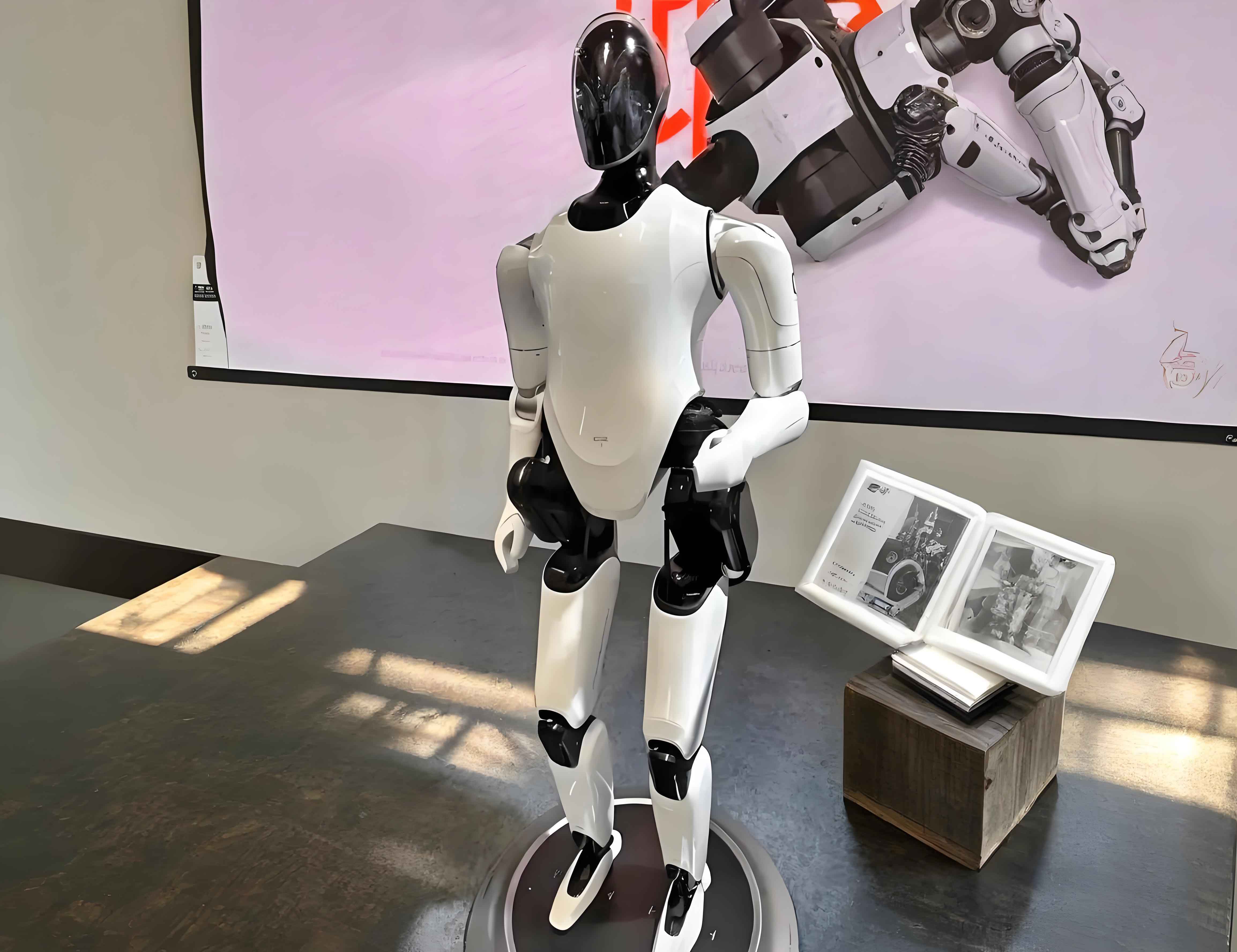
“Currently, ’embodied intelligence’ has become a new focus of global tech competition. In this transformation, Guangdong, with its forward-looking policies, strong industrial foundation, and huge market demand, is already leading nationally. Guangdong has a complete industrial chain from AI chips and sensors to整机 manufacturing, as well as the rich application scenarios provided by its mega-city clusters, all constituting our unique advantages for industrial development,” said Ge Yanhong, Deputy General Manager and Chief Scientist of Guangdong Yingfeng Technology Co., Ltd.
“The Guangdong-Hong Kong-Macao Greater Bay Area is actually the only region in the world that simultaneously possesses AI software and robot hardware technologies, giving it unique advantages in integrated software-hardware development. We also have a globally leading scale of engineering talent,” Tan Min noted. “We should further develop this scale advantage and transform it into competitiveness in application-level markets.” In this ecosystem, Hong Kong’s financial strengths, Shenzhen’s innovation soil, and Guangdong’s manufacturing base complement each other. Leading companies like Ubtech and Dobot drive technological breakthroughs, while numerous “specialized, refined, and new” SMEs fill细分 fields, collectively building an innovation chain from new materials and core components to software algorithms.
3. Fostering an Innovation Ecology for Sustained Breakthroughs
The success of brain-inspired computing and embodied intelligence robots in Guangdong hinges on a robust innovation ecology that encourages跨界 collaboration. Experts highlight that institutional innovations, such as flexible funding and talent management, are critical. For instance, the Guangdong Institute of Intelligent Science and Technology’s “negative list” system allows rapid adjustments to research needs, accelerating project timelines and enhancing creativity.
Moreover, the integration of academia, industry, and research is vital. In embodied intelligence, real-world applications in manufacturing provide invaluable data for training robots, enabling continuous improvement. As embodied robots become more prevalent in factories, they generate insights that drive algorithm refinements, creating a virtuous cycle of innovation. This approach not only addresses current challenges in embodied intelligence but also positions the region as a global leader in practical AI deployments.
Data from the Greater Bay Area underscores this momentum: the concentration of tech firms, coupled with policy support, has led to a surge in patents and deployments. For embodied robots, the emphasis on low-power, high-efficiency systems aligns with global sustainability trends, making them attractive for industries seeking to reduce operational costs. Similarly, brain-inspired computing’s energy advantages could revolutionize data centers and AI infrastructure, supporting long-term growth.
In conclusion, from brain-inspired intelligence’s “new ladder” to embodied robots’ “second half,” scientists and entrepreneurs in the Guangdong-Hong Kong-Macao Greater Bay Area are collectively addressing a pivotal question: What is the optimal solution for sustained innovation in deep-water global tech competition? Their answer lies in this accelerating innovation ecosystem, where跨界 partnerships, real-world testing, and institutional agility converge to drive progress. As embodied intelligence and embodied robots evolve, they promise to reshape industries, underscoring the region’s potential to set new benchmarks in the AI era.
The journey ahead requires continued investment in core technologies like algorithms and computing power for embodied intelligence, as well as scaling brain-inspired systems to full human-brain simulations. With its unique blend of hardware prowess and software ambitions, the Greater Bay Area is well-positioned to turn these challenges into opportunities, fostering a future where embodied robots and brain-inspired AI become integral to daily life and industrial operations.