
The recent conclusion of the inaugural World Humanoid Robot Games showcased remarkable advancements in humanoid robot capabilities, with models like Unitree H1 and TianGong Ultra performing complex movements such as running, gymnastics, and dance routines. This event highlighted the vast potential of humanoid robots, which are poised to revolutionize various industries. Dubbed the “mass production year” for humanoid robots, 2025 is expected to see shipments exceed 20,000 units, with a market scale approaching 9 billion yuan. As mass production accelerates, lithium batteries, serving as the core power source for these humanoid robots, are gaining significant attention. How are lithium battery enterprises positioning themselves in this technological shift?
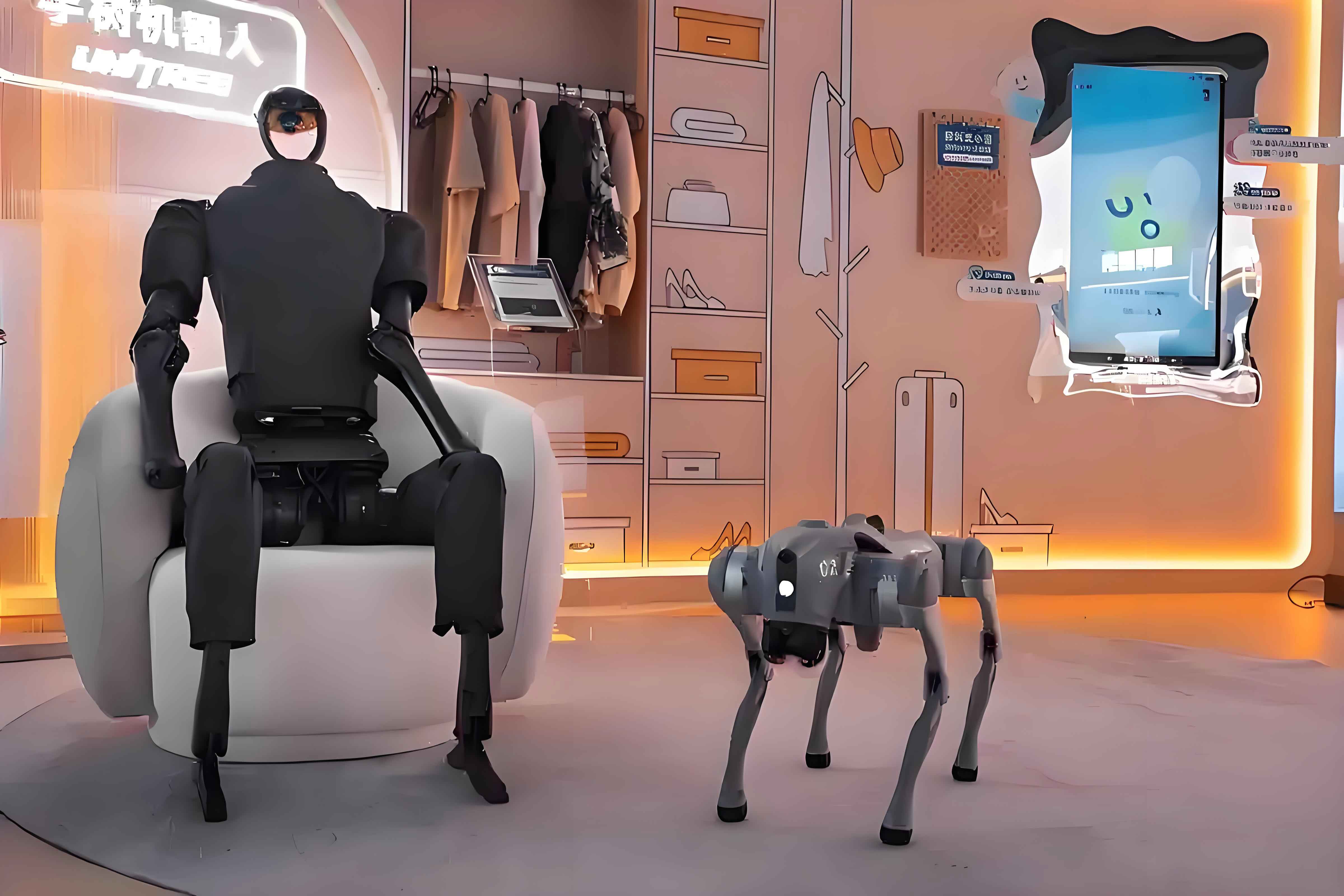
According to the “China Humanoid Robot Industry Development White Paper (2025)” released by research firm EVTank in collaboration with the Ivi Economics Institute, the humanoid robot industry is progressing through phases of “technology explosion—scenario validation—mass production deployment.” With the gradual maturation of the humanoid robot supply chain, penetration rates in industrial and service scenarios are deepening. EVTank forecasts that by 2035, global demand for humanoid robots will reach 18 million units, with market size soaring to 1.5 trillion yuan. Elon Musk, co-founder and CEO of Tesla, has repeatedly emphasized the importance of humanoid robots in public statements, predicting that the ratio of humanoid robots to humans could reach 5:1, implying a global total of 35 billion humanoid robots.
Industry insiders note that this sector is regarded as the next super growth area in global manufacturing, following the automotive industry. Although batteries currently account for only about 1% of the cost of a humanoid robot, their demand potential is enormous. By 2030, global shipments of humanoid robots are projected to hit 5 million units. Assuming an average battery capacity of 2.5 kWh per humanoid robot, this translates to a minimum battery demand of 12.5 GWh, underscoring substantial market growth prospects.
Lithium battery companies are already making strategic moves. In June, Galaxy General announced the completion of a new 1.1 billion yuan funding round led by CATL and Puquan Capital, bringing total financing over two years to over 2.4 billion yuan. In July, Sunwoda, in its H-share listing application submitted to the Hong Kong Stock Exchange, stated that it is actively expanding into the humanoid robot battery sector, developing high-energy-density battery solutions with a target to increase cell energy density to 350 Wh/kg. In August, EVE Energy announced a deep collaboration with Vbot Vita Power in the robot business, aiming to advance the productization and mass production of embodied intelligence based on user needs and technological trends in humanoid robot power batteries.
An industry insider revealed, “Lithium battery giants view humanoid robots as a ‘second growth curve.’ Leading companies such as CATL, EVE Energy, and Sunwoda have established dedicated teams to engage with humanoid robot manufacturers. Overseas players like Samsung and LG are also showing high interest in the humanoid robot market.”
Key Challenges in Humanoid Robot Battery Technology
Despite clearer development pathways for humanoid robots in industrial and service scenarios, significant technical hurdles remain. A major issue is insufficient battery life; most humanoid robots currently offer less than two hours of续航, falling short of practical application requirements. For instance, TianGong Ultra, the winner of the world’s first humanoid robot half-marathon, required three battery changes during the race. This indicates considerable room for improvement in energy density enhancement and power consumption optimization for humanoid robot batteries.
Zhou Shuangjun, a small-power battery technology expert at Sunwoda, explained that the core of humanoid robot battery technology development lies in addressing pain points in various application scenarios. For example, during actions like lifting, somersaulting, or rapid movement, humanoid robots demand high power from batteries, requiring sustained discharge capabilities of around 3C to ensure stability and responsiveness. “A humanoid robot typically weighs about 70 kg, with batteries placed in the chest and back areas, limiting battery weight to 5–8 kg. Current续航 is only 2–3 hours, but we aim to enable continuous work for 8 hours, akin to human shifts, which necessitates maximizing battery energy density,” Zhou stated.
Zhou further elaborated that based on performances at the Beijing E-Town Humanoid Robot Marathon, the 48V voltage platform struggles to meet the demands of long-term, high-load operations concerning kinetic output, heat dissipation efficiency, and energy consumption control. Batteries need to upgrade to higher voltages and stronger power outputs to adapt to complex scenarios. Additionally, battery weight directly impacts the agility and续航 of humanoid robots, making lightweight design a critical focus.
A senior humanoid robot expert pointed out that there is a mutual lack of understanding between robot manufacturers and lithium battery suppliers. Robot manufacturers often lack deep insights into lithium batteries, leading to suboptimal selection processes. Future humanoid robot batteries must not only focus on increasing energy density but also require innovations in structural design and architecture optimization to enhance续航. Compared to traditional lithium batteries, humanoid robot batteries need high energy density and high discharge rates to support actions like jumping and lifting, while also operating in a wide temperature range from -40°C to 60°C. Balancing energy density with safety under these conditions remains a challenge.
Current Battery Technologies and Safety Imperatives
According to Zhou Shuangjun, the primary power batteries for humanoid robots are currently ternary cylindrical lithium batteries, accounting for about 70% of the market, with some using lithium iron phosphate batteries, and a few testing semi-solid and solid-state batteries. Technically, battery systems typically operate at voltage platforms between 48V and 58V, providing 2–3 hours of continuous operation per charge, with cell energy densities ranging from 250 to 300 Wh/kg.
Battery safety is fundamental to the stable operation and application of humanoid robots. The expert emphasized that risks such as cycle life degradation and thermal runaway due to high-frequency, high-current discharge need to be addressed through material innovations. For instance, using lithium-rich manganese-based materials in the cathode can increase specific capacity by over 20%; employing silicon-carbon composite materials (with 30% silicon content) in the anode paired with nano-porous structures; and adopting sulfide solid-state electrolytes to reduce internal resistance.
Zhou outlined Sunwoda’s plans: through material innovations (e.g., high-nickel, high-silicon chemical systems) and process improvements, the company aims to initially boost cell energy density to 350 Wh/kg to address续航 issues. Full-pole ear designs will be used to reduce internal resistance, enhancing transient power output and kinetic stability. At the battery system PACK level, a hybrid architecture of “main torso battery + joint micro-batteries” will be implemented, combined with lightweight structural materials, to improve adaptability to irregular body shapes while reducing overall weight. Furthermore, intelligent management upgrades will include developing BMS systems integrated with electrochemical impedance spectroscopy (EIS) monitoring, end-cloud协同 control, SOX algorithms, and AI safety预警 functions to make batteries smarter and safer.
Future Directions and Customized Solutions
Regarding future needs, Zhou Shuangjun stated, “Due to the high spatial utilization requirements of humanoid robots and significant differences in the morphology and design of each model, we will provide fully customized end-to-end solutions based on overall client demands, ensuring that the irregular structures of battery systems truly fit the complex bodies of humanoid robots. Leveraging our expertise in material innovation, structural工艺, and intelligent management, we will focus on serving high-frequency usage scenarios such as industrial and service applications, where demands for battery life and power stability are higher, thereby highlighting technological advantages. Simultaneously, we will actively engage with leading humanoid robot R&D firms and policy-supported industrial projects, participate in industry standard setting, and promote the transition of battery technology from laboratory validation to规模化 application, facilitating the large-scale commercial deployment of the global humanoid robot industry.”
The rapid evolution of humanoid robot technology underscores the critical role of advanced battery systems. As the humanoid robot market expands, collaborations between battery manufacturers and robot developers will be essential to overcome existing limitations. With ongoing investments and innovations, humanoid robots are set to become integral to various sectors, driving economic growth and technological progress. The emphasis on safety, efficiency, and customization in battery development will pave the way for broader adoption of humanoid robots in everyday applications, ultimately transforming how tasks are performed in both industrial and service environments.
In summary, the humanoid robot battery segment represents a dynamic and promising frontier, with lithium battery companies at the forefront of this transformation. The integration of cutting-edge materials, smart management systems, and tailored designs will be key to unlocking the full potential of humanoid robots, ensuring they meet the rigorous demands of future applications. As the industry moves toward mass production, the focus on enhancing battery performance and safety will remain paramount, solidifying the position of humanoid robots as a cornerstone of next-generation automation.